In the high-stakes world of live concert touring, the bridge between a band’s performance and the audience’s experience is built by the Front of House (FOH) engineer. For more than three decades, Dan Hallas has been a master of this craft, shaping the sonic signatures of acts ranging from the rhythmic intensity of nu-metal pioneers P.O.D. to the nuanced, delicate textures of jazz and folk luminaries like Esperanza Spalding and Dianne Reeves. Central to Hallas’s technical arsenal throughout this storied career has been his steadfast reliance on Audix microphones.
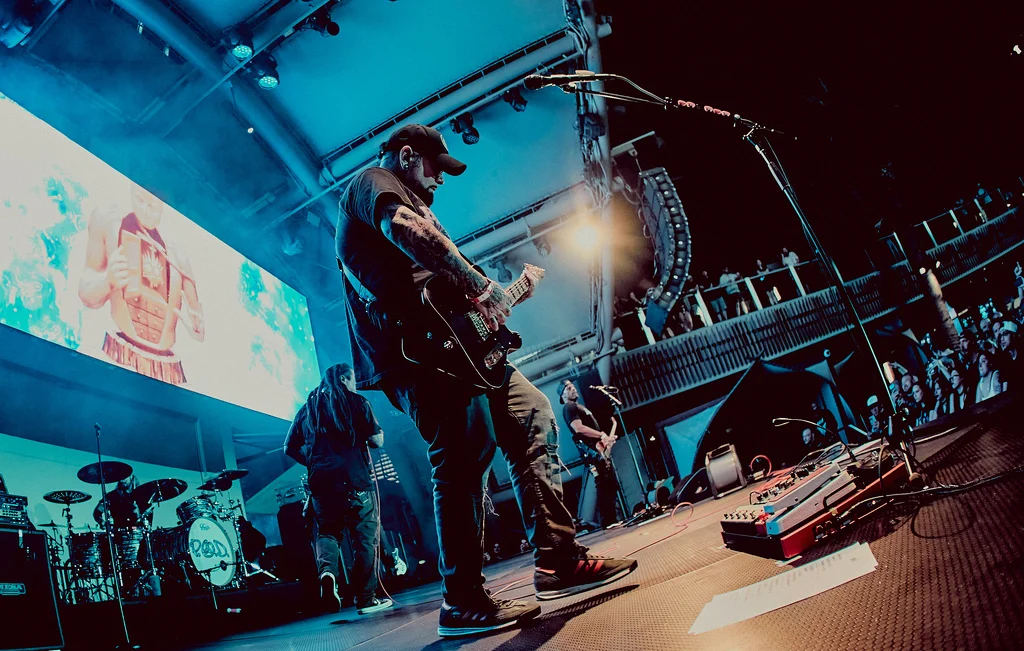
As he currently tours arenas with P.O.D., Hallas’s rig serves as a testament to the evolution of live sound technology—a journey that mirrors his own transition from a backline tech to a world-class sound engineer.
The Foundations of a Sonic Career
Dan Hallas’s entry into the industry is the stuff of road-warrior legend. His career began in 1989, an era defined by analog consoles and heavy racks of outboard gear. His break arrived in Minneapolis, at the hallowed grounds of First Avenue—a venue immortalized by Prince.
“One fateful night at First Avenue, the monitor engineer had to bow out because he was ill, and I stepped in for him,” Hallas recalls. “I finished that tour as monitor engineer, and I’ve stayed on the road doing live sound ever since.”
That baptism by fire taught Hallas that in the chaotic environment of a live show, reliability and off-axis rejection are paramount. It was this realization that led him to his first encounter with Audix. After observing the widespread use of the OM2 and OM3 dynamic vocal microphones in various venues, he began to integrate the brand into his own workflow.
“When I finally started working with them, the incredible amount of noise rejection they achieved from stage wedges completely sold me on the brand,” he explains. “I’ve chosen Audix ever since.”
Chronology of Innovation: From Prototypes to Industry Staples
Hallas’s relationship with Audix transcends that of a mere end-user; he has functioned as an informal consultant, directly impacting the design of some of the industry’s most iconic microphones.

The most prominent example of this collaboration occurred during the 2002 Ozzfest tour. While mixing for P.O.D. and witnessing the heavy-hitting percussion of the era’s biggest metal acts, Hallas was testing an early prototype of what would become the industry-standard D6 kick drum microphone.
“I remember specifically suggesting a higher frequency bump around 4 to 6 kHz,” Hallas notes. His ears, finely tuned to the requirements of high-energy, arena-filling music, were spot on. The resulting D6 became a staple in drum kits worldwide, praised for its "pre-EQ’d" sound that requires minimal processing to cut through a dense mix. As a gesture of gratitude for his contribution, Audix gifted Hallas several microphones inscribed with his name—a nod to his role in shaping the modern live sound palette.
Technical Deep-Dive: The Current Touring Rig
Today, Hallas’s touring rig for P.O.D. is a masterclass in microphone application, utilizing a specific suite of Audix tools to handle the complexities of a modern rock performance.
Vocal Precision: The OMX-T
In the high-volume environment of a nu-metal arena show, microphone bleed is the enemy of clarity. Hallas relies on the OMX-T dynamic vocal microphone to isolate the performance. “I like the OMX-T because it features a tight pickup pattern, which is essential for capturing clear vocals and rejecting drum bleed when the singer is close to the kit,” he says. This precision allows Hallas to maintain the integrity of the vocal track without it being muddied by the proximity of the drum kit or the wall of sound from guitar amplifiers.
Percussion Dynamics: D6X and MicroD
The drum kit remains the engine room of any rock show, and Hallas has upgraded his toolkit to include the new D6X. Building upon the legacy of the original D6, the D6X provides a broader tonal palette. “The new D6X is incredible because it offers so much breadth,” Hallas explains. “You can easily adjust the settings to capture a more natural sound or emulate classic vintage kick microphones.”
For the toms, Hallas employs the MicroD condenser instrument microphones. These compact units solve a common logistical problem: the need for bulky, obtrusive stands. By clipping directly onto the drums, the MicroDs provide a clean, uncluttered stage. “They capture a massive, full-bodied sound with perfect low-end and attack,” Hallas observes. “It sounds so good it’s like a sample.”
Capturing the Full Spectrum
Hallas’s strategy for the rest of the kit and backline is equally deliberate:

- Snare: He utilizes i5 dynamic instrument microphones on both the top and bottom skins, leveraging the i5’s versatility to capture the crisp snap of the snares and the depth of the drum shell.
- Cymbals: For overheads, he selects the SCX1 omnidirectional studio condenser microphones, prized for their transparency and ability to capture the nuance of the cymbal wash without harshness.
- Guitar Cabinets: To capture the P.O.D. guitar sound, Hallas places the compact D4 dynamic microphone directly on the voice coil of the cabinets. This positioning yields a "wonderfully full-bodied yet present sound," ensuring the guitars maintain their weight even at high volumes.
Implications for Live Audio Standards
The longevity of the partnership between Hallas and Audix underscores a significant shift in the professional audio landscape: the demand for "plug-and-play" reliability. In an era where tour schedules are tighter and budgets are more scrutinized, engineers require microphones that perform consistently in every room, from club stages to massive stadiums.
Hallas’s preference for Audix illustrates the importance of off-axis rejection in the modern age of high-density stage monitoring. As in-ear monitors become more prevalent and stage volumes remain high, the ability of a microphone to reject unwanted sound—without requiring extreme digital manipulation—is what separates a great mix from a passable one.
Furthermore, Hallas’s influence on the D6 design highlights the symbiotic relationship between manufacturers and the professionals in the field. By listening to the needs of working engineers, Audix has managed to maintain a competitive edge, ensuring that their products are not just pieces of hardware, but essential components of the artistic process.
Conclusion: The Human Element in Digital Sound
While digital mixing consoles and advanced signal processing have transformed how live sound is delivered, the foundation remains rooted in physics and transducers. Dan Hallas’s three-decade career serves as a reminder that the most sophisticated technology is only as good as the ears behind it.
His ongoing collaboration with Audix, spanning from the early days of Ozzfest to current arena tours, demonstrates that excellence in audio is rarely about chasing the latest fad. Instead, it is about identifying tools that offer clarity, reliability, and sonic integrity, and mastering them until they become extensions of the engineer’s own intent. For those aspiring to build a career in the live audio industry, Hallas’s path offers a clear roadmap: listen, experiment, and build relationships with the tools—and the people—that allow you to translate a performance into a lasting experience for the audience.