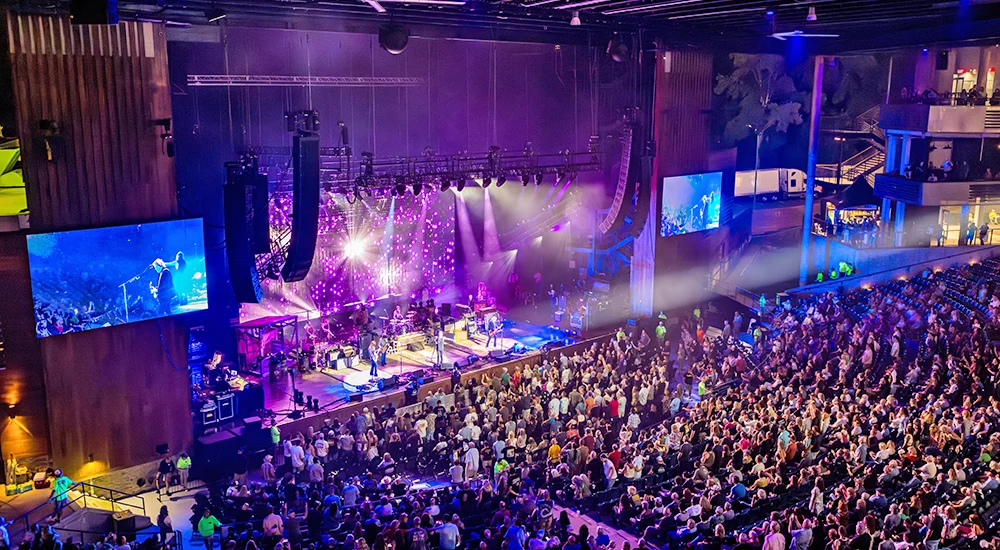
As The Black Crowes traverse North America on their sprawling 41-city “Southern Hospitality Tour,” the sonic landscape accompanying them is proving to be as formidable as their catalog. Supporting their 10th studio album, A Pound of Feathers, the band is not merely relying on legacy rock-and-roll power; they are utilizing a cutting-edge sound reinforcement ecosystem that prioritizes efficiency, coverage, and sonic transparency. At the heart of this technical achievement is the Meyer Sound PANTHER line array, provided by the Bay Area-based integrator UltraSound.
This tour represents a masterclass in modern live sound logistics, demonstrating how advances in loudspeaker technology can simultaneously reduce a tour’s carbon footprint while elevating the fidelity of a live concert experience.
Main Facts: The Anatomy of a High-Performance Rig
The logistical mandate for the “Southern Hospitality Tour” was daunting: the system had to remain versatile enough to scale across an eclectic mix of venues, ranging from intimate 3,000-seat theaters to sprawling 30,000-capacity amphitheaters.
To achieve this, UltraSound project coordinator Jason Mills designed a rig centered on the Meyer Sound PANTHER platform. The primary system features 18 PANTHER loudspeakers per side, supplemented by 16 LYON line array loudspeakers per side for out-fill coverage, ensuring that even the most extreme side-seating sections receive a pristine audio image. For front-fill requirements, six LEOPARD line array units are deployed to ensure that the audience in the front rows remains immersed in the mix.
The low-frequency reinforcement is handled by a sophisticated cardioid configuration of 1100-LFC elements. Six units are flown per side, while an additional 12 units are ground-stacked. This specific arrangement is crucial, not only for the visceral impact required for the Crowes’ blues-rock aesthetic but for the practical necessity of controlling low-end bleed on stage—a persistent challenge for lead vocalists like Chris Robinson.
Chronology of the Deployment
The success of the tour’s audio design was not an overnight realization but the culmination of months of pre-production and historical data analysis.
Phase 1: Strategic Planning and Simulation
Long before the first truck arrived at the initial tour stop, Mills utilized UltraSound’s extensive library of Meyer Sound MAPP 3D files. By pulling data from previous tours at the same venues, the engineering team could model the acoustic properties of each stop. This allowed for precise adjustments to be made during the planning phase, ensuring that the transition from a mid-sized arena to a cavernous outdoor amphitheater was seamless.
Phase 2: The Load-In Strategy
On the road, the system is managed by systems engineer David Williams. His daily routine involves arriving at the venue, surveying the acoustic environment, and immediately cross-referencing the space with the MAPP 3D predictive software. This real-time agility ensures that any architectural quirks—such as deep balconies or wide, reflective walls—are mitigated before the band hits the stage.
Phase 3: The Performance Cycle
Each show is a continuous loop of calibration. By maintaining a highly scalable rig, the crew can adjust the array length based on the venue’s capacity. If a venue is smaller than anticipated, the crew can scale back the PANTHER count without sacrificing the integrity of the sound, a flexibility that Mills notes is "easier for the guys on tour to scale back than it is to scale up."
Supporting Data: Efficiency and Physics
The adoption of the PANTHER system is driven by more than just subjective sound quality; it is a calculated response to the economic and environmental realities of modern touring.
Weight and Fuel Consumption
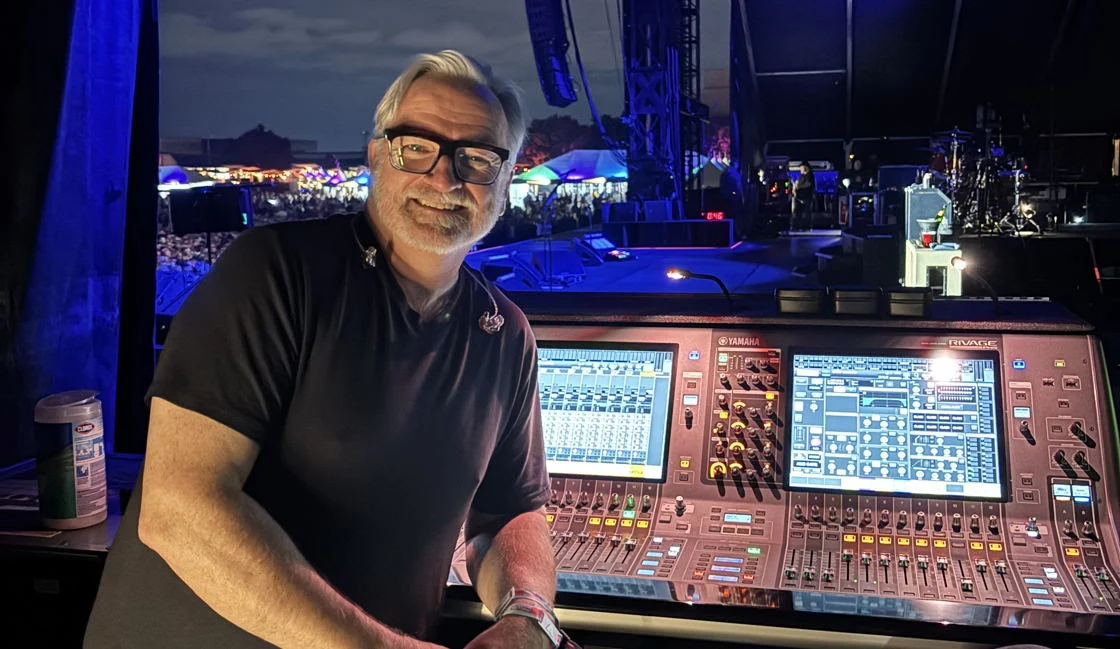
Veteran front-of-house (FOH) engineer and production manager Tim “Quake” Mark, who brings nearly half a century of experience to the tour, has championed the transition to PANTHER specifically for its weight-to-performance ratio. "With the size of the P.A. I have now, I save 20,000 pounds," Mark explains. In an era where fuel costs are a volatile component of tour budgets, a 10-ton reduction in gear weight translates to significant savings in logistics and a reduction in the tour’s overall carbon footprint.
Cardioid Control
The decision to utilize a cardioid configuration for the 1100-LFC elements was driven by the need for stage cleanliness. By “turning out” the subwoofers rather than facing them straight downstage, the team has successfully minimized low-frequency energy where the band stands. This level of control is essential for Chris Robinson, whose vocal performance requires a focused, clean environment free from the muddiness often caused by omnidirectional sub-bass dispersion.
Official Responses and Professional Insight
The technical team behind The Black Crowes emphasizes that the gear serves the art, not the other way around.
"I want to paint on the console, not on the P.A.," says Tim Mark. This sentiment reflects a growing trend among top-tier FOH engineers who prefer a loudspeaker system that provides a neutral, high-fidelity canvas. According to Mark, the PANTHER system sounds exceptional "right out of the box," requiring minimal corrective equalization. "I can go up into that bleacher a hundred feet from me, and it’s still covering everything," he notes, citing the system’s exceptional throw and consistency.
Regarding the aesthetic of the mix, Mark remains pragmatic. "My job as a front-of-house guy is not to create. Mine is to interpret and reinforce you in the room." By using the LYON out-fills in an alternating left-right sequence, he maintains a coherent stereo image throughout the venue, ensuring that the audience’s experience is consistent regardless of their physical location.
Jason Mills echoes the ease of deployment. "It’s easy to deploy, it’s easy to scale," he says. "The riggers have no problems with it." This synergy between the sound designers, the systems engineers, and the physical riggers is the backbone of the "Southern Hospitality Tour’s" success.
Implications for the Touring Industry
The Black Crowes’ tour serves as a case study for the future of large-scale concert sound. Several key takeaways emerge:
- The Shift to Lightweight High-Output Systems: The industry is moving away from heavier, less efficient rigs. The success of the PANTHER system suggests that power density is now the primary metric for touring professionals.
- Predictive Modeling as a Daily Necessity: The reliance on MAPP 3D by the engineering team highlights how software-driven prediction has moved from a "nice-to-have" to an essential component of daily load-ins.
- Prioritizing Stage Acoustics: The effort taken to ensure the lead singer is isolated from excessive sub-bass energy underscores a modern professional standard where performer comfort is directly linked to the quality of the audience’s experience.
- Sustainability in Touring: As the music industry faces increased scrutiny regarding its environmental impact, the 20,000-pound weight savings realized on this tour provides a blueprint for how technical choices can align with sustainability goals.
As the "Southern Hospitality Tour" continues, it does so with a technical foundation that is as robust as the music itself. By balancing the raw power required for rock-and-roll with the surgical precision of modern audio engineering, The Black Crowes and UltraSound have set a high bar for what a touring sound system can achieve. For fans, it means a concert experience that is clear, punchy, and consistently high-quality, whether they are in the front row or the highest seat in the stadium.