Welcome back to TechCrunch Mobility, your definitive hub for the rapidly evolving future of transportation. As artificial intelligence continues to reshape the automotive sector, we are tracking the critical tension between rapid technological deployment and the intensifying regulatory oversight governing our roads.
Note to readers: In observance of the July 4th holiday, this will be our final issue for the week. We will return with our regular deep dives and industry analysis the following week.
The Main Facts: Tesla Under the Regulatory Microscope
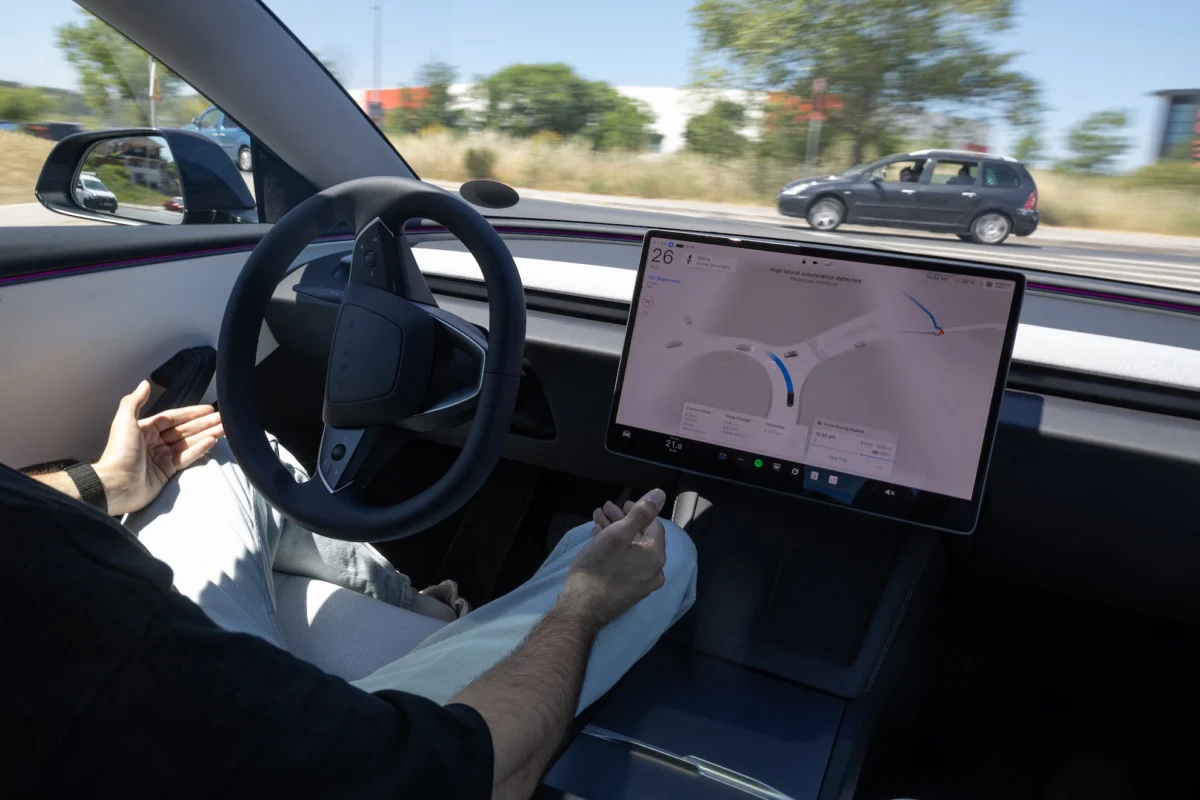
This week, the conversation within the mobility sector has been dominated by the escalating scrutiny surrounding Tesla’s "Full Self-Driving (Supervised)" (FSD) suite. The discourse reached a fever pitch following a tragic, fatal crash in Texas involving a Tesla vehicle that struck a private residence, resulting in the death of a 76-year-old woman.
The incident has drawn significant national attention, not merely due to the tragedy itself, but because of the conflicting narratives surrounding the vehicle’s operational state. Initial reports indicated the driver informed law enforcement that the vehicle’s Autopilot system—a legacy driver-assistance suite that has since been phased out—was engaged at the time of impact.
Conflicting Narratives and Technical Disclosures
Tesla’s response to the incident was swift. Ashok Elluswamy, the company’s vice president of AI software, took to X (formerly Twitter) to challenge the driver’s account. Elluswamy claimed that the vehicle was not functioning under the standard Autopilot parameters but was instead under the control of a driver who manually overrode the system by depressing the accelerator pedal to 100% capacity in a residential zone.

While these comments strongly imply the vehicle was operating with the current FSD (Supervised) software, the exact operational mode remains a point of contention. Without an independent forensic analysis of the vehicle’s Event Data Recorder (EDR), the industry remains in a "he-said, she-said" stalemate. However, this clarity may be forthcoming as the National Highway Traffic Safety Administration (NHTSA) and the National Transportation Safety Board (NTSB) have officially launched formal investigations into the incident.
Chronology of Escalating Oversight
The Texas incident is not an isolated event but rather the latest chapter in a broader narrative of federal intervention.
- 2023: A fatal crash involving a vehicle operating on FSD (Supervised) leads to a major lawsuit, which Tesla recently settled. This case remains central to an ongoing, broader NHTSA investigation into whether Tesla’s FSD system is capable of accurately detecting and responding to low-visibility conditions, such as dense fog, sun glare, or airborne particulates.
- June 2026: The NTSB launches a probe into the Texas residential crash, signaling a shift from routine inquiry to a more robust, safety-focused investigation.
- Present Day: Tesla finds itself navigating a paradox: it is positioning itself as a premier AI and robotics powerhouse, yet its most visible, revenue-generating product—FSD—is currently the primary subject of federal probes that could threaten its long-term viability.
Supporting Data: Waymo’s Expansion and the Robotaxi Logistics
While Tesla faces a defensive battle, Waymo continues to execute its aggressive scaling strategy. Our investigation into the company’s "Ojai" robotaxi program reveals a massive operational undertaking.
Waymo’s collaboration with Zeekr—the EV brand under China’s Geely Holding Group—has resulted in a purpose-built, minivan-style robotaxi. According to import data analyzed by the research firm MoffettNathanson, Waymo is currently on track to import 3,156 vehicles into the United States this year. This equates to an average of roughly 300 vehicles per month being funneled into their testing and deployment pipeline.
The Anatomy of the Ojai Fleet
These vehicles represent a sophisticated marriage of international manufacturing and American software. While the chassis and vehicle assembly occur in China, the vehicles are intentionally devoid of sensitive communication modules to comply with U.S. regulations regarding Chinese-connected vehicle technology. Once stateside, Waymo integrates its sixth-generation self-driving stack, which includes:

- 13 High-Resolution Cameras: Providing 360-degree environmental awareness.
- 4 Lidar Sensors: For precise depth perception and obstacle detection.
- 6 Radar Units: Ensuring functionality in inclement weather.
- External Audio Array: Enhancing pedestrian interaction and safety.
Official Responses and Strategic Implications
The industry is currently reacting to two major regulatory and strategic shifts that will define the next decade of autonomous transit.
1. The Brake Pedal Dilemma
The U.S. Department of Transportation has proposed a monumental shift in safety regulations: allowing manufacturers to omit physical brake pedals in vehicles specifically designed for full automation. This is a massive boon for companies like Tesla and Zoox, which aim to produce "driverless-first" vehicles. However, it raises significant questions about human-in-the-loop safety protocols and how passengers might intervene in a system failure.
2. The Sensor Standards War
Lyft CEO David Risher has set a new bar for the industry by declaring a "multi-sensor safety standard." Effectively, Lyft will not host autonomous vehicles on its network that rely solely on camera-based systems. This is a direct shot across the bow of Tesla’s camera-centric FSD (Unsupervised) approach. The implication is clear: the ride-hailing industry is moving toward a consensus that redundancy (Lidar + Radar + Camera) is non-negotiable for commercial safety, potentially creating a divide between camera-only fleets and multi-modal autonomous systems.
The Broader Mobility Ecosystem: Deals and Disruptions
The capital markets remain active, demonstrating that investors see the long-term value in autonomous infrastructure despite the regulatory headwinds.
- Infrastructure Investment: Aseon Labs secured $10 million in a seed round to build autonomous "pitstops" for robotaxi cleaning and charging. Similarly, Terawatt Infrastructure has secured a credit facility of up to $300 million to expand its charging depot network, signaling a massive push toward electrification.
- Corporate Restructuring: Lucid Motors is navigating a difficult period, laying off 18% of its workforce—roughly 1,500 employees—as it attempts to streamline its manufacturing footprint and focus on competitive positioning.
- Global Expansion: Waymo is quietly laying the groundwork for a European launch by registering an entity in Germany. While insiders suggest a launch is not imminent, the regulatory footprint is being established.
- New Entrants: The entry of budget-conscious hardware, such as the $24,950 Slate Auto electric truck, highlights a move toward "radically simple" utility vehicles, challenging the trend of increasingly complex and expensive vehicle architecture.
Conclusion: The Road Ahead
As we look toward the second half of 2026, the industry stands at a crossroads. The promise of autonomous mobility is being tempered by the hard reality of road safety and government oversight. While companies like Waymo demonstrate the viability of sensor-heavy, fleet-based deployment, others like Tesla are forced to defend a high-stakes, consumer-facing AI strategy.

The shift away from legacy hardware like the brake pedal, combined with stricter sensor-standard requirements, suggests that the "Wild West" era of autonomous testing is closing. We are entering an era of rigorous standardization. For the consumer, this means a slower, more cautious rollout—but one that, if successful, will fundamentally rewrite the laws of physics and economics on our public roads.
Do you have a tip or an insight into the future of mobility? Contact our team at TechCrunch. Our secure channels are open for those who wish to share documents or data concerning the industry’s most pressing developments.