By TechBeat Editorial Desk
June 29, 2026
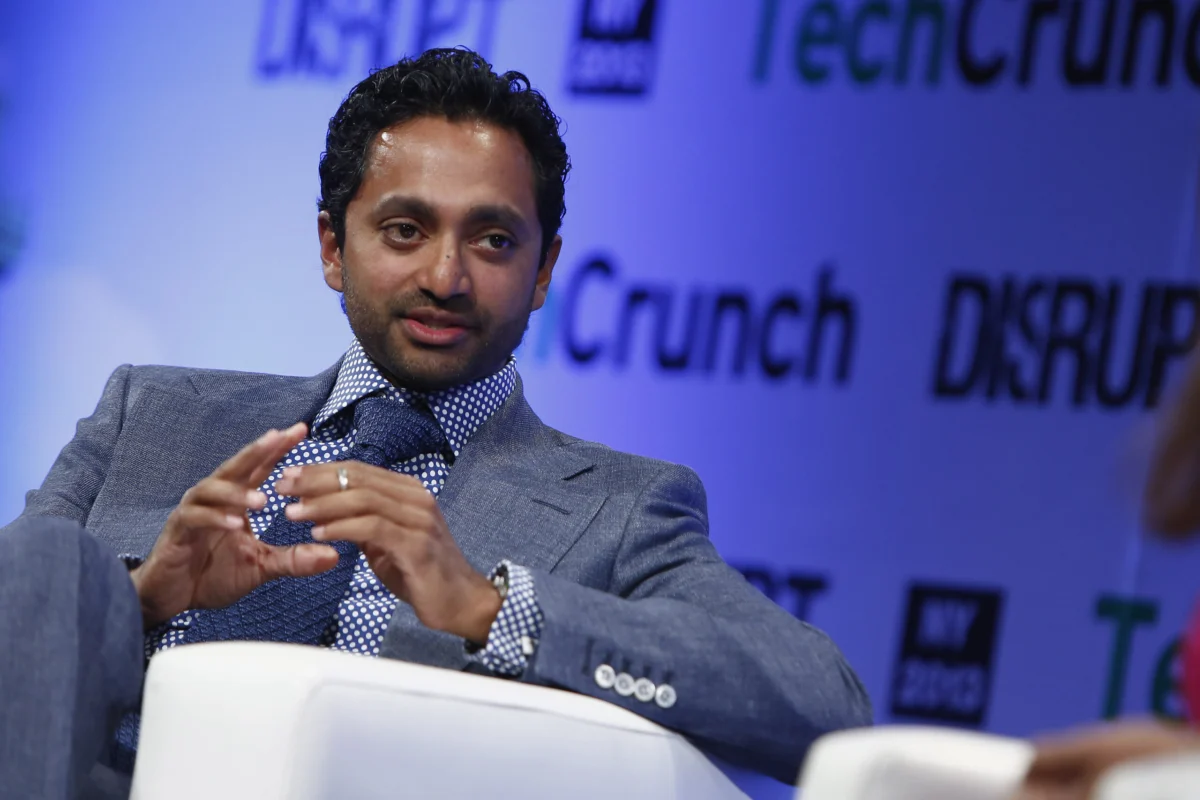
In a move that has sent ripples of anticipation through the Silicon Valley ecosystem, Chamath Palihapitiya—the high-profile venture capitalist, Social Capital founder, and co-host of the influential All-In podcast—has officially transitioned from the boardroom to the front lines. On Monday, Palihapitiya announced that his latest venture, 8090 Labs, has successfully closed a $135 million Series A funding round. More significantly, he declared his intent to take the reins as the company’s Chief Executive Officer, signaling a full-time return to the operational intensity he last experienced during the hyper-growth years of early Facebook.
The Financial Powerhouse: Breaking Down the Series A
The $135 million investment in 8090 Labs was spearheaded by Salesforce Ventures, a strategic heavy hitter in the enterprise software space. The round saw a significant concentration of capital from some of the most influential figures in tech, creating a "who’s who" of Silicon Valley venture capital.
Key participants included:
- WndrCo: The venture firm led by media and tech mogul Jeffrey Katzenberg.
- Craft Ventures: The firm founded by David Sacks, a long-time collaborator of Palihapitiya.
- The Production Board: Led by fellow All-In co-host David Friedberg.
- Launch: The venture vehicle of angel investor and media personality Jason Calacanis.
- Strategic Angel Investors: Notably, the round saw individual participation from Palo Alto Networks CEO Nikesh Arora and Quora CEO Adam D’Angelo, both of whom bring deep technical and industry credibility to the cap table.
The scale of this Series A round is indicative of the current market appetite for "agentic" AI solutions—tools that do not merely suggest code but actively participate in the software development lifecycle within the constraints of enterprise security and compliance.
A Chronology of Vision: From Concept to Execution
The genesis of 8090 Labs is rooted in the broader shift toward Generative AI that has defined the mid-2020s.
- January 2024: Palihapitiya formally incorporates 8090 Labs. Initially, the company operated in stealth mode, with Palihapitiya serving as a founder and board member while maintaining his responsibilities at Social Capital.
- Q3 2024 – Q1 2025: The development phase of "Software Factory," the company’s flagship product, begins. The focus is shifted away from the "vibe-coding" prototypes that dominated the early days of LLM-driven development toward robust, industrial-grade software engineering.
- June 29, 2026: The official public unveiling of the company’s mission, coupled with the announcement of the $135 million Series A and the transition of Palihapitiya into the role of CEO.
The Core Product: Why "Software Factory" Matters
While the market is currently saturated with AI-assisted coding tools, 8090 Labs is positioning itself to solve a specific, high-stakes problem: the "last mile" of enterprise software production.
Most existing coding assistants—such as GitHub Copilot or Cursor—are designed for individual developers. Palihapitiya argues that these tools fall short when applied to the complex, monolithic architectures of large enterprises. 8090 Labs’ "Software Factory" is designed to address this by moving beyond simple code completion.
According to company materials, Software Factory provides:
- Production-Quality Output: The system is trained to output code that meets strict architectural standards, rather than just suggesting snippets that may require significant refactoring.
- Enterprise-Grade Compliance: Unlike consumer-facing AI, Software Factory integrates directly into existing CI/CD pipelines, offering audit trails, security scanning, and automated version control compliance.
- Governance: It allows engineering managers to set guardrails on what the AI can change, ensuring that the "agent" operates within the established technical debt and security policies of the organization.
The "Facebook Effect": Palihapitiya’s Motivations
In a post on X (formerly Twitter) explaining his decision to assume the CEO role, Palihapitiya drew a direct parallel between the current AI landscape and the early days of the social media revolution at Facebook.
"Since I left Facebook, I was waiting for a moment like this to return to a full-time operating role," Palihapitiya wrote. "I am convinced that what we are building now is even more important, so there was no decision to make except to be all in."

For those who have followed Palihapitiya’s career, this statement is significant. His tenure at Facebook, where he served as a senior executive responsible for user growth and monetization, is often cited as the blueprint for his subsequent success as an investor. By stepping back into the CEO role, he is effectively signaling that he believes 8090 Labs represents a once-in-a-generation shift in the software industry—a transition from manual programming to "factory-automated" software creation.
Market Implications: The Future of Enterprise Development
The entry of 8090 Labs into the market has broader implications for the future of software engineering.
The Shift Toward Agentic Workflows
The industry is currently witnessing a transition from "Copilots" (passive assistants) to "Agents" (autonomous workers). 8090 Labs is betting that enterprises will be willing to pay a premium for systems that can perform complex, multi-step tasks—like migrating a legacy database or rewriting a microservice—without human intervention, provided the safety and auditability controls are rigorous.
The Competitive Landscape
The involvement of Salesforce Ventures is a clear strategic signal. Salesforce has been aggressively integrating AI into its platform, and the partnership with 8090 Labs suggests that Palihapitiya’s startup will likely have a direct line to massive, enterprise-scale distribution. This puts pressure on incumbents like Microsoft and Google, who are also racing to embed autonomous agents into their cloud and development ecosystems.
The Role of "The Besties"
The participation of other All-In podcast hosts—Sacks, Friedberg, and Calacanis—is more than just a financial investment; it is a signal of ideological alignment. The "All-In" group has consistently argued that the future of the economy lies in AI-driven productivity gains. Their combined capital and influence ensure that 8090 Labs will have a massive platform to evangelize its product to C-suite executives globally.
The Path Forward: Challenges and Opportunities
Despite the hype and the substantial funding, the path ahead for 8090 Labs is not without challenges.
Technical Hurdles: Building an AI that can reliably write production-grade code that integrates with legacy enterprise systems is a notoriously difficult engineering problem. The risk of "hallucinations" or security vulnerabilities in generated code remains a primary concern for CTOs.
Talent Acquisition: The market for high-level AI researchers and systems engineers is hyper-competitive. 8090 Labs will need to prove that it can attract top-tier talent away from the "Magnificent Seven" tech giants who are currently hoarding the world’s leading AI researchers.
Market Adoption: Enterprise software sales cycles are traditionally long and complex. Palihapitiya will need to prove that Software Factory can deliver immediate ROI for its early customers to maintain the momentum generated by this funding round.
Conclusion
Chamath Palihapitiya’s return to a full-time operating role marks a pivot point for his career and for the broader AI-coding sector. With $135 million in the bank, the backing of the most influential venture capitalists in the valley, and a clear product focus on enterprise-grade software automation, 8090 Labs is poised to be a major player in the next chapter of the AI revolution.
As Palihapitiya noted in his announcement, the decision to go "all in" was driven by the belief that the current AI shift is "even more important" than the rise of social media. Whether 8090 Labs can successfully transition from a high-profile startup to the engine room of global software development remains to be seen, but the industry is undoubtedly watching closely.