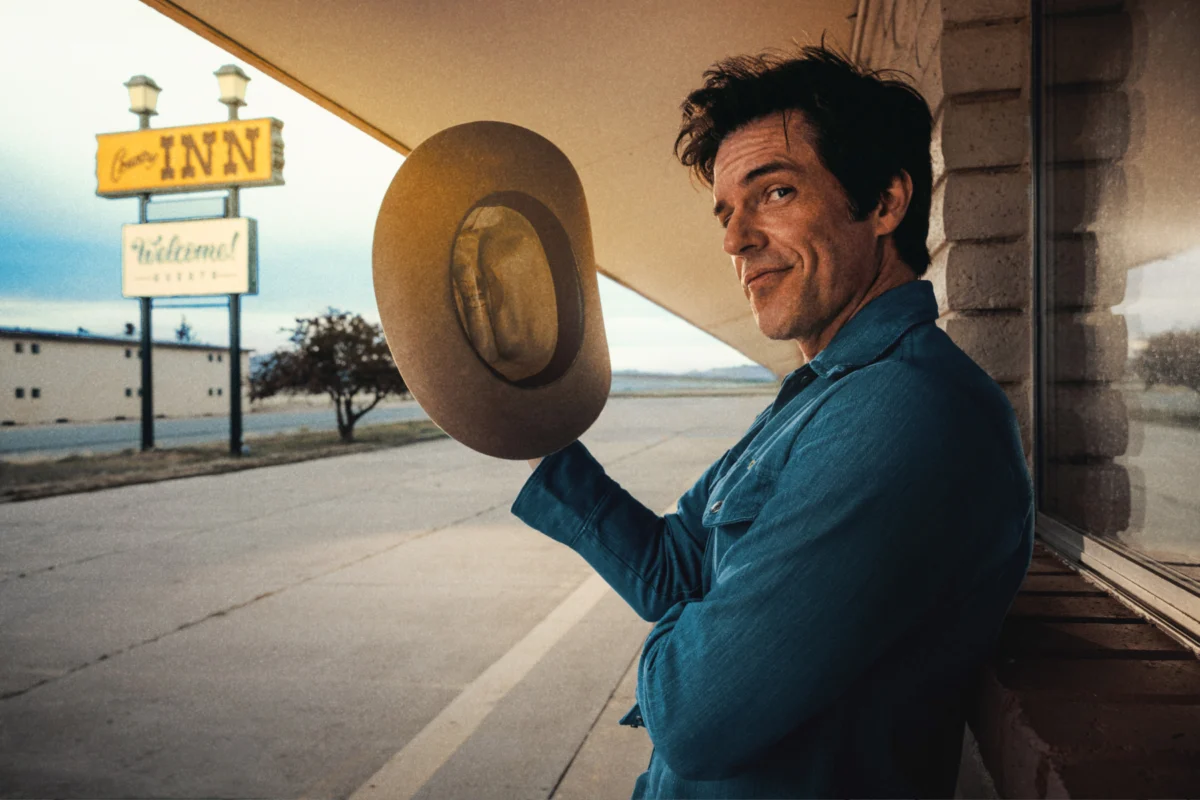
After more than a decade of silence on the solo front, Brandon Flowers is preparing to reintroduce himself to the world—not as the neon-clad, stadium-filling frontman of The Killers, but as a reflective, Americana-steeped songwriter. On Tuesday, June 23, the Las Vegas icon announced his highly anticipated third solo studio album, Thrasher, set for release on August 21 via Island Records.
The 10-track project marks a significant departure from the synth-heavy rock anthems that defined his band’s global dominance, opting instead for a sonic landscape shaped by the dust and heritage of the American West. As fans await the lead single, "Plans," arriving this Friday, the music industry is bracing for what promises to be one of the most intimate records of the year.
Main Facts: A New Chapter in the American Tradition
Thrasher serves as the long-awaited successor to Flowers’ 2015 solo effort, The Desired Effect. While that project leaned into 80s pop sensibilities and polished production, Thrasher is described by the artist as a return to his ancestral and geographical roots. Recorded at the historic RCA Studio A in Nashville, the album is a thematic exploration of memory, family, and the quiet, often overlooked gravity of small-town life.
The project features a stellar lineup of collaborators, including producers Shawn Everett and Jonathan Rado—both of whom have been instrumental in shaping the modern indie-rock soundscape. The instrumentation further underscores the shift in tone, with contributions from legendary guitarist David Rawlings, pedal steel virtuoso Bruce Bouton, and harmonica master Charlie McCoy. These elements combine to anchor the album in a sound that feels both timeless and deeply rooted in the soil of the American experience.
Chronology: From Nephi to Nashville
To understand Thrasher, one must look back to the formative years of Brandon Flowers. Long before he was selling out Wembley Stadium, a young Flowers was living in Nephi, Utah. It was in this small, high-desert town that he first encountered the foundational sounds that would eventually bloom into this new record.
- Early Childhood: Growing up in rural Utah, Flowers was surrounded by the "Country-Western" music his father favored—the gritty, narrative-driven records of Johnny Cash and Waylon Jennings.
- 2004–2015: The meteoric rise of The Killers diverted Flowers’ creative output toward the global stage, resulting in massive hits like "Mr. Brightside" and "Somebody Told Me." During this era, he released two solo albums: Flamingo (2010) and The Desired Effect (2015).
- 2015–2025: Following the success of his second solo record, Flowers focused heavily on The Killers’ touring and studio work. However, the seeds for Thrasher were being sown behind the scenes, as he began revisiting the music of his youth.
- 2026 (Present): The formal announcement of Thrasher marks the culmination of years of quiet reflection. Flowers spent much of the last year in Nashville, capturing the essence of the storytelling tradition he admired as a child.
Supporting Data: The Anatomy of the Record
The sonic architecture of Thrasher is built upon a foundation of organic instrumentation and narrative weight. By recording at RCA Studio A—a site synonymous with the golden age of country and folk music—Flowers intentionally sought to capture a "lived-in" sound.
The album’s composition is bolstered by the following key contributors:
- Shawn Everett: Known for his meticulous approach to production, Everett helps balance the expansive atmosphere of the tracks with the intimacy required for the subject matter.
- Jonathan Rado: A frequent collaborator who has helped bridge the gap between Flowers’ rock background and his new Americana trajectory.
- Session Musicians: The inclusion of David Rawlings (guitar), Bruce Bouton (pedal steel), and Charlie McCoy (harmonica) is a stylistic departure that confirms the genre-bending nature of the project.
According to preliminary reports, the 10-track list focuses on the intersection of personal loss and the preservation of childhood memory. Flowers has stated that these songs represent the stories he has carried with him throughout his career, finally finding their proper "skin" in the tradition of American songwriting.
Official Responses: "I Simply Found Room for More"
In an official trailer released alongside the announcement, Flowers addressed the inevitable question of whether this shift signifies an abandonment of his rock-and-roll identity. Driving through the landscapes of his youth in Utah, he offered a candid perspective on his artistic evolution.
"This is not me running away from rock and roll," Flowers stated in the clip. "I don’t want to replace my old songs. I simply found room for more."
He elaborated on his discovery of his father’s musical legacy, noting, "As I’ve gotten older, I’ve found my way back to my father’s music—’Country-Western’ (as he called it)—and discovered that the stories I carry really feel most at home in the skin of this beautiful American tradition."
This statement is a crucial indicator for his fanbase: Flowers is not rebranding, but expanding. By leaning into the narrative tropes of country and Americana, he is showcasing the versatility that has been present in his songwriting since the early days of his career, albeit often hidden beneath layers of synthesizers and driving percussion.
Implications: A Shift in the Cultural Landscape
The release of Thrasher arrives at a time when the boundaries between rock, country, and pop are increasingly porous. By stepping away from the stadium-rock machine, Flowers is positioning himself alongside other major artists who have successfully pivoted toward roots-oriented storytelling, such as Sturgill Simpson or Jason Isbell.
The Impact on The Killers
Industry analysts suggest that this project will not hinder the longevity of The Killers. On the contrary, it serves as a "reset" for Flowers, allowing him to return to his primary project with a renewed sense of purpose and a wider creative palette. Similar to the hiatuses taken by other major band leaders, this solo endeavor provides the space necessary to prevent creative burnout.
The Evolution of the "Small Town" Narrative
Thrasher is poised to become a touchstone for listeners interested in the intersection of geography and personal identity. By focusing on the specificities of his upbringing in Utah, Flowers is tapping into a universal theme: the search for meaning in the places that shaped us. For a generation of fans who grew up listening to his music, this record may serve as a bridge between the adolescent angst of Hot Fuss and the mature, reflective reality of middle age.
Artistic Longevity
Perhaps the most significant implication of Thrasher is what it says about Flowers’ future. In an industry that often demands artists repeat their past successes, Flowers is making a bold play for artistic longevity. By embracing the role of the "storyteller" rather than just the "frontman," he is ensuring that his music can evolve alongside his life, rather than being confined to the expectations of his younger self.
As August 21 approaches, the music world waits with bated breath. Whether Thrasher will become the definitive late-career masterpiece for Brandon Flowers remains to be seen, but the announcement alone is a reminder of his enduring status as one of the most compelling voices in modern music. Through his deep dive into the American tradition, Flowers is proving that while his sound may be shifting, the heart of his work remains as vital as ever.