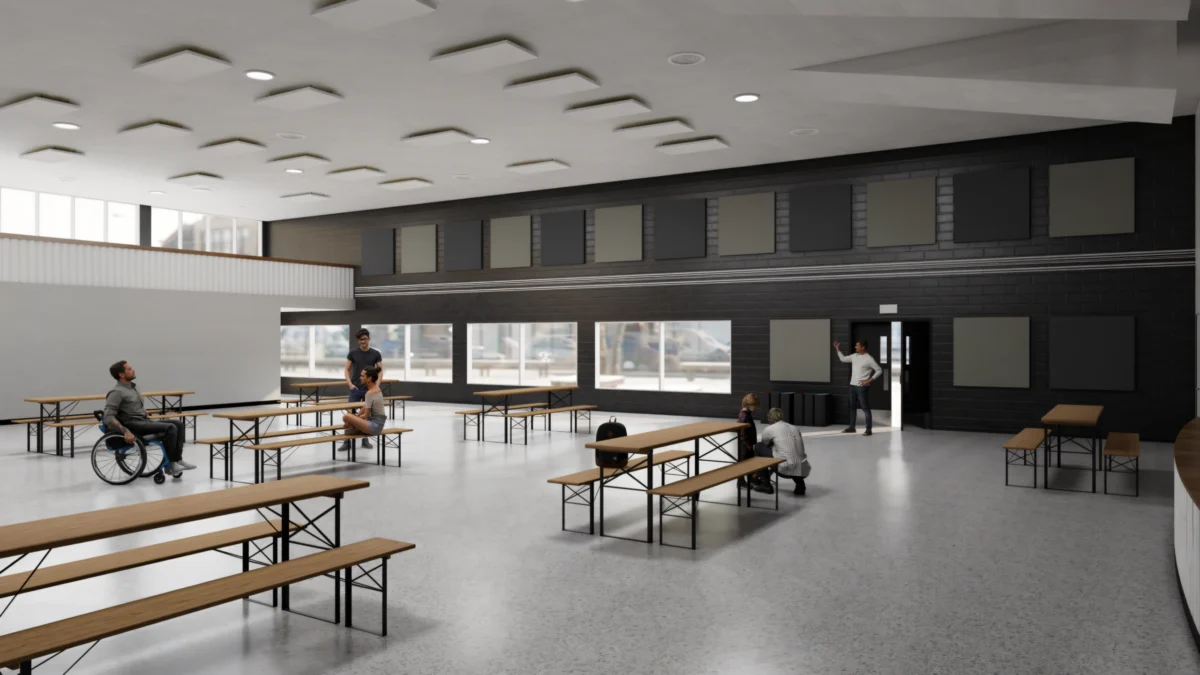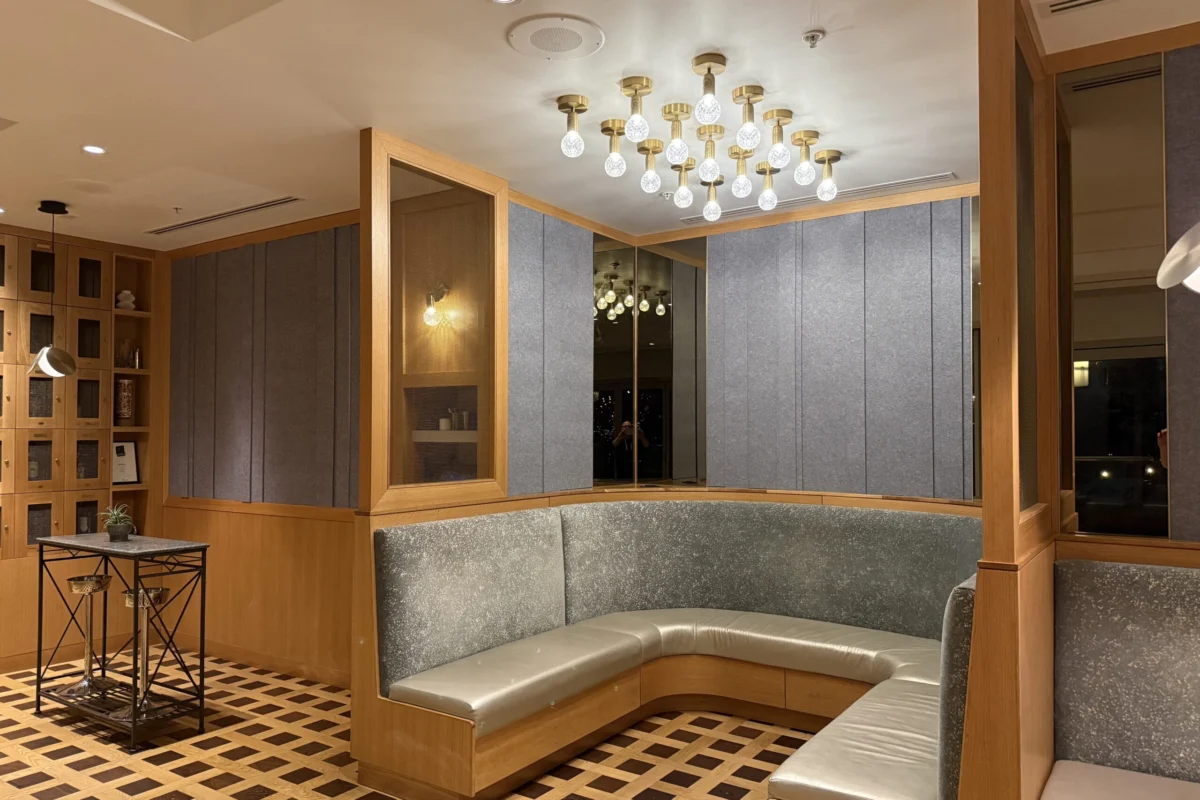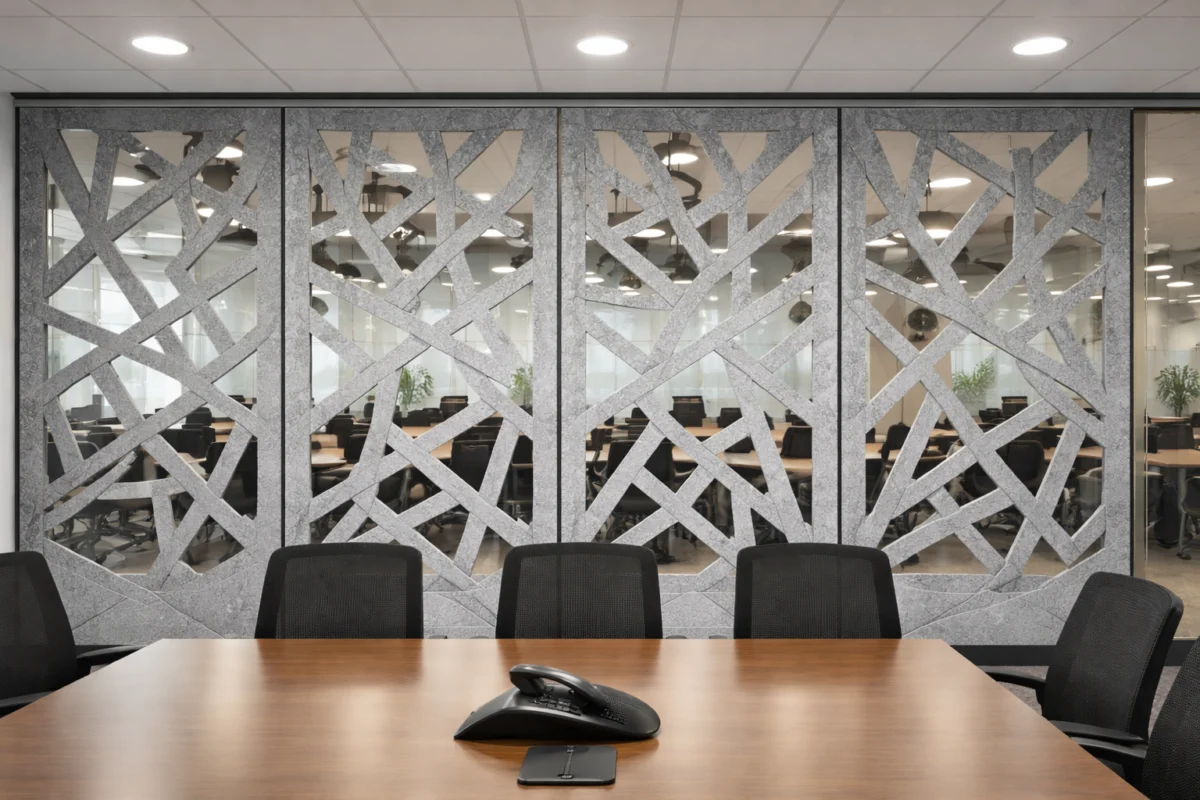
The architectural landscape of the 21st century is defined by light. From soaring floor-to-ceiling windows to glass-walled conference rooms, the design trend toward "daylighting"—the strategic use of natural light to enhance interior ambiance—has fundamentally reshaped the modern workplace. By blurring the lines between the exterior and interior, architects have succeeded in creating environments that feel expansive, connected, and energized.
However, this obsession with transparency has introduced a significant, often overlooked, byproduct: the acoustic "glass box" effect. As office designers prioritize hard, reflective surfaces like glass, metal, and polished concrete, they inadvertently create sonic environments rife with reverberation, flutter echoes, and compromised speech intelligibility. When words bounce off these surfaces, the resulting noise floor makes it difficult for employees to collaborate, attend virtual meetings, or maintain focus.
Primacoustic, a global leader in acoustic solutions, has recently addressed this tension between form and function. Through their specialized EcoScapes line of PET acoustic treatments, the company is demonstrating that architects no longer have to choose between the beauty of glass and the comfort of a quiet, professional workspace.
Main Facts: The Intersection of Aesthetics and Acoustics
The core challenge facing modern office design is the conflict between visual openness and acoustic privacy. Glass, while aesthetically pleasing, is acoustically inert; it does not absorb sound energy, but rather reflects it back into the room. In a space dominated by glass, sound waves bounce repeatedly, leading to a build-up of mid-to-high frequency reflections.
The Science of the Problem
- Reverberation Time (RT60): In rooms with extensive glass, the time it takes for a sound to decay by 60 decibels is often far too long, leading to a "muddy" sonic environment where words overlap and clarity is lost.
- Speech Intelligibility: High reverberation levels significantly lower the Speech Transmission Index (STI). In a teleconferencing era, this creates a barrier for remote communication.
- The Privacy Gap: Lack of sound absorption means conversations in one area of an open-plan office can easily bleed into another, compromising sensitive information.
Primacoustic’s approach to these issues utilizes Polyethylene Terephthalate (PET)—a polyester fiber material derived from recycled plastic bottles. By transforming this sustainable material into modular, high-density panels, Primacoustic provides a medium that traps sound energy rather than reflecting it.
Chronology: A Case Study in Boston
To understand how these solutions are implemented in real-world scenarios, one must look at a recent project involving a Boston-based pharmaceutical company. The client, working in a modern facility with high-end, minimalist design, found that their primary teleconferencing room was essentially unusable due to excessive echo.
Phase 1: Identifying the Acoustic Failure
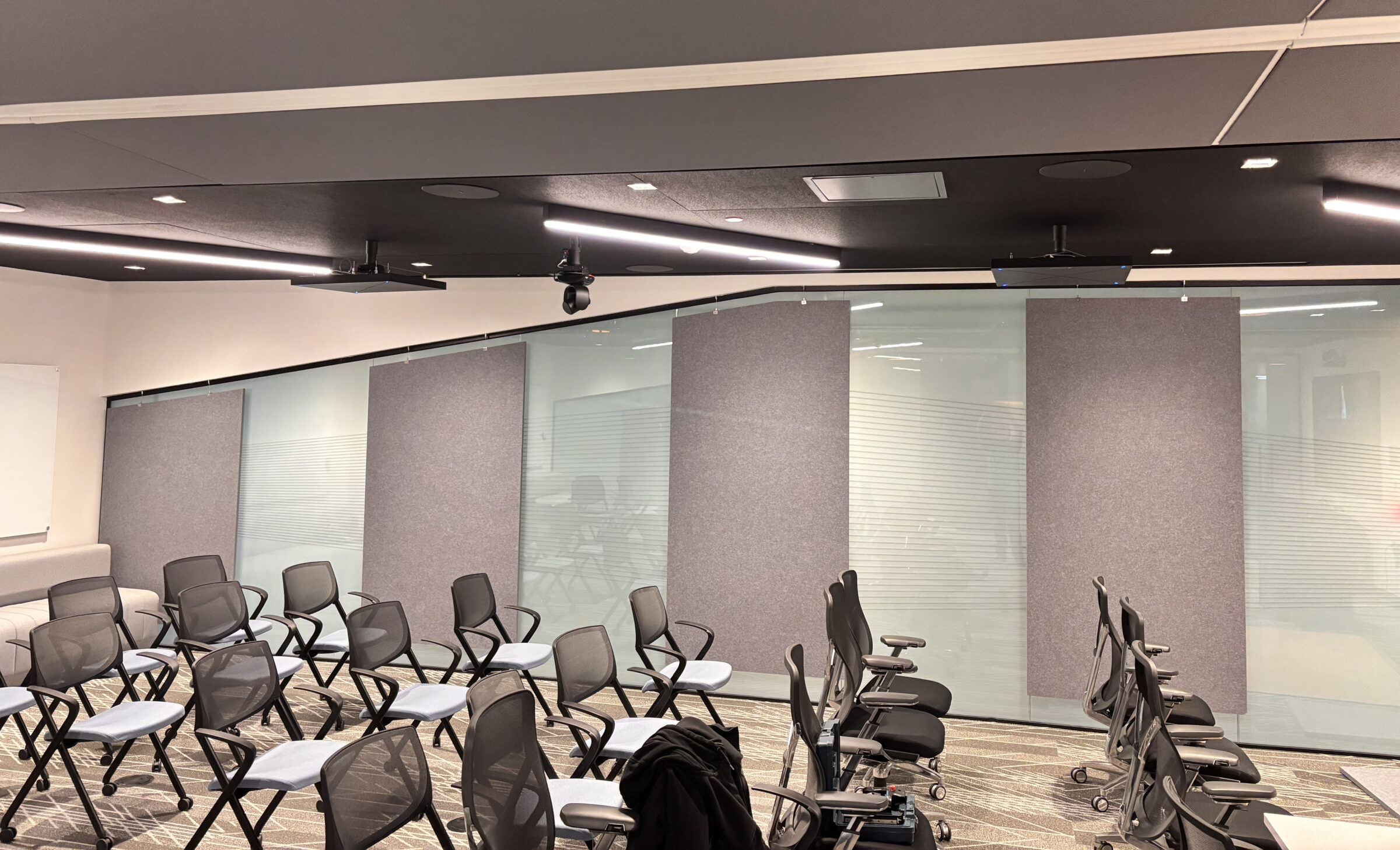
The room featured two long, parallel glass walls. The AV integrator, DGI Communications, identified that while the ceiling had some acoustic treatment, it was insufficient to combat the reflections generated by the expansive glass surfaces. The client was firm: they would not accept any structural modifications that detracted from the room’s clean, modern aesthetic, nor would they agree to ceiling-suspended baffles that might block light or look cluttered.
Phase 2: Engineering the Solution
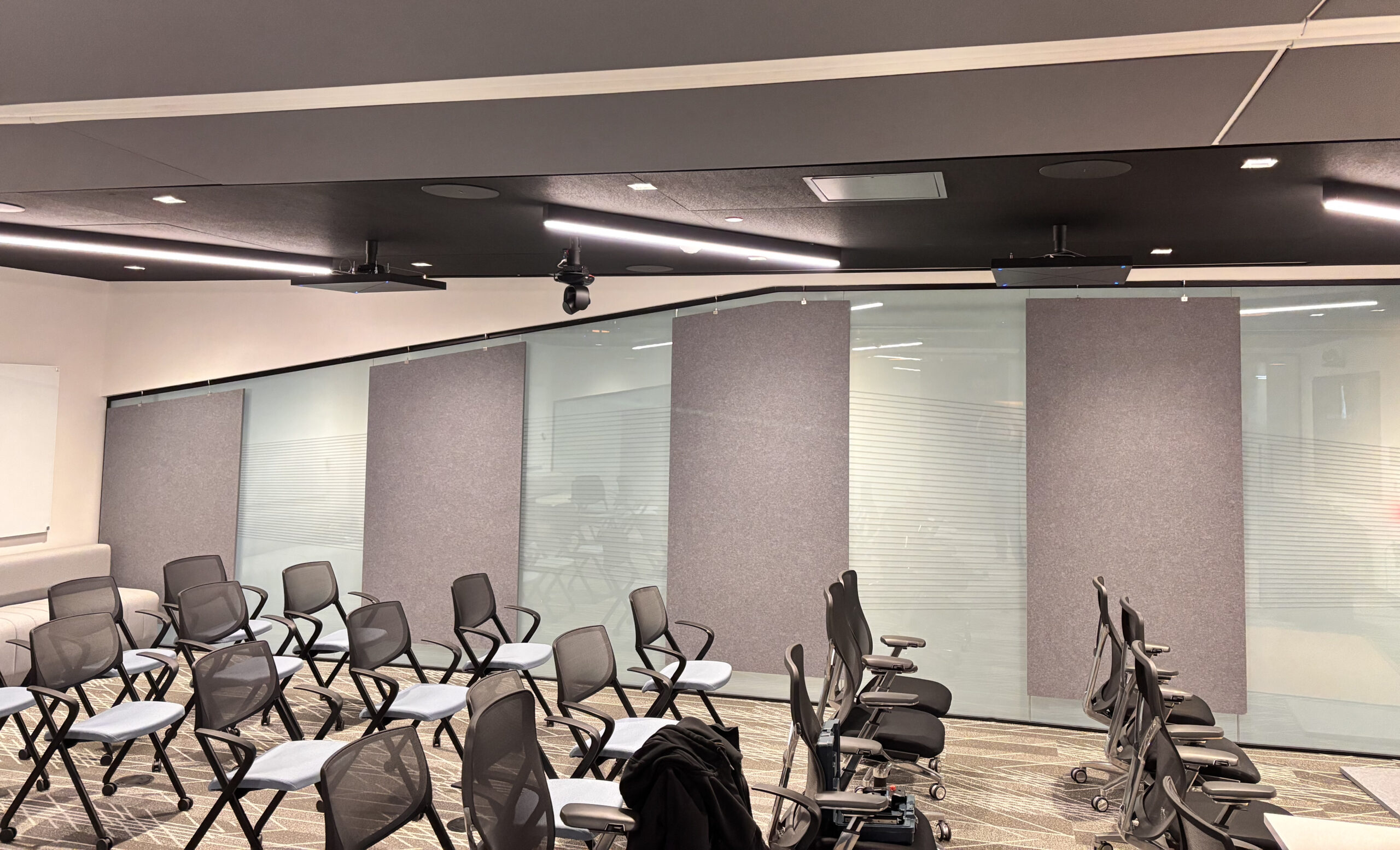
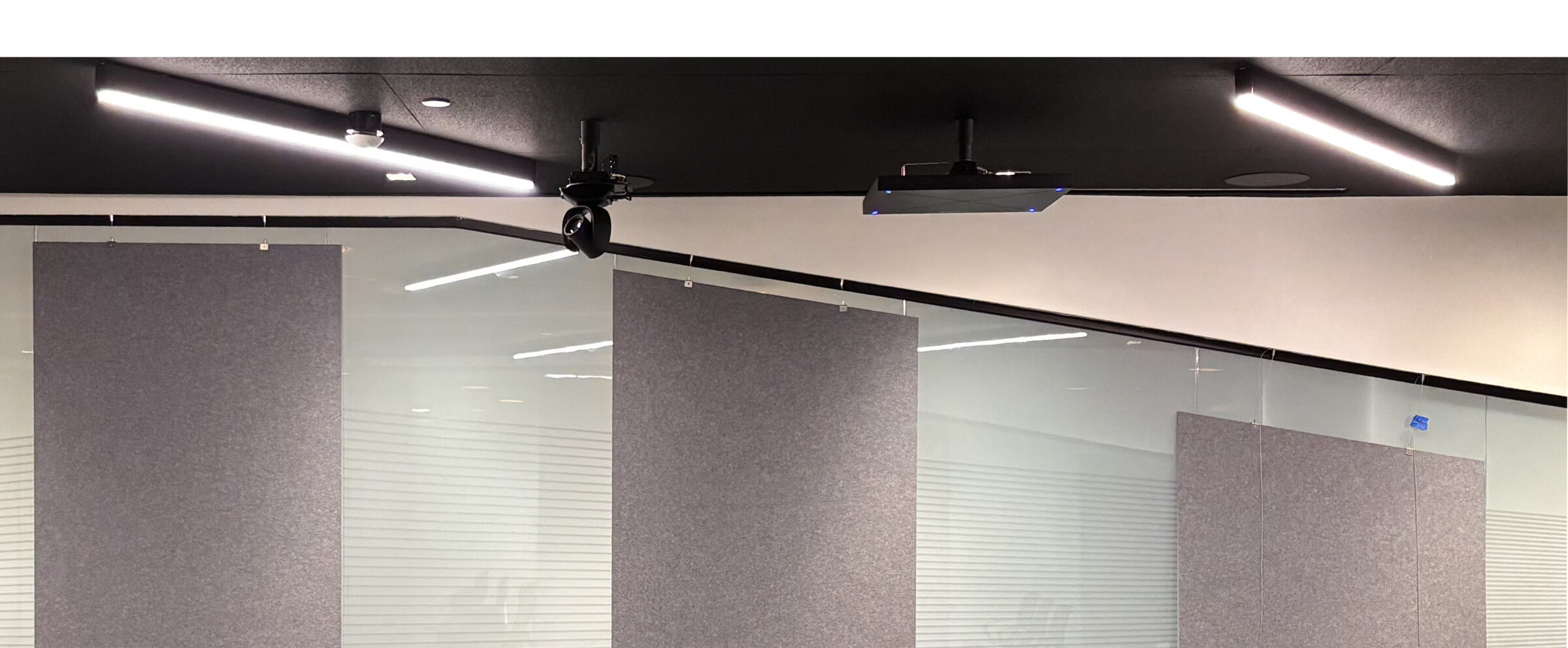
Primacoustic stepped in with a non-invasive, custom-engineered solution. Instead of covering the glass, they designed a system to "float" acoustic panels in front of it.
- Site Measurement: Panels were precision-cut on-site to match the exact angles and footprint of the room’s glass walls.
- Mounting Strategy: Hardware was anchored securely into the drywall above the glass line, allowing the panels to hang vertically.
- The Air Gap: A critical design decision was to leave a deliberate air gap between the panel and the glass. This gap serves a dual purpose: it maintains the visual "lightness" of the room and significantly increases the panels’ Noise Reduction Coefficient (NRC) by allowing sound waves to pass through the back of the material, effectively doubling the absorption efficiency.
Phase 3: Results and Optimization
By installing eight 4×8-foot panels (four per wall), the room reached the required level of sound dampening. The result was a dramatic improvement in speech clarity for video calls and a reduction in the "fatigue" factor often associated with high-echo environments.
Supporting Data: Why PET is the Material of Choice
The shift toward PET in acoustic design is not merely a trend; it is supported by structural and environmental data. As organizations prioritize ESG (Environmental, Social, and Governance) goals, the use of recycled materials has become a major factor in material procurement.
Key Performance Metrics of PET
- Acoustic Absorption: PET fibers are inherently porous, making them excellent at dissipating sound energy. They are particularly effective in the mid-to-high frequency range, where speech intelligibility is most critical.
- Sustainability: Because the material is manufactured from recycled plastic bottles, it is inherently eco-friendly. Furthermore, it is fully recyclable at the end of its lifecycle, contributing to LEED certification points for green building projects.
- Physical Versatility: Unlike traditional fiberglass or mineral wool, which requires fabric wrapping and frame construction, PET is rigid yet cuttable. It can be manufactured in a virtually infinite array of shapes, thicknesses, and colors.
- Safety and Maintenance: Primacoustic’s EcoScapes are fire-rated, non-toxic, and resistant to dust and moisture, making them suitable for high-traffic environments like hospitals, corporate boardrooms, and educational facilities.
Official Perspectives: The Value of Customization
The success of the Primacoustic/DGI Communications project underscores the growing demand for "bespoke" acoustic treatments. According to the Primacoustic engineering team, the era of "off-the-shelf" soundproofing is waning.
"We pride ourselves on providing personalized support from the initial sketch to final installation," a company representative noted. "Our goal is to ensure that the acoustic solution feels like a deliberate architectural choice rather than an afterthought. By working with the client’s architects, we can match the color palettes and design language of the space, ensuring that the technology is heard, but not necessarily seen."

This philosophy extends to their entire catalog. From the Broadway series—designed for high-fidelity recording environments—to the Archadia and EcoScapes lines designed for commercial office integration, Primacoustic maintains that acoustic health is a fundamental right of the modern workplace. The company’s "Signature Suite" now offers designer-grade fabrics and custom finishes, proving that the marriage of high-performance acoustics and interior design is finally reaching maturity.
Implications: The Future of the "Intelligent" Office
As we look toward the future of office design, the implications of this project are clear: the "Glass Office" is not going away, but it must evolve. The ability to integrate acoustic control into the visual fabric of a building is the next frontier of office productivity.
Implications for Architects
Architects who embrace early-stage acoustic planning can avoid the costly and often unattractive retrofits that occur when a space is found to be "too loud" post-construction. By considering the placement of acoustic PET panels during the design phase, the need for sound absorption can be treated as a creative design element—a feature wall, a sculptural element, or a ceiling detail—rather than a repair.

Implications for HR and Wellness
The correlation between a quiet environment and employee wellbeing is well-documented. High noise levels in an open office are a primary cause of workplace stress and burnout. By investing in professional-grade acoustic treatments, firms are not just improving sound quality; they are investing in the cognitive performance and mental health of their workforce.
The Role of AV Integrators
For integrators like DGI Communications, the lesson is clear: the job no longer stops at the microphone or the speaker. To provide a high-quality video conference experience, the room itself must be treated as an audio component. If the room is acoustically hostile, even the most expensive microphone will fail to capture clear audio.
Conclusion: A New Standard for Sonic Excellence
The project at the Boston pharmaceutical firm stands as a blueprint for the future of commercial interior design. It proves that by using innovative materials like PET, and by applying them with precision, engineering, and an eye for aesthetic detail, we can preserve the light-filled, open-plan architectures we love while simultaneously creating spaces that facilitate, rather than hinder, human communication.

As Primacoustic continues to push the boundaries of what is possible with their EcoScapes line, the focus remains on a singular, powerful mission: "We’re listening—be heard." For any business looking to balance the aesthetic demand for glass with the necessity of clear, private, and professional communication, the technology to bridge that gap is finally here. Whether it is through custom-cut panels, unique color-matching, or creative mounting systems, the path to a better-sounding workspace is as clear as the glass walls that defined the problem in the first place.
For those facing similar challenges, the technical resources are available to turn even the most reflective room into a sanctuary of clarity. Through collaboration between acoustic engineers, AV integrators, and facility managers, the modern office can finally achieve the balance it has long been missing.