The upcoming Fourth of July spectacle at San Antonio’s Alamodome, featuring the artist known as Ye (formerly Kanye West), has ignited a fierce political and cultural firestorm. As the city prepares to host one of the most polarizing figures in modern music, local leadership has officially moved to block the performance, citing a legacy of hate speech and antisemitic rhetoric that, they argue, stands in direct opposition to the values of “Military City USA.”
The Core Conflict: A City Divided
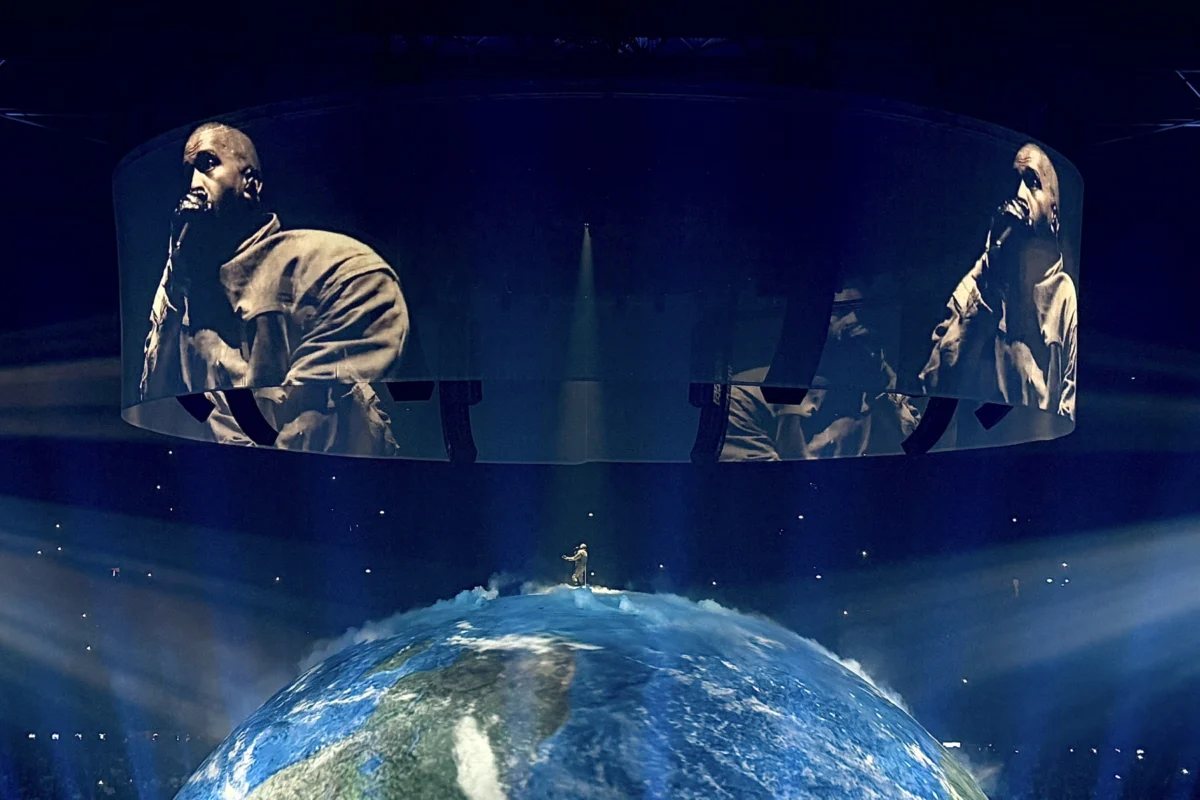
The controversy centers on a scheduled performance set for Independence Day, a date that carries profound national significance—especially as the U.S. approaches its 250th anniversary. Tickets for the event have been on sale via Ticketmaster, with prices ranging from $127.50 for standard upper-level seating to a staggering $1,461.25 for the “YE – Front Row Experience,” which promises fans proximity to the artist’s signature globe-shaped, in-the-round stage setup.
San Antonio Mayor Gina Ortiz Jones, a Democrat and U.S. Air Force veteran, broke her silence on the matter on June 20. In an unambiguous statement posted to social media, she called for the immediate cancellation of the event.
“Military City USA should not host someone with a record of hate speech and antisemitic comments in a city-funded facility like our Alamodome—not ever, and certainly not on July 4th, our Nation’s 250th birthday,” Ortiz Jones wrote. “Standing up to antisemitism is exactly what it takes to achieve a more perfect Union.”
A Chronology of Escalating Tensions
The push to cancel the San Antonio show is not an isolated incident but rather the latest chapter in a broader campaign to limit the artist’s access to public, taxpayer-funded venues.
- June 4, 2026: U.S. Senator Rick Scott (R-FL) issues a public condemnation of Ye’s scheduled performances in Tampa, Florida. Senator Scott cites the artist’s history of praising Nazi ideology and his 2025 decision to fund a Super Bowl advertisement that directed consumers to merchandise featuring swastikas.
- June 6, 2026: Ye performs at the GelreDome in Arnhem, Netherlands, as part of his ongoing international tour.
- June 20, 2026: Mayor Gina Ortiz Jones formally requests the cancellation of the San Antonio Alamodome date, citing the artist’s “vile” history of rhetoric.
- June 26, 2026: Scheduled performance dates in Tampa, Florida, approach amidst continued pressure from state officials.
- July 4, 2026: The contentious Independence Day date at the Alamodome.
- September 3-4, 2026: The artist is currently scheduled to return to the U.S. for homecoming shows in Chicago, Illinois.
Supporting Data and Historical Context
The current tour represents Ye’s first full-scale concert series in the current decade. However, the tour has been characterized by extreme inconsistency. While the rapper has successfully completed shows in major international markets including Mexico City, Istanbul, and various European cities, he has faced significant pushback elsewhere.
Promoters and local governments in France, Poland, and England have previously cancelled or moved shows due to concerns regarding security, public safety, and the reputational risk associated with the artist’s inflammatory comments.
The financial scale of these events is substantial. The Alamodome, a facility that can accommodate upwards of 70,000 spectators for in-the-round concert configurations, stands to generate significant revenue. However, critics argue that the “subsidy” provided by the use of city-owned infrastructure renders the municipality complicit in the artist’s message. Senator Rick Scott underscored this in his June 4 statement: “It is troubling that a stadium supported by taxpayer dollars would openly subsidize an event led by an artist known for pushing this dangerous, hateful rhetoric.”

Official Responses and Political Implications
The backlash against the tour is a rare example of bipartisan consensus, as both Republican Senator Rick Scott and Democratic Mayor Gina Ortiz Jones have utilized identical language to condemn the artist.
The arguments presented by these officials rely on three primary pillars:
- Values Alignment: The belief that public facilities represent the collective moral standard of a city or state.
- Safety and Security: Concerns that the presence of such a controversial figure could incite unrest or create a hostile environment for minority communities.
- Historical Sensitivity: The juxtaposition of the artist’s history of antisemitic comments with national holidays or state celebrations.
For the artist’s part, the focus remains on his creative output. On June 19, 2026, Ye released a deluxe edition of his latest album, Bully. The project features updated mixes and new tracks, including “OK” (featuring Don Toliver) and “Mission Control.” The release suggests a desire to maintain commercial momentum despite the mounting pressure to shutter his touring schedule.
The Broader Implications: Where Art Meets Governance
The struggle to keep Ye off the stage in San Antonio raises complex questions regarding the First Amendment, the nature of public-private partnerships, and the responsibilities of venue operators.
The Legal and Contractual Landscape
Most stadium bookings are governed by complex contracts that include morality clauses. However, invoking these clauses to cancel an event after tickets have already gone on sale is legally perilous. If the Alamodome were to cancel the contract unilaterally, the city could face breach-of-contract litigation. Conversely, allowing the show to proceed may result in ongoing protests and the loss of political capital for local officials who have staked their reputation on the cancellation.
The Impact on the Touring Industry
This situation sets a significant precedent for the touring industry. If elected officials successfully pressure venues to drop performers based on personal or political conduct, it may signal a shift in how concert promoters vet potential artists. The “cancel culture” vs. “free speech” debate is at the heart of this issue; supporters of the artist argue that his music should be separated from his personal views, while his detractors argue that his public platform has been used to propagate harm that cannot be ignored.
The Future of "Military City USA"
San Antonio, a city with a deep-rooted military culture, is particularly sensitive to rhetoric that targets marginalized groups. By framing the protest around the city’s identity as “Military City USA,” Mayor Ortiz Jones is appealing to a specific demographic that values patriotism and inclusivity. The outcome of this standoff will likely serve as a barometer for how American cities handle high-profile performers who are embroiled in social and political controversy.
As the Fourth of July draws closer, the eyes of the entertainment and political worlds are fixed on San Antonio. Whether the Alamodome holds firm to its contract or bows to the pressure of the Mayor’s office remains the defining question of this summer’s concert season. For now, the stage is set for a showdown that is as much about the soul of American public space as it is about the music itself.