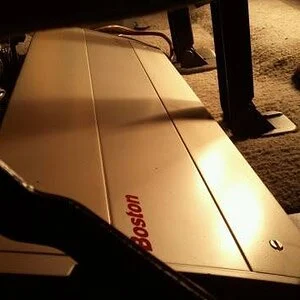
In the high-stakes world of automotive audio, the pursuit of sonic perfection often collides with the harsh reality of electrical physics. For enthusiasts pushing systems in the 3,000-watt range, the debate over how to sustain power has shifted dramatically. While the traditional gold standard—high-output alternators—remains a fixture of the community, a new wave of budget-conscious, high-performance battery technology is challenging the status quo.
As the cost of living rises and the hobby becomes more expensive, the car audio community is increasingly looking for "smarter" rather than "bigger" power solutions. Recent findings and user-tested data suggest that LiFePO4 (Lithium Iron Phosphate) batteries, particularly those in the "B-stock" category from brands like LiTime, are offering a viable, high-performance alternative to traditional lead-acid setups and expensive capacitor banks.
The Core Challenge: Sustaining 3,000 Watts
The central challenge for any car audio enthusiast running a 3,000-watt system is voltage stability. When an amplifier demands massive current to move large subwoofer cones, the vehicle’s electrical system must respond instantly. A voltage drop below 12.6V during a bass hit not only induces clipping—which can destroy expensive subwoofers—but also places undue stress on the vehicle’s primary charging system.
Historically, the "three-pillar" solution involved the "Big Three" wiring upgrade, a high-output (HO) alternator, and a massive lead-acid battery bank. However, as one enthusiast recently noted, the financial landscape has changed. With the average HO alternator costing upward of $380—not including the auxiliary battery support required to store that power—many hobbyists are finding themselves priced out of traditional high-end builds.
Chronology of a Power Shift: From Lead-Acid to Lithium
The shift in power storage can be traced through several distinct phases of hobbyist experimentation:
Phase 1: The Era of Hybrid Capacitors
For years, the industry relied on "hybrid" capacitors, often marketed as 5- to 10-farad units. These were designed to act as a buffer for short, violent bass transients. However, the consensus among experienced installers has shifted. Many now view these as an inefficient use of capital, often costing between $180 and $340 for performance that is arguably inferior to a dedicated lithium bank.
Phase 2: The DIY Lithium Boom
Approximately two years ago, the community saw a surge in DIY lithium builds. Enthusiasts began sourcing 16V cells to create custom banks. While promising on paper, the complexity of these builds proved to be a hurdle. Once the cost of high-quality cells, safety-critical isolators, and the necessary protective circuitry was tallied, the "DIY savings" largely evaporated. The added risk of building a power bank without professional-grade safety protocols pushed many back toward "plug-and-play" solutions.
Phase 3: The LiFePO4 Adoption
The current landscape is defined by the emergence of high-quality, factory-integrated LiFePO4 batteries. By leveraging grade-A cells and integrated Battery Management Systems (BMS), these units provide a stable, reliable, and cost-effective power source. Recent real-world testing has demonstrated that these batteries can sustain continuous output demands of nearly 90A, even during high-decibel play, without triggering thermal shutdowns.
Supporting Data: Why LiFePO4 is Changing the Math
The technical specifications of modern LiFePO4 batteries present a compelling case for the budget-conscious enthusiast.
The Performance Metrics
- Continuous Discharge: A standard 100AH/100A BMS LiFePO4 battery is capable of delivering a constant 100A, with a 250A burst capacity for up to 5 seconds. This is often sufficient to bridge the gap in a 3,000-watt system.
- Voltage Stability: Unlike lead-acid batteries, which suffer from a sharp voltage drop-off as they discharge, LiFePO4 maintains a consistent voltage curve, keeping amplifiers in their "sweet spot" for longer periods.
- Cost Efficiency: With "B-stock" units often available for $279–$319, these batteries offer a performance-to-dollar ratio that makes them highly attractive compared to the $500+ price tags of specialized car audio lithium banks (like the GV series).
The "B-Stock" Phenomenon
The procurement of "B-stock" (returned or slightly cosmetically imperfect) units has become a common strategy for savvy builders. These batteries often undergo rigorous inspection, ensuring that the internal cells meet original factory specifications while offering a significantly reduced price point. For the user, this means obtaining professional-grade energy storage for a fraction of the cost of new retail units.
Official Industry Perspective: The "HO Alternator" Myth
One of the most persistent debates in the audio community involves the necessity of high-output alternators. While industry manufacturers have long pushed the narrative that an HO alternator is a prerequisite for any system exceeding 1,500 watts, the reality is more nuanced.
For many, the installation of an HO alternator is an arduous task, requiring custom brackets, belt adjustments, and significant labor. In contrast, upgrading the battery bank—even if it involves installing a high-quality AGM battery under the hood and a lithium bank in the rear—is often a more modular, "install-friendly" approach.
As one experienced builder noted, the decision to opt for an HO alternator was often driven by youthful inexperience and the availability of disposable income. Now, facing the realities of mortgage payments and family life, the priority has shifted toward efficiency. "I was drawn in by all the pros and other people saying its dead necessary," they noted. "Now I’ve done much more research… battery options are simple and effective for anything under 3k watts."
Implications for the Future of Car Audio
The shift toward more efficient, lower-cost power solutions carries significant implications for the future of the hobby:
1. Accessibility for the Next Generation
By lowering the barrier to entry for high-wattage systems, lithium technology is democratizing the hobby. Enthusiasts who previously couldn’t afford a $1,000+ electrical upgrade can now achieve professional-level performance for less than half the cost.
2. A Focus on Engineering over "Brute Force"
The move away from simply throwing larger alternators at a system represents a move toward better engineering. Enthusiasts are now more focused on wire gauge, impedance matching, and voltage regulation rather than just raw amperage.
3. The Need for Standardization
Despite the success of brands like LiTime, there remains a need for better communication between the battery industry and the car audio sector. Many battery manufacturers do not fully grasp the high-current demands of automotive amplifiers, often leading to a lack of detailed documentation. As the market grows, we can expect to see more "audio-specific" lithium solutions that bridge this communication gap.
Conclusion
The pursuit of high-performance car audio is no longer solely about the most expensive equipment. It is about the intelligent application of technology. The data clearly shows that for systems under 3,000 watts, a properly executed lithium-based electrical system offers a superior, more cost-effective alternative to traditional setups.
Whether you are a seasoned competitor or a weekend hobbyist, the lesson is clear: do the research, look beyond the marketing, and prioritize electrical stability. As the technology continues to evolve, the "roasted" ideas of today may very well become the industry standards of tomorrow. The electrical infrastructure of your vehicle is the foundation upon which your sound system is built—and in 2026, the foundation is looking more efficient, more reliable, and more accessible than ever before.