Welcome to "Dodd’s Discoveries"
In the vast, sprawling landscape of high-resolution digital music, discerning listeners often find themselves overwhelmed by the sheer volume of choices. To bridge the gap between quality and discovery, NativeDSD is proud to present "Dodd’s Discoveries," a recurring review series curated by Senior Music Reviewer Bill Dodd.
This series is designed to act as a compass for audiophiles, highlighting the most compelling, sonically superior, and musically significant albums entering the catalog. Each installment focuses on Dodd’s latest selections, offering deep dives into the artistry behind the recording. As an added incentive for the community, NativeDSD offers the featured albums at a significant discount—40% off—during the review cycle, allowing listeners to experience top-tier performances without breaking the bank. Readers are encouraged to visit the NativeDSD portal to explore the full archive of Dodd’s recommendations and secure these current discounted offerings.
The Spotlight: A Masterful Take on Stravinsky’s Neoclassical Period
In our current feature, Bill Dodd turns his attention to a stunning new recording of Igor Stravinsky’s neoclassical works: Apollo Musagete, Dumbarton Oaks, and the Concerto in D. Performed by the Camerata Salzburg under the baton of Giovanni Guzzo, this album serves as a poignant reminder that Stravinsky’s legacy extends far beyond his "Big Three" ballets.
While The Rite of Spring, The Firebird, and Petrushka remain undisputed cultural icons—revered for their massive orchestrations and earth-shattering impact—Dodd argues that the neoclassical compositions represent a more nuanced, intimate, and perhaps even more beloved facet of the composer’s genius.
The Myth of the "Cold" Neoclassicist
For many, the term "neoclassical" serves as a deterrent. It evokes images of angular, mechanical, and emotionally detached musical landscapes. Dodd reflects on his own journey, noting that he was well into his twenties before he truly unlocked the richness of Stravinsky’s work between 1920 and 1950.
"Neoclassical is a term that often scares people away," Dodd observes. "They may think of it meaning angular, cold, or mechanical. While these works are certainly structured and possess a defined, driving rhythm, they are fundamentally not ‘cold.’"
By moving away from the gargantuan forces of his early ballets, Stravinsky found a new voice. This period was marked by a return to clarity, wit, and structural elegance—a reaction against the sprawling romanticism that had defined the preceding century.
Chronology: Stravinsky’s Evolution from Primitive Power to Structural Elegance
To understand the significance of this new release, one must look at the trajectory of Stravinsky’s career.
The Explosive Era (1910–1913)
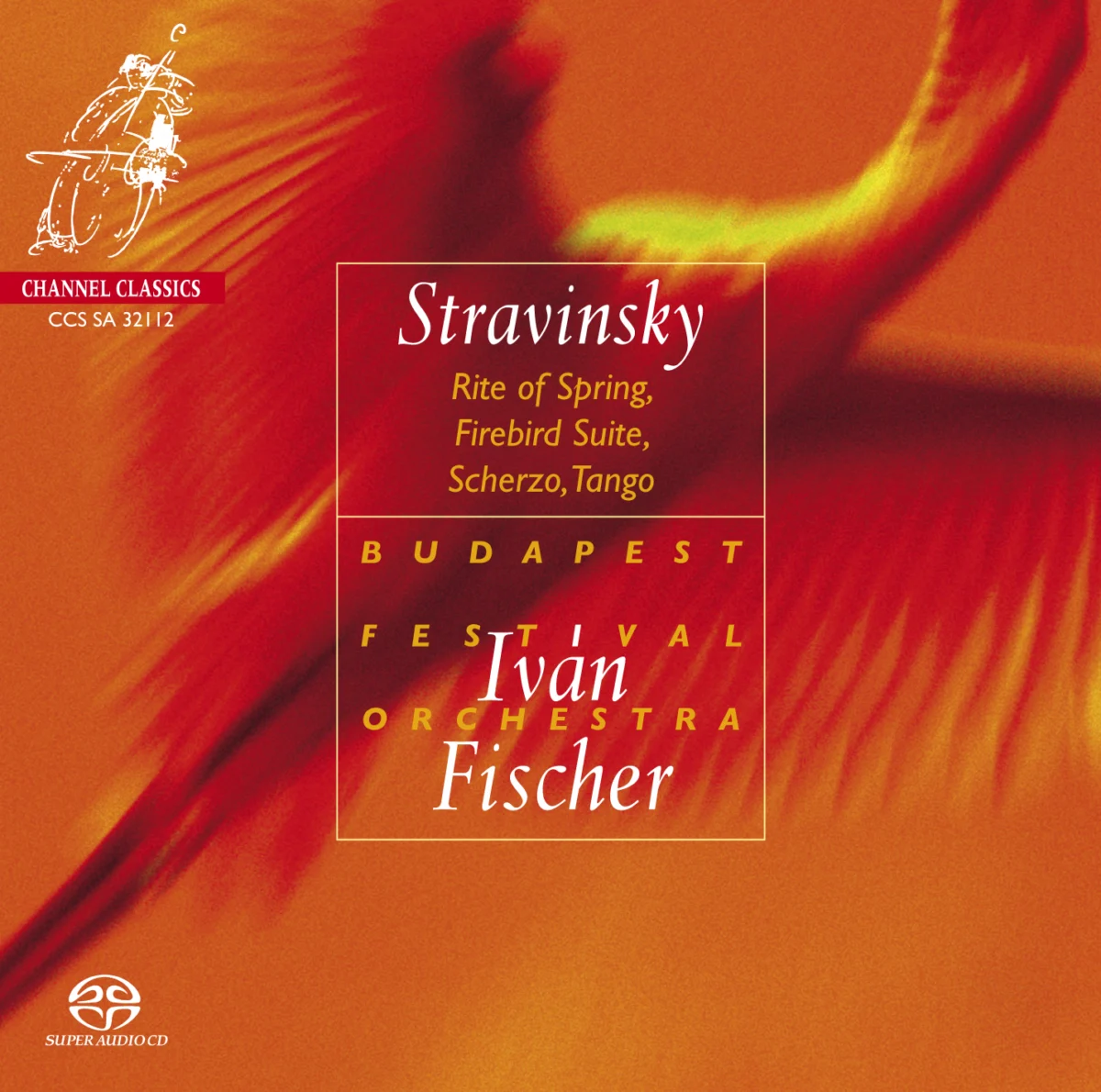
The early 20th century was defined by the "Big Three." The Firebird (1910), Petrushka (1911), and The Rite of Spring (1913) shattered the conventions of Western music. These works were designed for massive orchestras, featuring complex polyrhythms and visceral, primitive energy that shocked audiences in Paris and beyond.
The Transition (1920–1950)
Following the upheaval of the First World War, Stravinsky’s aesthetic shifted. He began to draw inspiration from the Baroque and Classical eras, utilizing cleaner textures and more precise instrumentation. It was during this time that he composed Apollo Musagete (1928), a work of serene beauty that serves as a cornerstone of the neoclassical style.
This was followed by Dumbarton Oaks (1938), a chamber concerto that mirrors the spirit of Bach’s Brandenburg Concertos, and the Concerto in D (1946). These pieces represent a refinement of Stravinsky’s musical vocabulary, prioritizing balance and intellectual rigor over raw, chaotic power.
The Codification of Style
For decades, the standard for interpreting these works was set by the CBS Records cycle, where Stravinsky himself conducted his own compositions. This massive project not only introduced these later works to the general public but effectively "codified" the performance practice. Musicians began to understand exactly how Stravinsky intended these works to be played: with precision, rhythmic snap, and an utter lack of gratuitous sentimentality.
Supporting Data: Why the Camerata Salzburg Recording Matters
The recent release by the Camerata Salzburg, led by Giovanni Guzzo, is being hailed by Bill Dodd as a definitive modern interpretation.
Musical Excellence
The Camerata Salzburg is a collective of virtuosos who possess an innate understanding of the neoclassical language. They avoid the trap of playing these works with too much "heaviness," opting instead for a nimble, alert, and vibrant approach that highlights the wit and intricate counterpoint inherent in the scores.
The Sonic Dimension: A Triumph of Engineering
A key component of this recommendation is the work of legendary recording engineer Jared Sacks. Known for his commitment to high-resolution, natural sound, Sacks has captured the Camerata Salzburg with startling transparency.
"Jared Sacks has outdone himself in capturing sound so real that you will start looking for the players," Dodd notes. In an era of over-processed, compressed audio, this recording stands out for its three-dimensional imaging and the sheer presence of the ensemble. It is a benchmark for how orchestral music should be captured in the modern era.
Official Perspective: The Voice Behind the Review
Bill Dodd’s authority as a reviewer is rooted in a lifetime of deep immersion in both music and high-fidelity audio. Living in the Portland, Oregon area, Dodd’s background is a unique blend of professional broadcasting and a lifelong passion for classical repertoire.
His resume includes a successful career as a morning radio personality in San Francisco—an experience that honed his ability to communicate complex ideas with clarity and charisma. Yet, despite his professional life being centered on popular music, his personal listening habits have always skewed toward the classical canon, complemented by a deep appreciation for jazz legends like Miles Davis and Dave Brubeck, as well as rock icons like The Who and Led Zeppelin.
This eclectic background allows Dodd to bring a fresh perspective to classical music. He hears the rhythmic drive of a jazz record in a Stravinsky concerto and the raw energy of a rock track in a Bartók string quartet. This holistic approach makes his recommendations particularly valuable to the modern listener.
Implications: The Future of Classical Discovery
The success of this album—and the enthusiasm with which it is being received—carries significant implications for the future of the classical music industry.
- The Shift to Niche Excellence: The popularity of the "Dodd’s Discoveries" series highlights a shift in how audiences discover music. Listeners are increasingly looking to trusted curators rather than algorithm-driven playlists to find high-quality recordings.
- The Renaissance of High-Resolution Audio: As streaming services prioritize convenience, companies like NativeDSD are proving that there is a massive, dedicated audience for high-resolution, uncompressed audio. The technical quality of the Camerata Salzburg recording proves that audiophile-grade sound is not just a luxury—it is essential for a fully immersive listening experience.
- Redefining "Neoclassical": By championing these works, reviewers like Bill Dodd are successfully dismantling the misconception that Stravinsky’s later music is inaccessible. As more listeners engage with Apollo Musagete and the Concerto in D, we are likely to see a resurgence of these works in concert halls and personal libraries alike.
Final Thoughts
In his review, Bill Dodd makes a compelling case for the enduring power of Stravinsky’s neoclassical period. With the Camerata Salzburg’s impeccable performance and Jared Sacks’ masterful engineering, this recording is not merely a document of music history; it is a living, breathing experience that demands to be heard.
As we continue to navigate the digital age, it is the guidance of experts like Dodd—who combine deep technical knowledge with a genuine, infectious love for the art form—that will ensure that the greatest works of the past continue to find new life in the future. Whether you are a long-time Stravinsky enthusiast or a newcomer looking for your next sonic adventure, this album serves as the perfect entry point. Don’t miss the chance to experience this masterwork at the reduced rate currently available through the NativeDSD store.