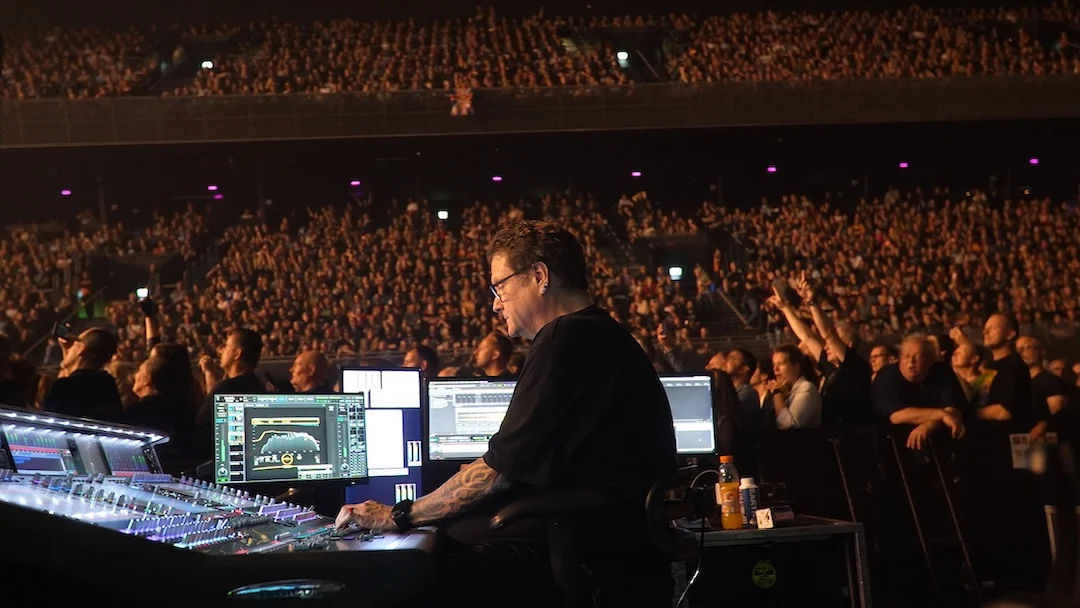
MILAN, ITALY — As the sun sets over the San Siro Stadium, the air is thick with the anticipation of 80,000 fans. The iconic gallop of Steve Harris’s bass is about to shake the foundations of Milan, but before a single note is struck, a different kind of precision is being refined at the Front of House (FOH) position. Iron Maiden, a band that has defined the heavy metal genre for over four decades, is currently traversing Europe on their 2026 stadium tour. While the spectacle on stage involves giant mechanical mascots and pyrotechnics, the technical marvel behind the mixing desk is equally ambitious.
At the helm of this sonic voyage is Ken “Pooch” Van Druten, Iron Maiden’s longtime FOH engineer. For the 2026 circuit, Pooch has integrated a sophisticated array of new technology, most notably the Waves LiveBox, to tackle the unique acoustic challenges of stadium-level sound reinforcement. By bridging the gap between traditional SoundGrid processing and third-party VST3 plugins, Van Druten is setting a new benchmark for live vocal clarity and system stability.
Main Facts: The 2026 Rig Architecture
The current Iron Maiden tour represents a pinnacle of live sound engineering, blending massive analog-style power with cutting-edge digital flexibility. The FOH position is anchored by the DiGiCo Quantum 7, a console widely regarded as the industry standard for high-input, high-stakes touring. However, the true innovation of the 2026 setup lies in the hybrid processing environment Van Druten has constructed.
The Hybrid Processing Core
Van Druten’s setup utilizes two distinct but interconnected digital ecosystems:
- Waves SuperRack SoundGrid: This serves as the primary engine for the majority of outboard plugins, handling buses, individual instrument inputs, and time-based effects.
- Waves LiveBox: The newest addition to the rack, this unit allows for the seamless integration of third-party VST3 plugins. It operates on a completely separate network from the SoundGrid system, providing a layer of redundancy and specialized processing power.
Connectivity and Integration
The integration of these systems is a masterclass in modern networking. While the SuperRack SoundGrid handles the bulk of the "heavy lifting," the LiveBox is connected via a dedicated Dante network. This requires a Dante 64 card installed directly into the DiGiCo Quantum 7 console. By separating these two networks, Van Druten ensures that the failure of one system does not compromise the other, a necessity when performing in front of stadium-sized audiences where technical hitches are not an option.
Chronology: A Nine-Year Technical Journey
Ken Van Druten’s tenure with Iron Maiden began nearly a decade ago, and his approach to their sound has evolved alongside the band’s increasingly complex stage productions.
The Early Years (2017–2020)
When Pooch first took the reins, the focus was on transitioning the band’s legacy sound into a more modern digital workflow without losing the "weight" of their classic records. During the Legacy of the Beast tour, the focus was on establishing a rock-solid foundation using DiGiCo SD-series consoles and early Waves integration.
The Quantum Shift (2021–2025)
As Iron Maiden’s stage shows grew to include more elaborate ramps and thrusts, the acoustic environment became more hostile. The adoption of the DiGiCo Quantum 7 allowed for greater processing depth, particularly the Mustard and Nodal processing features, which gave Pooch more control over what the band heard in their monitors versus what the audience heard in the house.
The 2026 European Tour
The current tour, which moved from Milan to Paris in mid-June 2026, marks the introduction of the "open-source" plugin philosophy. By adding the Waves LiveBox, Van Druten has moved beyond the "walled garden" of specific plugin formats, allowing him to use boutique software like Alpha Labs’ DeFeedback—a tool that has become the linchpin of the 2026 vocal sound.
Supporting Data: The Vocal Chain and Feedback Management
The primary motivator for the gear upgrade was the physical layout of the Iron Maiden stage. Bruce Dickinson, a vocalist known for his boundless energy, frequently utilizes ramps that extend to the far left and right of the stage. These ramps place him in close proximity to—and sometimes directly in front of—the main PA hangs.
The Feedback Challenge
"With Iron Maiden, there are ramps that come out on the right and left-hand side of the stage that put vocalist Bruce Dickinson almost in the PA," Van Druten explained. This proximity creates a nightmare scenario for any engineer: the high-volume output of the stadium speakers bleeding back into Dickinson’s microphone, causing catastrophic feedback loops.
The Alpha Labs Solution
To combat this, Van Druten turned to Alpha Labs’ DeFeedback VST3 plugin, hosted on the Waves LiveBox.
- Performance: The LiveBox allows for multiple instances of the DeFeedback plugin with near-zero latency.
- Precision: Unlike traditional graphic EQs which "hack away" at the vocal tone to stop feedback, DeFeedback uses intelligent algorithms to identify and suppress ringing frequencies without altering the character of Dickinson’s voice.
The Comprehensive Vocal Chain
Once the feedback is managed via the LiveBox, the signal enters a sophisticated chain within the Waves SuperRack SoundGrid:
- Waves CLA-2A: Provides smooth, optical-style compression to level out Dickinson’s dynamic range.
- Waves C6 Multiband Compressor: Manages frequency-specific dynamics, essential for a singer who moves between a low growl and high-pitched operatic screams.
- Waves F6 Dynamic EQ: Used for surgical tonal shaping that responds to the intensity of the performance.
- Waves SSL EQ: Adds the classic British console "sheen" and character.
- Waves X-Feedback: Acts as a secondary, failsafe backup to the primary DeFeedback system.
- Second Waves F6: A final stage of overall dynamic control to ensure the vocal sits perfectly atop the triple-guitar onslaught of Smith, Murray, and Gers.
Official Responses: The Philosophy of Reliability
In the world of high-level touring, innovation is often tempered by the need for absolute reliability. Ken Van Druten’s gear choices are dictated by a philosophy of consistency.
"We spend a lot of time choosing gear that is consistent, doesn’t fail, and keeps going," Van Druten remarked during the Milan setup. This sentiment is echoed by the crew and the manufacturers. Waves Audio has designed the LiveBox specifically for this "mission-critical" environment, recognizing that engineers like Pooch need the creative freedom of VST3 plugins but the stability of a dedicated hardware rack.
Van Druten emphasizes that the LiveBox isn’t just about having "more" plugins; it’s about having the right plugins. "It’s really a game changer; it’s become a lot better now. I just can’t get the same amount of instances on DeFeedback without the Waves LiveBox, so this setup is important for me."
The band’s management and technical directors have supported this evolution, noting that as the show’s visual scale increases, the audio must remain clear and intelligible, even in the "nosebleed" seats of a massive European stadium.
Implications: The Future of Live Sound Processing
The success of Van Druten’s 2026 rig has significant implications for the live sound industry at large.
1. The Death of the "Plugin Proprietary" Era
For years, live engineers were limited to the plugins supported by their console’s specific processing engine (e.g., Waves SoundGrid or Avid AAX). The introduction of stable, low-latency VST3 hosting via hardware like the LiveBox suggests a future where the "studio" and "live" worlds are fully merged. Engineers can now use the exact same tools in a stadium that they used in the recording studio.
2. Network Segmentation as a Safety Standard
Van Druten’s use of separate networks for SoundGrid and Dante/LiveBox sets a new precedent for redundancy. By isolating third-party VST3 processing from the core system, he ensures that a software crash in a non-native plugin won’t take down the entire audio feed. This "sandbox" approach is likely to become standard practice for major tours.
3. Managing the Modern Stage Design
As stage designs become more immersive and "thrust-heavy," the challenges faced by Bruce Dickinson and Pooch will become more common. The ability to use advanced AI-driven feedback suppression in real-time allows artists more freedom to interact with the crowd without compromising the sonic integrity of the show.
4. Sustainability of Legacy Acts
For veteran bands like Iron Maiden, maintaining a high-fidelity sound is key to their longevity. As the members age and the venues grow, the technology must work harder to preserve the "magic." Van Druten’s 2026 rig proves that with the right combination of experience and emerging technology, the "Beast" can sound as ferocious in 2026 as it did in 1982.
As Iron Maiden prepares to take the stage in Paris later this week, the technical foundation laid by Ken “Pooch” Van Druten stands as a testament to the invisible artistry of live sound. Through the strategic use of the DiGiCo Quantum 7 and the Waves LiveBox, the "Scream for me, Milan!" heard through the PA was not just a cry of metal tradition, but a crystal-clear triumph of modern engineering.