The global excitement surrounding major international football tournaments inevitably exposes a growing friction at the heart of modern home entertainment technology. For years, television manufacturers and broadcasters have championed the transition to Ultra High Definition (UHD) 4K resolution and High Dynamic Range (HDR) formats. Yet, as millions of fans gather around their state-of-the-art displays, an unexpected technological bottleneck has forced a compromise: viewers are actively choosing lower-resolution high-definition (HD) feeds over pristine 4K streams to avoid the dreaded "spoiler effect" caused by broadcast latency.
For owners of premium audio-visual equipment, such as flagship Sony OLED televisions paired with Sky Stream IP-delivery boxes, major sporting events have historically served as the ultimate showcase for picture quality. However, the transition from traditional terrestrial or satellite broadcasting to over-the-top (OTT) internet streaming has introduced a significant delay in signal transmission. This delay has transformed the simple act of watching a live match into a race against the reactions of neighboring households, prompting a reassessment of what matters more to the modern sports enthusiast: visual fidelity or temporal immediacy.
1. Main Facts: The Latency vs. Resolution Conflict
At the center of this broadcasting challenge is the discrepancy between the delivery speeds of traditional linear television and modern internet protocol television (IPTV) services. During high-profile fixtures, such as those featuring national teams, viewers watching on streaming platforms regularly experience delayed playback compared to those watching via traditional RF (radio frequency) signals.
The Source of the Delay
Traditional digital terrestrial television (DTT), marketed in the United Kingdom as Freeview, delivers live broadcasts with a minimal delay of approximately 8 to 10 seconds behind the actual pitch action. In contrast, digital streaming services—such as the BBC iPlayer or ITVX—and internet-based hardware packages like Sky Stream, operate with a broadcast lag that typically ranges between 30 and 40 seconds.
The Real-World Impact
This 30-second discrepancy manifests in real-world scenarios as a spoiler. During high-stakes matches, such as a crucial England encounter, streaming viewers are frequently alerted to goals, penalties, or red cards by the cheers or groans of neighbors watching via terrestrial aerials or satellite dishes long before the action occurs on their own screens.
The Broadcaster Solution
To mitigate this issue, television providers have begun introducing specialized low-latency channels. Sky, for instance, launched temporary "Real Time" versions of BBC One HD, ITV1 HD, and ITV4 HD during major tournament periods. These channels are engineered to reduce latency by up to 22 seconds, bringing the stream closer to the terrestrial benchmark. However, this latency reduction comes at a cost: these real-time channels are capped at standard high definition (HD), requiring viewers to sacrifice the visual benefits of 4K resolution to ensure they watch the match in near-real-time.
2. Chronology of the Streaming Latency Crisis
The evolution of sports broadcasting over the last two decades explains how the industry arrived at this technological compromise.
[Analog/Early Digital] ----> [The UHD & 4K Push] ----> [The IPTV Transition] ----> [The Low-Latency Response]
  Minimal lag (~5-10s)         High visual quality      Severe latency (30-40s)      Hybrid channels (HD/Low-lag)
  via RF & Satellite           via OTT streaming        "Spoiler" epidemic           Resolution vs. speed trade-off
The Linear Era (Pre-2010s)
In the eras of analog broadcasting and early digital switchover, live sports delivery was highly synchronized. Whether receiving signals via an analogue aerial, digital terrestrial Freeview, or digital satellite (Sky Q), the variance in latency between households was negligible—usually under three seconds. Viewers across a neighborhood experienced key moments simultaneously.
The Push for Ultra High Definition and HDR (2010s–Present)
As display technology transitioned from LCD to OLED and QLED, manufacturers and broadcasters sought content that could leverage these advanced panels. The BBC led the charge with experimental and eventually structured 4K HDR streams on BBC iPlayer, using the Hybrid Log-Gamma (HLG) format. This offered unprecedented clarity, deeper contrast, and more vibrant colors, making live sports feel immersive.
The IPTV Migration and the "Spoiler" Epidemic
In the late 2010s and early 2020s, pay-TV operators and public broadcasters began shifting their infrastructure away from satellite dishes and terrestrial antennas toward pure IP-based delivery (e.g., Sky Glass, Sky Stream, and standalone streaming apps). While this simplified installation and lowered hardware costs, it decoupled the broadcast from a unified delivery network, introducing packet delivery variables and buffering protocols that expanded latency to unprecedented levels.
The Emergency Intervention
As public frustration mounted during major tournaments—highlighted by instances during Euro and World Cup campaigns where social media notifications and external noise ruined the suspense of live matches—operators were forced to act. This culminated in the deployment of optimized "Real Time" streaming profiles, prioritizing speed over resolution to preserve the shared, live nature of sports.
3. Supporting Data and Technical Analysis
To understand why this delay occurs, it is necessary to examine the technical pipeline of modern video encoding and delivery. The latency of a broadcast is determined by the cumulative time taken at each stage of the broadcast chain:
$$textTotal Latency = textIngest & Encoding + textPackaging + textCDN Distribution + textPlayer Buffering$$
| Broadcast Medium | Average Latency (vs. Live Action) | Resolution Cap | Color Profile | Primary Delivery Method |
|---|---|---|---|---|
| Freeview (Terrestrial) | 8 – 10 seconds | 1080i / 720p | Standard Dynamic Range (SDR) | RF (Radio Frequency) |
| Sky Q (Satellite) | 10 – 12 seconds | 1080i / 2160p (4K) | SDR / HDR (HLG) | Satellite Dish (DVB-S2) |
| Standard BBC iPlayer (4K) | 30 – 40 seconds | 2160p (4K) | High Dynamic Range (HLG) | HTTP Adaptive Streaming (DASH/HLS) |
| Standard Sky Stream | 35 – 40 seconds | 1080p / 2160p (4K) | SDR / HDR | HTTP Adaptive Streaming |
| Sky "Real Time" Channels | 12 – 18 seconds (as low as 5s in tests) | 1080p | Standard Dynamic Range (SDR) | Optimized Low-Latency IP Pipeline |
Why Streaming Introduces Latency
The primary cause of the 30-to-40-second delay in standard OTT streaming is the method of video packaging and distribution:
- Segment Chunking: Traditional streaming protocols like HTTP Live Streaming (HLS) and Dynamic Adaptive Streaming over HTTP (DASH) break the video feed into small files or "chunks" (typically 2 to 6 seconds in length). A player cannot begin displaying a chunk until it has been fully downloaded.
- Buffer Safety Nets: To prevent buffering or stuttering caused by fluctuating home internet speeds, streaming applications and devices maintain a buffer of several chunks (often 3 to 4 segments). This safety net keeps playback smooth but adds 12 to 24 seconds of artificial delay.
- Encoding Overhead: Compressing a raw, high-bitrate 4K feed at the stadium into an efficient HEVC/H.265 stream suitable for domestic broadband requires heavy computational processing, which adds several seconds of encoding delay compared to standard HD compression.
4. Official Responses and Industry Solutions
Broadcasters and platform operators are aware of the latency gap and have publicly addressed the technical challenges of modern live streaming.
Sky’s "Real Time" Initiative
Sky’s introduction of "Real Time" channels on its IP-based platforms (Sky Glass and Sky Stream) represents a significant software and infrastructure intervention. According to Sky, these specialized channels bypass standard processing pipelines to reduce latency by approximately 22 seconds.
By utilizing optimized chunking configurations (reducing chunk sizes to sub-second levels) and streamlining the distribution path through its proprietary Content Delivery Network (CDN), Sky has managed to bring streaming latency within striking distance of satellite and terrestrial broadcasts. However, Sky has confirmed that these channels are limited to 1080p HD, as the extra bandwidth and processing power required for 4K delivery currently conflict with low-latency performance targets.
The BBC’s Hybrid Approach
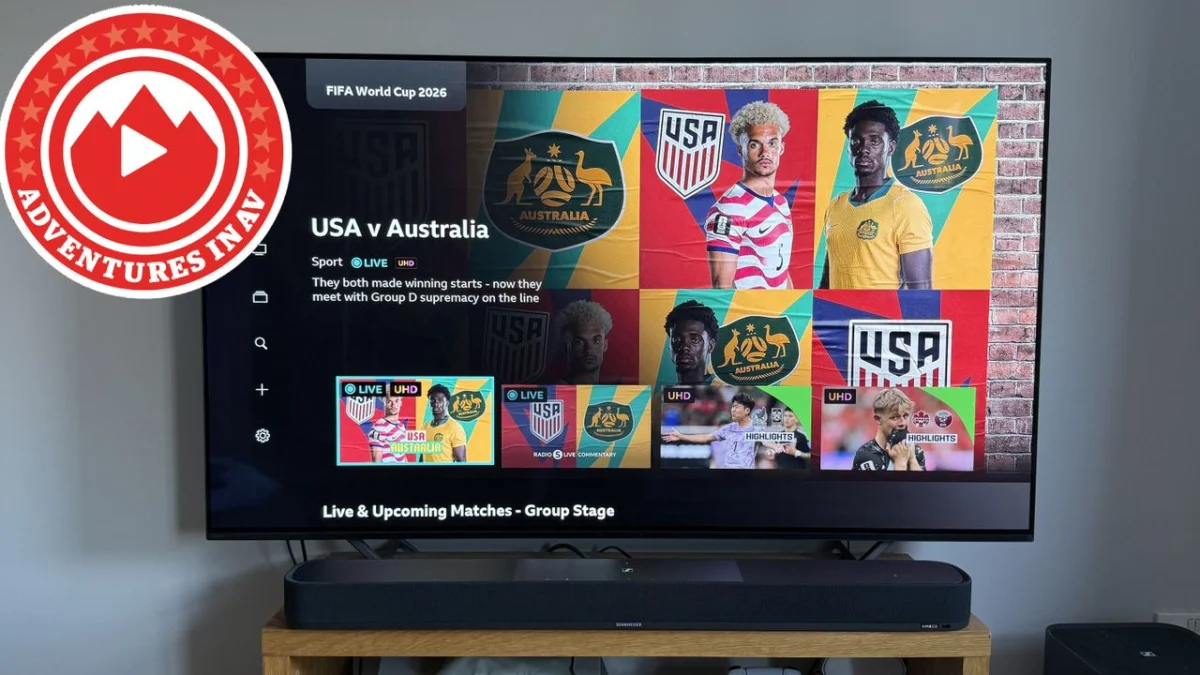
The BBC has consistently aimed to deliver premium picture quality via its iPlayer platform, utilizing 4K HDR streams for high-profile matches like Czechia vs. South Africa. While acknowledging the latency challenges inherent in HTTP-based streaming, the corporation has emphasized its commitment to picture quality for viewers who prioritize visual fidelity.
For critical matches, however, the BBC continues to point users to its standard linear Freeview and Freesat services as the definitive low-latency options for those seeking to avoid spoilers.
5. Implications for the Future of Broadcasting
The current compromise—forcing consumers to choose between the high resolution of 4K and the low latency of HD—highlights a transitional phase in television technology. As the industry prepares for the eventual decommissioning of traditional terrestrial and satellite infrastructures in favor of an all-IP future, solving the latency crisis is a priority for sports broadcasters, advertisers, and tech providers.
The Standardization of Low-Latency Streaming Protocols
The future of sports streaming relies on the widespread adoption of advanced protocols designed to eliminate chunk-based delays:
- LL-HLS (Low-Latency HTTP Live Streaming): Developed by Apple, this protocol reduces chunk sizes into tiny "parts" that can be loaded before the full segment is completed, lowering latency to under 3 seconds.
- WebRTC (Web Real-Time Communication): Originally designed for video conferencing, WebRTC is being adapted for sub-second live streaming, though scaling it to millions of simultaneous viewers remains a challenge.
- DVB-I: This emerging standard aims to unify internet-delivered television with the reliability and low latency of traditional broadcast standards, ensuring a consistent user experience regardless of the delivery medium.
Impact on Sports Rights and Advertising
For sports rights holders and advertisers, latency is not just a minor inconvenience; it is a financial variable. Live sports are among the few remaining television events that draw massive, real-time audiences.
If streaming delays continue to fragment the viewing experience—with some households reacting to events nearly a minute ahead of others—the value of live social media engagement and synchronized advertising campaigns could decline. Consequently, the development of low-latency solutions is increasingly tied to the commercial viability of digital sports rights.
Conclusion: A Pragmatic Consumer Choice
Until low-latency 4K streaming becomes technically viable at scale, sports fans face a clear trade-off. For lower-stakes matches or games not involving a viewer’s primary team, the visual detail of 4K HDR on an OLED screen remains a compelling option.
However, when immediate updates and shared tension are paramount, viewers are showing a clear preference for speed over resolution. For now, the ultimate home cinema setup is defined not just by raw pixel count, but by the temporal accuracy of the broadcast.