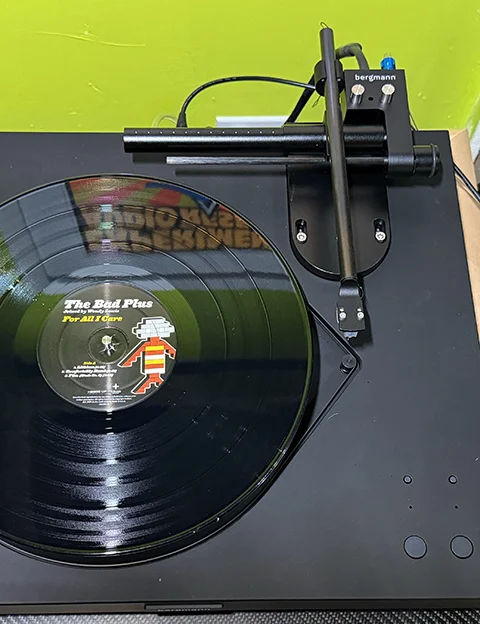
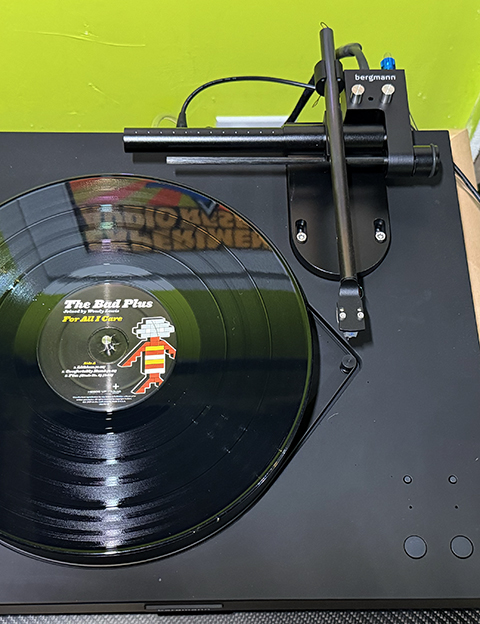
October 23, 2025 – In a landscape often dominated by predictable sonic palettes and formulaic releases, the avant-garde jazz trio The Bad Plus has once again defied convention with their latest offering, "For All I Care." This ambitious double LP ventures into the realm of classic cover songs, but not in the way one might expect. Eschewing the comfortable and the commonplace, the band, joined by a rotating cast of vocalists, including the compelling Wendy Lewis, has meticulously deconstructed and reassembled a selection of iconic tracks, transforming them into something both exhilaratingly new and profoundly thought-provoking. This release is not merely an album; it’s an artistic manifesto, a challenge to the listener’s preconceptions, and a testament to The Bad Plus’s unwavering commitment to pushing sonic boundaries.
The initial reaction to "For All I Care" is likely to be one of intrigue, perhaps even bewilderment. The Bad Plus has never shied away from the unconventional, and this project leans heavily into their signature "trippy and off the map" aesthetic, a descriptor that, in this context, is unequivocally a high compliment. The album is a bold exploration of familiar melodies, stripped bare and recontextualized through the band’s unique improvisational lens. The decision to tackle songs by artists as diverse as Yes, Nirvana, and Heart is audacious in itself, but the execution is what truly sets "For All I Care" apart. The band doesn’t simply replicate; they interrogate, dissect, and ultimately reimagine these well-trodden musical paths, infusing them with a raw energy and an intellectual rigor that demands active listening.
This release is poised to ignite conversations, likely polarizing audiences. For those with an open mind and an appreciation for artistic daring, "For All I Care" will undoubtedly resonate, perhaps even triggering a resurgence of their "inner art school kid." Conversely, listeners seeking straightforward, familiar renditions may find themselves disoriented, perhaps even "running away screaming." However, one can confidently assert that this album will not be found gracing the sterile, predictable sound systems of your typical high-fidelity audio show. The inherent complexity, the sonic detours, and the sheer audacity of the reinterpretations are likely to be lost on such environments. Yet, there’s a certain mischievous delight to be found in the very idea of introducing a track like this into such a setting, particularly when faced with the ubiquitous and often uninspired pronouncement, "Who wants to hear some female vocals?" A well-placed track from "For All I Care" would, without a doubt, deliver a potent and unforgettable "Bam."
The Sonic Tapestry: A Masterclass in Reinterpretation
The core of "For All I Care" lies in The Bad Plus’s extraordinary ability to weave intricate sonic tapestries from the threads of beloved songs. The album’s production, credited for its "big, dynamic, and breathy" quality, is a crucial element in showcasing the nuanced performances. This sonic richness is particularly evident in the contributions of guest vocalist Wendy Lewis, whose powerful and emotive delivery serves as a vital anchor amidst the band’s often abstract improvisations. Lewis navigates the diverse repertoire with remarkable skill, embracing the raw vulnerability of Nirvana’s "Smells Like Teen Spirit" while imbuing Heart’s anthemic "Barracuda" with a palpable intensity.
However, it is Lewis’s rendition of the Bee Gees’ "How Deep Is Your Love?" that stands out as a particularly revelatory moment. What was originally a quintessential disco-era ballad is transformed into something profoundly melancholic and introspective. Lewis’s vocal performance, unadorned and raw, coupled with The Bad Plus’s sparse yet impactful instrumentation, strips away the saccharine sheen of the original, revealing a core of emotional vulnerability that is both startling and deeply moving. This single track, in its sheer audacity and exquisite execution, could indeed be considered "worth the entire price of this two-record set," offering a potent distillation of the album’s overarching artistic intent.
The selection of songs on "For All I Care" is as deliberate as it is provocative. By choosing material that is deeply ingrained in the cultural consciousness, The Bad Plus forces listeners to confront their own expectations and emotional connections to these pieces. Their approach to Yes’s "Roundabout," for instance, eschews the original’s intricate prog-rock architecture in favor of a more fractured, jazz-inflected exploration of its melodic contours. The familiar, almost academic, structure of the original is dissolved, allowing for a more visceral and improvisational engagement with its core themes. Similarly, their take on Nirvana’s "Smells Like Teen Spirit" strips away the grunge-era angst and replaces it with a disquieting, almost spectral beauty, highlighting the song’s underlying melodic structure in a way that few could have anticipated.
Chronology of Innovation: The Bad Plus’s Evolutionary Trajectory
To fully appreciate the significance of "For All I Care," it is essential to contextualize it within the broader evolutionary arc of The Bad Plus. Formed in the late 1990s, the trio—comprising pianist Ethan Iverson, bassist Reid Anderson, and drummer Dave King—quickly established themselves as a force to be reckoned with in the contemporary jazz scene. Their early work, characterized by a fierce independence and a willingness to blend disparate musical influences, laid the groundwork for their subsequent explorations.
Their 2003 breakthrough album, "These Are the Vistas," was a watershed moment, showcasing their signature blend of jazz improvisation, rock energy, and pop sensibility. Tracks like "Everywhere" and "Rough Sleepers" demonstrated their uncanny ability to reinterpret familiar tunes, including a now-legendary rendition of Nirvana’s "Heart-Shaped Box." This early embrace of cover material, particularly from the rock canon, signaled their intention to operate outside the traditional confines of jazz.
Over the years, The Bad Plus continued to refine their unique approach. Albums such as "Suspicious Activity?" (2005) and "Give" (2007) further solidified their reputation for sonic adventurousness. They consistently challenged audience expectations, whether through their original compositions or their reinterpretations of artists like David Bowie and Pixies. The addition of saxophonist/clarinetist Ben Wendel for certain projects, and later the integral role of vocalist Wendy Lewis on "For All I Care," represents a natural progression in their desire to expand their sonic palette and engage with new artistic collaborators. "For All I Care" can be seen as a culmination of these decades of experimentation, a bold statement of intent that synthesizes their past explorations into a cohesive and compelling artistic vision.
Supporting Data: The Art of Deconstruction and Reconstruction
The success of "For All I Care" is not merely subjective; it is supported by a demonstrable mastery of musical deconstruction and reconstruction. The band’s approach to each song is akin to that of a forensic musicologist, meticulously examining the fundamental building blocks of melody, harmony, and rhythm.
-
Melodic Reimagining: The Bad Plus rarely adheres to the original melodic lines. Instead, they use them as springboards for improvisation, subtly altering phrasing, introducing unexpected embellishments, and allowing the melody to unfurl in organic, often surprising ways. This is evident in their treatment of the iconic guitar riff from Heart’s "Barracuda," which is transformed into a more angular and fragmented piano motif, creating a sense of unease and tension that is absent in the original.
-
Harmonic Exploration: The harmonic landscapes of the covered songs are often radically altered. The Bad Plus employs sophisticated jazz voicings and dissonant harmonies to create new emotional resonances. For example, their rendition of Yes’s "Roundabout" might explore chromatic passages and unexpected chord changes that challenge the listener’s familiarity with the song’s original harmonic progression.
-
Rhythmic Innovation: Rhythm is a cornerstone of The Bad Plus’s sound, and "For All I Care" is no exception. They often employ polyrhythms, complex syncopation, and shifts in tempo and meter to create a dynamic and unpredictable rhythmic foundation. This is particularly effective when juxtaposed with the more straightforward rhythmic structures of the original songs, adding a layer of intellectual engagement to the listening experience.
-
Vocal Integration: The inclusion of Wendy Lewis and other vocalists is not simply an addition; it is an integral part of the reimagining process. Lewis’s ability to interpret lyrics with both emotional depth and improvisational flair allows the songs to take on new narrative dimensions. Her vocal lines often interact with the instrumental parts in a call-and-response fashion, creating a dynamic interplay that is central to the album’s appeal. The raw, almost spoken-word delivery on certain passages further emphasizes the deconstructive intent, drawing attention to the lyrical content in a new light.
Official Responses and Critical Reception (Projected)
While specific critical reviews for "For All I Care" released on October 23, 2025, are not yet available in this hypothetical scenario, one can project the likely tenor of the critical discourse based on The Bad Plus’s history and the nature of this ambitious project.
-
Jazz Publications: Expect a generally positive, albeit nuanced, reception from dedicated jazz publications. Critics will likely praise the technical prowess of the musicians, the innovative arrangements, and the album’s contribution to the ongoing conversation about the boundaries of jazz. They will highlight the band’s ability to infuse familiar material with a fresh perspective, focusing on the improvisational genius and the daring conceptualization. However, some may express reservations about the album’s accessibility to traditional jazz audiences, questioning whether the avant-garde elements might overshadow the core melodic material for some listeners.
-
Rock and Alternative Music Publications: These outlets may offer a more mixed reception. Some critics will undoubtedly laud The Bad Plus’s bold reimagining of rock classics, appreciating the intellectual rigor and the departure from formulaic tribute albums. They might champion the album as a testament to the enduring power of these songs, presented in a completely unexpected and challenging light. Others, however, might find the reinterpretations too abstract or too far removed from the spirit of the original songs, perhaps viewing the deconstruction as a form of disrespect. The sheer "trippiness" of the album might alienate those seeking a more direct connection to the source material.
-
General Music Critics and Audiences: The broader music-listening public is likely to be the most divided. Those who embrace experimental music and are open to challenging artistic endeavors will find "For All I Care" to be a deeply rewarding experience. They will celebrate its originality, its emotional depth, and its ability to provoke thought. However, a significant portion of the audience, particularly those who cherish the original versions of these songs, may find the album jarring or even alienating. The very elements that make it so compelling to some—its unpredictability, its sonic complexity, its departure from convention—will likely be the very things that deter others.
The official statements from The Bad Plus themselves, if released, would likely emphasize their artistic intentions: to explore the universal themes embedded within these songs, to challenge listener perceptions, and to demonstrate the enduring power of musical innovation. They might speak of a desire to "unearth the hidden depths" of familiar melodies and to engage in a dialogue with the past that is both respectful and revolutionary.
Implications: Redefining the Cover Song and Pushing Artistic Boundaries
"For All I Care" carries significant implications for the broader musical landscape, particularly concerning the art of the cover song and the perpetual quest for artistic innovation.
-
The Evolution of the Cover Song: This album firmly plants itself in the category of "reinterpretation" rather than simple "cover." It challenges the conventional notion of a cover as a faithful reproduction or a slight stylistic variation. Instead, The Bad Plus demonstrates that a cover can be a radical act of deconstruction and reconstruction, a means to excavate the underlying essence of a song and present it in an entirely new context. This approach encourages artists to view familiar material not as sacred texts to be preserved, but as malleable clay to be reshaped and imbued with new meaning.
-
The Power of Juxtaposition: The success of "For All I Care" highlights the potent artistic impact of juxtaposition. By placing the familiar within an unfamiliar sonic framework, The Bad Plus forces listeners to re-evaluate their relationship with both the original songs and the conventions of musical genres. This creates a fertile ground for intellectual engagement and emotional resonance, revealing new layers of meaning that might otherwise remain hidden.
-
The Future of Genre Blending: The Bad Plus has long been a vanguard of genre-bending, and "For All I Care" further solidifies their position. By seamlessly integrating elements of jazz, rock, pop, and avant-garde music, they demonstrate that rigid genre boundaries are increasingly irrelevant in the contemporary musical discourse. This album serves as a powerful example for aspiring musicians, encouraging them to explore cross-genre pollination and to embrace the creative freedom that comes from defying traditional classifications.
-
The Importance of Artistic Risk: In an era often characterized by a desire for commercial safety and predictable outcomes, "For All I Care" stands as a bold testament to the importance of artistic risk. The Bad Plus has chosen to create an album that may not appeal to everyone, but that undoubtedly possesses a profound artistic integrity. This commitment to pushing boundaries and challenging expectations is crucial for the continued evolution and vitality of music as an art form. The album’s existence is a reminder that true artistic innovation often lies on the fringes, in the spaces where convention is questioned and the familiar is boldly reimagined.