
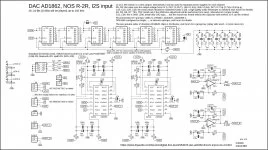
In the rapidly evolving world of digital-to-analog conversion, where Delta-Sigma chips and high-resolution oversampling have dominated the consumer landscape for decades, a quiet but passionate revolution is taking place. At the center of this movement is a cult-classic component: the Analog Devices AD1862. Recently, the DIY audio community, led by prominent figures like the designer known as "miro1360," has launched a significant effort to secure the future of this legendary R-2R DAC chip. As original stock dwindles globally, these group-buy initiatives represent what may be the final opportunity for audiophiles to acquire new-old-stock (NOS) units of one of the most revered digital-to-analog converters ever manufactured.
The Significance of the AD1862
The AD1862 is not merely another integrated circuit. To the audiophile ear, it represents a "golden age" of digital audio architecture. Unlike modern chips that rely on complex mathematical algorithms to reconstruct signals, the AD1862 utilizes a true R-2R (resistor-ladder) design. This architecture is celebrated for its ability to produce a natural, coherent, and highly musical presentation that many enthusiasts argue is superior to the "sterile" or "analytical" sound often attributed to modern oversampling DACs.

Because these chips are no longer in production, their scarcity has turned them into a commodity for high-end audio enthusiasts. The current initiative to organize group buys is a calculated effort to aggregate global demand, allowing enthusiasts to pool resources and acquire remaining factory-sealed inventory before it disappears into the hands of private collectors or is lost to time.
Chronology of the Movement: A Community Effort
The push to keep the AD1862 alive did not happen overnight. It is the result of years of collaborative engineering and community discussions centered on forums like DIYAudio.

Early Development and Standardization
The roots of the current project trace back to 2020, when designers began releasing modular PCB (Printed Circuit Board) designs that allowed hobbyists to integrate the AD1862 into modern setups. These boards were designed to handle the complex I2S-to-PCM data conversion required by the legacy chips, making them accessible even to those with limited experience in digital signal processing.
The Shift Toward Sustainability
By mid-2026, the urgency reached a boiling point. As the remaining supplies of genuine, unused AD1862N and AD1865N-J chips began to evaporate, project leaders formalized the "Group Buy" campaigns. These efforts have become a focal point for the DIY community, moving from experimental hobbyist designs to structured procurement projects designed to ensure that every participant receives authentic, verified silicon.
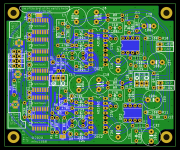
Technical Foundations: The "Almost THT" Philosophy
One of the core tenets of the current AD1862 project is accessibility. The designs—often referred to as "Almost THT" (Through-Hole Technology)—are crafted to be manageable for the average soldering enthusiast.
The Importance of Design Simplicity
Designers like miro1360 have prioritized a "pure" approach. By keeping the main DAC module simple and modular, they avoid the pitfalls of over-engineering. The goal is to provide a clean, high-performance base that allows users to experiment with different output stages, such as tube-based buffers or high-quality discrete operational amplifiers (op-amps).

Critical Handling and Safety Protocols
The community has also become a repository of technical knowledge regarding the care of these sensitive components. One of the most critical, yet rarely discussed, aspects of working with these chips is the potential for electrostatic or voltage-induced damage.
- Capacitor Discharge: Experts advise that before inserting a DAC chip or an op-amp into a socket, one must discharge the surrounding capacitors using a 100-ohm resistor. Failing to do so can result in a voltage spike that, while perhaps negligible to a modern, robust component, can permanently destroy a delicate, legacy AD1862.
- The Grounding Note: Builders are frequently reminded to bridge the 8th pin of the I2S header to the ground, a nuance that was discovered during the prototyping phase to prevent signal noise and improve overall system stability.
Supporting Data: Why R-2R Continues to Dominate
The debate between Delta-Sigma and R-2R conversion is perennial. However, the data—and more importantly, the subjective listening results—suggest that the R-2R architecture provides a unique temporal accuracy.
Distortion and Component Quality
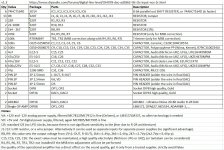
In the technical discussions surrounding these builds, the choice of passive components (resistors and capacitors) is treated with religious rigor. Designers emphasize that while the chip itself is the heart of the DAC, the "sound" is significantly shaped by the support circuitry. Using polypropylene (PP) or C0G (SMD) capacitors, which exhibit extremely low Total Harmonic Distortion (THD), is considered the industry standard for those looking to extract the full potential of the AD1862.
Modular Flexibility
The modular nature of these group-buy projects allows users to bypass the limitations of integrated designs. By providing an "Iout" (current output) interface, the boards invite users to experiment with various I/V (current-to-voltage) stages. Whether a user chooses a classic op-amp implementation or a more complex discrete transistor-based stage, the board acts as a blank canvas, ensuring the project remains "future-proof" despite the age of the primary chip.
Official Responses and Expert Commentary
The project has received widespread support from veteran audio engineers and community moderators. Notably, figures such as Paddy Garcia have been recognized for their "honorable work" in facilitating these massive group buys, which involve coordinating international shipping, verifying chip authenticity, and managing the logistics of bulk procurement.
Addressing the "Tube vs. Op-Amp" Debate
A recurring question in the community is whether the standard op-amp output stage is sufficient for such a high-caliber DAC. The consensus among the lead designers is pragmatic: the basic op-amp solution is provided to ensure functionality and simplicity, but the PCB design is intentionally left open for those who wish to implement tube output stages. This allows the enthusiast to choose their "flavor" of sound without having to redesign the entire DAC architecture from scratch.
The Role of PCBs and Manufacturing
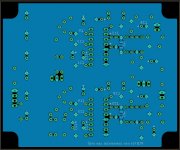
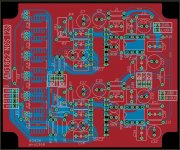
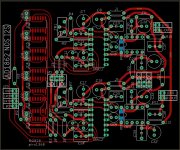
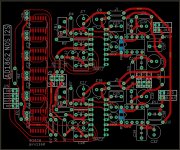
The democratization of PCB manufacturing, facilitated by companies like JLCPCB, has played a pivotal role in this movement. Builders can now produce professional-grade, 4-layer boards for a fraction of the cost previously associated with high-end audio projects. This accessibility ensures that the AD1862 project remains a hobbyist pursuit rather than an exclusive high-end product.
Implications for the Future of Audio
What does the future hold for the AD1862 once the current supply is exhausted? The implications are profound for both the DIY community and the broader audio market.
The End of an Era
When the last AD1862 is sold, a chapter of audio history will effectively close. The industry is currently moving toward even higher integration and software-defined audio, leaving little room for the hand-tuned, discrete logic of the 1990s. The current group buy is not just a shopping trip; it is an act of preservation.
The Rise of Discrete Replacements
As original chips become impossible to find, the next wave of DIY audio will likely involve "discrete" R-2R DACs—circuits built from individual resistors and logic gates to mimic the function of the AD1862. While these will represent a massive technological achievement, they will lack the specific "DNA" of the original Analog Devices silicon, which many believe is impossible to replicate perfectly.
A Lasting Legacy
The passion displayed by the DIYAudio community serves as a testament to the idea that quality in audio is not measured by the latest feature set or the highest sampling rate, but by the integrity of the signal path. The AD1862 movement proves that there is a significant, global demand for audio equipment that prioritizes musicality over marketing specs.
For those considering entering the fray, the message is clear: the opportunity to own a piece of this history is fleeting. Whether one is a seasoned engineer or a novice with a soldering iron, the collaborative spirit of these group buys provides a rare bridge between the past and the future of high-fidelity sound. As the remaining stocks continue to dwindle, the legacy of the AD1862 will likely only grow, cemented by the very community that fought so hard to keep it playing.


