Nearly three decades after its original release, Oasis’s quintessential 1995 track "Wonderwall" has achieved a rare feat in the modern music industry: a massive, organic resurgence that has propelled it back onto the Billboard Hot 100. This revival, however, was not born in a boardroom or triggered by a TikTok trend, but rather by the roaring crowds of the 2026 FIFA World Cup, where the song transformed into an unofficial anthem for the England men’s national team.
The Resurgence: Main Facts
As of the chart dated July 25, 2026, "Wonderwall" has reentered the Billboard Hot 100 at No. 27. According to data provided by Luminate, the track saw a staggering 73% surge in U.S. streams between July 10 and July 16, totaling 8.7 million chart-eligible plays. The song’s momentum extended beyond streaming, with a 41% increase in all-format radio audience and a 112% spike in digital downloads.
This resurgence is not confined to U.S. shores. The track has bounded significantly on international charts, leaping from No. 26 to No. 4 on the Billboard Global 200 and from No. 21 to No. 4 on the Billboard Global Excl. U.S. chart. Worldwide, the song’s footprint grew by 64% in streams (35 million) and 78% in sales (4,000 units), cementing its status as a global phenomenon once again.
A Chronology of a Classic
To understand the gravity of this comeback, one must look at the historical trajectory of the track. "Wonderwall," the centerpiece of the 1995 album (What’s the Story) Morning Glory?, originally peaked at No. 8 on the Billboard Hot 100 in 1996. For twenty years, it remained a staple of rock radio and karaoke bars, but it had not graced the Hot 100 since a fleeting appearance in October 2008 with the track "The Shock of the Lightning."
The 2026 revival is inextricably linked to the atmosphere surrounding the England men’s team during the recent World Cup. Throughout the tournament, which concluded on July 15, fans adopted "Wonderwall" as their primary emotional outlet. Following the team’s victory over Croatia on June 17, the song became a permanent fixture in the stands, with thousands of supporters singing it in unison, creating a viral visual and auditory backdrop that permeated social media and sports broadcasts.
Supporting Data: By the Numbers
The sheer scale of "Wonderwall’s" enduring popularity is reflected in its cumulative statistics. To date, the song has amassed:
- 1.5 Billion official U.S. streams.
- 1.7 Billion in total radio reach.
- 2.9 Million in lifetime download sales.
These figures illustrate a song that has moved beyond being a mere "hit" to becoming a cultural object. Oasis’s broader discography has also benefited from this sustained interest. The band boasts six top 10 hits on the Billboard Alternative Airplay chart, including the chart-topping "Champagne Supernova" and "Live Forever." Their albums have similarly enjoyed longevity, with three titles—(What’s the Story) Morning Glory?, Be Here Now, and Dig Out Your Soul—all reaching the top 10 on the Billboard 200.
Official Responses and the Oasis Legacy
The Gallagher brothers—Liam and Noel—have historically maintained a complex relationship with their most famous song. However, the 2026 World Cup fervor has drawn a gracious response from the band. In a statement to The Sun following the Croatia match, Noel Gallagher remarked, "‘Wonderwall’ belongs to the people, and it was a magical moment between the people and the players."
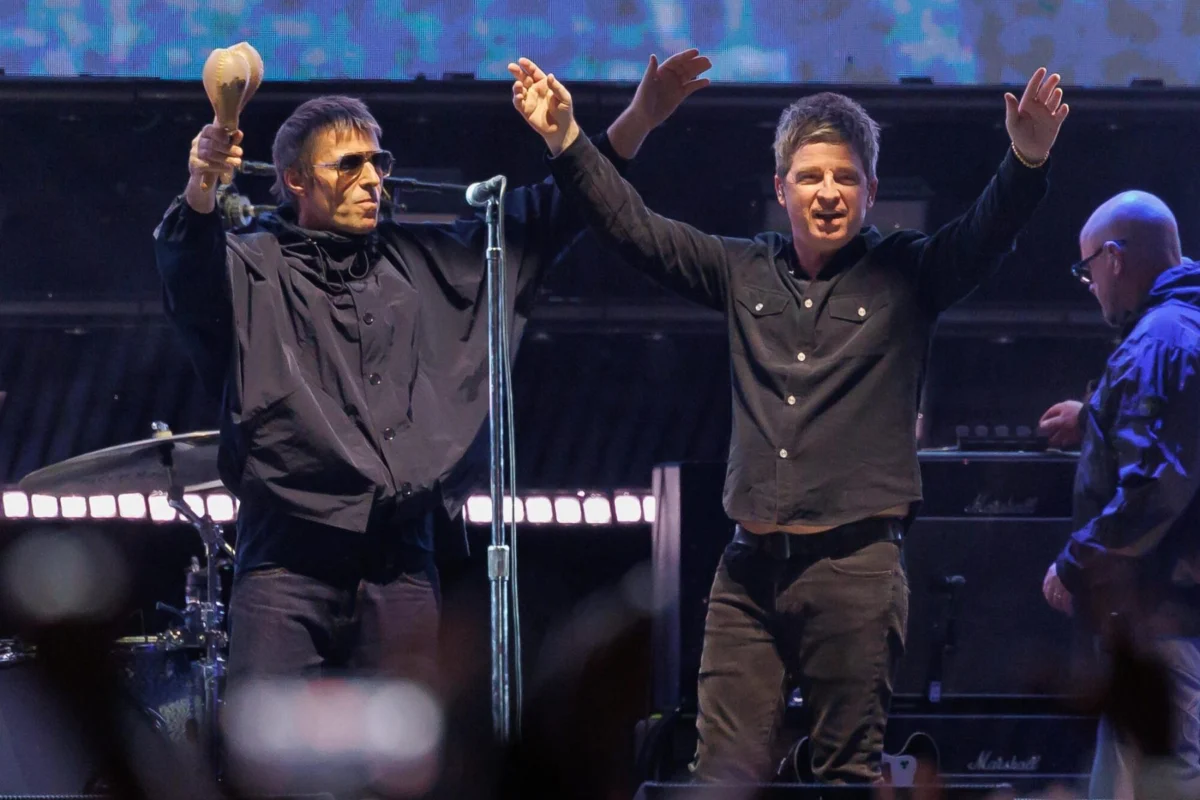
This sentiment underscores the band’s current position within the cultural zeitgeist. After a high-profile split in 2009, Oasis reunited in 2024, a move that delighted fans worldwide. The band’s cultural relevance was further solidified in April 2026 when they were officially inducted into the Rock & Roll Hall of Fame.
The momentum is set to continue with the upcoming release of the documentary Don’t Look Back in Anger, which chronicles the group’s reunion and the subsequent "Oasis Live ’25" world tour. The film, which premiered its first official trailer on July 4, is scheduled for a theatrical and IMAX release on September 11, with subsequent streaming availability on Disney+ and Hulu in the U.S.
The Implications: Why Now?
The return of "Wonderwall" to the charts raises questions about the nature of nostalgia and collective experience in the digital age. Why did this specific song become the anthem for the 2026 World Cup?
Experts suggest that the song’s inherent "singalong-ability," coupled with its themes of resilience and communal bonding, perfectly captured the spirit of the English fans. In an era of fragmented media consumption, the World Cup remains one of the few global events capable of unifying audiences. When a stadium full of fans begins to sing a song that is universally known, it transcends the sport, becoming a symbol of shared identity.
Furthermore, the "Oasis Live ’25" tour likely primed the public consciousness. By being back in the news cycle, performing for sold-out stadiums, and engaging with a new generation of fans, Oasis had already established a baseline of high visibility. The World Cup provided the final spark required to push the song back into the charts.
A Cultural Benchmark
The phenomenon of "Wonderwall" in 2026 serves as a case study for the music industry. It highlights that even in the age of algorithmic playlists, genuine human connection and cultural events can still dictate chart success. The song has moved through three distinct phases: the 1996 chart peak, the long tail of mid-2000s radio dominance, and now, the modern "stadium anthem" phase.
As Oasis prepares for the broader release of their documentary and the continuation of their reunion activities, "Wonderwall" stands as a testament to the longevity of the Britpop era. It is a song that has managed to avoid the trap of being "dated," instead finding ways to evolve alongside the audience that first embraced it.
Whether the song will maintain its position on the Hot 100 in the coming weeks remains to be seen, but its impact on the 2026 World Cup is already etched in history. For England fans and music enthusiasts alike, the summer of 2026 will be remembered not just for the matches played on the pitch, but for the melodic, anthemic echoes of a song that, as Noel Gallagher noted, truly belongs to the people.
Summary of Key Metrics
| Metric | Growth/Total |
|---|---|
| Hot 100 Position | No. 27 |
| Weekly Stream Surge | 73% |
| Global 200 Move | 26-4 |
| Total U.S. Streams | 1.5 Billion |
| Radio Audience Growth | 41% |
As the dust settles on the tournament, one thing is clear: Oasis remains a juggernaut of modern rock, and their ability to command the global stage—both on tour and in the charts—is as potent as it was in the mid-1990s. The "Wonderwall" revival is more than a statistical anomaly; it is a reminder that the best music never truly goes away—it simply waits for the right moment to return.