
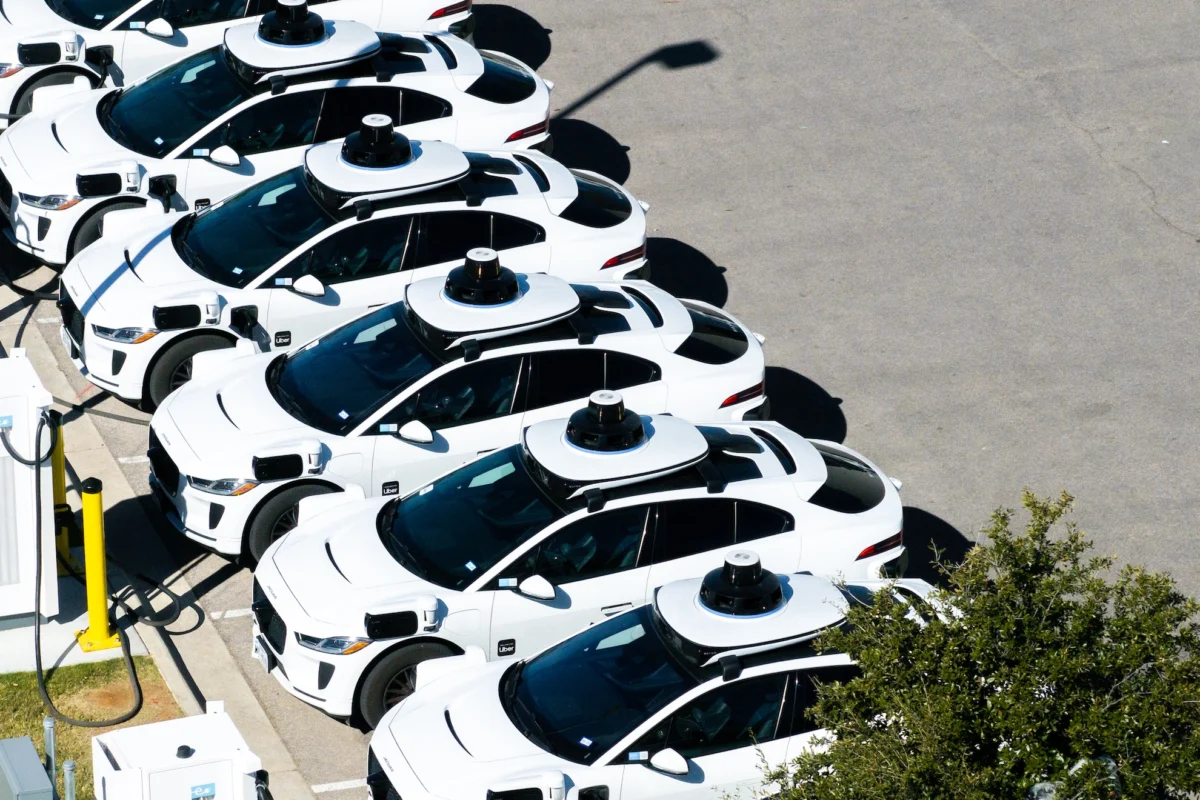
SAN ANTONIO, Texas — Five months after a series of high-profile incidents involving submerged autonomous vehicles rattled public confidence in driverless technology, Waymo has officially resumed its robotaxi operations in San Antonio. The Alphabet-owned subsidiary, which stands as the vanguard of the autonomous vehicle (AV) industry, is back on the streets, promising a safer, more technologically refined experience for passengers navigating the city’s dense urban corridors.
The return marks a significant milestone for Waymo, which had been forced to ground its local fleet in late spring following a harrowing encounter with flash flooding. As the company expands its footprint to 15 U.S. cities, the San Antonio relaunch serves as a litmus test for how the industry handles the intersection of cutting-edge AI and the unpredictable, often extreme, realities of regional climate patterns.
The Core Facts: A Strategic Relaunch
Waymo’s reentry into the San Antonio market is not merely a restart; it is a recalibration. According to the San Antonio Express-News, which first reported the resumption of services, the company has deployed a fleet of dozens of autonomous vehicles to cover a sprawling 60-square-mile operational design domain (ODD).
This service area is designed for maximum utility, connecting the city’s historic downtown core with the high-traffic corridor leading to San Antonio International Airport. Passengers can once again hail these driverless taxis via the Waymo One app. However, the operational parameters have shifted. The company has implemented stringent geofencing and software protocols specifically engineered to prevent the vehicles from entering low-lying areas during inclement weather—a direct response to the failures observed in April.
Chronology: From April Floods to October Resumption
To understand why Waymo’s return is so significant, one must look at the timeline of events that prompted the temporary exit.
The April Crisis
In mid-April, San Antonio experienced a series of intense, localized flash floods. As the water levels rose rapidly across the city’s drainage basins and roadways, several Waymo vehicles operating in autonomous mode encountered the water. Data from the events showed that the vehicles detected the standing water but failed to recognize the severity of the hazard. Rather than pulling over or rerouting, the cars continued to approach the waterlogged streets, resulting in multiple vehicles becoming immobilized.
The May Recall
By May, the situation had escalated from a local operational hurdle to a federal regulatory matter. The National Highway Traffic Safety Administration (NHTSA) initiated inquiries into Waymo’s software performance during extreme weather. In response, Waymo issued a voluntary software recall. The recall, while not requiring the physical removal of cars from the road, mandated a software update across its fleet to refine how the AI perceives "static" and "dynamic" obstacles—specifically water.
The Summer Hiatus
Throughout the summer, Waymo paused its San Antonio operations entirely. While it maintained and even expanded services in other markets, it kept the Texas fleet in a "data-gathering mode." Engineers spent these months running thousands of hours of simulation training, using the data captured during the April floods to "teach" the AI how to identify, categorize, and safely avoid deep puddles and flooded intersections.
The October Resumption
With the software patches validated through simulation and closed-course testing, Waymo began a phased return to San Antonio in October, focusing first on mapping validation before opening the app to the general public for paid rides.
Supporting Data: Scaling the Autonomous Frontier
Waymo’s presence in San Antonio is part of a broader, aggressive expansion strategy. As of this month, Waymo operates paid, driverless rides in 15 major U.S. cities, including Phoenix, San Francisco, and Los Angeles.
The scale of the San Antonio operation is noteworthy:
- Fleet Size: Dozens of Jaguar I-PACE electric vehicles.
- Service Area: 60 square miles of urban and suburban infrastructure.
- Key Connectivity: Direct service to San Antonio International Airport, a critical node for both business and tourism.
According to Waymo’s internal performance metrics, the company now logs millions of miles in autonomous mode every month. The incident in April, while damaging to the brand’s immediate reputation, provided a unique edge-case dataset. In the world of machine learning, "edge cases"—rare or difficult scenarios—are the most valuable data points. By training its neural networks on the exact sensor readings from the April flooding, Waymo claims its vehicles are now significantly more sensitive to the refractive properties of water on asphalt and the displacement of liquid in a roadway.
Official Responses and Engineering Adjustments
In a statement provided to the San Antonio Express-News, Waymo emphasized that safety remains the "foundational layer" of their business model.
"We have implemented comprehensive software updates that enhance our vehicles’ ability to perceive standing water and make more conservative routing decisions in the presence of heavy precipitation," a company spokesperson stated. "Our vehicles are now programmed with a higher sensitivity to environmental variables, ensuring that if conditions reach a certain risk threshold, the vehicle will autonomously choose to deviate from its route or come to a safe stop at a location with higher elevation."
Furthermore, the company has integrated real-time meteorological data feeds into its dispatching system. If the National Weather Service issues a flash flood warning for a specific sector of San Antonio, the Waymo system now automatically restricts operations in that zone, effectively creating a "digital barrier" that prevents the vehicles from entering high-risk areas before the weather even begins to impact the streets.
Implications: The Future of Urban Mobility
The restart of the San Antonio service carries profound implications for the future of urban transportation and the broader AV industry.
1. The Challenge of "Climate-Ready" AI
As climate change increases the frequency and intensity of flash flooding in cities across the American South and Southwest, the ability for autonomous vehicles to navigate extreme weather is no longer a luxury—it is a requirement. If Waymo can successfully prove that its AI can navigate the unpredictable Texas weather, it will set a new industry benchmark for safety.
2. Regulatory Scrutiny
The NHTSA’s role in the April recall highlights the growing maturity of AV regulation. No longer are robotaxis operating in a "Wild West" environment. The industry is under the microscope, and every software update is now subject to federal reporting. Waymo’s cooperation with the recall process and its subsequent transparency in updating its software may serve as a roadmap for competitors like Cruise or Zoox.
3. Public Trust vs. Technological Progress
For the average San Antonio resident, the sight of a driverless car is no longer a novelty; it is a point of contention. The April incident gave critics of autonomous technology a tangible example of the dangers involved. By returning with "smarter" cars, Waymo is attempting to bridge the trust gap. The success of this restart will likely determine whether the city embraces AVs as a core part of its public transit infrastructure or continues to view them as a risky experiment.
4. Economic Impact
By connecting the airport to the city center, Waymo is positioning itself as a legitimate alternative to ride-hailing services like Uber and Lyft. This creates a competitive market where the "driverless" factor is the primary value proposition. If the service proves reliable during the next rainy season, it could fundamentally alter the commute patterns of thousands of San Antonians, reducing the reliance on private vehicle ownership and potentially alleviating traffic congestion in the city’s most saturated corridors.
Conclusion: A Turning Point
The return of Waymo to San Antonio is a testament to the resilience of the autonomous vehicle sector. While the industry is often characterized by rapid, unchecked growth, the events of this year have forced a necessary maturation.
By prioritizing safety-first programming over rapid expansion, Waymo is attempting to prove that the "robotaxi" is not just a high-tech gimmick, but a robust, reliable tool for modern urban life. The coming months will be critical. As San Antonio heads into the winter months, the true test will not be the company’s marketing claims, but the vehicle’s performance when the next storm clouds roll over the city. For now, the cars are back on the road, the sensors are tuned to a new standard of vigilance, and the industry is watching closely to see if the lessons of April have truly been learned.