Introduction: The Unseen Scourge of System Noise
In the relentless pursuit of sonic purity, audiophiles often grapple with an insidious adversary: system noise. This elusive gremlin, manifesting as subtle hums, distracting crackles, or a general dulling of dynamic range, can undermine even the most meticulously curated high-fidelity setups. While sophisticated power conditioners and premium grounding accessories have emerged as potential solutions, their exorbitant price tags often place them out of reach for many enthusiasts. Enter Vera-Fi, a forward-thinking audio company that appears poised to democratize noise mitigation with its innovative "Ground Floor" device. This article delves into the promise of Vera-Fi’s latest offering, exploring its potential to solve a pervasive problem at a refreshingly accessible price point.
The Persistent Problem: Ground Loops and Beyond
The term "ground loop" is a familiar refrain among those who have experienced its frustrating consequences. A ground loop occurs when there are multiple paths to ground for an electrical signal, creating a loop that can pick up unwanted electromagnetic interference (EMI) and radio frequency interference (RFI). This interference can then manifest as audible noise within the audio system. However, ground loops are not the sole architects of sonic malaise. Other grounding issues can also contribute to system noise and diminish the immersive listening experience.
For owners of Single-Ended Triode (SET) amplifiers, known for their exquisite tonal purity and delicate reproduction, and those employing highly sensitive horn speakers, even the faintest whisper of noise can be a significant detraction. The inherent gain of these systems often amplifies any residual noise, becoming particularly noticeable when one brings their ear close to the tweeter – a common diagnostic practice for identifying such issues. This subtle but persistent noise can erode the very qualities that make these high-performance systems so desirable.
Furthermore, the integration of vintage audio equipment into modern systems presents its own unique set of grounding challenges. Older components, designed with different electrical standards and often lacking the sophisticated shielding of contemporary designs, can introduce their own noise floor, complicating the quest for an utterly silent background. The complexity of interconnecting disparate pieces of gear, each with its own grounding characteristics, can quickly transform a passion project into a battle against unwanted sonic artifacts.
The Market Landscape: Expensive Solutions and Unmet Needs
The audio industry has responded to the demand for noise reduction with a variety of solutions. High-end power conditioners, some costing thousands of dollars, aim to filter out incoming power line noise and offer robust surge protection. While many of these devices prove effective, their efficacy in addressing specific grounding anomalies can vary. Some may tackle general noise but fail to resolve the persistent hum of a ground loop, leaving users with a significant financial investment but an incomplete solution.
More recently, premium cable manufacturers have introduced specialized grounding accessories. These often involve elaborate star-grounding configurations or dedicated ground isolation devices. While these products are frequently praised for their performance, their pricing can be eye-watering. It is not uncommon to see these grounding solutions priced on par with significant audio components such as a high-quality amplifier or a digital-to-analog converter (DAC). This places them squarely in the luxury category, accessible only to the most dedicated and affluent audiophiles. For the vast majority of music lovers, these premium grounding accessories represent an aspirational but ultimately unattainable solution. This creates a significant unmet need in the market for an effective, yet reasonably priced, grounding solution.
Vera-Fi’s Ground Floor: A Paradigm Shift in Accessibility
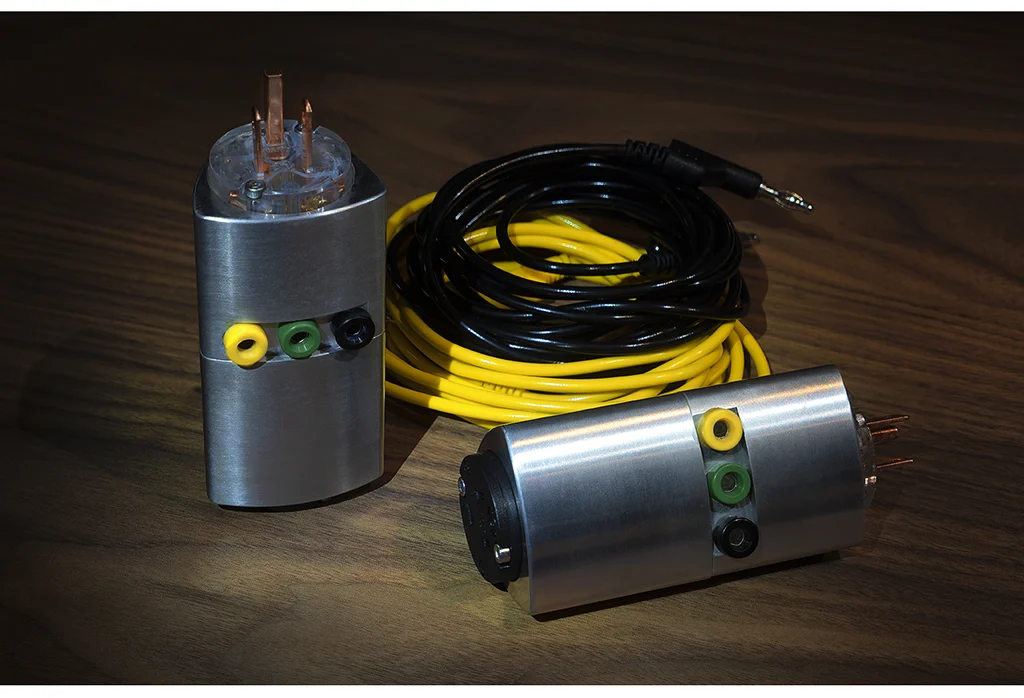
Vera-Fi’s "Ground Floor" appears to be designed precisely to bridge this gap. The company’s latest creation is presented not as a one-size-fits-all panacea, but as a flexible and scalable solution to a common problem. The core appeal of the Ground Floor lies in its affordability and adaptability. The introductory price of $199 positions it as an accessible upgrade for a wide range of audio enthusiasts. For those suffering from the vexing effects of system noise, this price point can be considered truly "priceless" – a small investment for the restoration of sonic clarity and dynamic impact.
Chronology of Innovation: Addressing System Noise
The evolution of audio system design has always been intertwined with the challenge of noise reduction. Early audio systems, often simpler in design, were less susceptible to the complex grounding issues that plague modern, multi-component setups. However, as audio technology advanced, so did the potential for noise ingress.
- Early Audio Systems (Pre-1970s): Simpler componentry and less complex power grids meant that grounding issues were generally less prevalent. When they did occur, they were often addressed through basic electrical grounding practices.
- The Rise of Multi-Component Systems (1970s-1980s): The proliferation of separate preamplifiers, power amplifiers, turntables, and tuners, often interconnected by a myriad of cables, increased the likelihood of ground loops. Early attempts at noise reduction focused on improving cable shielding and component isolation.
- Introduction of Power Conditioners (1990s-Present): As power line noise became a more recognized issue, sophisticated power conditioners emerged. These devices aimed to filter AC power and provide surge protection, offering a broad approach to noise mitigation. However, their effectiveness against specific grounding issues was not always guaranteed, and their cost was often substantial.
- Emergence of Specialized Grounding Solutions (2000s-Present): In recent years, a segment of the high-end market has focused specifically on grounding. This includes dedicated ground isolators, star-grounding accessories, and specialized cables designed to optimize the ground path. While offering impressive results, these solutions are typically very expensive.
- Vera-Fi’s Ground Floor (Present): Vera-Fi’s Ground Floor enters this landscape by offering a versatile, scalable, and affordably priced solution specifically targeting grounding-related noise issues. Its design prioritizes addressing common problems without demanding a premium price tag.
Supporting Data and Technical Versatility: The Ground Floor’s Architecture
While a full technical dissection will be part of a forthcoming review, the initial information suggests that the Ground Floor is far from a simplistic plug-and-play device. Its strength lies in its configurability. The device is supplied with cables that allow for three distinct grounding methodologies:
- Floating the Ground on a Device: This configuration can be used to isolate a specific component from the main grounding system. This is particularly useful when a single piece of equipment is suspected of introducing noise into the entire system. By "floating" its ground, it can be effectively silenced without affecting the grounding of other components.
- Establishing a System-Wide Star Ground: A star ground configuration is widely considered an ideal grounding topology in audio. In this setup, all components are connected to a single central grounding point. This minimizes potential differences between components and prevents ground loops from forming. The Ground Floor’s ability to facilitate this system-wide approach is a significant advantage.
- Telescoped Grounds Between Outlets: This method allows for a sequential grounding scheme, where the ground connection is passed from one outlet to the next in a controlled manner. This can be effective in managing complex power distribution and preventing noise propagation across multiple interconnected devices.
This inherent versatility means that the Ground Floor can be tailored to a wide array of system configurations and specific noise problems. Whether the issue originates from a single turntable, a rack of vintage equipment, or a complex multi-amplifier setup, the Ground Floor offers a pathway to remediation. The ability to scale the solution, starting with a single unit for a specific component and potentially expanding as needed, further enhances its cost-effectiveness and user-friendliness.
Official Responses and Company Vision
While specific quotes from Vera-Fi are not yet available in this preliminary report, the company’s product development ethos appears to be centered on addressing practical audio challenges with intelligent, accessible solutions. The very existence of the Ground Floor, with its emphasis on cost-effectiveness and user-configurable functionality, suggests a vision that aims to empower a broader spectrum of audiophiles.
The company’s commitment to providing more information and a full review is a positive sign. This indicates a confidence in their product and a desire to engage with the audio community through transparent and thorough evaluation. The provision of a direct link to the Vera-Fi website further underscores their willingness to communicate and support potential customers. It is expected that as the full review progresses, more detailed insights into the design philosophy and technical specifications will be revealed by the company.
Implications for the Audiophile Community
The advent of Vera-Fi’s Ground Floor could represent a significant turning point for audiophiles seeking to combat system noise without breaking the bank.
- Democratization of Noise Reduction: For years, effective grounding solutions have been largely the domain of the ultra-high-end. The Ground Floor’s accessible price point has the potential to bring these benefits to a much wider audience, allowing more enthusiasts to experience the full potential of their audio systems.
- Enhanced System Performance: The removal of subtle noise can lead to a dramatic improvement in perceived audio quality. Increased dynamic range, finer detail retrieval, and a more immersive soundstage are all direct beneficiaries of a clean signal path. The Ground Floor promises to unlock these sonic improvements for a broader segment of the market.
- Simplified Troubleshooting: The versatile nature of the Ground Floor, with its multiple configuration options, can also serve as a valuable diagnostic tool. By systematically applying different grounding strategies, users may be able to pinpoint the source of their system noise more effectively.
- A Catalyst for Further Innovation: If the Ground Floor proves to be as effective as it promises, it may encourage other manufacturers to develop similarly innovative and affordable solutions, further pushing the boundaries of accessible high-fidelity audio.
Conclusion: A Promising Dawn for Noise-Free Listening
The frustration of system noise is a universal experience for many audiophiles. While the solutions have historically been expensive and often complex, Vera-Fi’s "Ground Floor" emerges as a beacon of hope. Its combination of a reasonable price point, remarkable versatility, and a clear focus on solving a common problem positions it as a potentially game-changing product. As a full review is eagerly anticipated, the initial indications suggest that Vera-Fi may have indeed delivered a cost-effective revolution in noise annihilation, opening up a new world of pristine sound for a generation of music lovers. The pursuit of sonic perfection just became a lot more attainable.