
May 12, 2026 – Over four decades after its initial, somewhat bewildered reception, Van Halen’s "Diver Down" continues to be a subject of both fan devotion and critical re-evaluation. Released in 1982, the album stands as a curious anomaly in the band’s discography, a predominantly cover-driven effort that challenged expectations and cemented its place as a cult favorite among the most dedicated of followers. While the band’s early success was undeniably fueled by their electrifying rendition of The Kinks’ "You Really Got Me," "Diver Down" ventured further into uncharted territory with its eclectic selection of covers, including a notable take on Martha and the Vandellas’ "Dancing in the Street" and a surprising interpretation of the Bee Gees’ "Happy Trails." This departure from their established sound initially divided listeners, yet as time has passed, this "oddball" record has not only endured but has also revealed itself as a fascinating artistic experiment from a band navigating its own creative currents.
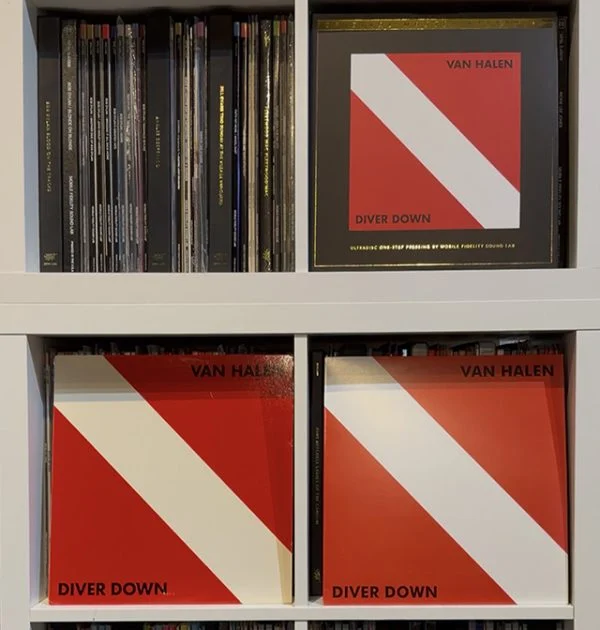
This extensive re-examination of "Diver Down" is particularly relevant today, coinciding with the release of a highly anticipated audiophile pressing by Mobile Fidelity Sound Lab (MoFi). This new iteration promises to resurrect sonic details that may have been obscured in previous releases, offering listeners an unprecedented opportunity to experience the album as it might have been intended. The journey from the original vinyl pressing, acquired by many fans on its release day, through subsequent reissues and now the MoFi ONE-Step, provides a compelling narrative arc for understanding the album’s sonic evolution and its persistent appeal.
The Unconventional Genesis of "Diver Down"
A Shift in Direction: From Originality to Interpretation
Van Halen’s trajectory in the early 1980s was marked by a desire to push boundaries, even if it meant deviating from the formula that had catapulted them to stardom. Following the immense success of their first three albums – "Van Halen" (1978), "Van Halen II" (1979), and "Women and Children First" (1980) – the band found themselves at a creative crossroads. While they had established a reputation for their explosive original material, featuring Eddie Van Halen’s groundbreaking guitar work and David Lee Roth’s charismatic stage persona, a subtle shift began to emerge.
"Diver Down," released on April 14, 1982, was a stark departure. While it did feature three original compositions – "The Full Bug," "Hang ‘Em High," and "Little Guitars" – the bulk of the album was comprised of cover songs. This decision was met with a mixture of intrigue and skepticism from their fanbase. Many had come to expect the raw, unadulterated energy of Van Halen’s self-penned anthems. The inclusion of covers, while not entirely unprecedented for the band (their debut album famously included "You Really Got Me"), was now the dominant theme, raising questions about the band’s creative direction.
The selection of covers itself was eclectic and, for some, perplexing. The album delved into the repertoires of artists as diverse as The Kinks, Roy Orbison, and even the Bee Gees. This ambitious undertaking suggested a band eager to explore different musical landscapes, perhaps as a means of artistic rejuvenation or as a deliberate challenge to their own established sound. The album’s title, "Diver Down," itself suggested a descent into something different, a dive into unfamiliar waters.
The "Diver Down" Tracklist: A Tapestry of Influences
The album’s tracklist, a blend of covers and originals, offered a unique listening experience:
- "Where Have All the Good Times Gone!" (The Kinks cover)
- "Hang ‘Em High" (Original)
- "Cathedral" (Instrumental, credited to Eddie Van Halen)
- "Secrets" (Original)
- "Summer Nights" (Loudon Wainwright III cover)
- "Dancing in the Street" (Martha and the Vandellas cover)
- "Little Guitars" (Original)
- "Big Bad Bill (Is Sweet William Now)" (Traditional, arranged by Van Halen)
- "The Full Bug" (Original)
- "Pretty Woman" (Roy Orbison cover)
The inclusion of "Pretty Woman," a classic rock staple, alongside the more obscure "Summer Nights" and the traditional folk tune "Big Bad Bill," underscored the album’s adventurous spirit. "Cathedral," an instrumental piece showcasing Eddie Van Halen’s technical prowess and innovative guitar techniques, also stood out as a moment of pure instrumental artistry.
Audiophile Archaeology: Unearthing the Sonic Depths of "Diver Down"
The Original Pressing: Compressed Realities and the Radio Play Compromise
The sonic landscape of the original "Diver Down" pressing, as experienced by many fans who purchased it upon release, presented a familiar characteristic of many early Van Halen records: a certain degree of compression and a truncated low-end frequency response. This characteristic, while contributing to a punchy, radio-friendly sound, often masked the full dynamic range and depth of the recordings.
The question of why this sonic approach was adopted has been a subject of speculation among audiophiles and music historians for years. Was it a deliberate artistic choice intended to optimize the album for the prevailing radio formats of the era, prioritizing immediate impact over nuanced detail? Or was it an unintended consequence of the recording and mastering processes of the time? Some have even playfully posited whether it was a form of "passive aggressiveness" towards bassist Michael Anthony, whose foundational basslines might have been less prominent in the mix. Regardless of the precise reasons, the original pressing, while beloved by many, represented a sonic compromise that left room for improvement.
The Chris Bellman Restoration: A Significant Step Forward
The emergence of later pressings, notably those mastered by Chris Bellman, marked a significant improvement in the album’s sonic fidelity. Bellman’s work is renowned for its ability to breathe new life into classic recordings, and his mastering of "Diver Down" was no exception. These versions began to restore some of the lost depth and clarity, bringing a greater sense of presence and impact to the music.
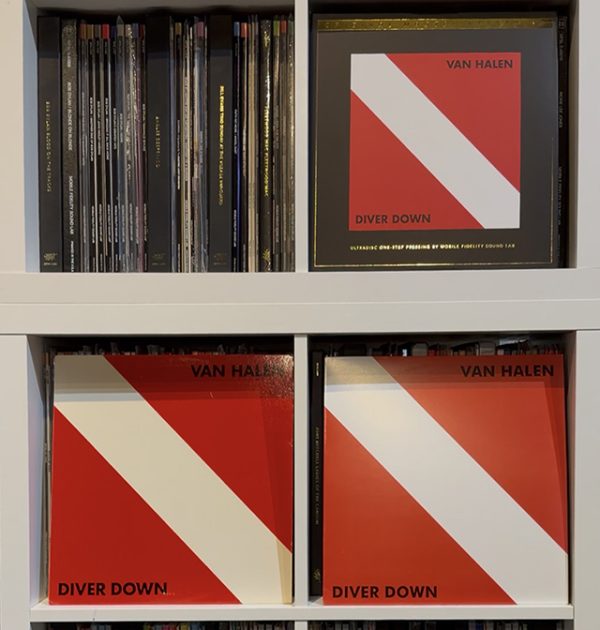
Bellman’s efforts successfully recaptured much of what had been diminished in earlier iterations. The dynamics were more pronounced, and the low-end frequencies, which had been somewhat elusive, started to reassert themselves. This made for a more engaging and immersive listening experience, demonstrating that there was indeed more sonic information lurking within the master tapes than had previously been apparent. For fans who had long cherished the album’s energy but yearned for greater sonic fidelity, the Bellman reissues represented a welcome and substantial leap forward.
The MoFi ONE-Step: A New Benchmark in Vinyl Reproduction
The latest chapter in the "Diver Down" sonic saga arrives with the Mobile Fidelity Sound Lab (MoFi) ONE-Step pressing. This ultra-premium format, known for its meticulous mastering process and limited production runs, aims to deliver an unparalleled vinyl listening experience. The comparison between this MoFi release and its predecessors is, as the original article suggests, "an easy task indeed" due to the dramatic improvements unveiled.
The MoFi ONE-Step pressing of "Diver Down" has been lauded for its ability to extract the finest nuances from the original master tapes. The album not only rocks harder in every conceivable way, but the restoration of the low-end is described as "perfection." This is not merely about increased volume or bass presence; it’s about a richer, more defined foundation that underpins the entire sonic tapestry.
A particularly striking example of this meticulous restoration is highlighted in the track "Big Bad Bill (Is Sweet William Now)." The MoFi version reveals the "genius in the execution" of this track with extraordinary clarity. Beyond the enhanced rock impact and restored bottom end, the "smoothness of the tone in Van Halen senior’s clarinet is incredible." This level of detail, capturing the subtle textures and timbres of individual instruments, is a hallmark of exceptional audiophile mastering. It allows listeners to appreciate the artistry and sonic choices made during the recording sessions with a newfound appreciation.
Furthermore, the article posits that, despite the excellence of MoFi’s own SACD (Super Audio CD) release of the album, "this is one of those instances where the magic of vinyl rules the day." This statement underscores the enduring appeal of analog playback for certain recordings, suggesting that the tactile experience and sonic characteristics of vinyl, when mastered to this level of quality, can offer a unique and arguably superior listening experience for "Diver Down."
The Enduring Appeal of "Diver Down"
A Cult Classic in the Making
While "Diver Down" may not have achieved the same immediate commercial ubiquity as some of Van Halen’s more straightforward rock anthems, its lasting impact is undeniable. The album has cultivated a dedicated following who appreciate its experimental nature and the band’s willingness to take creative risks. For these fans, "Diver Down" represents a fascinating period in Van Halen’s history, showcasing their versatility and their ability to imbue even cover songs with their signature energy and flair.
The album’s success, albeit in a different vein than their earlier work, speaks to the band’s artistic evolution. It demonstrated that Van Halen was not content to rest on their laurels, constantly seeking new avenues for musical expression. The inclusion of "Little Guitars," a complex instrumental piece, and the raw energy of the original tracks, alongside their inventive cover choices, created a dynamic and engaging listening experience that has stood the test of time.
"Where Have All the Good Times Gone?": A Lingering Question
The final lines of the article, referencing the opening track "Where Have All the Good Times Gone?" and the popular Google search result identifying it as "A Song by Van Halen," encapsulate the album’s unique position. It’s a song that, for many, has become intrinsically linked to the band, almost as if it were one of their own. This blurring of lines between original composition and cover interpretation is a testament to Van Halen’s ability to make the material their own.
The question posed by the song’s title, "Where have all the good times gone?", resonates beyond the lyrical content. It invites reflection on the nature of musical evolution, the passage of time, and the enduring power of iconic albums. "Diver Down," with its unconventional approach and its sonic rebirth through audiophile reissues, continues to offer a compelling answer, proving that the good times, and great music, can indeed endure and even be rediscovered with renewed brilliance. The album’s journey from a divisive release to a celebrated cult classic, amplified by cutting-edge audio restoration, solidifies its status as a significant and fascinating chapter in the annals of rock music.