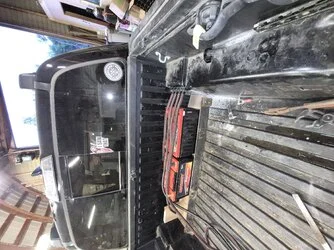

In the world of high-fidelity mobile audio, few things are as frustrating as a system that refuses to produce the low-end frequency response expected from high-powered hardware. A recent inquiry from a car audio enthusiast highlights a common yet perplexing configuration error: a user struggling to get signal response from a DS18 2,000-watt amplifier, noting that bass only functions when RCA cables are improperly bridged between the amplifier’s "Input" and "Output" ports.
This article serves as an in-depth technical analysis of why such signal routing issues occur, the dangers of incorrect RCA daisy-chaining, and a comprehensive guide to diagnosing and optimizing a 1-ohm stable subwoofer system.
Main Facts: The Anatomy of a Signal Path Problem
At the core of the user’s issue is a misunderstanding of signal flow architecture. In a standard car audio installation, the head unit acts as the "source," the amplifier acts as the "processor/power house," and the subwoofers act as the "transducers."
The user reports that the system only functions when an RCA cable is connected from the amplifier’s input to its output—a practice known as a "loopback" or "bridging" that, in most modern Class D monoblock amplifiers like the DS18 2K, is fundamentally incorrect. The amplifier’s "Output" RCA jacks are designed specifically for "Pass-Through" or "Daisy-Chaining," allowing a signal to be sent to a second amplifier. By plugging the output back into the input, the user is likely creating a signal feedback loop or attempting to compensate for a lack of signal voltage from the head unit.
Key Technical Considerations:
- Source Integrity: The head unit must be set to "Subwoofer Mode" to activate the dedicated low-frequency output.
- Gain Structure: Proper gain staging is the difference between clean, thunderous bass and a blown voice coil.
- Load Impedance: Wiring subs to a 1-ohm load requires substantial electrical current, making the grounding of the amplifier more critical than ever.
Chronology of Installation Errors
Troubleshooting an audio system often requires backtracking to the initial installation phases. If you find your bass performance is lackluster, consider this chronological sequence of verification:
Phase 1: The Pre-Installation Setup
Before mounting any equipment, verify the impedance compatibility. The DS18 2K amplifier is designed to handle a 1-ohm load, but if the subwoofers are not wired to provide that specific resistance, the amplifier may enter a protection mode or fail to output signal effectively.
Phase 2: Signal Routing
The most common mistake occurs here. Users often mistake the "Output" RCA ports on the amplifier for a "second input." In truth, these ports are "buffered" outputs, meaning they carry the exact signal coming from the head unit. Creating a loop between these ports does not amplify the signal; it often causes phase cancellation or, in worst-case scenarios, internal clipping within the amplifier’s preamp stage.
Phase 3: The Testing Phase
Once the wiring is corrected (Input only), the user must perform a "Cold Start" test. This involves turning the head unit volume to 75% and slowly adjusting the amplifier gain until the desired output level is reached without audible distortion.
Supporting Data: Understanding 1-Ohm Load Stability
When running an amplifier at a 1-ohm load, the demands on your vehicle’s electrical system increase exponentially. At 1 ohm, the amplifier draws the maximum amount of current allowed by its internal circuitry.
Table: Electrical Demands at 1-Ohm
| Component | Requirement | Consequence of Failure |
|---|---|---|
| Grounding | 0-Gauge Copper | Voltage drop, amplifier clipping |
| Voltage | 12.6V – 14.4V | Protection mode activation |
| Speaker Wire | 8-12 AWG | Overheating, fire hazard |
If the signal is not being processed correctly due to poor RCA configuration, the amplifier may attempt to compensate by drawing excessive current, leading to a "thermal shutdown." Users must ensure that their ground cable is connected to a clean, sanded metal point on the vehicle chassis—not just a bolt—to ensure the amplifier can complete its circuit efficiently.
Official Responses and Best Practices
Industry experts from leading car audio forums and manufacturers like DS18 emphasize that "less is more" when it comes to signal routing.
- The "Direct-Only" Rule: Never use output jacks for input purposes. If you are experiencing a "no signal" issue, the problem is not a lack of cabling, but a lack of source voltage.
- Low Pass Filter (LPF) Calibration: The LPF is the most important setting for a subwoofer. Experts recommend setting the LPF between 80Hz and 100Hz. Anything higher will cause the sub to play "muddy" vocals; anything lower may result in a lack of "punch."
- Phase Matching: If you have multiple subwoofers, ensure the phase settings on the amplifier match. If one sub is pushing while the other is pulling, they will cancel each other out, resulting in near-zero bass output.
Implications: When Your System Fails
The implications of improper configuration go beyond just a quiet subwoofer. Operating an amplifier with incorrect signal routing or a poor ground can lead to:
- Permanent Hardware Damage: Internal preamp circuits can be fried by improper signal loopbacks.
- Electrical Hazards: A 1-ohm load is unforgiving. If the ground is not secure, the amplifier will look for a path of least resistance—which could be your head unit’s RCA shield, potentially destroying the internal components of your car’s stereo.
- Degradation of Audio Quality: Even if the system "works" (as the user reported), the audio signal is likely heavily degraded, resulting in poor transient response and "flat" sounding bass.
The Professional Path to Resolution
To resolve this, the user must strip the system back to basics:
- Disconnect all unnecessary RCA loopbacks.
- Verify the Head Unit’s "Subwoofer Out" is enabled in the software settings.
- Use a Digital Multimeter (DMM): Check the AC voltage coming out of the head unit RCA cables. If there is no voltage, the head unit is either misconfigured or the RCA cable itself is severed.
- Check Ground: Measure the resistance between the amplifier ground terminal and the vehicle chassis. It should be less than 0.5 ohms.
Conclusion
The pursuit of high-performance bass is a technical endeavor that rewards precision. By moving away from "trial-and-error" wiring—such as the problematic loopback configuration mentioned—and focusing on the fundamentals of signal flow, grounding, and impedance management, any enthusiast can unlock the true potential of their DS18 system.
If the problem persists after verifying these steps, it is highly recommended to seek professional installation services. Audio equipment is a significant investment; treating it with the technical respect it demands will ensure years of reliable, earth-shaking performance. Always refer to your specific amplifier manual, as internal crossovers and input sensitivities vary wildly between different models and manufacturers. Remember: if the bass isn’t hitting, check the source first, the ground second, and the wiring third.