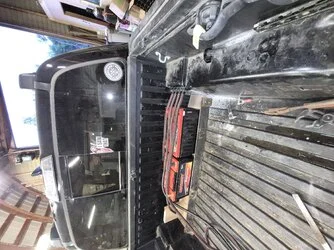

The modern truck owner is no longer satisfied with mere utility; they demand a mobile concert hall. For owners of the 2018 Ford F-150 SuperCrew, the factory 8-inch head unit serves as a functional foundation, yet many enthusiasts find the stock audio performance lacking, especially when speakers begin to fail due to age or overuse. As a recent community discussion on the CarAudio.com forums highlighted, upgrading a complex vehicle like an F-150 requires more than just swapping out components—it requires a strategic balance between budget, space constraints, and audio fidelity.
The Quest for Sonic Clarity: Understanding the Challenge
The request originated from a forum user seeking to revitalize their 2018 F-150’s audio system. With the factory speakers blown, the goal was twofold: replace all four door speakers and the front pillar tweeters, while simultaneously integrating a dual 10-inch subwoofer setup under the rear seat. The user’s constraints—a budget of approximately $800—pushed the conversation toward the realities of modern car audio: the trade-off between "entry-level" convenience and "high-fidelity" quality.
For many truck owners, the F-150 SuperCrew offers a generous cabin, but the space beneath the rear seat is a specialized real estate. Traditional subwoofer enclosures often struggle to fit into the tight vertical clearances available, necessitating specialized, low-profile, or custom-fit boxes. Furthermore, moving from a "plug-and-play" mindset to a pursuit of quality requires careful consideration of impedance, mounting depth, and the integration of aftermarket amplifiers with the factory Ford SYNC system.
Chronology of the Forum Discussion
The discourse, which unfolded on September 18, 2026, provided a snapshot of how enthusiasts approach vehicle modifications today.
- 3:56 PM: The user initiates the thread, explicitly identifying their vehicle (2018 F-150 SuperCrew) and their goal: a comprehensive audio overhaul. They acknowledge a limited background in audio engineering, admitting they have historically relied on basic sub-and-amp setups.
- 4:15 PM: A moderator intervention prompts the user to sharpen their query, ensuring that the community provides specific, actionable advice rather than vague recommendations.
- 6:01 PM: Veteran users begin the technical diagnostic phase, clarifying the vehicle configuration—specifically the "SuperCrew" designation, which denotes four full-sized doors, as opposed to the "SuperCab" variant.
- 6:07 PM: The discussion shifts toward hardware sourcing. Experienced contributors point the user toward pre-loaded enclosures, specifically mentioning Skar Audio, which offers vehicle-specific boxes that mitigate the difficulty of custom fabrication.
- 6:16 PM: The dialogue concludes with a breakdown of available enclosure options, weighing the acoustic differences between sealed and ported boxes, and identifying specific fitments that cross-reference from F-250 to F-150 platforms.
Technical Considerations and Supporting Data
When upgrading an F-150, enthusiasts must account for several critical technical variables that dictate the success of the installation.
1. Enclosure Dynamics: Sealed vs. Ported
The debate between sealed and ported enclosures is a cornerstone of automotive audio. A sealed box offers tighter, more accurate bass response, which is often preferred for listeners who value "musicality." Conversely, a ported (or vented) box is designed for efficiency and output, allowing for deeper bass extension at the cost of enclosure size. Given the constraints of the under-seat area in an F-150, the user must decide if they prefer the punchy accuracy of a sealed dual-10-inch setup or the volume-oriented output of a ported one.
2. The $800 Budget Constraint
In the current market, $800 is a challenging but achievable target for a high-quality upgrade, provided the owner is willing to perform the labor themselves. A typical breakdown might look like this:
- Component Door Speakers (Front & Rear): $300–$400.
- Subwoofer/Enclosure Package: $300–$350.
- Amplifier Wiring Kit & Installation Accessories: $100–$150.
- Note: This budget assumes the use of the factory head unit, utilizing a line-output converter (LOC) or a digital signal processor (DSP). If the user decides to upgrade the head unit entirely, the budget would likely need to double to account for dash kits and CAN-bus steering wheel control interfaces.
3. Space Management
The F-150 SuperCrew’s rear floor is relatively flat, but the folding mechanism of the rear seat is a major obstruction. "Loaded" boxes—those that come pre-fitted with speakers—are generally the most cost-effective solution. However, users must be wary of "mounting depth." High-excursion subwoofers often require significant depth that standard under-seat enclosures simply cannot provide, necessitating the use of "shallow-mount" subwoofers.
Expert Perspectives and Community Consensus
The consensus among forum contributors is that for a budget-conscious build, the "loaded enclosure" is the gold standard. By purchasing a box pre-engineered for the specific make and model of the truck, the user eliminates the risk of resonance issues and improper volume calculations.
However, professional installers often argue that the "weakest link" in a stock system is not the speakers themselves, but the lack of power and the factory EQ curve. The factory head unit in the 2018 F-150 is designed to protect the low-end components from distortion by rolling off bass frequencies at higher volumes. To truly "prioritize quality," as the user requested, adding a DSP is often more important than the brand of speakers chosen. A DSP can flatten the factory signal, allowing the new speakers to perform to their full potential.
Implications for the DIY Audio Enthusiast
The move toward better audio is reflective of a broader trend in the automotive aftermarket: the "prosumer" approach. Owners are no longer content with "good enough" sound, but they are also hesitant to pay the premium for high-end professional audio shops.
Long-term Reliability
One often-overlooked aspect of these upgrades is the impact on the vehicle’s electrical system. Modern trucks like the F-150 rely on sophisticated Battery Management Systems (BMS). When adding a high-powered amplifier, users must ensure they are not overtaxing the alternator or causing voltage drops that could trigger fault codes in the truck’s computer. Proper grounding and the use of an appropriate gauge power wire are not just "best practices"—they are requirements to prevent long-term damage to the vehicle’s electronics.
The Value of Research
The forum thread underscores the importance of peer-to-peer knowledge sharing. By verifying the cab style and cross-referencing fitment guides, the user avoided the common pitfall of ordering parts that would not physically fit. This collaborative process acts as a safeguard against the "trial and error" costs that often plague beginners.
Conclusion
Upgrading the audio system in a 2018 Ford F-150 is a rite of passage for many truck owners. While the initial request for help was simple, it touched upon the complex interplay of acoustics, vehicle-specific spatial limitations, and budgetary management. By leveraging the collective wisdom of online communities, even an novice enthusiast can transition from a "throw it in and hope for the best" approach to a structured, high-quality audio build.
For the user in question, the path forward is clear: define the acoustic goal (sealed for quality, ported for volume), verify the specific under-seat dimensions of their SuperCrew, and prioritize the signal processing that will allow their new components to shine. As the automotive industry continues to integrate more complex digital systems, the role of community forums will only grow in importance, providing the essential bridge between factory limitations and the high-fidelity experiences that modern drivers crave. Whether it is a modest $800 upgrade or a multi-thousand-dollar custom install, the pursuit of better sound remains one of the most rewarding modifications a truck owner can undertake.