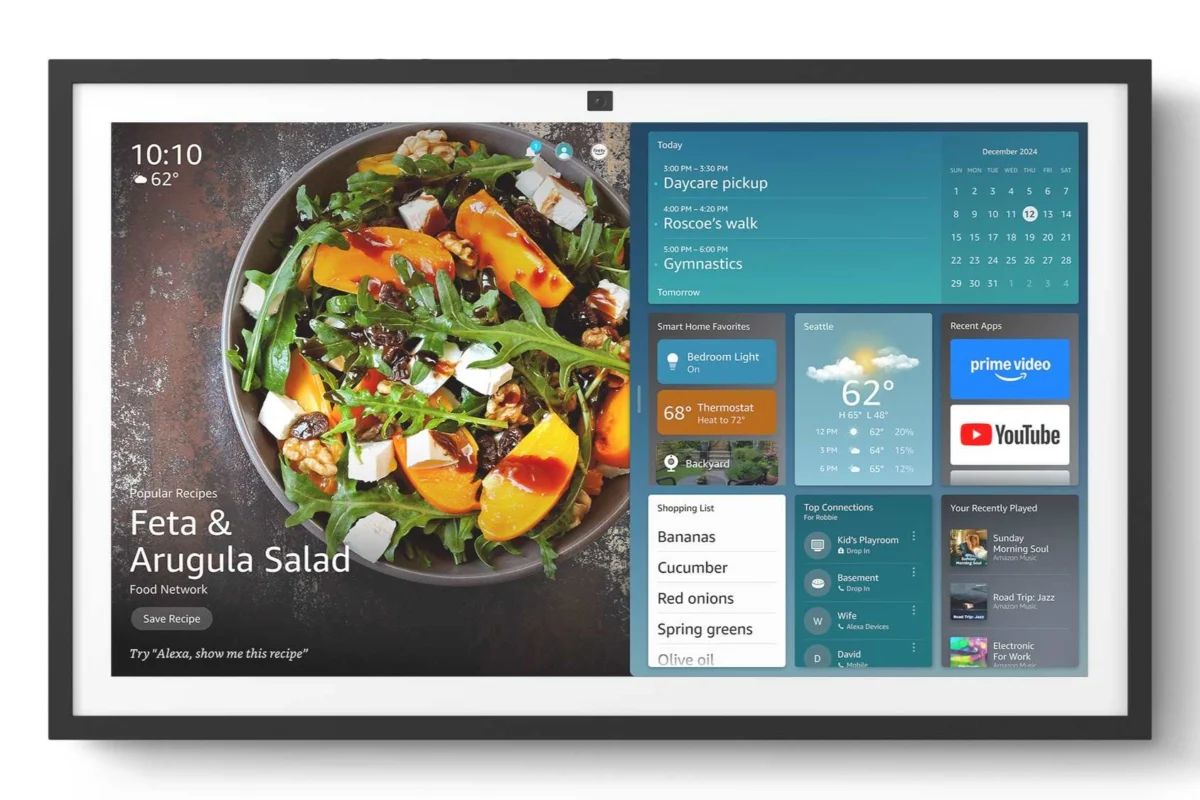
In the rapidly evolving landscape of smart home technology, the kitchen has long been the primary battleground for the “digital assistant.” Today, Amazon is significantly raising the stakes with the launch of its largest smart display to date: the Echo Show 21. By expanding the footprint of its wall-mountable display series, Amazon is positioning these devices not just as voice-activated speakers, but as central command hubs for the modern, hyper-connected household.
The launch of the Echo Show 21, alongside a refreshed version of the Echo Show 15, represents a pivotal shift in Amazon’s hardware strategy. The company is moving away from the smaller, bedside-table aesthetic toward a "command center" philosophy—large-format screens designed to be mounted on walls, integrated into kitchen backsplashes, or displayed prominently in high-traffic living areas.
The Core Facts: A New Standard for Smart Displays
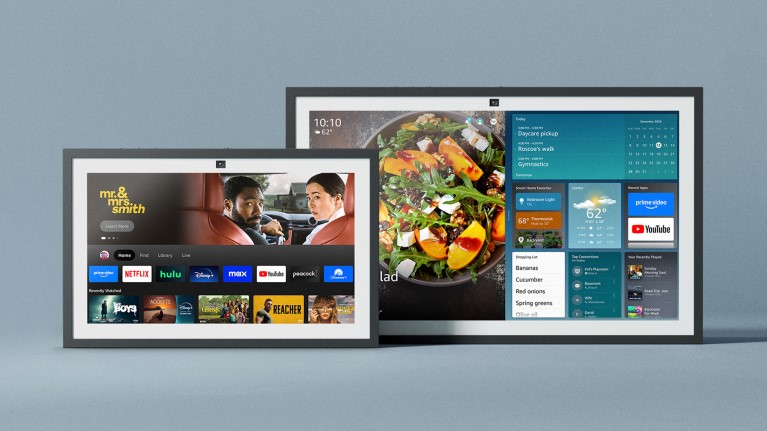
The Echo Show 21, as the name implies, boasts a 21-inch display, offering nearly double the screen real estate of its smaller sibling. While the Echo Show 15 ($299.99) retains its familiar wall-mountable form factor, the Echo Show 21 ($399.99) enters the market as a formidable contender for the title of the ultimate home dashboard.
Both devices represent a significant hardware iteration over the original Echo Show 15, which debuted in 2021. Amazon has addressed the most persistent criticisms of its predecessor—specifically regarding audio fidelity and smart home integration. By incorporating dual 2-inch woofers and sophisticated "room adaptation" technology, these devices are designed to fill a room with sound, moving beyond the tinny, thin audio profile that plagued the original model.
Furthermore, both units now feature native support for Zigbee and Thread radios. This is a critical functional upgrade, as it allows these devices to act as full-fledged Matter smart home hubs. In the past, users relying on the original Echo Show 15 were forced to purchase additional hardware to maintain local control over smart devices. With this update, Amazon is centralizing control, effectively turning the wall display into the brain of the smart home ecosystem.
A Chronology of the Echo Show Evolution
To understand the significance of the Echo Show 21, one must look at the trajectory of Amazon’s hardware design.
- 2017: The Genesis: Amazon introduced the original Echo Show, a device that added a modest 7-inch screen to the Alexa experience. It was largely seen as a novelty—a way to see song lyrics or weather reports.
- 2018–2020: Diversification: Amazon experimented with various sizes, from the diminutive Echo Show 5 to the rotating, motorized Echo Show 10. These devices prioritized versatility and personal interaction.
- 2021: The Wall-Mount Shift: The release of the Echo Show 15 marked a fundamental change. It was the first device designed to live on a wall, treating the screen as a digital bulletin board for family calendars, sticky notes, and video streaming.
- 2022: Critical Reception: While the Echo Show 15 was praised for its design, it faced criticism for its lack of smart home hub capabilities and audio quality, which some reviewers noted was not up to par with the Echo Studio or other high-fidelity speakers.
- 2024: The "Command Center" Era: With the introduction of the Echo Show 21 and the updated Echo Show 15, Amazon has listened to the feedback. By adding Wi-Fi 6E, improved camera optics, and hub-level smart home integration, the company is finally fulfilling the promise of the “all-in-one” home display.
Supporting Data and Technical Specifications
The technical leap between the 2021 model and the new hardware is substantial. Amazon has clearly targeted the "power user" demographic with these upgrades.

Audio and Connectivity
The shift to twin 2-inch woofers is more than just a marketing claim. The "room adaptation" technology continuously monitors the acoustic properties of the environment, adjusting the frequency response to ensure that music and spoken word content remain clear, even in reverberant spaces like kitchens. The inclusion of Wi-Fi 6E is another quiet but massive win; as home networks become increasingly crowded with connected devices, the move to the 6GHz band ensures that video calls and streaming content remain stutter-free.
The Camera Experience
Perhaps the most notable improvement for families is the upgraded camera. The new auto-framing lens offers double the field of view and 65 percent more zoom capabilities compared to the previous generation. This is specifically designed for video conferencing, allowing users to move around a kitchen while remaining centered in the frame. Coupled with enhanced noise reduction, the Echo Show 21 aims to compete with dedicated video conferencing hardware.
Comparison Table: Key Features
| Feature | Echo Show 15 (Original) | Echo Show 15 (2024) | Echo Show 21 |
|---|---|---|---|
| Display Size | 15.6-inch | 15.6-inch | 21-inch |
| Smart Hub | Wi-Fi only | Zigbee + Thread | Zigbee + Thread |
| Networking | Wi-Fi 5 | Wi-Fi 6E | Wi-Fi 6E |
| Audio | Standard | Dual 2" Woofers | Dual 2" Woofers |
| Mounting | Wall | Wall | Wall |
Official Responses and Strategic Vision
Amazon’s product managers have emphasized that these devices are intended to solve the problem of "household chaos." In a statement accompanying the launch, the company noted that the Echo Show 21 was developed in response to consumer demand for a "true digital home hub."
"We wanted to create a device that isn’t just for consuming content, but for managing the complexities of modern life," an Amazon spokesperson remarked. "Whether it’s coordinating a family calendar, monitoring a Ring doorbell feed, or managing lighting and security systems, the Echo Show 21 acts as the connective tissue of the home."
The decision to keep the resolution at 1920 x 1080 (1080p) for the 21-inch model has been a point of minor debate among tech analysts. However, Amazon argues that for a device primarily used for ambient information, calendars, and casual video streaming, the 1080p resolution provides an optimal balance between visual clarity and system performance.
The Implications: Is Bigger Truly Better?
The market entry of the Echo Show 21 carries significant implications for both consumers and competitors.
For the Consumer
The Echo Show 21 is a premium investment. At $399.99, plus the potential cost of additional frames ($34.99) or a premium counter stand ($99.99), it is an expensive addition to the home. Consumers must weigh whether they require a 21-inch screen. For large families managing complex schedules, the extra screen space is undeniably valuable. However, for those who simply want a device for music or occasional news, the smaller Echo Show 15 or even the Echo Show 10 may remain more cost-effective options.
For the Smart Home Market
By integrating Matter, Zigbee, and Thread, Amazon is effectively signaling that it intends to be the primary controller in the home. This puts pressure on platforms like Apple Home and Google Home, which have also been pushing for broader Matter adoption. Amazon’s strategy is clear: by providing superior hardware that acts as a hub, they create a "walled garden" that is difficult for users to leave.
The Future of the "Smart Kitchen"
The Echo Show 21 faces competition from specialized devices like the Skylight Calendar Max. While the Skylight is larger (27 inches), its lack of an onboard camera and speakers confirms that it is a specialized tool. Amazon is taking a different path: they want the Echo Show to be a multi-modal device. It must be a speaker, a video conferencing tool, a television, and a security monitor all at once.
Conclusion: A Turning Point for Alexa
The release of the Echo Show 21 is a bold statement. It demonstrates that Amazon still believes in the "smart display" category, even as the market for smaller smart speakers begins to plateau. By focusing on the "command center" use case, Amazon is attempting to justify the existence of these devices by making them indispensable to the daily flow of household management.
As we await full-scale testing and long-term reviews, the initial impression is clear: Amazon has finally addressed the structural and acoustic flaws of the original wall-mounted Echo series. Whether the 21-inch screen becomes a staple of the modern kitchen or remains a niche device for power users, the Echo Show 21 represents a significant evolution in how we interact with our homes.
Stay tuned for our upcoming in-depth performance analysis, where we will put the Echo Show 21’s "room adaptation" audio and video conferencing capabilities to the ultimate test.