NEW YORK, NY – In the vast, intricate tapestry of the professional audio industry, the microphone stands as the singular, indispensable bridge between the physical vibration of sound and the captured permanence of recorded history. Without the microphone, the last century of cultural development—from the broadcasts of world leaders to the seminal recordings of pop icons—would exist only as fleeting memories.
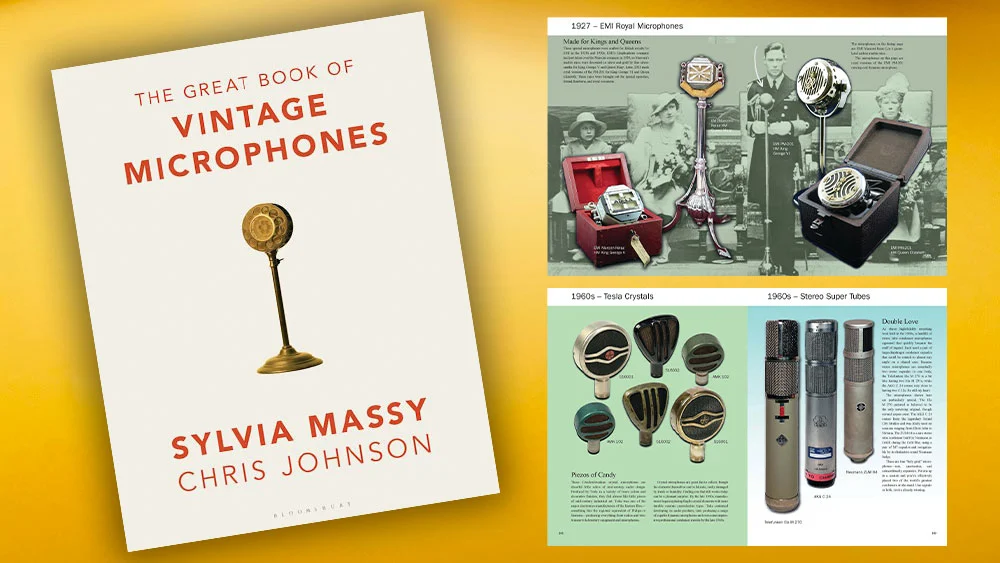
On November 12, 2026, the industry receives a definitive, visual, and historical document that aims to codify this legacy: The Great Book of Vintage Microphones, authored by Grammy-winning producer Sylvia Massy and veteran studio owner Chris Johnson. Published by Bloomsbury, this 248-page hardcover and eBook ($49.50) is poised to become the industry-standard reference for engineers, historians, and audiophiles alike.
The Genesis of a Monumental Project
The collaboration between Massy and Johnson is not their first foray into technical literature. Having previously achieved critical success with Recording Unhinged: Creative and Unconventional Recording Techniques, the duo possesses a unique synergy that blends Massy’s legendary "mad scientist" approach to production with Johnson’s meticulous eye for historical detail.
Massy, whose discography includes seminal works for artists such as Tool, System of a Down, Johnny Cash, Prince, and the Red Hot Chili Peppers, has long been known for her unorthodox recording techniques. Her reputation for placing microphones in unconventional locations—or using microphones in ways their manufacturers never intended—provides a distinct "hands-on" authority to the book.
"The microphone is the primary lens through which we view our sonic world," Massy noted in recent discussions regarding the project. By partnering with Chris Johnson—a multifaceted professional who balances roles as a writer, studio owner, minister, and obsessive collector—Massy has ensured that the book is as much a technical manual as it is a love letter to the hardware that shaped the modern world.
A Chronological Journey Through the Transducer Era
The Great Book of Vintage Microphones is not merely a catalog of gear; it is a historical survey that maps the development of the microphone against the backdrop of the 20th century’s most tumultuous and transformative periods. The authors have carefully curated the narrative to trace how audio technology evolved through the Great Depression, the technological leaps forced by two World Wars, and the clandestine advancements of the Cold War era.
The Era of Necessity: War and Innovation
The book highlights how the geopolitical climate of the early 20th century accelerated microphone development. During the World Wars, the need for clear communication on the battlefield led to breakthroughs in signal-to-noise ratios and ruggedness that would eventually trickle down into the commercial recording studio.
The Golden Age of Broadcasting
As radio became the primary source of news and entertainment, the microphone became a tool of political power. The authors detail how the design and aesthetics of microphones were adapted for the podiums of world leaders, effectively turning the transducer into an icon of authority.
The Modern Studio Revolution
The mid-to-late 20th century saw the transition from broadcast-grade equipment to the specialized instruments used in music production. The book tracks the rise of the large-diaphragm condenser, the ubiquity of the moving-coil dynamic, and the ribbon mics that defined the warmth of early rock and roll.
Curating the Collection: Rare and Eccentric Treasures
The true allure of the book lies in its nearly 600 color photographs, which showcase a collection ranging from the historically significant to the utterly bizarre. Among the featured items are:
- The Presidential Standard: The book documents the specific microphone models utilized by U.S. Presidents from Lyndon B. Johnson through the modern era, illustrating how these devices became silent witnesses to the most pivotal moments in American politics.
- Royal Provenance: Included in the pages is a monumental microphone custom-built for King George V, serving as a testament to the status and gravitas associated with early high-fidelity audio equipment.
- The Studio Workhorses: Readers are granted an inside look at the specific, "handy" microphones used by legendary engineer Bruce Swedien to capture the vocal performances of Michael Jackson—a detail that will undoubtedly spark renewed interest in the specific signal chains that defined the "Thriller" era of pop music.
Supporting Data and Technical Context
Beyond the historical narrative, the authors provide a deep dive into the engineering philosophy behind these devices. The book explores:
- Manufacturing Techniques: An examination of how craftsmanship in metallurgy and diaphragm tensioning changed over the decades.
- Design Evolution: How the physical shape of a microphone—from the "salt shaker" designs to the sleek, side-address condenser—was influenced by the ergonomic needs of the time.
- Usage Guides: Practical insights into how these vintage pieces can be utilized in contemporary digital workflows, bridging the gap between analog warmth and modern transparency.
The sheer volume of technical data provided in the 248-page volume makes it an essential reference for studio managers and vintage collectors who often struggle to find accurate, verified information on discontinued or obscure models.
Official Perspectives: Why This Book Matters
Industry observers have noted that The Great Book of Vintage Microphones fills a significant gap in audio literature. While many books focus on the "how-to" of mixing, few focus on the "what-is" of the hardware itself with such depth and visual clarity.
Bloomsbury’s decision to release the book in both a high-quality hardcover format and an eBook version indicates an intent to reach both the coffee-table collector and the working professional. For the professional, the book serves as a diagnostic tool; for the collector, it serves as a valuation and identification guide.
In an era where software emulations of vintage microphones are increasingly common, the book serves as a vital reminder of the physical, tangible reality of the original hardware. It challenges the reader to consider the nuance of air, distance, and physics—elements that are often lost in purely digital environments.
Implications for the Future of Audio
The release of this book comes at a time when the "vintage craze" in professional audio has reached a fever pitch. As younger generations of engineers seek to replicate the sounds of the 1960s and 70s, the demand for authentic, well-maintained vintage microphones has skyrocketed.
The Great Book of Vintage Microphones provides more than just history; it provides a roadmap for the future. By understanding the "why" and "how" of the past, contemporary producers are better equipped to make informed decisions about their own gear acquisitions and studio setups.
Furthermore, the book highlights the sustainability of high-quality engineering. A well-maintained microphone from 1950 can still outperform many modern, mass-produced counterparts, and the authors make a compelling case for the preservation and continued use of these "outliers" of audio history.
Conclusion: A Legacy Captured
As we move toward the release on November 12, 2026, it is clear that Sylvia Massy and Chris Johnson have delivered a work that is destined to sit on the bookshelves of every major recording studio in the world. It is a comprehensive, meticulously researched, and beautifully presented volume that treats the microphone not just as a tool, but as a cultural artifact.
Whether you are a seasoned veteran who remembers the transition from tubes to transistors, or a digital native looking to understand the roots of your craft, this book offers a profound look at the devices that have captured the human voice and the world’s soundtrack for over a century.
For those interested in exploring the world of audio engineering further, the insights found within these pages will serve as a foundational text for years to come. The Great Book of Vintage Microphones is a testament to the idea that, in an ever-changing world of technology, the most important piece of equipment in the room remains the one that translates the air into the truth.
For more information on the book or to secure your copy, visit the official Bloomsbury catalog or check local independent bookstores.