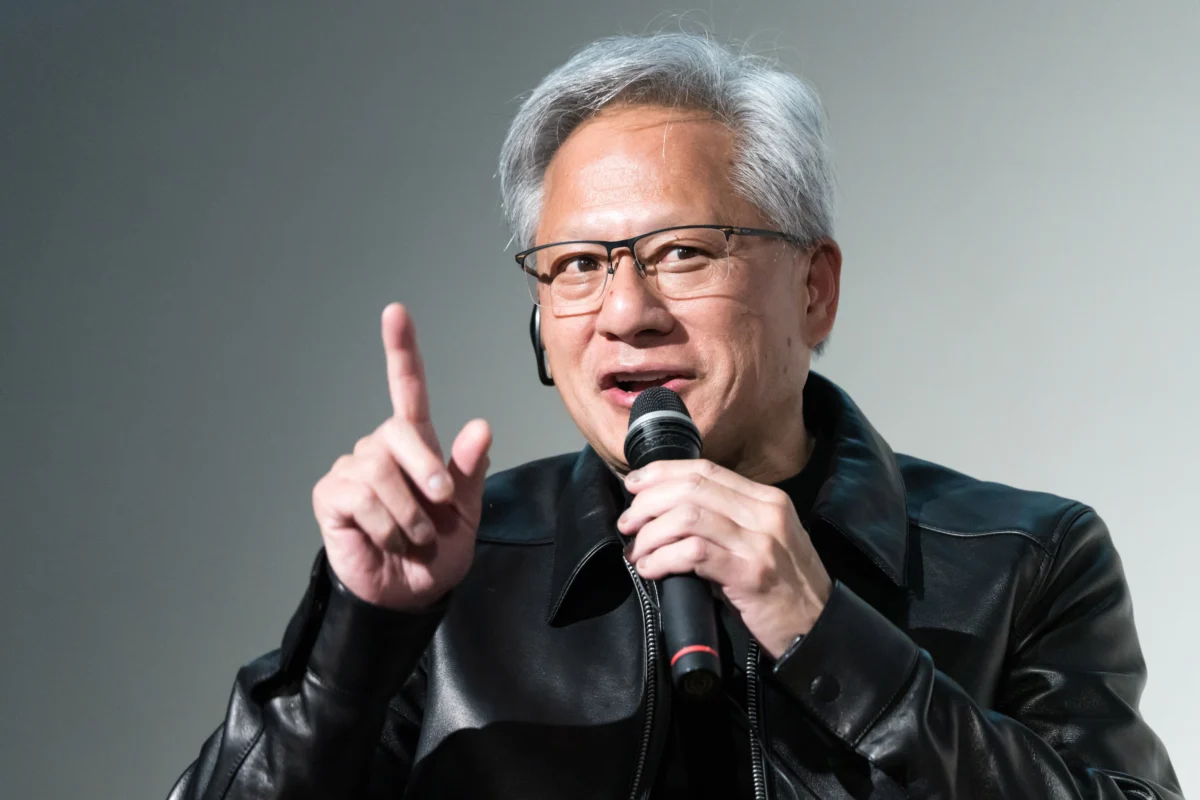
In an era where the intersection of Silicon Valley and Washington D.C. has become the most critical frontier for global power, the All-In Conference in Los Angeles witnessed a moment of theater that transcended the typical boundaries of corporate keynote presentations. On Monday, September 14, 2026, Nvidia CEO Jensen Huang found himself at the center of a geopolitical firestorm when he received a live, on-stage telephone call from President Donald Trump.
The spectacle, occurring in front of a captivated audience of investors, tech executives, and policymakers, served as a flashpoint for the ongoing debate over the trajectory of artificial intelligence. As Huang accepted the call on an undisclosed foldable smartphone—a device that briefly sparked confusion regarding its manufacturer before a subsequent correction—the conversation pivoted immediately to the existential questions currently haunting the halls of power: Should the development of AI be slowed to address safety concerns, or is such a pause a surrender of national dominance?
A Chronology of the All-In Interaction
The exchange began as a high-profile demonstration of influence. Huang, maintaining his signature persona—clad in his trademark alligator leather jacket—was mid-discussion regarding the unprecedented demand for Nvidia’s Blackwell-class GPUs when the call was routed to the stage.
- The Initiation: As the audience recognized the caller, the room’s atmosphere shifted from a technical briefing to a political town hall.
- The Core Argument: President Trump wasted little time, characterizing the widespread "AI safety" movement—which advocates for stricter regulation and a potential deceleration of frontier model training—as a "hoax."
- The Nationalist Frame: Trump argued that the narrative surrounding AI risk is being weaponized by "political people" and foreign adversaries, most notably China, to hinder American technological supremacy. He framed the technology not merely as a business vertical, but as a strategic asset, asserting it is "bigger than the internet."
- The Public Validation: Huang, maintaining a diplomatic stance throughout the call, punctuated the President’s comments by noting the room’s reaction: "Did you hear that? Thousands of people are clapping."
The event concluded with the President emphasizing the need for unbridled innovation, a sentiment that resonated with the conference’s largely venture-capitalist demographic, even as the global community remains deeply divided over the long-term safety implications of superintelligence.
The Economic Imperative: Why Nvidia Can’t Afford to Pause
To understand why the Nvidia CEO would align—or at least refrain from pushing back—against the President’s rhetoric, one must look at the company’s current market position. Nvidia’s business model is tethered to the relentless growth of AI compute requirements.
For the past several years, the "AI gold rush" has seen hyperscalers like Microsoft, Google, Meta, and Amazon pouring hundreds of billions of dollars into Nvidia’s hardware. Any regulatory cooling period or industry-wide "pause" would immediately jeopardize the demand for current and future GPU cycles.
Market Volatility and Investor Sentiment
Despite a robust 33% increase in share price over the previous twelve months, Nvidia’s stock experienced a modest dip of a few percentage points in the wake of the conference. This movement suggests a market that is sensitive to the regulatory mood music. Investors are aware that while the company is currently the primary beneficiary of the AI explosion, it is also the primary target for potential antitrust and national security restrictions.
Huang’s performance on stage was, in many ways, a masterclass in risk management. By allowing the President to dictate the narrative of "AI as a national security asset," Huang effectively lobbied for continued deregulation, framing his company’s success as synonymous with the nation’s success.
Supporting Data: The AI Arms Race
The rhetoric shared between Huang and Trump is supported by a growing body of data regarding global competition.
- Compute Supremacy: Current estimates suggest that the United States leads in the development of frontier models, but the gap in chip manufacturing and data center capacity is increasingly scrutinized.
- The Regulatory Landscape: The European Union’s AI Act and various proposed U.S. frameworks have created a "patchwork" of compliance costs. Pro-innovation advocates, like those at the All-In conference, argue that these costs disproportionately affect domestic startups, effectively ceding the market to state-subsidized actors in foreign jurisdictions.
- Safety vs. Speed: A recent study by the Global AI Policy Institute indicated that while 70% of the public expresses "moderate concern" regarding AI safety, 82% of institutional investors believe that the economic cost of losing the "AI race" is a greater existential threat than the hypothetical risks of model misalignment.
Official Responses and Industry Reception
The response to the Trump-Huang call has been polarized. Industry insiders argue that the call was a necessary assertion of American industrial strength. "We are in an arms race, whether people want to admit it or not," noted one venture capitalist in attendance. "Jensen is doing what any CEO would do: he’s aligning his company with the future of national policy."

Conversely, the AI ethics community has expressed significant alarm. Critics argue that by dismissing safety concerns as a "hoax," the nation’s leadership is ignoring the warnings of researchers who have spent decades identifying the potential for catastrophic failure in unaligned autonomous systems.
"There is a difference between competitive speed and reckless disregard," said a spokesperson for a prominent AI watchdog group. "By framing safety as an impediment to progress, the CEO of the world’s most important chip company is effectively telling the public that they are not stakeholders in their own technological future."
Long-Term Implications: The "Too Big to Fail" Paradigm
The fallout from this event will likely be felt in three distinct areas:
1. Regulatory Capitulation
We should expect to see a softened stance on AI oversight in the coming months. If the executive branch is actively encouraging a "full-speed ahead" approach, the likelihood of restrictive, safety-oriented legislation passing through Congress diminishes significantly.
2. The Weaponization of Tech
Nvidia and its peers are increasingly becoming extensions of state policy. As the primary providers of the hardware needed for everything from military logistics to autonomous cyber-warfare, companies like Nvidia are no longer just vendors—they are defense contractors in all but name. This status brings with it significant geopolitical entanglements that will limit their ability to operate freely in global markets.
3. The Shift in Corporate Governance
Jensen Huang’s ability to navigate this political theater demonstrates a shift in the role of the modern CEO. No longer is it sufficient to provide a superior product; the CEO of a "foundational" company must be an active diplomat, capable of managing the volatile intersection of market valuation, presidential ego, and existential global risk.
Conclusion: A New Era of High-Stakes Diplomacy
The image of Jensen Huang, holding a foldable phone to his ear while the President of the United States dictates the future of global technology, will likely become an iconic symbol of the late-2020s tech boom.
While the correction regarding the specific model of phone used serves as a reminder of the need for journalistic precision, it does not diminish the gravity of the underlying event. We are witnessing the fusion of corporate dominance and political power. Whether this trajectory leads to a new golden age of innovation or a reckless descent into unmanageable risk remains the defining question of our time. For now, Nvidia, the market, and the current administration remain in lockstep—prioritizing growth, speed, and dominance above all else.
As the dust settles from the All-In conference, one thing is clear: the safety debate has been effectively sidelined by the urgency of the arms race, and for the foreseeable future, the "hoax" of AI risk will remain a distant second to the reality of AI revenue.