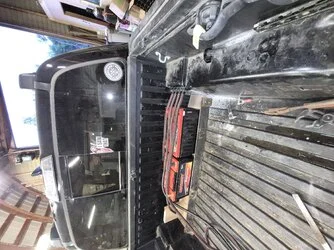

In the world of competitive car audio and high-fidelity mobile sound systems, the mantra has historically been "bigger is better." For decades, enthusiasts seeking to reach the lowest octaves of the audible spectrum gravitated toward 12-inch, 15-inch, or even 18-inch subwoofers. However, a significant shift in design philosophy and consumer demand has brought the "micro-subwoofer" movement to the forefront. Among the most discussed entrants in this niche category is the Sundown Audio SA 6.5-inch series, a driver that has sparked intense debate, experimentation, and admiration within the enthusiast community.
Main Facts: The Emergence of the SA 6.5"
The Sundown Audio SA 6.5" subwoofer represents a strategic move by the manufacturer to offer a high-excursion, high-power-handling driver in a footprint that was previously reserved for mid-bass or midrange speakers. While traditional 6.5-inch speakers in a car audio context are often relegated to door-mounted components, the SA 6.5 is engineered specifically for low-frequency reproduction.
The primary appeal of this driver lies in its mounting depth—typically around 3.5 inches—and its ability to operate effectively in enclosures with minimal internal volume. For the car audio enthusiast, this solves a chronic problem: fitting a proper, ported subwoofer system into vehicles with limited space, such as extended-cab trucks, compact sedans, or vehicles where cargo space is at a premium. Unlike shallow-mount subwoofers, which often sacrifice excursion and linear travel for reduced depth, the SA series retains the robust build quality and motor strength that Sundown Audio is known for, allowing it to perform with authority despite its diminutive diameter.
Chronology: A Community Discussion
The discourse surrounding this driver reached a fever pitch in August 2017, as enthusiasts began documenting their real-world experiences with the unit. The conversation, which began as an inquiry into port tuning and enclosure design, quickly evolved into a comprehensive knowledge-sharing session.
Early adopters of the driver were initially searching for baseline specifications, as the product had just begun to circulate in the market. The lack of standardized, easily accessible documentation on the manufacturer’s website in the early weeks led users to cross-reference data from the premium X-series 6.5-inch models.
By mid-August 2017, user reports began to solidify. Enthusiasts were confirming that a ported enclosure tuned to approximately 32Hz, with a volume of roughly 0.4 cubic feet, yielded impressive results. The "real-world" testing phase proved that these drivers were not just toys; they were capable of blending seamlessly with stock audio systems while providing a substantial boost to the 30–40Hz range—a region often missing from factory-installed sound systems.

Supporting Data: Enclosure Tuning and Performance
One of the most critical aspects of the SA 6.5’s success is its versatility in enclosure design. Unlike larger subwoofers that require massive, heavy boxes, the SA 6.5 allows for creative, compact builds.
The 32Hz Sweet Spot
Technical feedback from the field indicates that the 32Hz tuning frequency is the "gold standard" for this specific driver. At this frequency, the sub exhibits a linear response that feels punchy and authoritative without becoming boomy or uncontrolled. In a 0.4 cubic foot enclosure, the driver exhibits excellent power handling, often taking more wattage than its design specifications might suggest, provided the signal is clean and the user is cautious with the subsonic filter.
Comparisons and Alternatives
Within the community, the SA 6.5 is frequently compared to the Sundown E-series 8-inch subwoofer. The E-8 is often touted as a more economical choice, offering slightly more cone area and power handling for a price point hovering between $70 and $80. However, the SA 6.5 wins on the "space-constrained" front. When the goal is to maximize output in a tight space, such as under the rear seat of a 2008 Chevy Sierra, the 6.5-inch footprint allows for a dual-subwoofer configuration that would be physically impossible with 8-inch or 10-inch drivers.
Misconceptions: The "Mr6.5" Factor
The reputation of the 6.5-inch subwoofer category has been bolstered by high-profile builds, such as those featured on social media platforms like YouTube and Instagram. A notable point of clarification in the enthusiast community involved distinguishing between the standard SA 6.5 and the more aggressive X-6.5. High-output builds—some involving as many as 20 drivers powered by massive amplifiers—often utilize the X-series, which is designed for extreme SPL (Sound Pressure Level) competition. It is vital for the average consumer to recognize that while the SA 6.5 is robust, it is a daily-driver component, not necessarily a competition-grade behemoth, though it certainly shares the same "Sundown DNA."
Official Responses and Engineering Philosophy
While Sundown Audio is known for its high-performance, over-engineered products, the SA 6.5 serves a different function than their flagship competition subwoofers. The engineering philosophy behind this driver is one of "density." By utilizing a larger motor structure and a heavy-duty cone assembly in a small diameter, the manufacturer has effectively created a "miniature powerhouse."
The recommendation to use X-series specs for early SA 6.5 builds suggests that these drivers share a similar electro-mechanical family, even if the specific T/S (Thiele/Small) parameters differ. This transparency within the community—where users share box build sheets and tuning notes—has served as a de facto support system, compensating for the early lack of official, detailed documentation.

Implications for the Car Audio Industry
The success of the SA 6.5 has profound implications for the future of mobile audio installations.
The Death of the "Shallow Mount" Compromise
For years, the "shallow mount" subwoofer was the only option for truck owners and sports car enthusiasts. These drivers were often notorious for mechanical noise and limited excursion. The SA 6.5 proves that you do not need to settle for a shallow-mount design to save space. By opting for a smaller diameter with standard-depth high-excursion capabilities, enthusiasts can achieve output levels that rival traditional 10-inch subwoofers.
The Shift Toward Modular Bass
The trend of using multiple 6.5-inch drivers in custom arrays (the "double barrel" or "triple threat" configurations) allows for a more even distribution of bass within a vehicle’s cabin. Rather than having one large pressure point from a single 15-inch sub, multiple 6.5-inch units can provide a smoother, more tactile bass response.
Practicality in Modern Vehicle Design
Modern vehicles are increasingly difficult to modify. With complex interior plastics, under-seat electronics, and shrinking trunk spaces, the demand for "stealth" audio is at an all-time high. The SA 6.5 fits into the "stealth" category perfectly. A pair of these, down-firing under a seat, provides the visceral impact that modern listeners crave without requiring the sacrifice of the entire trunk or cargo area.
Conclusion: A New Standard for Daily Drivers
The Sundown Audio SA 6.5-inch subwoofer is more than just a novelty; it is a testament to how far transducer technology has progressed. By focusing on high-quality materials, massive magnet structures, and linear excursion, Sundown has created a driver that defies its physical size.
Whether you are looking to add a bit of punch to a factory system or attempting a complex, space-limited build under the seat of a truck, the 6.5-inch platform offers a compelling alternative to traditional subwoofer sizes. As the community continues to experiment with these drivers—tweaking port placements, enclosure volumes, and power delivery—it is clear that the micro-subwoofer movement is here to stay. The SA 6.5 has earned its place in the pantheon of car audio components, proving that in the right hands, six-and-a-half inches is more than enough to get the job done.