Main Facts: A New Benchmark for Flagship AV Amplifiers
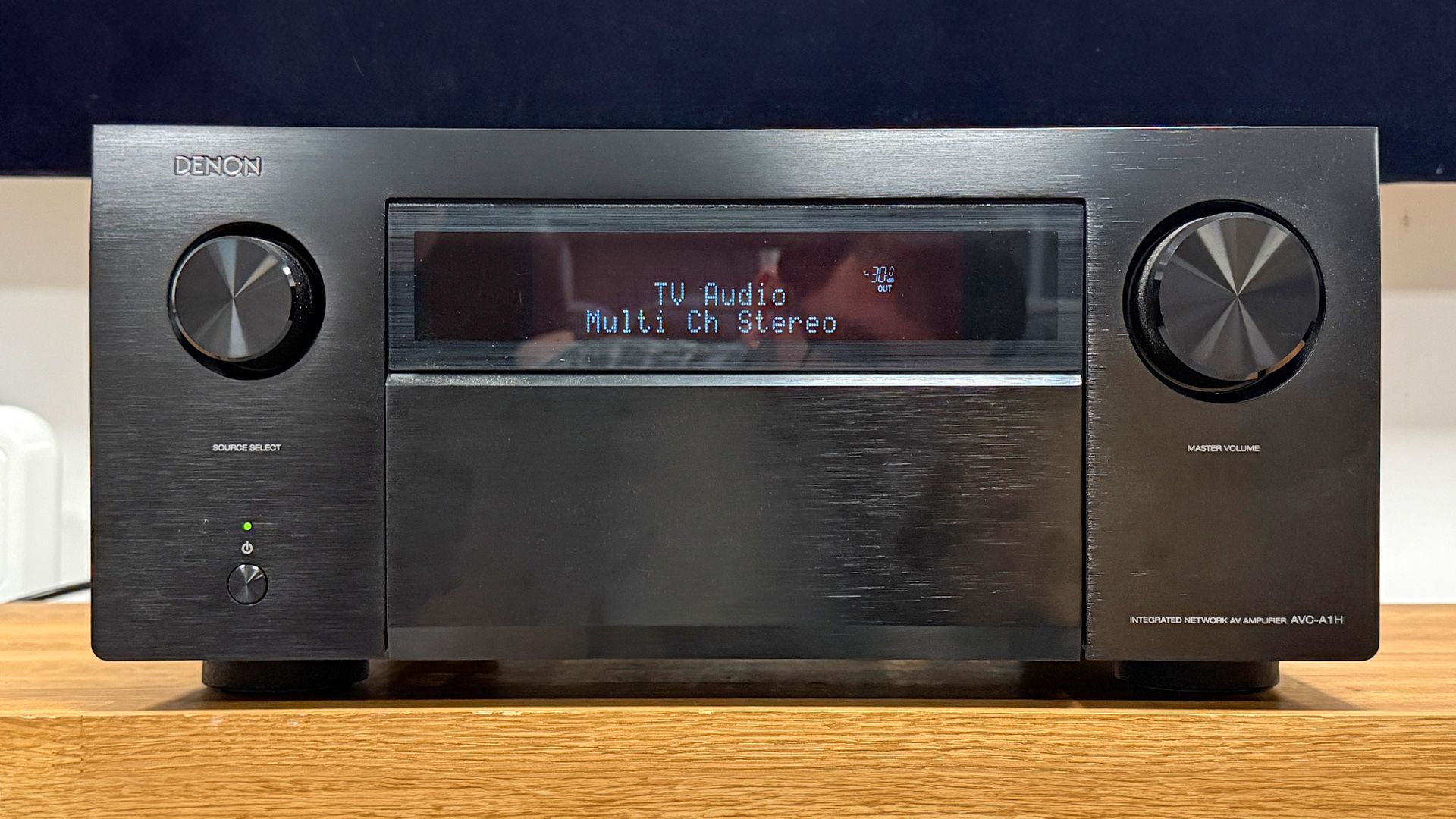
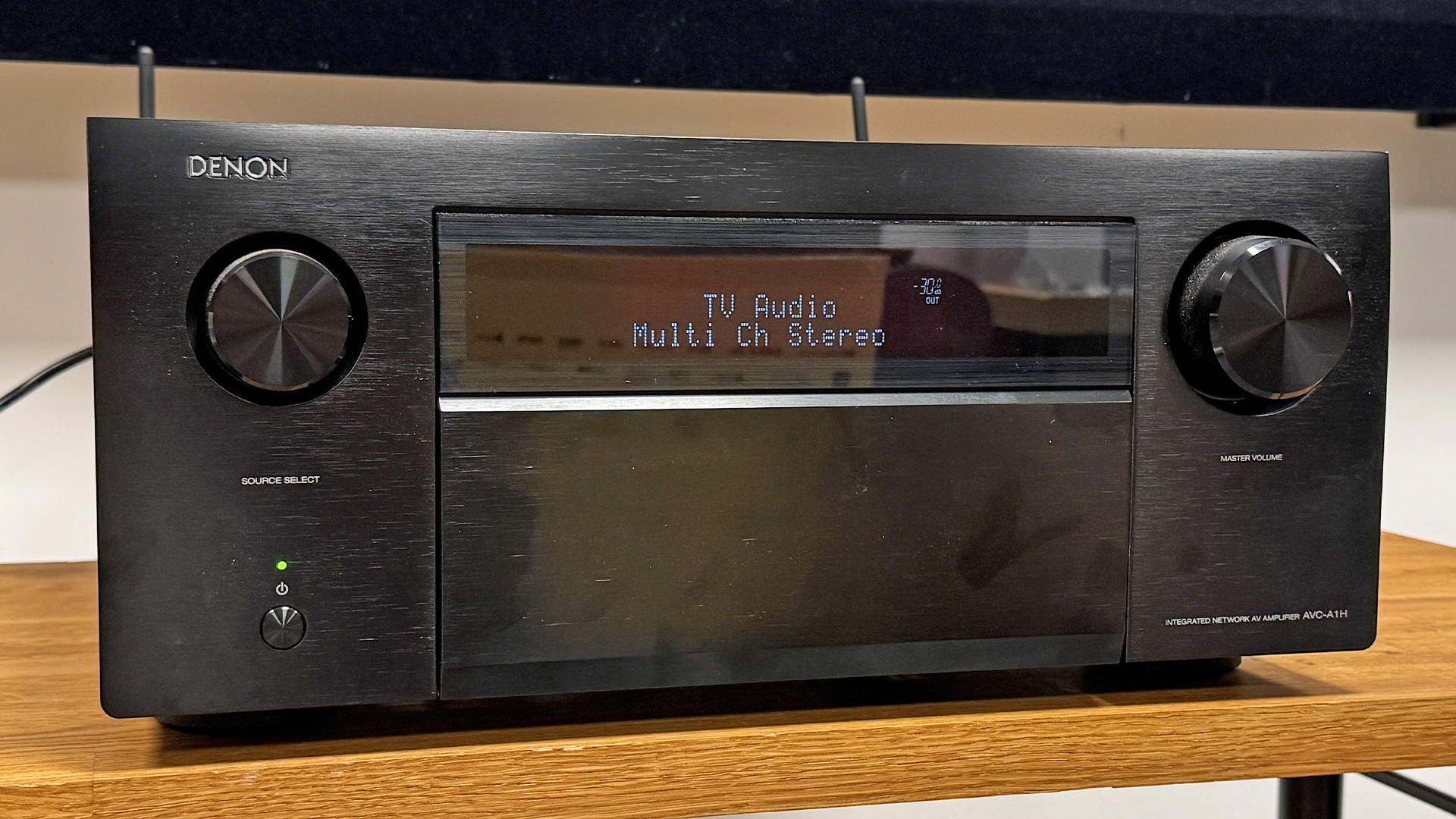
In the premium home cinema market, the search for the ultimate single-box solution is a journey of diminishing returns and uncompromising engineering. Denon, a brand long celebrated for dominating the entry-level and mid-range AV receiver (AVR) sectors, has officially thrown down the gauntlet to the ultra-high-end tier with its absolute flagship: the Denon AVC-A1H (marketed in the United States as the AVR-A1H).
This gargantuan amplifier is designed for home cinema purists who refuse to compromise on power, processing channels, or spatial accuracy. Boasting an unprecedented 15 channels of built-in amplification and support for up to four independent subwoofers (a 9.4.6 configuration), the AVC-A1H is engineered to drive complex, high-end speaker arrays without the need for external power amplifiers.
However, this level of audio engineering demands a premium. The AVC-A1H carries an official retail price of £6,300 in the United Kingdom, AU$12,499 in Australia, and $7,200 in the United States. The American variant, designated with an "R" (AVR-A1H), features an integrated AM/FM tuner, whereas the British and Australian versions (AVC-A1H) omit the tuner but remain otherwise identical in terms of internal circuitry, processing power, and performance.
For enthusiasts with the budget and physical space to accommodate it, this flagship device represents the pinnacle of modern home audio processing, combining cutting-edge HDMI 2.1 connectivity with master-grade internal components.
Chronology: The Evolution of Denon’s Premium Audio Legacy
To appreciate the significance of the AVC-A1H, one must look at the broader timeline of Denon’s product development and the modern AV receiver landscape.
Over the last decade, Denon established a dominant market position by delivering highly competitive, feature-rich AVRs at accessible price points. Models like the AVR-X2800H and the premium AVC-X6800H became default recommendations for mid-range home theaters. However, it had been several years since Denon updated its absolute top-tier "A-Series" reference amplifier. The previous generation of reference-grade units had begun to age, particularly regarding the rapid transition to HDMI 2.1 standards, high-refresh-rate gaming, and advanced object-based audio formats.
The development of the AVC-A1H was a multi-year undertaking conducted at Denon’s famed Shirakawa Audio Works in Japan. This facility is the spiritual heart of the brand, where elite craftspeople assemble reference-grade components by hand.
[ Shirakawa Audio Works Development ]
                 │
                 ▼
[ Sound Master Shinichi Yamauchi Tuning ]
                 │
                 ▼
[ Global Launch: £6,300 / $7,200 / AU$12,499 ]
                 │
                 ▼
[ Current Market Phase: Strategic Retail Discounts (~£5,000 UK) ]
Following its global launch, the amplifier has entered a mature phase in its lifecycle. While its launch prices were formidable, the market has settled, and discerning buyers can now find the amplifier in the UK for closer to £5,000. This price adjustment positions the AVC-A1H as a highly competitive alternative to boutique separate processor-and-amplifier combinations, offering a simpler, single-chassis path to reference-grade sound.
Supporting Data: Technical Specifications and Performance Metrics
The physical and electrical architecture of the AVC-A1H is defined by extreme scale. Weighing a massive 32kg (70.5 lbs) and measuring 43 x 50 x 20cm (HWD), this amplifier requires a reinforced AV rack and ideally two people to safely lift and install.
Key Technical Specifications
| Feature | Specification |
|---|---|
| Channels of Amplification | 15.4 channels (supports up to 9.4.6 configurations) |
| Power Output | 150W per channel (into 8 ohms, 20Hz-20kHz, 0.05% THD, 2 channels driven) |
| Digital-to-Analog Converters | 10x two-channel ESS Sabre ES9018K2M DAC chips |
| HDMI Inputs / Outputs | 7x HDMI 2.1 inputs / 3x HDMI outputs (including eARC) |
| Video Passthrough | 8K/60Hz, 4K/120Hz, HDR10, HDR10+, HLG, Dolby Vision |
| Gaming Features | VRR (Variable Refresh Rate), ALLM, QFT (Quick Frame Transport) |
| Immersive Audio Formats | Dolby Atmos, DTS:X, DTS:X Pro, Auro-3D, Sony 360 Reality Audio |
| Wireless Streaming | HEOS Multi-room, AirPlay 2, Spotify Connect, Tidal, Deezer, Bluetooth 5.0 |
| Room Correction | Audyssey MultEQ XT32 (included); Dirac Live / Dirac Live Bass Control (optional license) |
Real-World Testing Environment and Performance Analysis
To evaluate the capabilities of the AVC-A1H, the amplifier was installed in a dedicated, acoustically treated testing facility. It was paired with the five-star KEF R Meta 5.1 Speaker System, utilizing an Oppo UDP-203 4K Blu-ray player as the reference source.
1. Multidimensional Spatial Accuracy
Testing began with the Dolby Atmos track of F1: The Movie during the high-octane 24 Hours of Daytona sequence. The AVC-A1H demonstrated an extraordinary ability to construct a seamless, three-dimensional dome of sound. Individual acoustic elements—such as gravel spraying against carbon-fiber chassis, the high-pitched whine of pneumatic wheel guns, and the overhead sweep of a tracking helicopter—were placed with pinpoint accuracy. The amplifier maintained complete control over the soundstage, ensuring that micro-details were never masked by the roar of the V8 engines.
2. Bass Management and Low-End Texture
Low-frequency control was assessed using the demanding "Flight to the LAPD" sequence from Blade Runner 2049 and the worm attack scene from Dune: Part One. The Denon managed the KEF subwoofers with absolute authority. Rather than producing a monophonic, boomy rumble, the AVC-A1H resolved the complex, textured low-frequency synthesis of Hans Zimmer’s scores. The rhythmic drumming in Dune felt incredibly tactile, demonstrating excellent start-stop speed and transient response.
Low-Frequency Performance Comparison:
[Standard AVR]  ━━━ Low-frequency boom with limited tonal variation
[Denon AVC-A1H] ━━━ Textured, multi-layered bass with precise transient control
3. Vocal Fidelity and Dynamic Range
Dialogue handling proved to be another area of superiority. When comparing the AVC-A1H to its highly regarded sibling, the Marantz Cinema 30, the Denon resolved a deeper level of low-level vocal dynamics. Subtle inflections, whispers, and the natural chest resonance of actors’ voices were rendered with realistic weight, making speech sound remarkably lifelike.
4. Musical Performance
While AV receivers often struggle with two-channel music, the AVC-A1H leveraged its high-grade ESS Sabre DACs to deliver an engaging musical performance. Testing with Daft Punk’s electronic score for Tron: Legacy revealed sparkling high-frequency transients and a driving, rhythmic bassline. When playing Carly Rae Jepsen’s "On Wires," the amplifier preserved the delicate separation between the dry, intimate lead vocals and the wide, synthesized soundstage of the chorus.
Official Responses: Denon’s Engineering Philosophy
The development of the AVC-A1H represents a deliberate rejection of the industry trend toward smaller, lifestyle-oriented audio components. According to engineering insights from Denon’s Shirakawa facility, the flagship was designed from the ground up to prioritize electrical isolation and raw power delivery over aesthetic minimalism.
       [ Heavy-Duty Transformer / Power Supply ]
                     │             │
      ┌──────────────┘             └──────────────┐
      ▼                                           ▼
[Left Channel Array]                       [Right Channel Array]
(Isolated Symmetrical Mono-Block Construction to Minimize Crosstalk)
Denon’s Sound Master, Shinichi Yamauchi, oversaw the final acoustic tuning of the unit. Yamauchi’s signature tuning philosophy focuses on achieving a "Vivid and Spacious" sound. To achieve this, the engineering team implemented several key design choices:
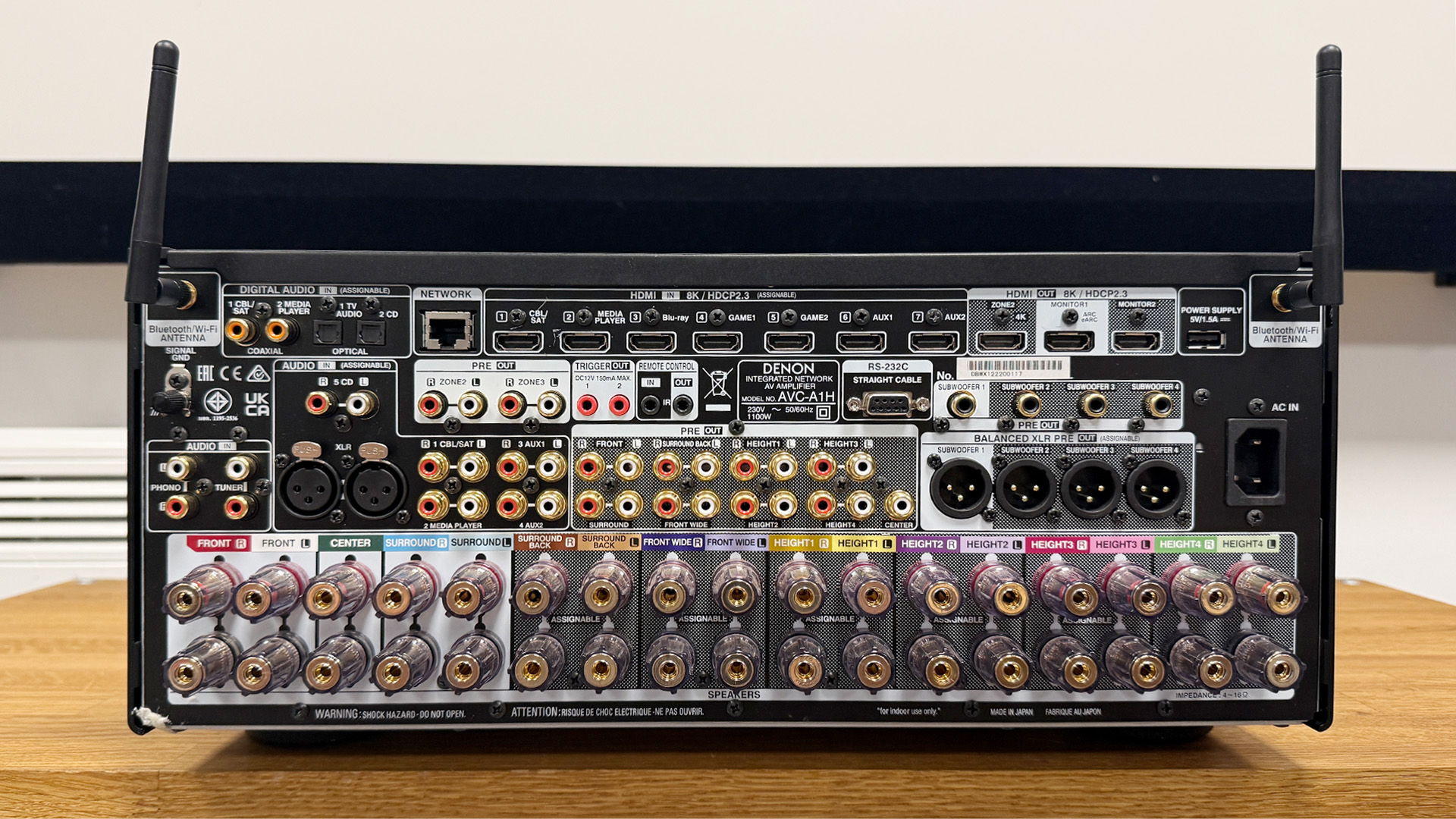
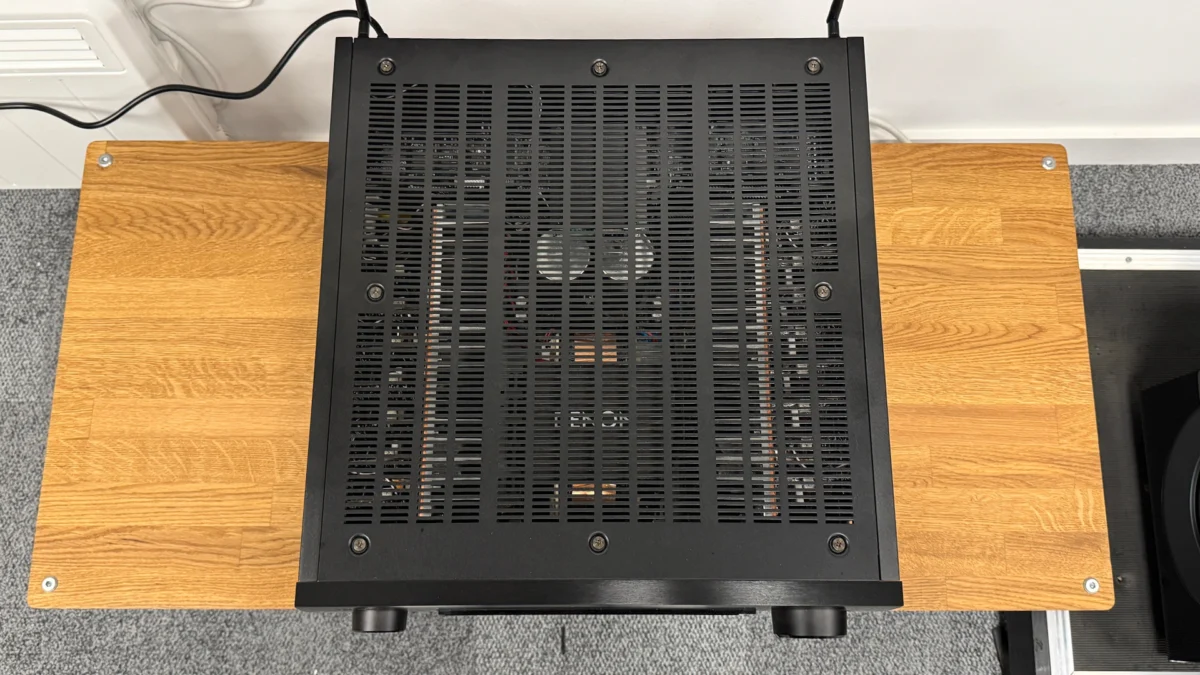
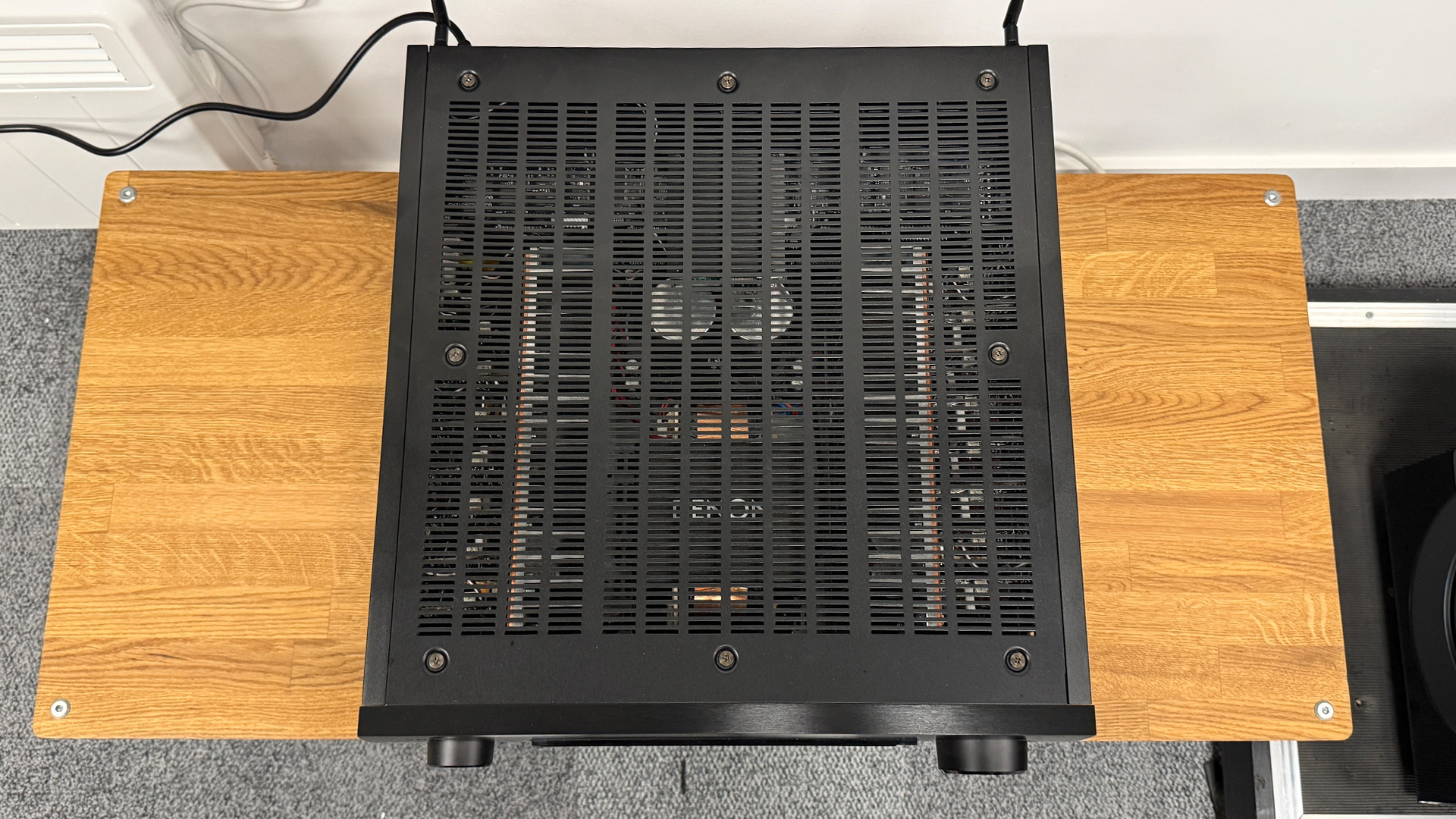
- Symmetrical Mono-Block Construction: The 15 amplifier channels are mounted on separate boards in a symmetrical configuration, flanking a massive, centrally positioned power transformer. This layout minimizes crosstalk and ensures equal power distribution.
- Premium Power Supply: The custom-wound transformer weighs over 11kg on its own, housed in a cast-iron casing to suppress mechanical vibrations.
- Bespoke Capacitors: The reservoir capacitors were custom-designed to Denon’s exact specifications, ensuring instantaneous current delivery during sudden dynamic shifts in film soundtracks.
- Upgraded User Experience: Recognizing that a premium product requires premium touchpoints, Denon replaced the standard plastic remote control found on lower models with a backlit, metal-fronted remote that feels appropriately luxurious.
Implications: Redefining High-End Home Cinema
The introduction of the Denon AVC-A1H has significant implications for both consumers and the broader home audio industry, reshaping expectations for what a single-box system can achieve.
The Integration vs. Separates Debate
Traditionally, enthusiasts seeking to power more than 11 channels of audio had to purchase a dedicated AV processor and pair it with multiple heavy, expensive multi-channel power amplifiers. This setup required extensive cabling, massive rack space, and complex power-sequencing systems. By delivering 15 channels of clean, high-current power alongside state-of-the-art processing in a single chassis, the AVC-A1H offers a compelling alternative. It dramatically simplifies high-end system design while matching the sonic authority of many separate component systems.
The Competitive Landscape
The AVC-A1H sits in a strategic position among three five-star home cinema amplifiers:
                          [ Market Positioning ]

  £3,500 - £4,000             ~£5,000 - £6,300             £7,300+
┌──────────────────┐        ┌──────────────────┐        ┌──────────────────┐
│  Marantz Cinema  │        │  Denon AVC-A1H   │        │  JBL Synthesis   │
│        30        │        │                  │        │      SDR-38      │
└──────────────────┘        └──────────────────┘        └──────────────────┘
  - 11 Channels               - 15 Channels               - 7 Channels
  - Warm, smooth tone         - Dynamic, authoritative    - Class G power
- Ultimate single-box - Highly analytical- Marantz Cinema 30: Retailing at a lower price point (£4,000 launch, often found for £3,500), the Marantz is a spectacular 11-channel receiver with a warmer, slightly more relaxed sound signature. However, for users planning large 9.4.6 or 7.4.6 layouts, the Denon’s four additional channels of onboard amplification and superior dynamics justify the extra financial outlay.
- JBL Synthesis SDR-38: Launching at a more premium £7,300, the JBL features Class G amplification but offers only 7 channels of onboard power, requiring external amplification to run a full immersive setup. The Denon presents a much more complete and cost-effective single-box package.
Advanced Calibration and Future-Proofing
The inclusion of Audyssey MultEQ XT32, alongside optional paid upgrades for Dirac Live and Dirac Live Bass Control, represents the future of home audio integration. Room acoustics remain the single biggest variable in audio performance. By offering dual-platform compatibility, Denon allows users to choose between the user-friendly, automated Audyssey setup or the highly advanced, impulse-response corrections of Dirac Live.
Ultimately, the Denon AVC-A1H redefines the reference class for AV receivers. It proves that with meticulous Japanese engineering, a single-box solution can deliver the raw power, poise, and atmospheric immersion once thought exclusive to massive multi-box separates. For the dedicated home cinema enthusiast, it is an investment that yields spectacular sonic dividends.