In an era where the audiophile landscape is shifting rapidly between the purity of analog heritage and the convenience of high-resolution digital streaming, the Onkyo A-50 Network Integrated Amplifier arrives as a compelling bridge between two worlds. As a flagship component of Onkyo’s new "Icon Series," the A-50 is not merely an amplifier; it is a sophisticated, feature-dense hub designed to anchor the modern home entertainment system. With an MSRP of $1,599, it promises to deliver both the sonic transparency demanded by purists and the versatile connectivity required by the contemporary listener.
Main Facts: An Architectural Overview
The Onkyo A-50 is a Class AB integrated amplifier engineered to provide 110W per channel into 8 ohms and 180W into 4 ohms. Beyond its raw power, it acts as a digital nexus, featuring a robust internal DAC that supports coaxial, optical, and USB-A inputs, alongside HDMI ARC for seamless television integration.

The unit’s design philosophy centers on the company’s proprietary three-stage Inverted Darlington circuit and Dynamic Intermodulation Distortion Reduction Circuitry (DIDRC). This approach ensures that signal noise—particularly in high-frequency bands typical of digital sources—is suppressed, leading to an exceptionally clean and textured output. Physically, the unit is striking, sporting a minimalist matte finish with distinctive orange LED indicators that break away from the industry-standard blue or white light schemes, offering a refined, retro-modern aesthetic.
Chronology: The Journey from Unboxing to Calibration
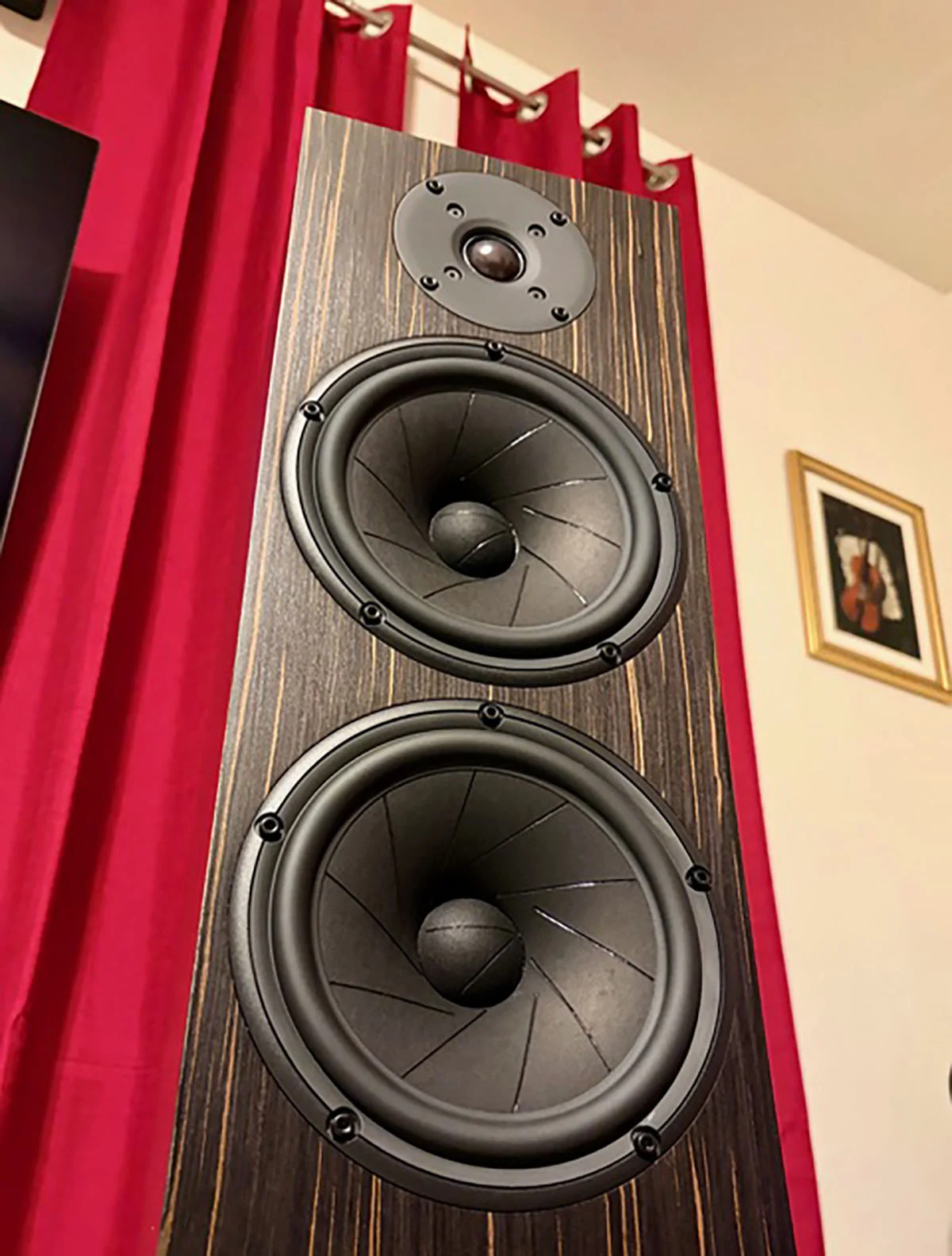
My experience with the A-50 began with the hardware installation. Pairing the amplifier with Totem Bison Twin floor-standing speakers and an SVS SB-3000 R|Evolution subwoofer (connected via pre-out), the unit demonstrated immediate physical competence.

Following the hardware setup, I transitioned to the software integration. Utilizing the Onkyo Controller application on an iPhone, the device was easily located via Bluetooth and integrated into my local Wi-Fi network. While the unit supports wired Ethernet for those prioritizing network stability, the wireless performance proved more than adequate for high-fidelity streaming. A firmware update followed shortly after setup, highlighting the "computer-like" nature of this component—a sentiment reinforced by the fact that the device hosts its own web interface, allowing for advanced configuration via any browser on the local network.
The true transformation occurred during the room correction phase. While the "Fidelity IQ" loudness-control feature provided some tonal adjustment, the real star was the integration of Dirac Live® Room Correction. By using the included setup microphone, the A-50 analyzed the acoustic environment of the listening room. The difference post-calibration was profound; the soundstage collapsed the "gap" between the subwoofer and the main speakers, creating a cohesive, immersive environment where the speakers seemingly vanished, leaving only the music.

Supporting Data: Technical Specifications and Performance Metrics
The A-50 is built to handle a diverse range of inputs with high precision. Its technical profile is as follows:
- Amplification: 2-channel Class AB, 110W (8 Ohm) / 180W (4 Ohm).
- Connectivity: Wi-Fi/LAN, HDMI ARC, 3x RCA analog inputs, MC/MM Phono stage.
- Room Correction: Dirac Live® (Full version available as a $99 upgrade).
- Dimensions & Weight: 17.1” x 5.3” x 14.0”; 28 lbs (13kg).
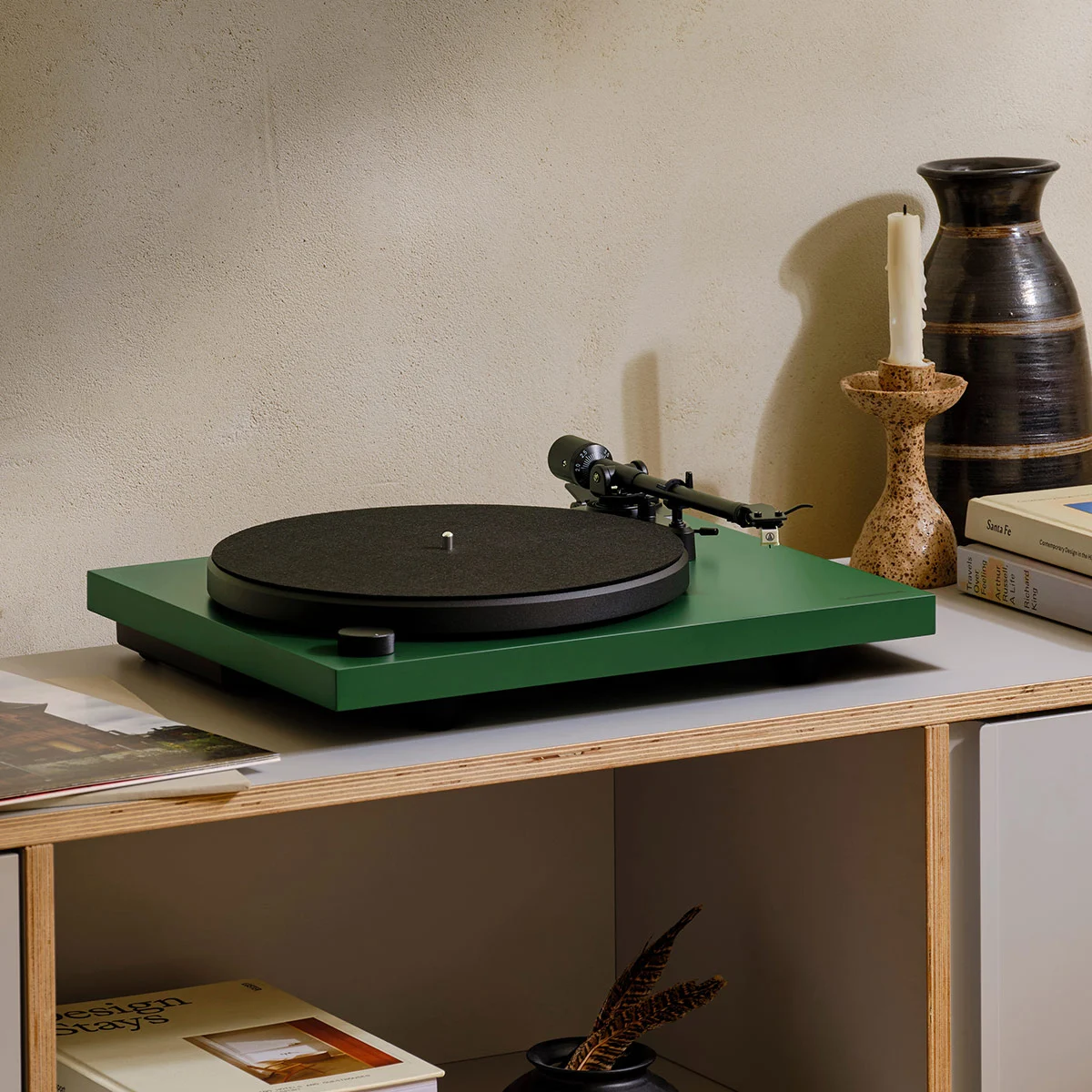
During testing, the phono stage was particularly impressive. When paired with a Thorens TD-124 turntable and a Zu Audio DL-103 low-output moving-coil cartridge, the amplifier provided sufficient gain and noise floor management to reveal fine details—such as subtle note decay and room ambience—that are often lost in lesser integrated units. Similarly, the internal DAC handled CD playback from a Cambridge Audio CXC2 transport with remarkable warmth and punch, effectively proving that the internal signal path is as capable as the analog sections.

One minor technical limitation encountered was the USB-A input. The unit’s operating system does not natively support the exFAT file system; users must format flash drives to FAT to ensure compatibility. Additionally, the placement of the USB-A port on the rear panel is somewhat inconvenient, a design choice that contrasts with some of Onkyo’s own smaller-form-factor models that feature front-facing access.
Official Philosophy: The "Direct" Approach
Onkyo’s design philosophy emphasizes the "Direct" function, a toggle that bypasses tone control circuits to provide the shortest possible signal path. Throughout my testing, this mode consistently delivered the most detailed and transparent results. By removing the influence of bass and treble filters, the A-50 allowed the inherent character of the source material to shine through. Whether streaming from Qobuz or playing back a vintage vinyl press of Sgt. Pepper’s Lonely Hearts Club Band, the amplifier remained neutral, authoritative, and entirely non-fatiguing, even after extended listening sessions at high volumes.

Implications: The Future of the Integrated Amplifier
The release of the A-50 signifies a shift in the audiophile market toward "intelligent" components. By integrating Dirac Live and network-based firmware updates, Onkyo is acknowledging that the listening room is the final, and often most problematic, link in the audio chain.
For the prospective buyer, the implications are clear: the A-50 represents a "set it and forget it" solution that doesn’t sacrifice the modularity of high-end audio. You can use it as a standalone streaming receiver today, and incorporate a high-end turntable or CD transport tomorrow. It is a device that recognizes that while music consumption habits have changed, the fundamental requirement for accurate, powerful, and immersive sound reproduction remains constant.

Final Assessment
The Onkyo A-50 is a powerhouse that successfully marries the aesthetic elegance of the Icon Series with the computational power required by modern digital audio. While it lacks a dedicated subwoofer channel—forcing users to rely on pre-outs—and the rear USB placement is a minor ergonomic annoyance, these are easily overshadowed by the sheer quality of the playback.
Pros:

- Exceptional, effortless power delivery that remains cool under load.
- Sophisticated Dirac Live room correction capabilities.
- Versatile connectivity, including a high-quality MC/MM phono stage.
- Stunning industrial design with a high-end matte finish.
Cons:
- Rear-mounted USB-A port is difficult to access.
- Requires FAT formatting for USB storage drives.
- No dedicated subwoofer output (though pre-outs function well).
In summary, the Onkyo A-50 is a triumph of balance. It provides the audiophile with the tools to refine their environment through room correction while maintaining the classic, warm, and authoritative sound signature that Onkyo enthusiasts have come to expect. It is, quite simply, an excellent foundation for any serious music or home theater enthusiast looking to consolidate their system into a single, beautiful, and capable chassis.