
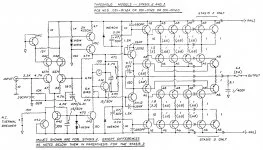
In the rarefied world of high-fidelity audio, few names command the reverence of Nelson Pass. As the founder of Threshold and later Pass Labs, Pass has spent decades defining the topology of modern amplification. Recently, the DIY audio community witnessed a landmark moment in engineering history: the release of a new "Stasis" front-end design, directly from the master himself.
For those who have followed the evolution of power amplifiers, the "Stasis" architecture represents a pinnacle of the 1980s and 90s, characterized by its unique ability to combine the delicacy of a low-power, high-linearity gain stage with the raw, high-current muscle of a massive output section. By sharing his latest iteration of this design on the diyaudio community forums, Nelson Pass has effectively handed the keys to the kingdom to enthusiasts worldwide, sparking a wave of excitement, technical inquiry, and collaborative engineering.

Chronology: A Gift to the Enthusiasts
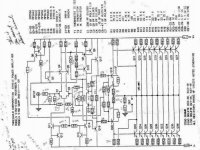
The project began in late November 2020, when Nelson Pass initiated a thread titled "New Stasis Front-End." In an industry where intellectual property is often guarded with iron-clad secrecy, the move was uncharacteristically generous. Pass, known for his long-standing support of the "do-it-yourself" audio movement, released the schematics and design philosophy for a modern interpretation of the legendary Threshold Stasis topology.
The community reaction was instantaneous. Within hours, veteran builders and novices alike were pouring over the design. The discourse quickly shifted from initial disbelief to rapid-fire technical troubleshooting. Enthusiasts began analyzing component choices—specifically the input JFETs, thermal compensation, and power supply requirements—to determine how to best implement the design for contemporary standards.
By the end of the first 48 hours, the thread had become a focal point for the global audiophile community. It wasn’t just a technical discussion; it was a collaborative workshop where the original architect was actively answering questions, clarifying values, and offering sage advice on how to translate a 20th-century classic into a 21st-century powerhouse.
Technical Foundations: The "Stasis" Architecture
At the heart of the Stasis design is a concept that seems almost paradoxical: the "stasis" (or static) condition. The topology uses a bootstrap circuit to ensure that the primary gain stage sees essentially constant voltage and current, regardless of the output signal. This removes the "work" from the sensitive front-end components, allowing them to operate in a perfectly linear, distortion-free state, while the massive output stage handles the heavy lifting of driving demanding speaker loads.
Key Technical Considerations
The implementation of this new front-end brought to light several critical design questions addressed by Pass during the discussion:
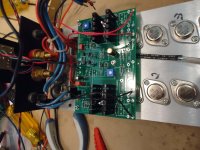
- Thermal Management: Pass emphasized the use of a thermostat ("T" switch) and a classic 2K thermistor (TH1) mounted directly to the output stage heatsinks. This ensures that as the amplifier reaches operating temperature, the bias remains stable—a crucial factor in maintaining the sonic signature of the Stasis sound.
- Component Selection: While the original Threshold designs relied on transistors that are increasingly rare or obsolete, Pass guided users toward modern equivalents. He noted that the KSC2690 and KSA1220 remain excellent choices for current-production builds, while acknowledging that newer Toshiba parts (TTA004B/TTC004B) could also be employed with success.
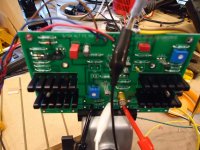
- Calibration: The design requires careful adjustment of output offset (via potentiometer P1) and output transistor bias (via P2). Pass advised that the target bias should be whatever results in the heatsinks reaching approximately 50°C after an hour of operation with the chassis cover in place—a "real-world" thermal test that balances performance with reliability.
Official Responses and Engineering Insights
The most compelling aspect of the thread was the direct dialogue between Nelson Pass and the community. When users asked about the specific values for capacitors and resistors, Pass provided precise, actionable data.
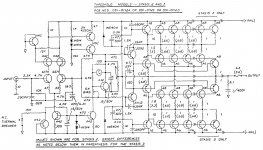
When asked about the voltage rails for a Stasis 2 or 3 build, Pass confirmed that 30V to 60V would be appropriate, depending on the desired power output and headroom. Regarding the input stage, he clarified that for those wishing to use a single-ended input, simply grounding the negative input was the standard procedure.
Perhaps the most significant takeaway for the DIY community was Pass’s candidness about the "evolution" of the design. He noted that certain components (like the 680pF capacitors C9 and C10) were specific to driving cascode outputs and were relics of earlier versions—a level of historical transparency rarely seen from an active designer.
Implications for the High-End Audio Market
The release of the Stasis front-end has broader implications for the high-end audio market. First, it democratizes access to elite-tier engineering. A project that might have cost tens of thousands of dollars as a commercial product in the 1980s can now be constructed by a hobbyist for a fraction of that cost, provided they possess the necessary skills and patience.
Furthermore, it keeps the "Stasis" legacy alive. By allowing a new generation to build and maintain these amplifiers, the design is being preserved in a way that commercial products, which eventually become "orphaned" by their manufacturers, often are not.
The "Legendary" Factor
The enthusiasm in the thread—characterized by lighthearted banter from users like "2 picoDumbs" and "gary s"—reveals the emotional connection audiophiles have with this hardware. There is a palpable sense of accomplishment in building an amplifier that carries the "Pass" pedigree. As one user noted, the act of building the amplifier is as much about the process and the community as it is about the final sound.
Looking Forward: A Legacy of Generosity
As the project continues to gain momentum, the long-term impact on the DIY audio scene is clear: Nelson Pass has provided a roadmap for building one of the most respected amplifier topologies in history.

For the reader interested in pursuing this, the project is not for the faint of heart. It requires a deep understanding of electrical safety, a mastery of soldering and mechanical construction, and the ability to source high-quality, reliable components. However, for those who successfully complete the build, the result is a piece of audio history.
The conversation that occurred on diyaudio remains a masterclass in collaborative engineering. By answering questions about bias, thermal runaway, and component substitution, Nelson Pass did more than just release a schematic; he acted as a mentor to thousands of enthusiasts.
In a world where technology is increasingly proprietary, sealed behind glass and software locks, the Stasis front-end revival stands as a testament to the power of open knowledge. It is a reminder that the best audio designs are not just products—they are shared experiences, evolving over time through the hands of those who truly appreciate the art of sound.
Summary of Specifications for Builders
- Rails: 30V to 60V DC recommended.
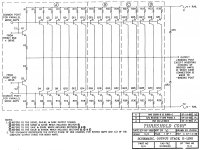
- Output Devices: MJ21193/94 (TO3) recommended for robust performance.
- Bias: Target 50°C steady-state sink temperature.
- Protection: D3/D4 1N4004 diodes for flyback protection.
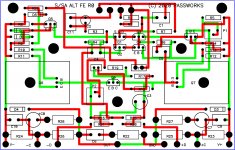
- Front End: Updated JFET input stage with precise offset and bias trimming.
The Stasis project is more than a circuit; it is an invitation to participate in a lineage of high-fidelity excellence. Whether one is a seasoned electrical engineer or a dedicated hobbyist, the opportunity to build a "Pass-designed" amplifier is an invitation to own a piece of audio legend, built by one’s own hands and grounded in the wisdom of a true master of the craft. As the community continues to refine the build, the Stasis front-end will undoubtedly remain a cornerstone of the DIY audio movement for years to come.


