
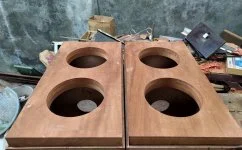
In the world of high-end audio, the pursuit of "the absolute sound" often collides with the harsh realities of domestic living. Audiophiles frequently find themselves trapped in a paradox: the desire for state-of-the-art sonic performance typically necessitates large, imposing enclosures, while the aesthetic and spatial requirements of a modern home demand a minimalist, low-profile footprint.
A recent technical discourse within the audiophile community has reignited the debate on how to achieve reference-level performance without sacrificing the aesthetic integrity of a listening room. By leveraging advanced driver technology and strategic design, experts are suggesting that the "big box" era of high-fidelity audio may be reaching a sophisticated, compact evolution.
The Design Conundrum: Performance vs. Footprint
The central challenge in speaker design remains the relationship between cabinet volume and low-frequency extension. Traditionally, to achieve deep, authoritative bass, designers have relied on large-diameter drivers paired with high-volume enclosures. However, as noted by industry enthusiasts and technical consultants, the integration of external subwoofers changes this equation entirely.
If a listener commits to an external subwoofer system, the main speakers are relieved of the burden of producing deep, subsonic frequencies. This architectural shift allows for a paradigm change: the main speakers can now utilize smaller drivers and more compact cabinets without compromising overall fidelity. By offloading the "heavy lifting" to a dedicated LFE (Low-Frequency Effects) channel, designers can optimize the mid-range and high-frequency units for greater clarity and lower distortion.
Chronology of the High-End Compact Movement
The shift toward compact, high-performance systems has been a slow but steady evolution over the last decade.
- 2015–2018: The rise of high-excursion 8-inch and 10-inch woofers led many to believe that large, floor-standing towers were the only way to achieve full-range response.
- 2019–2022: KEF’s innovation with the Blade and LS60 series—utilizing side-mounted woofers—demonstrated that a slim front baffle could exist alongside powerful bass output, sparking interest in alternative cabinet geometries.
- 2023–2025: Advances in material science, particularly with beryllium and specialized dome drivers (such as the Bliesma T25B and M74T), allowed for smaller, highly efficient mid-range and tweeter units that outperformed their larger predecessors.
- 2026 (Current): The focus has shifted toward "TMW" (Tweeter-Mid-Woofer) configurations that utilize ultra-high-performance 6.5-inch drivers like the Purifi PTT6.5, allowing for a slender, "less visually dominating" speaker profile.
Supporting Technical Data: The Case for Purifi and Bliesma
To surpass the performance of legacy systems—specifically those utilizing industry staples like the RS225—designers are looking toward specialized, high-cost components that operate within their "sweet spot."
The Bliesma Advantage
The Bliesma T25B (tweeter) and M74T (mid-range) are currently viewed as the gold standard for high-end DIY and boutique speaker design. Technical analysis indicates that the M74T mid-range dome provides superior sensitivity, exceptionally low distortion, and a lack of "off-axis bunching." Because these drivers maintain pistonic operation throughout their intended frequency range, they offer a level of transparency that larger, more traditional cone drivers often struggle to replicate.
The PTT6.5 Engineering Benchmark
When discussing compact, high-performance woofers, the Purifi PTT6.5 has become the benchmark. Its Intermodulation Distortion (IMD) performance is currently unmatched by any other 6.5-inch driver in the industry. For a designer seeking to shrink the cabinet, a pair of PTT6.5s in a sealed enclosure provides several advantages:
- Bass EQ Readiness: Because these drivers are engineered for high control, they respond exceptionally well to digital signal processing (DSP) and bass equalization.
- IMD Mitigation: Even when pushed, the PTT6.5 maintains a clean output, ensuring that the critical mid-range frequencies remain untouched by the excursions of the bass drivers.
- Subwoofer Synergy: A sealed PTT6.5 setup allows for a seamless "hand-off" to a subwoofer system, creating a coherent, full-range experience from a cabinet that is significantly narrower than traditional designs.
Official Perspectives and Expert Recommendations
The consensus among those currently pushing the envelope is that the "4-way" speaker system is becoming redundant for the home listener. While a 4-way system with side-mounted dual-opposed woofers offers incredible output, it is an over-engineered solution if the listener intends to incorporate dedicated subwoofers later.
Industry experts suggest that the "TMW" configuration—using a single high-performance 6.5-inch woofer on the front baffle—is the most logical path forward. To mitigate edge diffraction, designers recommend incorporating "decent chamfers" or rounded edges on the front baffle. This geometry not only aids in physical aesthetics, making the speaker appear slimmer, but also improves the acoustic radiation pattern.
"The goal," notes a prominent design lead, "is to move away from the ‘big box’ mentality. If you have a solid mid-range driver, the main cabinet only needs to be large enough to handle the mid-to-low transition. Everything else should be handled by the subwoofers."
Implications for Future Home Audio
The implications of this move toward compact, high-fidelity systems are significant for both the consumer and the manufacturer.
For the Consumer
The primary benefit is the reclamation of living space. By reducing the visual mass of the speakers, high-end audio becomes a more welcome addition to multi-purpose living rooms rather than being relegated to dedicated, acoustically treated bunkers. Furthermore, the modular nature of this design—starting with high-quality mains and adding subwoofers as the budget or room permits—offers a more sustainable path to building a "dream system."
For the Industry
The trend puts pressure on driver manufacturers to continue refining small-diameter performance. As consumers realize they can get "state-of-the-art" sound from a 6.5-inch driver, the market for large-format 12-inch and 15-inch home woofers may see a decline, or at least a shift toward dedicated subwoofer applications.
The Aesthetic Shift
We are likely to see a decline in the popularity of the monolithic tower speaker in favor of "slim-profile" designs that utilize side-firing woofers or high-excursion front-facing units. By employing wave-guides—such as the custom designs created by experts like augerpro for the Bliesma T25B—designers can ensure that even these slim-profile speakers maintain wide, consistent dispersion, effectively "vanishing" the speaker from the room while keeping the soundstage intact.
Final Considerations
Ultimately, the decision to downsize a speaker system requires a rigorous assessment of spatial constraints versus sonic ambitions. While it is possible to achieve reference-grade audio with smaller enclosures, it requires a higher financial investment in driver technology. The Purifi and Bliesma drivers mentioned are not "budget" components; they are specialized instruments.
However, for the audiophile who values both the visual aesthetics of their home and the clinical precision of their music, this represents a significant advancement. By embracing the synergy between compact, high-excursion drivers and dedicated subwoofer integration, the future of high-fidelity audio is looking increasingly slim, elegant, and uncompromisingly precise. The question remains: how much are we willing to invest in the physics of the small? Based on current trends, the answer is: as much as it takes to achieve the perfect sound.


