In a case that reads like a high-stakes financial thriller, federal authorities have dismantled what they describe as a brazen, sophisticated, and ultimately hollow scheme to hijack one of the most recognizable brands in the history of the music industry. Charles Cole, a 57-year-old North Carolina resident, stands accused of orchestrating a massive fraud that successfully swindled Napster—formerly known as Infinite Reality—out of a 25% ownership stake by dangling the promise of a multi-billion-dollar investment that never existed.
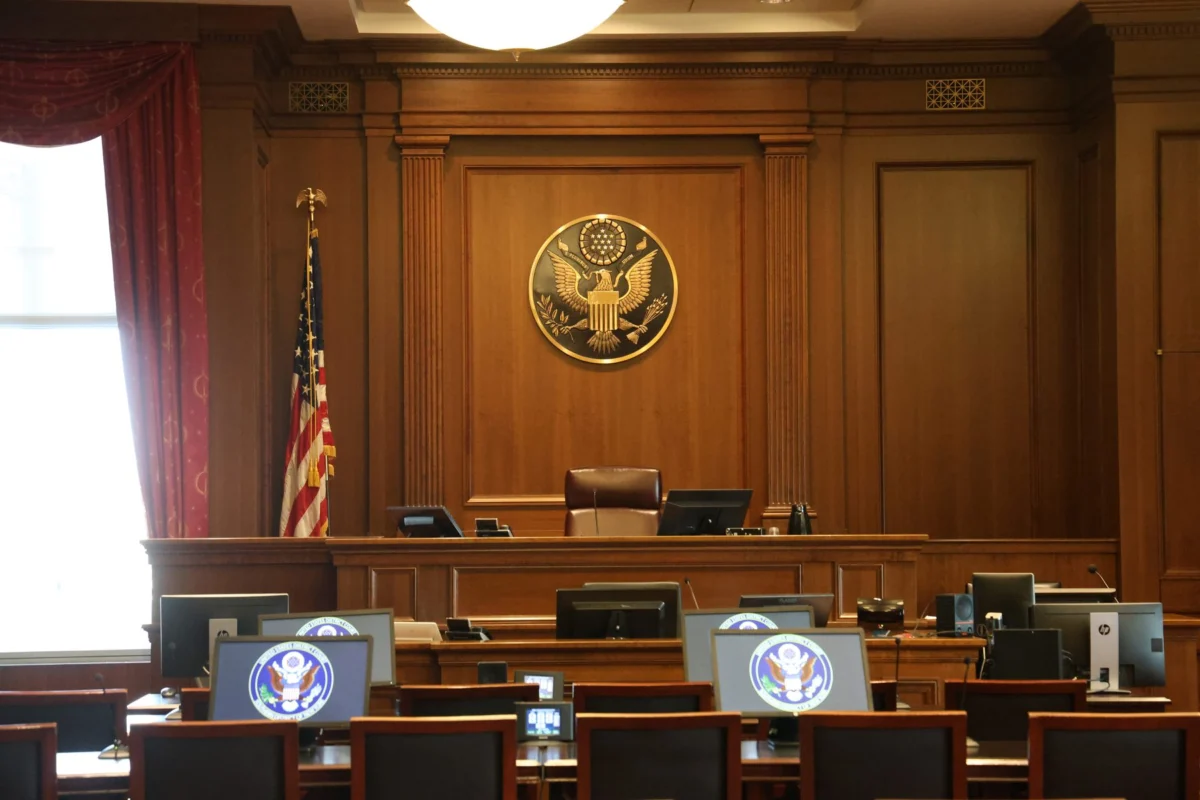
The indictment, unsealed on June 11 in the Southern District of New York, alleges that Cole exploited the corporate restructuring of a digital media firm, utilizing forgery, technical deception, and sheer audacity to secure a quarter of the company’s equity. The case, which involves federal criminal charges and parallel civil action from the Securities and Exchange Commission (SEC), has left shareholders reeling and cast a shadow over the future of the once-pioneering music platform.
The Anatomy of the Deception
According to court documents, the scheme unfolded throughout 2024. At the time, the company was known as Infinite Reality, a digital media startup that would later rebrand as Napster following a $207 million acquisition of the streaming platform in March 2025.
Cole’s primary instrument of fraud was the fabrication of a vast personal fortune. He allegedly claimed to possess liquid assets totaling $55 billion—a sum that would place him among the wealthiest individuals on the planet. By presenting himself as a high-net-worth benefactor, Cole convinced the leadership at Infinite Reality that he was prepared to inject $3.36 billion into the company’s capital reserves.
To maintain the illusion, Cole and his attorney, Torben Welch—who is also named as a defendant in the SEC complaint—reportedly constructed a "fictitious paper trail." This elaborate ruse included forged bank statements designed to mimic legitimate financial documentation. Perhaps most notably, investigators claim the pair went as far as creating a fraudulent website hosted on offshore servers. This digital facade was carefully engineered to replicate the online portal of a genuine Malaysian bank, intended to deceive auditors or curious executives into believing that Cole’s purported billions were safely held in overseas accounts.
A Chronology of the Scheme
The timeline of this sophisticated deception reveals a rapid escalation from initial contact to the successful acquisition of equity:

- Early 2024: Charles Cole initiates contact with Infinite Reality, presenting himself as a mysterious, ultra-wealthy investor with access to $55 billion in capital.
- Mid-2024: Relying on forged documents and the phantom promise of a $3.36 billion investment, Cole negotiates the acquisition of 239 million shares of Infinite Reality, representing approximately 25% of the company.
- March 2025: Infinite Reality successfully acquires the streaming platform Napster for $207 million, rebranding the parent company under the iconic Napster name.
- April 2025: Following the acquisition, investigative reporting by Forbes begins to cast doubt on the identity and viability of the company’s primary backer, raising red flags within the investor community.
- November 2025: Facing mounting pressure, Napster’s CEO formally informs shareholders that the promised $3.36 billion investment will not materialize. The company publicly acknowledges it has been the victim of "misconduct" and initiates cooperation with federal law enforcement.
- June 11, 2026: The Department of Justice unseals an indictment charging Cole with three counts of criminal fraud and conspiracy. The SEC simultaneously files a civil complaint against Cole and his attorney, Torben Welch.
Supporting Data and Technical Fraud
The indictment details how Cole leveraged his ill-gotten shares to extract immediate value from the company before the fraud was fully exposed. The SEC complaint alleges that, with the active assistance of Welch, Cole utilized the fraudulently obtained 239 million shares of Infinite Reality to secure a $1 million loan from a private, third-party lender.
The documents suggest that this loan was never repaid, serving as an immediate illicit payday for the conspirators. The "fictitious paper trail" was essential to this secondary fraud; by creating the appearance of ownership in a high-growth company, Cole was able to pass the threshold of creditworthiness required by the private lender.
The technical sophistication of the fraud—specifically the creation of the mirror website for the Malaysian bank—highlights a growing trend in financial crimes where perpetrators exploit the perceived reliability of digital banking portals to bypass traditional due diligence. By routing the traffic through offshore servers, Cole hoped to evade the jurisdictional oversight that might have flagged the bank’s credentials as fraudulent.
Official Responses and Corporate Fallout
The fallout from the investigation has been severe for Napster. Since the news broke, the company has attempted to distance itself from the incident while emphasizing its role as a victim.
In a formal statement provided to Billboard, a company spokesperson remarked: "We have cooperated with law enforcement since the company initially reported it was the victim of misconduct. We are continuing to support this process. Questions about the proceedings should be directed to the U.S. Attorney for the Southern District of New York. We have no further comment on an active matter."
The silence from Cole and Welch, neither of whom could be reached for comment, stands in stark contrast to the aggressive posture of federal prosecutors. For the U.S. Attorney’s office, the case is a priority, signaling a crackdown on the type of "fake-it-till-you-make-it" corporate fraud that has become increasingly prevalent in the era of high-stakes tech valuations and metaverse-related hype.

Broader Implications for the Music Industry
Napster’s history is already one of the most tumultuous in the music industry. Born in 1999 as a peer-to-peer file-sharing juggernaut, it famously upended the music business before facing a series of legal battles that effectively destroyed its original model. Since then, the brand has been a revolving door of ownership: from the streamer Rhapsody in 2011 to the virtual reality concert app MelodyVR in 2020, and later to Hivemind Capital Partners and Algorand in 2022.
The 2025 acquisition by Infinite Reality was intended to be the brand’s "third act," a pivot toward "next-generation" immersive 3D technology. The discovery that the company’s largest shareholder was a fraudster casts a long shadow over these aspirations.
Market Confidence and Due Diligence
The Napster case serves as a cautionary tale for venture capitalists and private equity firms operating in the digital media space. In the rush to secure "metaverse" and "Web3" assets, companies are often incentivized to prioritize rapid capital infusion over exhaustive background checks. The "fictitious paper trail" created by Cole suggests that even established firms can be misled if their verification processes are not rigorous enough to detect offshore digital fabrications.
The Cost of "Mystery" Investors
The Forbes investigation that initially triggered the collapse of the scheme highlights the importance of financial journalism as a check on corporate transparency. In the current market, the presence of a "mystery investor" with billions in liquid cash is often treated as a mark of prestige rather than a red flag. The Napster incident proves that such opacity is frequently a veil for underlying illegality.
As the legal proceedings in the Southern District of New York move forward, the focus will likely shift to how the company intends to recover the lost equity and whether the $1 million loan obtained through the fraud will be clawed back from the creditors. For now, Napster finds itself in the uncomfortable position of having to prove its financial integrity to the public, all while navigating the wreckage of a deal that promised a multi-billion dollar future but delivered a federal investigation.
The case of Charles Cole is a stark reminder that in the world of high-finance, the most elaborate and "official-looking" documents are often the most dangerous. As the industry watches, the trial will likely serve as a benchmark for how federal authorities handle the intersection of corporate acquisition fraud and digital-era white-collar crime.