
In the rarefied world of high-fidelity DIY audio, few components command as much respect as the Scan-Speak Revelator series. Renowned for their uncompromising build quality and sonic transparency, these drivers are the gold standard for audiophiles who build their own reference-grade speaker systems. However, a recent listing on the industry-leading forum DIYAudio has sent ripples through the community, sparking a debate over authenticity, manufacturing variations, and the limits of proprietary hardware.
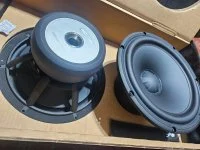
At the center of this controversy is a listing for a Scan-Speak Revelator 26W/8867T-10 woofer, a driver characterized by its striking black aluminum cone. When forum user "Jimmy154" posted the item for sale, the community response was immediate and skeptical—not because of the price or the shipping terms, but because of the physical appearance of the driver itself.

Main Facts: The "Extra Special" Anomaly
The subject of the inquiry is a 10-inch woofer from the Revelator line, a series widely regarded by professional acoustic engineers as one of the most successful designs in transducer history. The 26W/8867T-10 is specifically known for its rigid black aluminum cone and low-distortion motor system.
However, eagle-eyed enthusiasts noted a distinct deviation in the unit posted by Jimmy154: the dustcap geometry did not match the factory-standard profile associated with this specific model number. In the world of high-end audio, where tolerances are measured in microns and every gram of mass on a cone affects the transient response, a non-standard dustcap is a significant departure.

The seller, Jimmy154, has maintained that the unit is "extra special," implying that it is a unique or limited-run variant, while listing the price at $300 for local pickup in Nashua, New Hampshire. This price point is aggressive for a genuine, high-performance Revelator, which often commands significantly higher prices on the secondary market, adding another layer of intrigue to the listing.
Chronology of the Inquiry
The discourse began on May 27, 2026, when Jimmy154 first introduced the listing to the DIYAudio community. The initial post was sparse on technical details but high on availability, aiming to clear out inventory in the New England area.

- May 27, 2026, 5:29 PM: Jimmy154 initiates the thread, signaling intent to sell the 26W/8867T-10 woofer.
- May 27, 2026, 6:32 PM: User "AlmaAtaKZ" injects skepticism into the thread, questioning the legitimacy of the dustcap shape. This comment serves as the catalyst for the broader community investigation.
- June 29, 2026, 1:36 PM: After a month of silence and speculation, Jimmy154 returns to the thread. The response is short and dismissive of the scrutiny, labeling the unit as "extra special" and reiterating the logistical terms for the sale—confirming local pickup in Nashua and expressing a willingness to ship within the continental United States.
Supporting Data: Why the Dustcap Matters
To understand the intensity of the community response, one must understand the function of a dustcap in a long-throw woofer. It is not merely a cosmetic cover to keep debris out of the voice coil; it is a critical structural element. The dustcap contributes to the cone’s overall rigidity, affecting the "break-up" modes of the driver.
- The Revelator Philosophy: Scan-Speak’s design philosophy relies on the Symmetrical Drive (SD) motor system and specific cone geometry to ensure that the driver moves as a perfect piston.
- The Aluminum Cone Variable: Aluminum is chosen for its extreme stiffness-to-weight ratio. However, because metal rings at high frequencies, the dustcap design is optimized to dampen these resonances. Changing the shape of the dustcap fundamentally alters the mechanical impedance of the driver.
- The "Special" Claim: In the industry, "special" versions of drivers are typically designated with a suffix (e.g., -01, -02). The absence of a clear manufacturing backstory for this specific unit suggests either an OEM-exclusive run, a prototype that escaped the lab, or, as some cynics fear, a third-party modification.
Official Responses and Community Skepticism
The response from the DIYAudio community reflects a culture of "trust but verify." When a user claims a component is "extra special," they are essentially asking the community to take their word for it, bypassing the usual data-driven validation that defines the forum.

While there has been no formal statement from Scan-Speak regarding this specific unit, experts on the forum have noted that Scan-Speak occasionally produces custom drivers for boutique speaker manufacturers. These "OEM specials" often feature different dustcaps or mounting hole patterns. The skepticism, therefore, is not necessarily a claim of fraud, but a request for provenance.
Jimmy154’s response—asserting the driver is "new" and "extra special"—has not fully quelled the concerns. In a marketplace where clones and counterfeit audio components are becoming increasingly sophisticated, buyers are naturally wary of any driver that deviates from the catalog specification without supporting documentation.

Implications for the DIY Audio Market
The situation surrounding this 26W/8867T-10 unit highlights several critical issues in the contemporary high-end audio hobby:
1. The Rise of the "Secondary Market" Detective
The DIY community has evolved into a self-policing body. By utilizing high-resolution imagery and years of collective experience, users can identify manufacturing anomalies that would go unnoticed by the average consumer. This creates a safer, if more scrutinized, marketplace.

2. The Value of Provenance
In high-end audio, the "story" behind a component is often as valuable as the component itself. A driver that was part of a failed prototype for a $50,000 speaker system carries "audiophile street cred." Conversely, a driver with an unknown origin is viewed as a liability.
3. The Fragility of Technical Standards
The debate reminds us that even brands with sterling reputations like Scan-Speak are subject to the complexities of custom manufacturing. When a product enters the used market, the lack of a clear technical paper trail can turn a premium component into a subject of intense controversy.

Conclusion: A Buyer’s Dilemma
As the thread stands, the future of this particular Revelator remains uncertain. For a potential buyer, the choice is clear: either accept the seller’s assertion that this is a unique, "extra special" variant, or demand the technical parameters that would prove the driver performs to the same standard as its factory-cataloged counterparts.
The incident serves as a poignant reminder that in the world of high-end audio, technical specifications are not just numbers on a page—they are the foundation of trust. Whether this woofer is a hidden gem from a limited production run or an anomaly that defies categorization, it has sparked a necessary conversation about authenticity, the value of information, and the ever-present need for transparency in the DIY audio community.

For those interested in the outcome, the DIYAudio thread remains open. It serves as a testament to the community’s dedication to truth in audio engineering, ensuring that whether a component is a masterpiece of design or a simple mystery, it will be analyzed with the same rigor that defines the hobby itself. As the market for high-fidelity components continues to grow, cases like the "Nashua Revelator" will likely become more frequent, forcing both sellers and buyers to prioritize transparency above all else.


