Main Facts
In the high-end audio community, few brand names carry the historical weight and reverence of Thorens. Globally renowned for pioneering high-performance turntables—particularly their legendary idler-wheel and belt-drive designs—the historic manufacturer has long been synonymous with analog warmth and mechanical ingenuity. However, modern audiophiles are currently buzzing over a surprising and bold departure from convention: the introduction of a direct-drive (DD) system bearing the iconic Thorens badge.
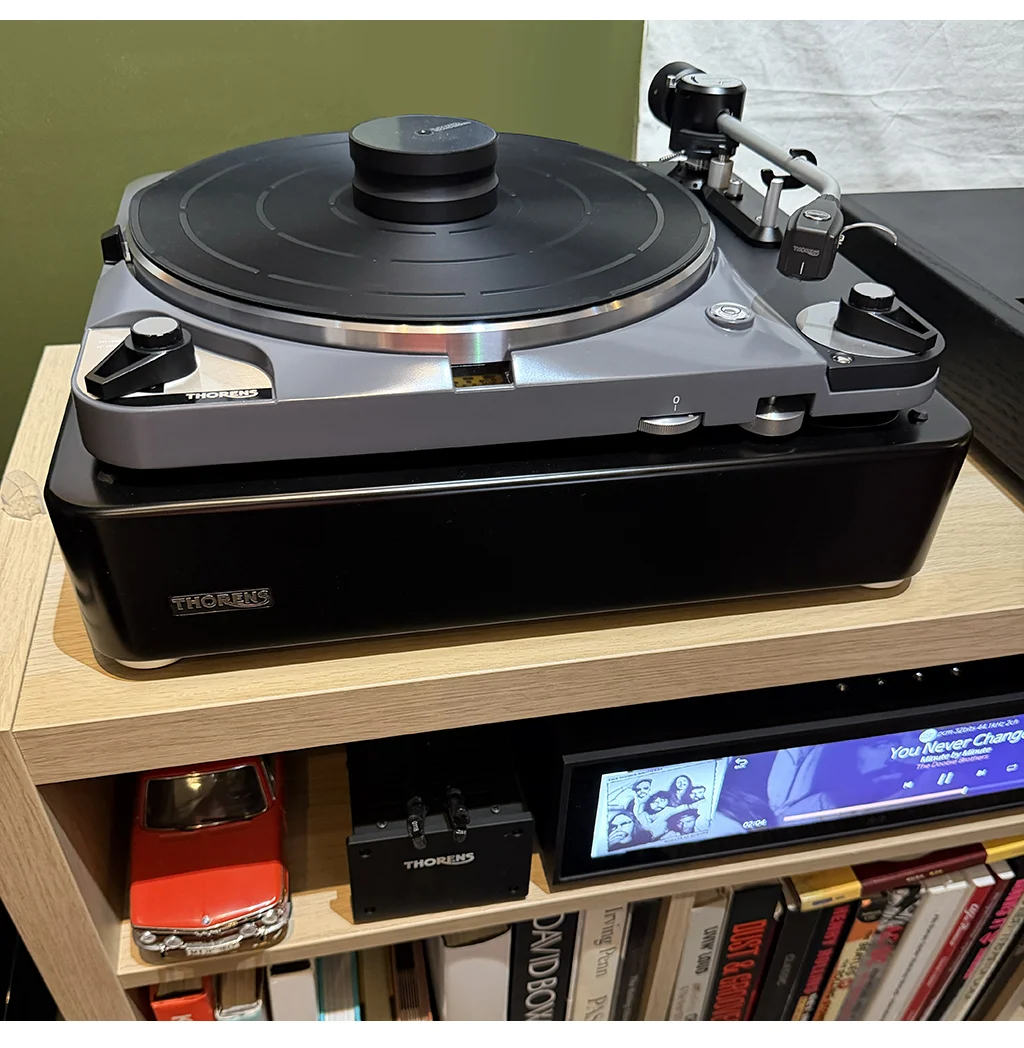
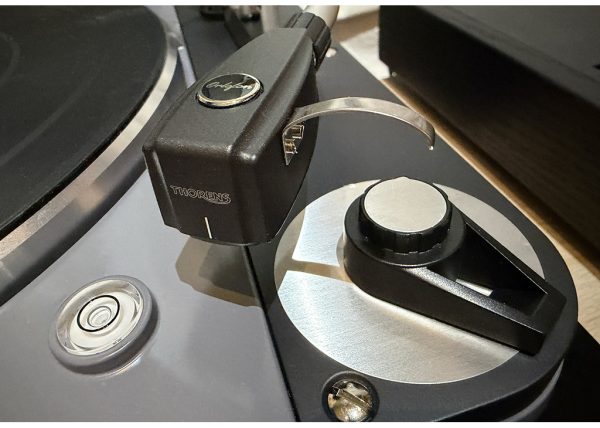
Distributed in the United States by MoFi Distribution, this reimagined direct-drive turntable arrives with a formidable legacy to uphold. Far from merely riding a wave of vintage nostalgia, this contemporary engineering feat bridges the gap between mid-century analog heritage and twenty-first-century precision. Paired out of the box with a 9-inch Thorens tonearm and outfitted with Ortofon’s latest specialized moving coil cartridge—appropriately designated the SPU TD 124—the playback system presents a formidable high-end audio chain.
Initial setup is refreshingly straightforward, circumventing some of the notorious calibration hurdles of vintage analog gear. Early listening sessions routed through the MoFi Master Phono stage—operating in current mode—reveal a soundstage that is remarkably expansive, richly textured, and dynamically alive. While purists might initially balk at the letters "DD" attached to a Thorens chassis, early hands-on evaluations suggest this machine is rewriting the rules of what a modern direct-drive deck can achieve.
Chronology
To fully understand the significance of this new direct-drive release, it is necessary to trace the timeline of Thorens’ engineering evolution and the path that led to this modern reimagining.
- The Mid-20th Century Golden Age: Thorens establishes itself as an industry titan, manufacturing iconic turntables celebrated for their mechanical complexity, robust idler-wheel drives, and heavy cast-iron platters. These vintage decks become prized collector’s items, setting a high benchmark for speed stability and dynamic slam.
- The Belt-Drive Era: As the decades progress, the industry shifts toward belt-drive systems to isolate the motor from the platter, reducing rumble and vibration. Thorens adapts brilliantly, dominating the audiophile market with numerous belt-drive classics.
- The Modern Resurgence: Recognizing a booming global appetite for physical media, Thorens undergoes a corporate and engineering revitalization. Leadership seeks to honor the company’s illustrious past while aggressively incorporating modern manufacturing tolerances and motor technologies.
- The Direct-Drive Shift: Breaking from decades of idler and belt tradition, Thorens engineers design a contemporary direct-drive system. The goal: combine the torque and speed stability of direct drive with the delicate microscopic retrieval expected of a reference-grade audiophile deck.
- The Present Day: MoFi Distribution introduces the new turntable configuration to reviewers and consumers. Equipped with the factory 9-inch Thorens tonearm and the bespoke Ortofon SPU TD 124 cartridge, the system undergoes its first round of critical evaluation in professional listening rooms, generating widespread industry anticipation.
Supporting Data and Technical Specifications
Evaluating a turntable of this caliber requires looking closely at the hardware ecosystem supporting it. The synergy between the turntable chassis, motor system, tonearm, and cartridge forms a complex chain where every component dictates the final sonic output.
The Direct-Drive Mechanism
Traditional Thorens lore is built upon idler-wheel mechanics and massive floating sub-chassis designs. Shifting to direct drive means eliminating belts and idler wheels entirely, utilizing a high-torque electric motor that couples directly to the platter spindle. While direct-drive tables historically battled associations with broadcast decks or DJ gear (most notably the ubiquitous Technics SL-1200 series), modern high-end direct-drive designs utilize sophisticated quartz-locked electronic speed controllers and coreless motors to eradicate cogging and speed drift.
Platter Engineering and Cartridge Safety
One of the most notable practical improvements in this modern iteration involves the platter construction. Vintage Thorens models—such as the legendary TD 124—featured notoriously heavy cast-iron platters. While these provided immense rotational inertia, they presented a notorious hazard: powerful magnetic stray fields or accidental drops could spell absolute disaster for delicate, expensive moving coil (MC) cartridges.
Reviewers note that while the new direct-drive platter still boasts plenty of high-mass stability to maintain pitch blackness and dynamic punch, its updated metallurgy and design eliminate the terrifying cartridge-destroying risks of its mid-century ancestor. As one reviewer wryly noted after past mishaps with vintage gear: #askmehowiknow.
The Tonearm and Phono Integration
The review unit arrives packaged with a precision-engineered 9-inch Thorens tonearm, perfectly weighted to extract optimal tracking performance from high-end cartridges. Crucially, the system is paired with Ortofon’s specialized SPU TD 124 moving coil cartridge. The SPU (Stereo Pick Up) lineage is legendary for its low compliance, rich midrange body, and unmatched ability to dig deep into vintage and modern vinyl grooves alike.
When chained to the MoFi Master Phono stage operating in current mode, the electrical synergy is optimized. Current-mode amplification bypasses traditional voltage gain constraints, translating low-impedance moving coil signals with exceptional transient speed and reduced distortion.
Official Responses and Industry Perspectives
The announcement and subsequent early testing of a direct-drive Thorens have drawn commentary from across the high-end audio spectrum, highlighting a fascinating dialogue between traditionalists and modernists.
Representatives from MoFi Distribution emphasize that the project was approached with immense respect for the brand’s history. The goal was never to blindly copy the past, but rather to ask what a mid-century icon like the TD 124 would look like if its designers had access to twenty-first-century materials science, motor control algorithms, and precision manufacturing.
Industry analysts and veteran reviewers have expressed cautious excitement. While aesthetic purists lifting the modern platter might momentarily mistake the under-chassis architecture for a sleek, highly evolved descendant of the Technics SL-1200 rather than a classic Swiss idler, that visual and mechanical resemblance is largely viewed as a triumph of progress.
"That’s progress," notes initial testing feedback, acknowledging that modern industrial design inevitably converges on reliable, high-performance manufacturing solutions. The prevailing sentiment among distributors and early listeners is that Thorens has successfully avoided the trap of making a hollow, museum-piece replica. Instead, they have delivered a serious, contemporary music-making machine.
Implications for the Audiophile Market
The arrival of a flagship direct-drive system from a historic belt- and idler-wheel house carries profound implications for the high-end turntable market.
1. Bridging the Gap Between Vintage Character and Modern Reliability
For decades, audiophiles faced a stark dilemma: buy vintage gear (such as an original Thorens TD 124) and deal with the endless headache of sourcing rare replacement parts, motor overhauls, and mechanical maintenance, or buy a modern deck that might lack the undeniable physical "soul" and dynamic punch of mid-century heavyweights. This new direct-drive offering suggests buyers no longer have to compromise. It offers the plug-and-play reliability and speed precision of the modern era paired with the authoritative scale demanded by golden-ear enthusiasts.
2. The Resurgence of Direct Drive in High-End Audio
For years, direct-drive technology was unfairly maligned in audiophile circles due to early digital-era misconceptions and a focus on low-cost DJ hardware. Over the last decade, however, ultra-high-end manufacturers have systematically reclaimed direct drive, proving that a well-engineered DC motor coupled directly to a heavy platter can yield peerless pitch stability, deep bass articulation, and startling black backgrounds. Thorens entering this arena validates the technology for an entirely new segment of traditionalist buyers.
3. What Lies Ahead: The Vintage vs. Modern Showdown
As exciting as these initial impressions are, the story is far from complete. Independent critics have already signaled that a definitive, head-to-head comparison between this modern direct-drive creation and a fully restored, pristine vintage TD 124 is currently in the works.
This upcoming clash between past and present will be closely watched by vinyl enthusiasts worldwide. Can a modern direct-drive marvel truly capture the elusive magic of the vintage idler wheel, or does the original retain an untamable sonic personality all its own?
As the audio world waits for the definitive comparative review, one thing is certain: Thorens has successfully proven that its legacy is not frozen in amber. By embracing modern direct-drive innovation while keeping one foot firmly planted in its illustrious past, the brand has ignited a compelling new chapter in the history of analog sound reproduction. Stay tuned.