By Lewis Empson
In the modern landscape of consumer technology and entertainment, patience has become an involuntary virtue. Whether it is the grueling, multi-decade wait for the next iteration of The Elder Scrolls, the continuous Hollywood delays pushing The Batman: Part II further into the horizon, or the agonizingly slow countdown to Grand Theft Auto VI, modern enthusiasts are constantly tested.
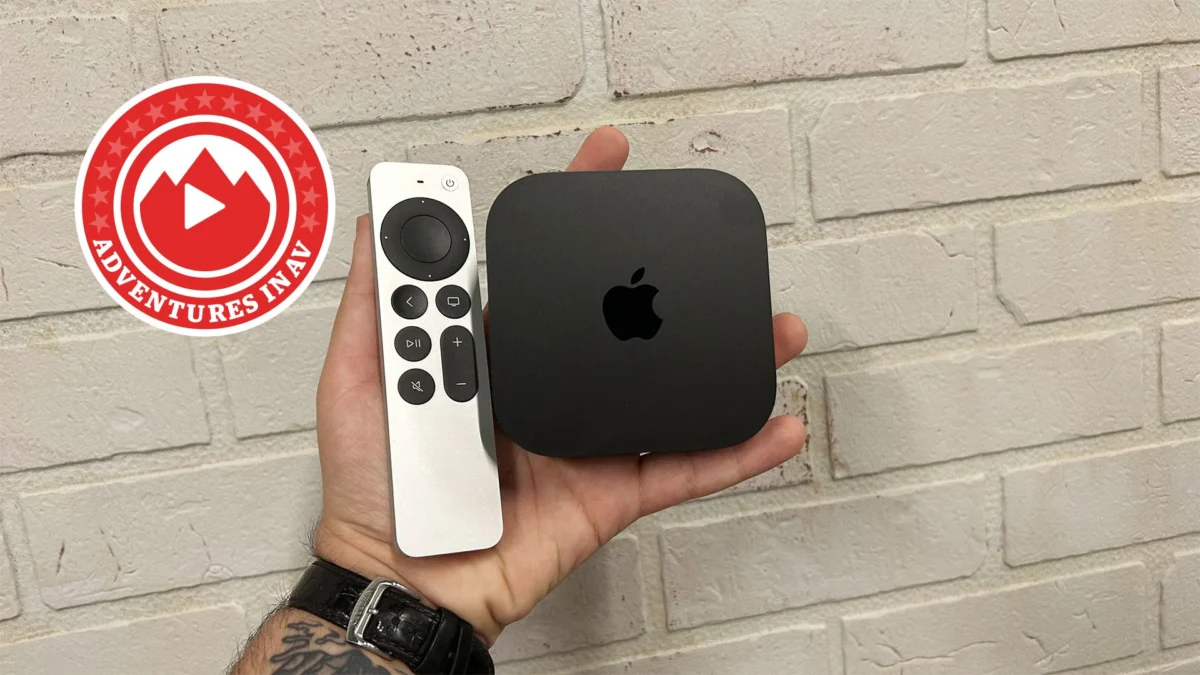
Yet, for home entertainment enthusiasts and audio-visual purists, one of the most egregious passages of time is the seemingly endless wait for a brand-new Apple TV 4K. The current third-generation model made its debut on October 18, 2022. For those keeping track, that milestone marks a four-year gap in hardware refreshes—an eternity in the fast-moving consumer electronics market.
Rumors regarding a successor have circulated through AV circles for well over a year. Whispers initially suggested a revised box was primed for release around this time last year. Naturally, that launch never materialized. Instead, the most notable recent update to the product line was a controversial price adjustment that pushed the base model up from £139 to £199, and the 128GB Ethernet-equipped version to a staggering £249.
However, hope springs eternal. Apple has officially locked in its upcoming "Welcome Home" event for October 13, setting the stage for what many hope will be a long-overdue unveiling.
Main Facts: What to Expect from the "Welcome Home" Event
Apple’s upcoming showcase on October 13 is expected to heavily pivot toward the company’s smart home ecosystem. Industry insiders and supply chain reports suggest the event will shine a spotlight on several key hardware categories:
- A New Smart Home Hub: Apple is heavily rumored to be developing a centralized home management device equipped with a display, designed to better integrate HomeKit and Matter-compatible accessories.
- Smart Security Gadgets: Expanded offerings in home surveillance and security integrations.
- The HomePod Mini Refresh: A long-overdue update to the smaller smart speaker, addressing a product line that has sat dormant alongside the standard HomePod variants.
- The Apple TV 4K Successor: Arguably the most anticipated item for AV enthusiasts, featuring reports of an upgraded processor, a refined remote, and deeper integration of Apple’s evolving Siri AI ecosystem.
While previous rumors have fizzled out into nothingness—leaving tech journalists and reviewers writing post-mortem pieces about absent hardware—the confluence of supply chain leaks and a dedicated smart home focus has renewed optimism.
Chronology: The Timeline of Apple TV 4K Iterations
Understanding the urgency for a new Apple TV 4K requires looking back at the device’s historical cadence and how its hardware has evolved over the years:
- September 2017 (First Generation): Apple introduces the original Apple TV 4K, bringing 4K resolution, HDR10, and Dolby Vision support to the living room, powered by the A10X Fusion chip.
- May 2021 (Second Generation): A modest refresh arrives, headlined by a redesigned Siri Remote (replacing the contentious glass-touchpad model), high frame rate HDR support, and the inclusion of the A12 Bionic chip.
- October 2022 (Third Generation): The current model launches with a slimmer, fanless design, the A15 Bionic chip for enhanced efficiency, HDR10+ support, and a lower initial price point (which was later hiked). Crucially, this model has remained the standard-bearer for four years.
- October 2025 (Projected): Industry anticipation reaches a boiling point as the "Welcome Home" event approaches, threatening to break the four-year hardware drought.
Supporting Data: Why Dedicated Streaming Boxes Still Matter
A common skepticism surrounds dedicated streaming hardware: If modern smart TVs already come equipped with native streaming apps, why spend extra money on an external box?

The answer lies in performance, processing overhead, and data integrity. While devices like a Sony A80L running Google TV, a PlayStation 5, or a Sky Stream box offer immense convenience, they often approach audio and video processing differently than a dedicated streaming media player.
Picture Performance
The current Apple TV 4K delivers a masterclass in video output. It offers:
- Exceptionally rich, accurate color reproduction without oversaturation.
- Superior contrast handling, ensuring deep blacks on OLED panels.
- Tangible depth and high-resolution detail extraction that prevents compression artifacts from muddying dark scenes.
- Outstanding motion processing that avoids judder and stutter during fast-paced cinematic sequences.
Audio Fidelity
On the audio front, the Apple TV 4K supports uncompromised Dolby Atmos passthrough, rendering spatial audio with remarkable precision, a crisp dynamic range, and a textured soundstage that rivals physical media players.
Operating System Superiority
Beyond raw audio-visual output, tvOS remains arguably the most user-friendly interface in the streaming ecosystem:
- Ad-Free Home Screen: Unlike Fire TV or Google TV, which aggressively monetize their interfaces with banner ads and sponsored content, Apple’s home screen remains clean, organized, and focused entirely on user apps.
- Ecosystem Integration: Features such as using an iPhone to automatically authenticate passwords or calibrate color balance via the phone’s camera sensor provide genuine quality-of-life improvements.
Official Responses and Industry Outlook
Apple has historically remained tight-lipped regarding unannounced hardware, declining to comment on rumors surrounding the October 13 event. However, supply chain analysts note that component manufacturers have ramped up production on chips mirroring the specifications of Apple’s newer mobile processors, suggesting a hardware refresh is imminent.
AV reviewers and industry experts remain divided on whether a spec bump will drastically alter the streaming landscape. The current third-generation Apple TV 4K is already so robustly powered by the A15 Bionic chip that it rarely shows signs of lag. Therefore, any new model will likely lean heavily on AI processing capabilities—likely leveraging Apple Intelligence via Siri—to justify its existence to current owners.
Implications: What a New Apple TV Means for the Market
If Apple successfully launches a new iteration of the Apple TV 4K next week, the implications for the broader smart home and streaming market could be significant:
- Setting a New Benchmark for AI in the Living Room: By integrating deeper AI capabilities into tvOS and Siri, Apple could redefine how users search for content, manage smart home devices, and interact with voice assistants on the big screen.
- Pressure on Competitors: Rivals like Roku, Amazon, and Google will be forced to evaluate the processing power and interface cleanliness of their own high-end streaming devices.
- The Longevity Dilemma for Current Owners: With the third-generation model holding its value and performance benchmark so high for four years, consumers will scrutinize whether the generational leap in a new box warrants an upgrade—especially given Apple’s recent pricing trajectory.
As the clock ticks down to October 13, anticipation hangs heavy in the air. Whether the "Welcome Home" event finally delivers the long-awaited streaming box or leaves enthusiasts writing yet another post-mortem disappointment piece remains to be seen. But for now, the faithful continue to wait.