“We wouldn’t teach reading in a classroom without lights. Why then do we teach in acoustical darkness?” — Dr. John Erdreich, PhD
In the modern educational landscape, we invest heavily in digital whiteboards, high-speed internet, and ergonomic furniture. Yet, we often overlook the most fundamental element of the learning process: the ability to hear. For millions of students worldwide, the classroom is not a sanctuary of focused learning, but an environment of "acoustical darkness." While school administrators and parents strive to create environments that foster academic excellence, a silent, pervasive issue—poor room acoustics—is actively undermining those efforts.
The State of the Modern Classroom
For the uninitiated, a classroom seems like a straightforward space: a teacher speaks, and students listen. However, the reality is far more complex. The modern classroom is frequently a "distraction-rich" environment filled with the hum of HVAC systems, the scuffling of chairs, external traffic, and the persistent chatter of peers.
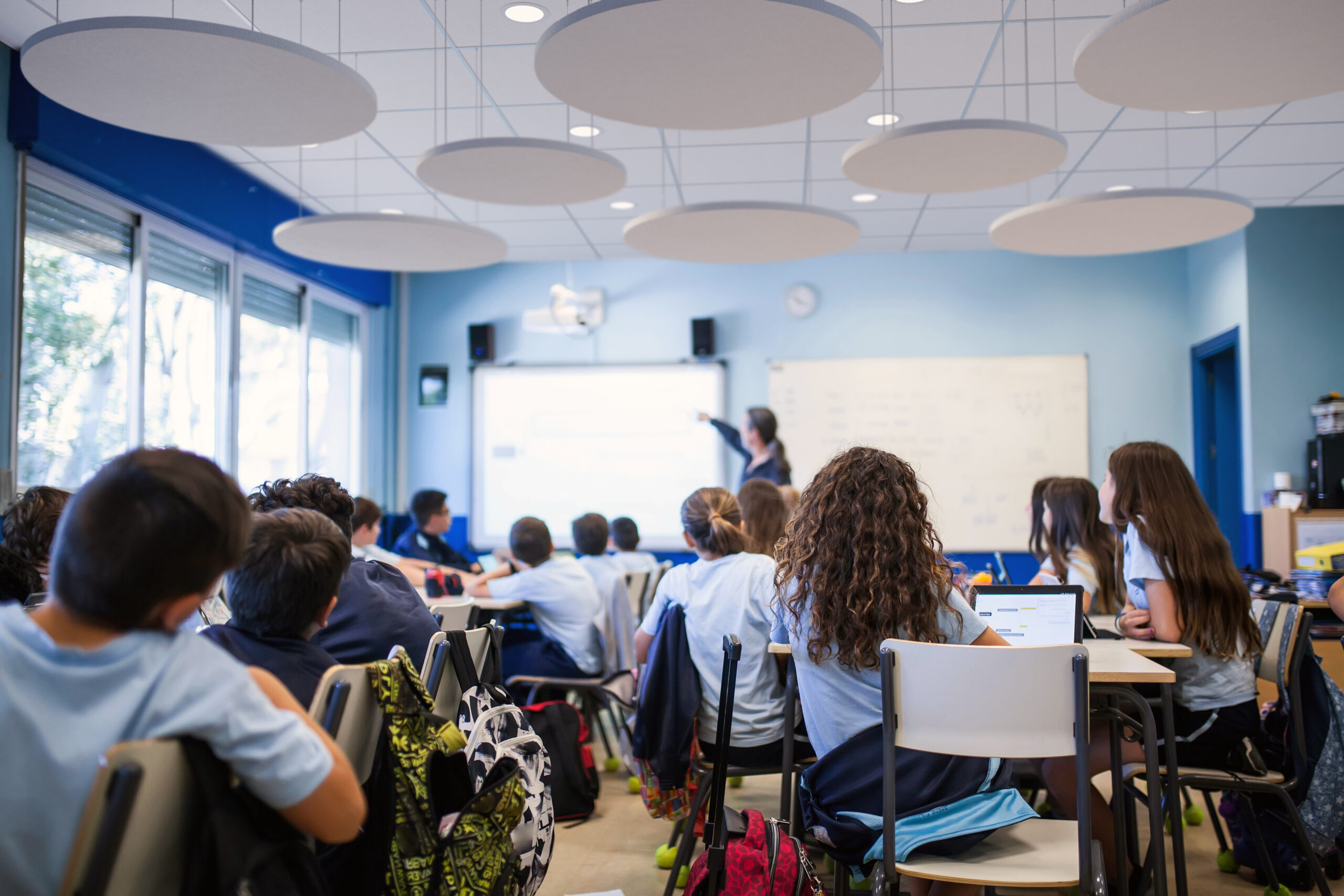
When a teacher closes the classroom door, they are not necessarily shutting out the world. In most schools, they are sealing students into a box of hard, reflective surfaces. Concrete floors, expansive glass windows, and bare drywall act as mirrors for sound. Instead of clear, crisp speech, students are often bombarded with reverberation—the persistence of sound after the original source has stopped. This leads to a muddied, indistinct auditory experience where, in some instances, students miss as many as one in four words spoken by their instructor.
A Century of Overlooked Science
The crisis of classroom acoustics is not a new discovery. Researchers have been documenting the detrimental effects of poor sound environments on learning for over 100 years. Despite the evolution of educational theory and the proliferation of academic standards, the structural design of schools has largely remained stagnant.
A Chronology of Acoustic Awareness
- Early 20th Century: Pioneers in architectural acoustics, such as Wallace Sabine, began to quantify the relationship between room volume and reverberation. His work laid the foundation for understanding how sound decays in enclosed spaces.
- The 1970s–1990s: As school populations grew and building materials shifted toward cheaper, more durable, but acoustically "reflective" materials (like drop-ceilings and vinyl flooring), the focus on student speech intelligibility began to emerge as a public health concern.
- The 2000s: The Acoustical Society of America (ANSI) formalized standards for classroom acoustics, suggesting that a 0.7-second reverberation time is the "gold standard" for effective communication.
- The 2020s: Modern technology has allowed for deeper analysis of "the invisible architecture"—a term coined by sound expert Julian Treasure. Today, the focus has shifted from merely "fixing" rooms to creating active, inclusive learning spaces that accommodate students with diverse auditory needs.
The Hard Data: Why Acoustics Impact Achievement
The correlation between sound quality and academic performance is supported by decades of data. The Acoustical Society of America has highlighted a sobering reality: classrooms without acoustic treatment often suffer from reverberation times approaching 1.9 seconds—nearly triple the recommended threshold.
When a student struggles to distinguish phonemes or hear the nuance of a teacher’s instruction, the brain is forced to compensate. This process of "filling in the blanks" requires significant cognitive load. When that energy is spent on decoding sound, it is not being spent on processing information or storing it in long-term memory.
Implications for Student and Teacher Health
The consequences are not merely academic; they are physical and psychological.

- Student Fatigue: Constant straining to hear leads to cognitive exhaustion, shorter attention spans, and increased stress. For students with Auditory Processing Disorders (APD) or those who rely on hearing aids, a poor acoustic environment can render a classroom effectively inaccessible.
- The Teacher’s Burden: Educators are among the most vulnerable to voice-related injuries. To be heard over the cacophony of a reflective room, teachers are forced to project their voices constantly. Research indicates that teachers are 32 times more likely to suffer from vocal strain than the average professional. Nearly 50% of teachers report some form of voice disorder during their career, often directly linked to the ambient noise levels of their working environment.
The Fallacy of Amplification
When schools recognize that a teacher is struggling to be heard, the reflexive response is often the installation of a PA system or microphone array. While well-intentioned, experts argue this is frequently a "band-aid" solution that creates new problems.
According to ANSI standards, amplification without first addressing the room’s acoustics is counterproductive. Simply making the teacher louder in a room with a 1.9-second reverberation time does not improve clarity; it simply amplifies the noise. The microphones pick up the hum of the air conditioner, the scraping of desks, and the ambient noise of the hallway, resulting in a wall of sound that is even more difficult to parse. To fix the sound, one must treat the room, not just turn up the volume.
Solutions: The Primacoustic Approach
The most effective way to improve an educational environment is through sound absorption. By strategically installing acoustic panels on walls and ceilings, schools can effectively "soak up" the excess sound energy.
The Mathematics of Silence
The math is surprisingly encouraging for budget-conscious administrators. Studies show that covering just 17% to 25% of a room’s surface area with professional-grade acoustic panels can drop reverberation times below the 0.7-second benchmark. This transformation turns a chaotic, echo-heavy space into a "critical listening environment."

Flexibility and Aesthetic Integration
Modern acoustic treatments are no longer just utilitarian foam squares. Companies like Primacoustic have pioneered solutions that blend into the educational environment:
- Customization: Panels can be printed with school colors, educational graphics, or high-resolution photography, turning treatment into a design feature.
- Sustainability: Eco-friendly materials are becoming the industry standard, allowing schools to meet green building requirements.
- Versatility: From ceiling clouds that hang above desks to wood-grain panels that match classroom cabinetry, there is a solution for every architectural constraint.
Why This Matters: The Path Forward
The shift toward acoustically treated classrooms is an investment in human capital. When we treat a room, we are not just installing hardware; we are lowering the barrier to entry for every student in the room. We are reducing the stress on our teachers, enabling them to speak at a conversational volume, which in turn fosters a more intimate and engaging teaching style.
As we look toward the future of education, we must move beyond the "four walls and a roof" mentality. We must recognize that the air in a classroom is the medium through which knowledge travels. If that medium is distorted, the message is lost.
A Call to Action for Administrators
For those in charge of school facilities, the path forward is clear. The first step is an acoustic audit. By understanding the current reverberation times and identifying the primary reflective surfaces, schools can implement targeted, cost-effective solutions.

Primacoustic and similar organizations are working to bridge this gap, offering turnkey support that guides educators from the initial consultation through to final installation. By prioritizing the "invisible architecture" of our schools, we can ensure that every child—regardless of their auditory capabilities—has the best possible chance to succeed.
We have the technology, the data, and the professional expertise to solve the acoustic crisis in our schools. It is time to turn the lights on in our classrooms and ensure that, in the pursuit of knowledge, every student is truly heard.
For further information on improving your educational environment, visit Primacoustic.com to explore how acoustic treatment can transform your classroom into a space where students thrive and teachers can focus on what matters most.
References:
- The Essex Study: Optimised Classroom Acoustics for All (National Deaf Children’s Society)
- ANSI/ASA S12.60: Acoustical Performance Criteria, Design Requirements, and Guidelines for Schools