In the heart of London’s bustling Strand, within the subterranean industrial expanses of 180 Studios, a quiet revolution in audiovisual art is taking place. Ryoji Ikeda, the Japanese electronic composer and visual artist renowned for his minimalist, data-driven aesthetics, has unveiled data-cosm [n°1]. This monumental commission, which has been extended due to overwhelming public demand until February 1, 2026, represents the pinnacle of Ikeda’s career-long obsession with the invisible architecture of the universe.
By transforming abstract scientific datasets into a visceral, total-sensory encounter, Ikeda does more than display art; he facilitates a collapse of the boundary between the viewer and the infinite.
Main Facts: A Convergence of Physics and Perception
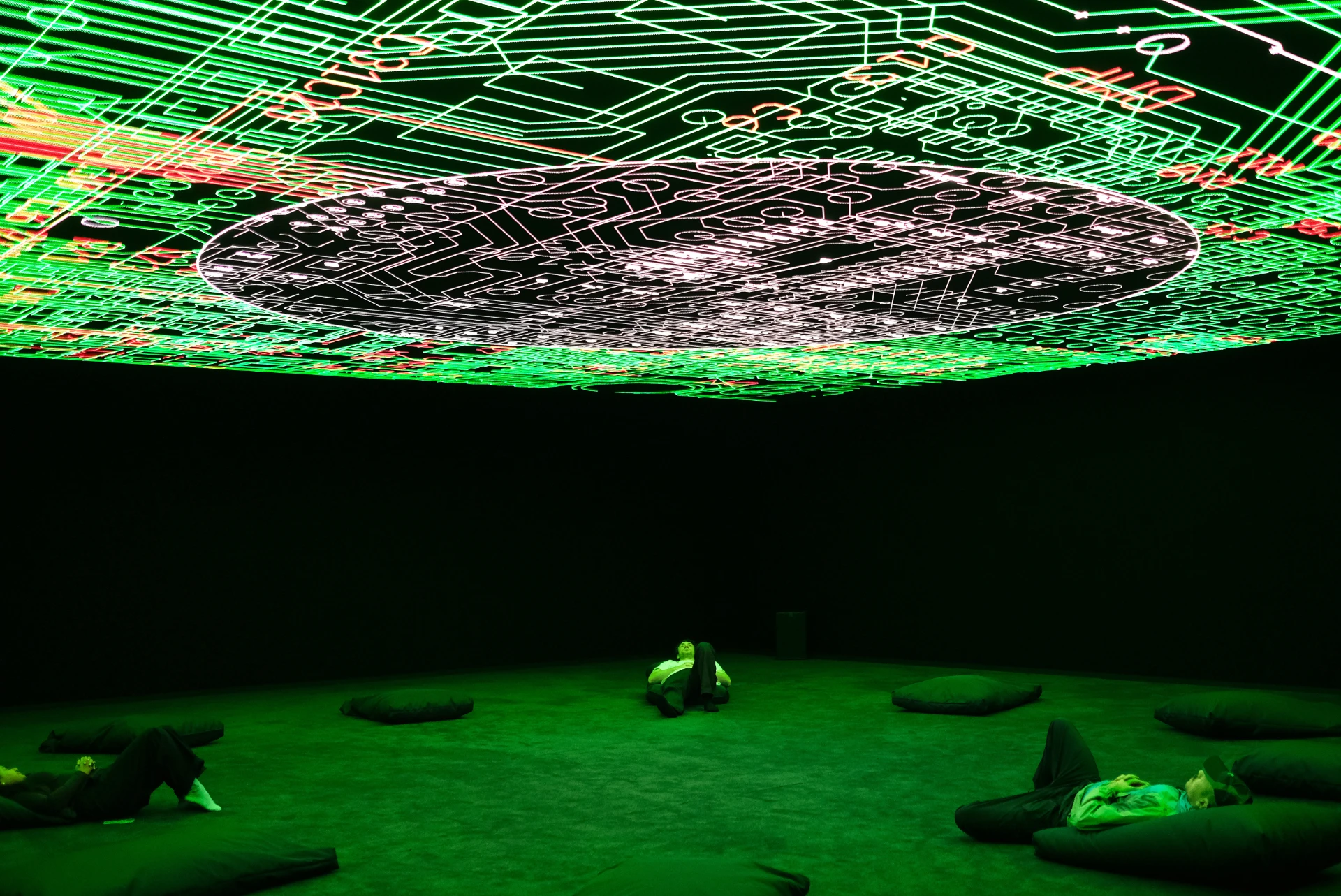
data-cosm [n°1] is not merely an installation; it is an environment. Commissioned specifically by 180 Studios—a venue that has become synonymous with large-scale, high-concept digital art—the work builds upon the conceptual foundations of Ikeda’s celebrated data-verse project.
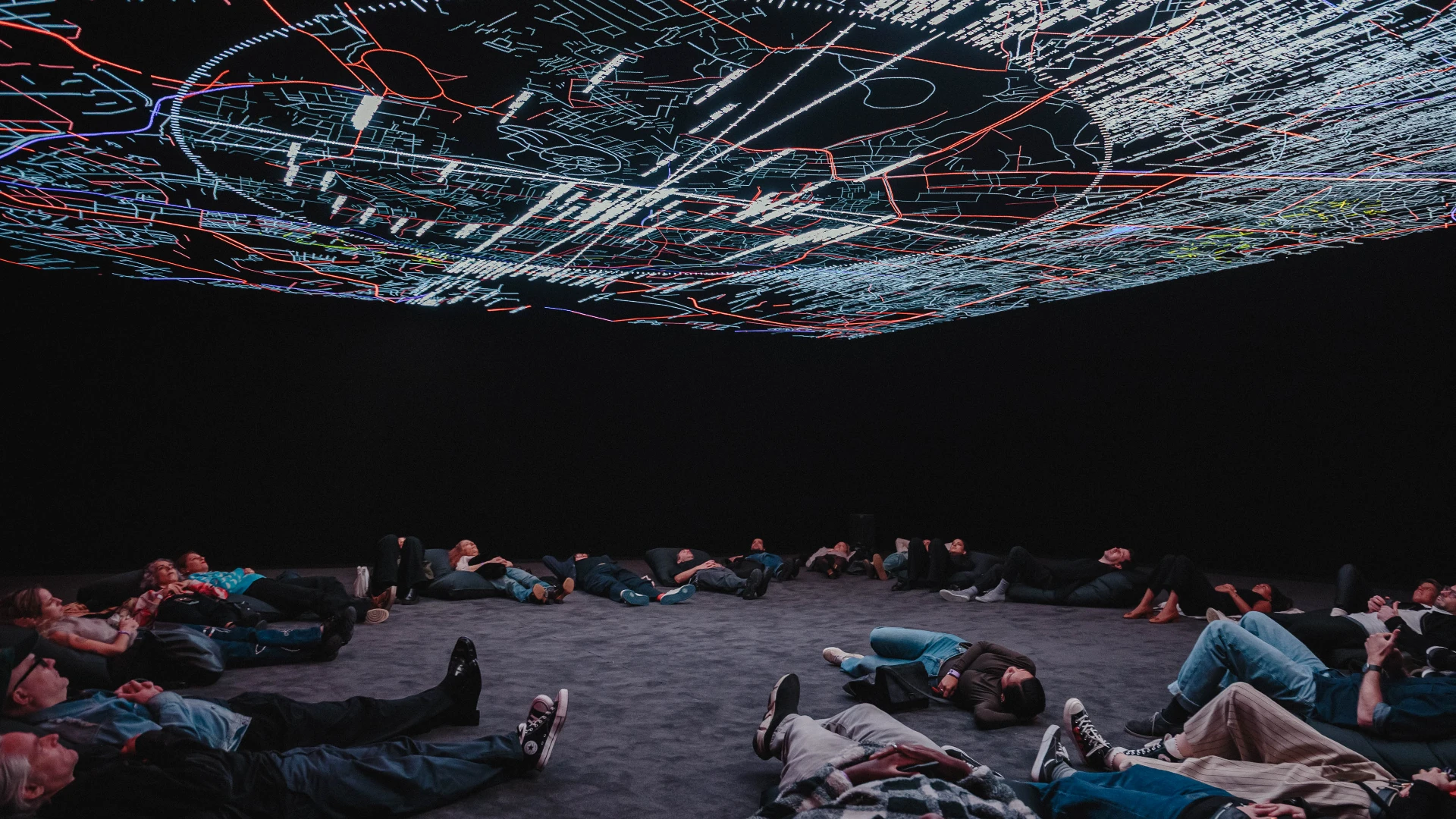
The installation invites visitors to strip away the distractions of the outside world, lie down upon the floor, and surrender to a vast LED ceiling that acts as a portal. Through a sophisticated synthesis of light, shadow, and high-frequency soundscapes, the piece charts the entire spectrum of nature’s data. Ikeda traverses the impossible distance between the microscopic world of subatomic particle physics and the macroscopic, breathtaking scale of astrophysics.
- Venue: 180 Studios, 6 Surrey Street, London, WC2R 2ND.
- Duration: October 15, 2025, through February 1, 2026.
- Operating Hours: 12pm–7pm, Wednesday to Sunday.
- Nature of Experience: Immersive, site-specific audiovisual installation.
Chronology: From data-verse to the Cosm
To understand the weight of data-cosm [n°1], one must look at the trajectory of Ikeda’s artistic evolution.
The Genesis: Early Minimalism
Ryoji Ikeda first gained international acclaim for his use of pure sine tones and "glitch" aesthetics. His early works were characterized by a clinical, almost mathematical precision, stripping sound and light down to their binary essence.
The data-verse Period (2019–2021)
The data-verse project was a watershed moment in digital art. Commissioned by Audemars Piguet Contemporary, it was an exhaustive exploration of human knowledge, visualizing scientific data from organizations like NASA and CERN. It introduced the world to Ikeda’s ability to turn cold, hard metrics into a flowing, liquid visual language.
The Current Moment: data-cosm [n°1] (2025–2026)
With the launch of data-cosm [n°1], Ikeda has evolved from simply visualizing data to embodying it. This latest work represents a more refined, more ambitious approach to scale. While data-verse was an observation of human-collected data, data-cosm feels like an observation of the fundamental laws of the universe itself. The extension of the exhibition date is a testament to how profoundly this work has resonated with contemporary audiences, who are increasingly seeking experiences that offer a sense of cosmic perspective in an era of digital saturation.
Supporting Data: The Science Behind the Art
The strength of Ikeda’s work lies in its authenticity. Unlike generative art that relies on randomized algorithms, data-cosm [n°1] is rooted in empirical reality.
The Scale of the Invisible
Ikeda’s collaboration with scientific institutions allows him to access raw data points that would otherwise be inaccessible to the public. In the installation, the "micro" is represented by the behavior of fundamental particles—quarks, leptons, and bosons—moving with a frenetic, rhythmic intensity. This data is then mirrored by the "macro," utilizing the mapped positions of stars, the curvature of galaxies, and the gravitational waves detected by deep-space observatories.
The Audiovisual Synthesis
Ikeda’s soundscapes are not background music; they are the audio manifestation of the visuals. Using high-bitrate audio processing, he creates frequencies that interact with the LED ceiling’s refresh rate. This synergy creates a phenomenon known as "flicker fusion," where the brain struggles to distinguish between the light and the sound, resulting in a unique neurological response that heightens the viewer’s sense of immersion.
Official Responses and Curatorial Context
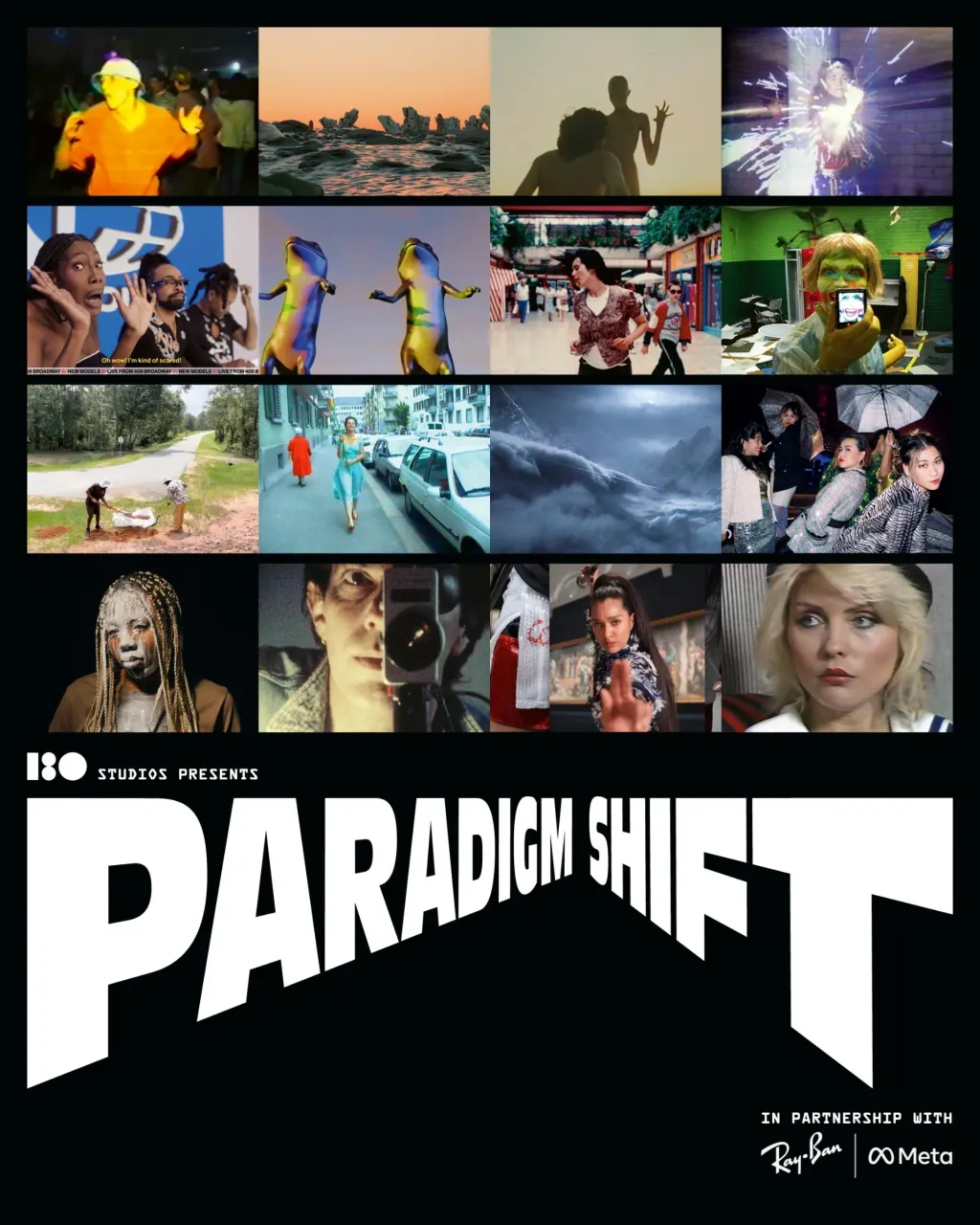
180 Studios has positioned data-cosm [n°1] as the centerpiece of a larger intellectual conversation about moving image culture. The exhibition runs alongside Paradigm Shift, a multi-artist showcase featuring visionaries such as Andy Warhol, Arthur Jafa, Mark Leckey, and Martine Syms.
The curatorial team at 180 Studios notes that pairing Ikeda with these artists provides a necessary contrast. While Warhol or Jafa might focus on the social or political narratives of the moving image, Ikeda provides the "technological bedrock"—the pure data from which all modern moving image culture originates.
"Ryoji Ikeda creates a mirror for the 21st century," a spokesperson for the exhibition stated. "By inviting visitors to lie beneath the data, we are asking them to acknowledge their small, yet significant, place within a vast, digitized cosmos. The popularity of the installation proves that the public is not afraid of the abstract; they are hungry for it."
Implications: Why data-cosm Matters Today
The success of data-cosm [n°1] carries significant implications for the future of fine art, technology, and the museum-going experience.
1. The Death of the "Passive Gallery"
Traditional art exhibitions often rely on the "white cube" model, where the viewer maintains a respectful, static distance from the object. Ikeda’s work renders this model obsolete. By requiring the viewer to lie down, he removes the vertical, authoritative stance of the observer. The result is a democratized, vulnerable, and deeply personal experience. This trend toward "total immersion" is likely to influence how museums design exhibition spaces in the coming decade.
2. The Reconciliation of STEM and Art
For decades, the "Two Cultures" divide—the perceived irreconcilability of the sciences and the humanities—has dominated academic discourse. Ikeda acts as a bridge. By proving that particle physics can be poetic, he encourages a new generation of artists to engage with the hard sciences, not as subjects to be analyzed, but as mediums to be sculpted.
3. Digital Literacy in the Age of AI
In an age where data is often weaponized or misused, Ikeda’s work offers a redemptive view of information. He reminds us that at the base of our digital world, there is beauty, order, and a fundamental connection to the laws of nature. data-cosm [n°1] serves as a meditation on the digital sublime, helping audiences process the overwhelming nature of our modern, data-heavy existence.
Visiting Information and Future Prospects
As the exhibition moves into its extended run, 180 Studios is expecting high footfall. Given the sensory nature of the installation, visitors are encouraged to book in advance to ensure availability, particularly for weekend slots.
The installation is not just an opportunity to see a world-class artist at the height of his powers; it is a rare chance to engage with the fundamental nature of existence. Whether you are a student of physics, a lover of electronic music, or simply a citizen of the digital age, data-cosm [n°1] offers a moment of silence in a loud world.
Exhibition Details:
- Location: 180 Studios, 6 Surrey Street, London, WC2R 2ND.
- Dates: October 15, 2025 – February 1, 2026.
- Ticketing: Tickets can be purchased via the official 180 Studios website.
- Entry Requirements: Last entry is strictly at 7pm. Visitors are advised to prepare for a dark, light-intensive environment.
In the final analysis, Ryoji Ikeda’s data-cosm [n°1] is a triumph of human curiosity. It captures the spirit of the age—a period where we have gained the tools to measure everything, yet are still struggling to understand what it all means. By turning data into light and sound, Ikeda doesn’t just explain the universe; he lets us feel it.