In the heart of London, beneath the historic architecture of 180 Strand, a quiet revolution in digital art is unfolding. Ryoji Ikeda, the Japanese electronic composer and visual artist whose work has long operated at the intersection of mathematics, particle physics, and pure sound, has returned to 180 Studios with his most ambitious installation to date: data-cosm [n°1]. Due to overwhelming public demand and a critical reception that has cemented its status as a must-see event, the exhibition has been officially extended, now slated to run until February 1, 2026.
The Main Facts: A Total Sensory Encounter
data-cosm [n°1] is not merely an art installation; it is an exercise in scale. Commissioned specifically for the cavernous, subterranean spaces of 180 Studios, the work serves as an evolution of Ikeda’s acclaimed data-verse project. While data-verse sought to visualize the invisible digital architecture of our world, data-cosm pushes the boundary further, attempting to reconcile the disparate extremes of the universe through the language of data.
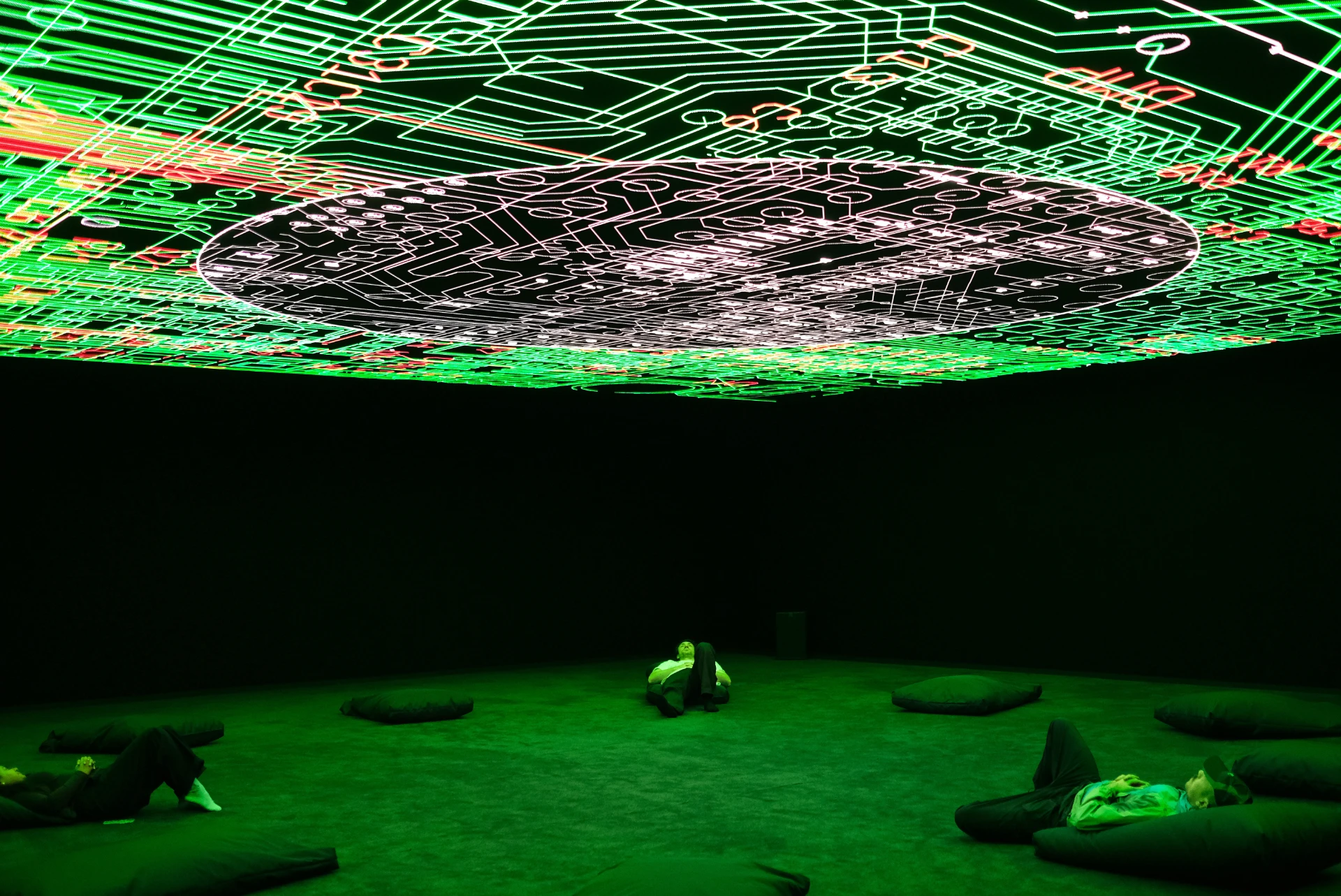
The setup is minimalist yet imposing. Visitors are invited to lie down on the floor, positioning themselves directly beneath a vast, high-resolution LED ceiling. As the sequence begins, the room dissolves. The audience is enveloped in a meticulously crafted soundscape of Ikeda’s signature glitch-heavy, high-frequency aesthetic, which pulses in perfect synchronization with an overwhelming visual display. This is described by the gallery as "a total sensory encounter," a space where the microscopic world of subatomic particles is placed on equal footing with the macroscopic expanse of astrophysics.
By translating raw datasets—ranging from the behavior of atoms to the movement of celestial bodies—into light and sound, Ikeda creates an environment that renders the abstract tangible. It is a work that demands total surrender, forcing the viewer to confront the sheer magnitude of the information that governs our existence.
Chronology: From data-verse to the Cosm
To understand the significance of data-cosm [n°1], one must trace the trajectory of Ikeda’s recent output.
The Foundation: data-verse (2019–2021)
The journey began with the data-verse project, a three-part series that marked a turning point in Ikeda’s career. Debuted globally, the trilogy utilized NASA’s open-source data, human DNA mapping, and global network traffic metrics to create a sprawling digital tapestry. It was praised for its ability to turn "cold" data into a visceral, emotional experience.
The Commission and Opening (October 2025)
Recognizing the potential to expand this inquiry into the nature of reality, 180 Studios commissioned Ikeda to develop a new, site-specific work. On October 15, 2025, data-cosm [n°1] opened its doors. The anticipation was palpable, with early reviews noting that the scale of the ceiling-mounted LEDs far surpassed the technical capabilities utilized in previous iterations of his work.
The Extension (2026)
Following months of sold-out time slots and a viral presence across social media platforms, 180 Studios confirmed the extension of the exhibition. The decision to keep the doors open until February 2026 reflects a broader cultural trend: the increasing public appetite for "experience-first" art that offers a meditative escape from the digital noise of daily life.
Supporting Data: The Physics of Art
The aesthetic power of data-cosm is rooted in its rigorous adherence to scientific accuracy. Ikeda does not invent his visuals; he interprets them.
![Ryoji Ikeda's data-cosm [n°1] extended at 180 Studios until 1 February](https://factmag-images.s3.amazonaws.com/wp-content/uploads/2025/12/data-cosm-ALubbock_180-14Oct-3554.webp)
- Data Source Integration: The installation pulls from real-time and archival datasets provided by international scientific institutions. This includes gravitational wave data, particle collision logs from the Large Hadron Collider, and cosmic microwave background radiation mapping.
- Acoustic Engineering: Ikeda’s sound design operates at the edges of human perception. By utilizing ultra-high-frequency sine waves and low-end infrasound, the installation creates a physical sensation of vibration that mimics the turbulence of physical space.
- The Scale Metric: The "n°1" in the title suggests a series, hinting that this is the first iteration of an ongoing exploration. The installation covers a surface area of several hundred square meters, requiring a custom-built LED array that provides a density of pixels high enough to prevent aliasing, ensuring that the "glitch" aesthetic remains crisp and intentional rather than a product of resolution limits.
Official Perspectives: A Dialogue with the Void
180 Studios has positioned this exhibition as a cornerstone of their contemporary program. In a statement, curators noted, "Ryoji Ikeda is one of the few artists working today who can make the abstract nature of physics feel profoundly human. data-cosm [n°1] is a bridge between the scientific community and the general public."
Ikeda himself has been characteristically reticent, preferring the work to speak for itself. In previous discussions regarding his practice, he has remarked on his desire to "de-mystify the digital." He posits that we live in a "data-saturated" society, yet we rarely interact with data in its raw, unfiltered state. By stripping away the user interface—the icons, the menus, the windows—and presenting the data as light, Ikeda aims to return the audience to a state of primal observation.
Implications: A New Era for Moving Image Culture
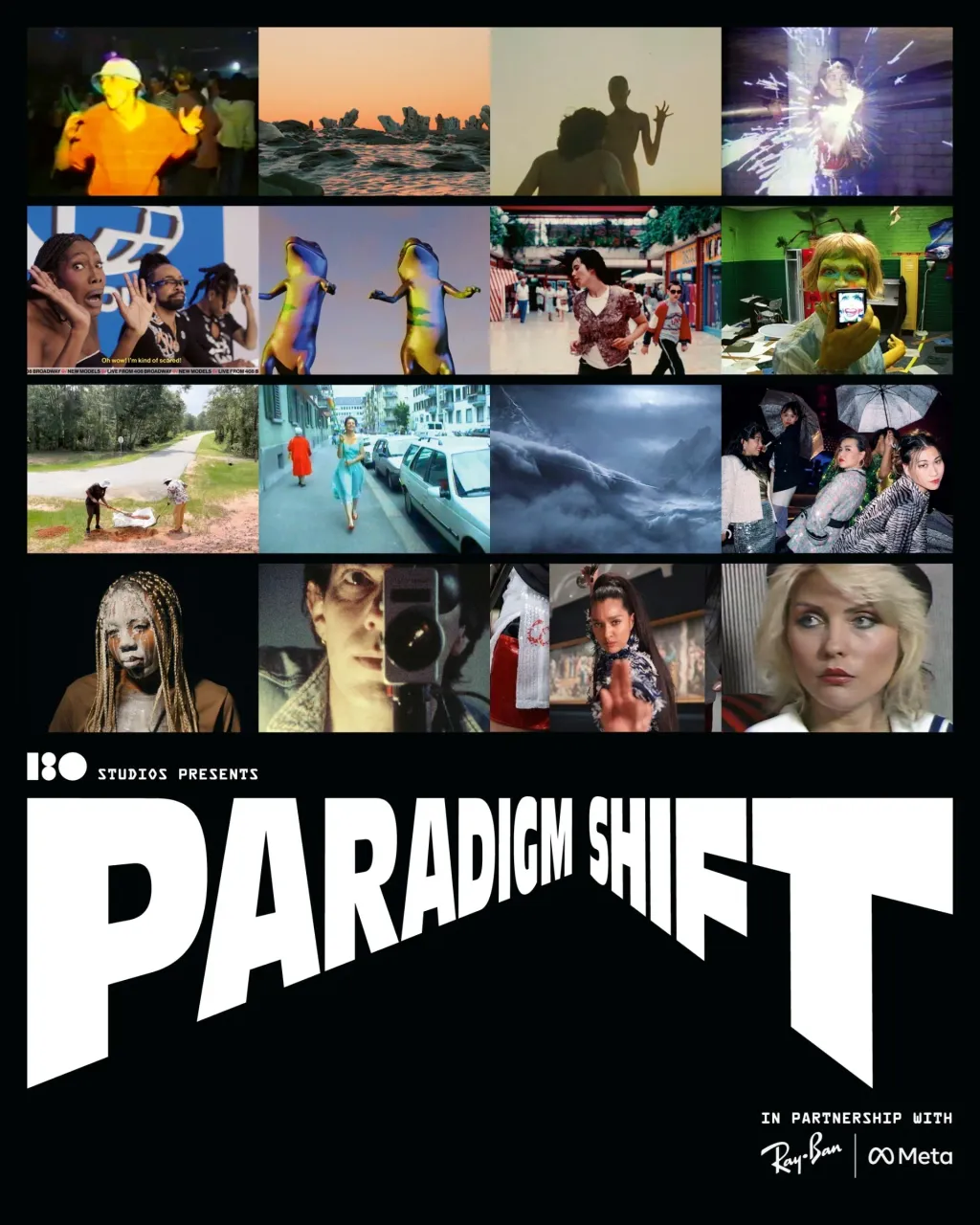
The success of data-cosm [n°1] cannot be viewed in isolation. It is currently running alongside Paradigm Shift, a landmark exhibition at 180 Studios that interrogates the history and future of moving image culture. The proximity of these two exhibitions creates a fascinating intellectual environment.
The Evolution of the "White Cube"
Traditionally, gallery spaces were designed for static objects—paintings and sculptures that required a quiet, detached viewing experience. Ikeda’s work represents a move toward the "Black Box" gallery model, where the space itself is the medium. This shift has major implications for how museums will be designed in the next decade, prioritizing immersive acoustics and projection mapping over traditional wall-hanging space.
The Intersection of Art and Science
data-cosm [n°1] acts as a proof-of-concept for the "Art-Sci" movement. It suggests that scientific discovery is not a dry, clinical pursuit but a source of profound aesthetic beauty. As we move further into an era dominated by Artificial Intelligence and Big Data, artists like Ikeda serve as translators, helping society interpret the massive, complex systems that underpin our reality.
The Cultural Impact of Immersion
The fact that thousands of visitors are queuing to lie on a floor in the dark to watch a stream of data suggests that there is a deep, psychological hunger for this kind of experience. In an era of constant, rapid-fire social media consumption, the ability of data-cosm to hold a viewer’s attention for an extended period is a testament to the power of slow-form, immersive media.
Visitor Information and Legacy
For those planning to visit, the exhibition remains open through the winter of 2025 into early 2026.
- Location: 180 Studios, 6 Surrey Street, London, WC2R 2ND.
- Hours: Wednesday – Sunday, 12:00 PM – 7:00 PM.
- Note: The installation is a sensory-intense experience. Visitors are encouraged to book in advance via the 180 Studios website to avoid disappointment.
As the exhibition continues to draw crowds, its legacy is already beginning to take shape. It serves as a definitive marker of the mid-2020s, a moment where technology, physics, and art converged to create a new language of expression. Ryoji Ikeda has not only expanded his data-verse—he has successfully invited us to look up from our screens and into the cosmic data that flows through us, around us, and defines the very fabric of the universe.
For those who cannot make the trip to London, the data-verse documentation remains a critical touchstone. However, as with all of Ikeda’s work, the digital reproduction is but a shadow of the physical experience. To stand—or lie—in the presence of data-cosm is to understand that, in the vast ocean of data, there is a haunting, mathematical beauty that connects the smallest atom to the farthest star.