In the heart of London’s bustling Strand, beneath the unassuming exterior of 180 Studios, a quiet revolution in digital perception is taking place. Ryoji Ikeda, the Japanese electronic composer and visual artist renowned for his minimalist, mathematically precise aesthetic, has unveiled data-cosm [n°1]. This ambitious new installation is not merely an exhibition; it is an ontological journey through the architecture of reality, rendered in light and sound. Following an overwhelming public response that has seen queues snake through the gallery’s corridors, 180 Studios has officially extended the run of the installation until February 1, 2026.
Main Facts: A Total Sensory Encounter
Commissioned specifically by 180 Studios, data-cosm [n°1] serves as a grand evolution of the themes Ikeda explored in his seminal data-verse project. While his previous work focused on the democratization of information and the digital fabric of our modern existence, data-cosm shifts the lens toward the cosmic and the quantum.
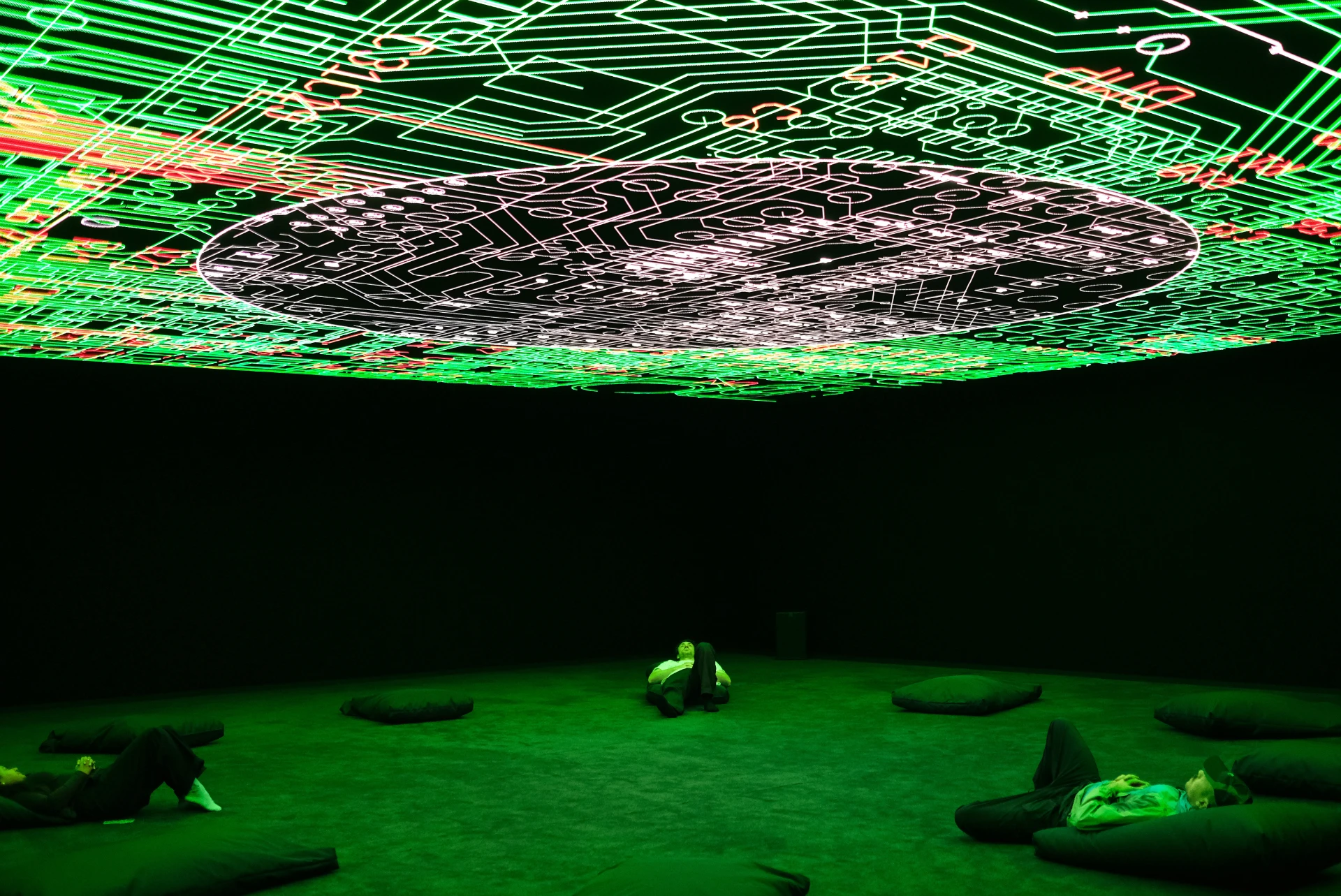
The installation is designed to be a "total sensory encounter." Upon entering the space, visitors are invited to shed the weight of the external world and lie down beneath a colossal LED ceiling. This physical positioning is deliberate: by reclining, the viewer surrenders their vertical autonomy, becoming a passive observer enveloped by a vast, pulsating digital canopy. The work functions as an audiovisual symphony, transmuting complex, raw datasets—ranging from the subatomic movements of particle physics to the celestial rotations of astrophysics—into a singular, cohesive environment.
It is a paradox of scale: Ikeda takes the most abstract, invisible components of the universe and forces them into a tangible, visceral experience. The soundscapes, characterized by Ikeda’s signature high-frequency oscillations and tectonic bass, act as a pulse, syncing the visitor’s biological rhythm to the digital fluctuations of the cosmos.
Chronology: The Evolution of a Digital Visionary
Ryoji Ikeda’s career has long been defined by his attempt to "see" the invisible. His transition from experimental music to large-scale installation art has been a decades-long pursuit of clarity within the noise of the information age.
The Foundation: The data-verse Era
The genesis of the current project can be traced back to the data-verse trilogy (2019–2021). data-verse was a monumental attempt to visualize the sheer volume of data produced by humanity—satellite imagery, weather patterns, stock market fluctuations, and human movement. It was a reflection on the "Big Data" era, asking the viewer to grapple with the overwhelming nature of the digital footprint left by modern civilization.
The Commission and Realization (2024–2025)
Following the success of his previous collaborations with 180 Studios, Ikeda began conceptualizing data-cosm in 2024. The commission was predicated on the desire to move beyond the human-centric data of the data-verse and into the realm of pure physical law. Throughout the summer of 2025, the team at 180 Studios worked in tandem with Ikeda to calibrate the LED arrays, ensuring that the resolution of the ceiling display could handle the intense, rapid-fire imagery required to visualize particle interactions.
Public Debut and Extension (2025–2026)
The installation opened to the public on October 15, 2025. Within weeks, it became a cultural touchstone in London’s art scene. The unexpected intensity of the public demand prompted the gallery’s management to extend the exhibition’s duration, providing an additional three months for the public to experience the work.
Supporting Data: The Physics of Aesthetics
To understand data-cosm [n°1], one must understand the rigor behind the data sets. Ikeda’s methodology is rooted in the philosophy of "mathematical aesthetics." He does not merely create visuals; he maps existing data structures onto a canvas of light.
![Ryoji Ikeda's data-cosm [n°1] extended at 180 Studios until 1 February](https://factmag-images.s3.amazonaws.com/wp-content/uploads/2025/12/data-cosm-ALubbock_180-14Oct-3554.webp)
- Microscopic Data: The visuals often involve simulations of particle decay and quantum superposition. By processing these datasets, Ikeda illustrates the inherent chaos and beauty of the subatomic world.
- Macroscopic Data: The installation incorporates imagery derived from astrophysical observations, mapping the distribution of galaxies and the curvature of space-time.
- Technical Specifications: The installation utilizes a bespoke, high-density LED ceiling array. The resolution is calibrated to avoid the "screen effect," creating a seamless, floating void that effectively erases the boundary between the physical architecture of the studio and the digital projection.
- The Soundscape: Ikeda employs a multi-channel audio system that utilizes non-musical frequencies. By utilizing the full spectrum of human hearing, the sound design acts as a physical force, effectively vibrating the space and the visitors within it.
Official Responses and Curatorial Context
The curators at 180 Studios have noted that data-cosm [n°1] serves as an essential bridge between the legacy of video art and the future of immersive digital environments. "Ikeda doesn’t just show you data," a spokesperson for 180 Studios remarked. "He allows you to inhabit it. He is one of the few artists working today who can command the scale of the universe while maintaining the intimacy of a personal experience."
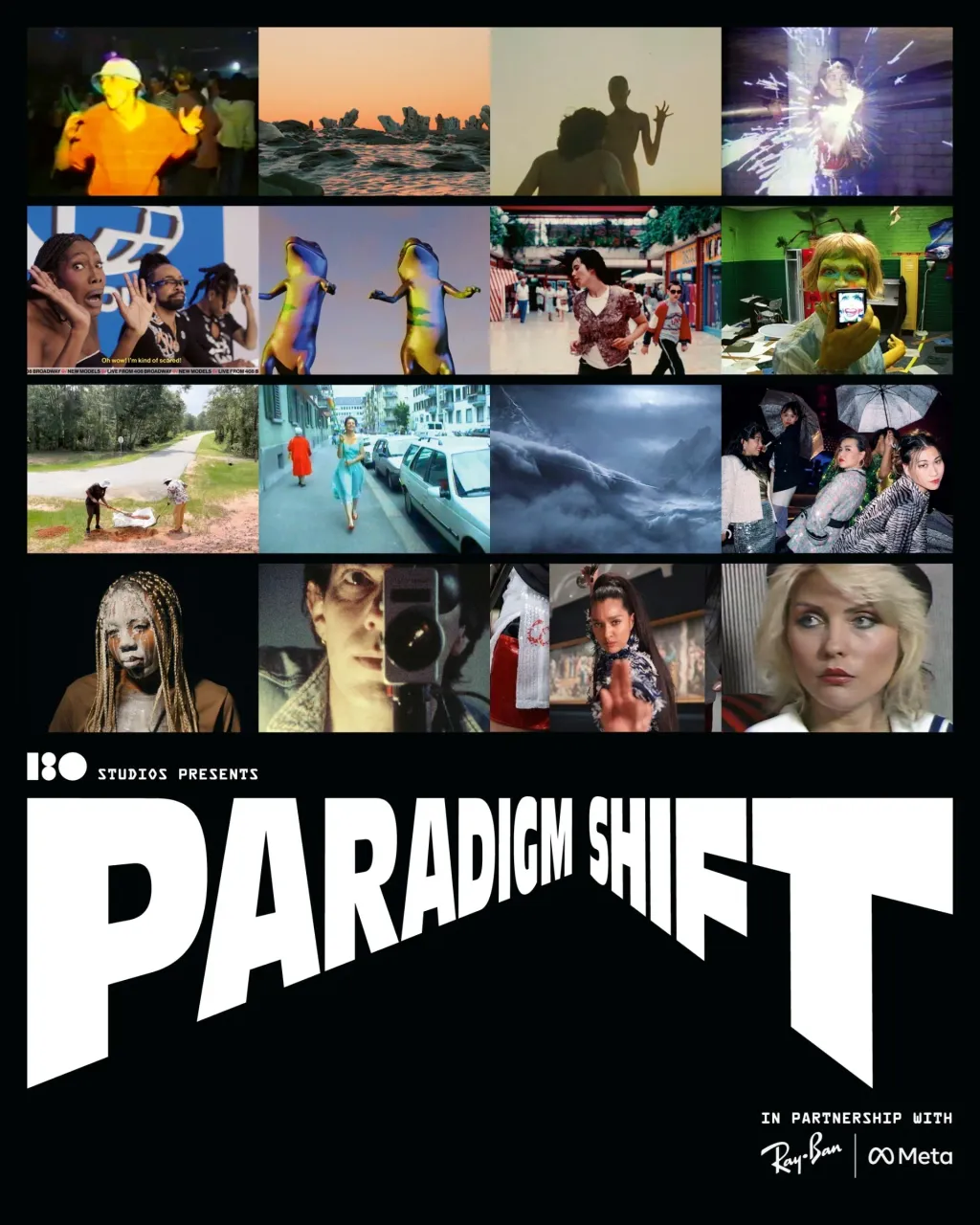
The installation is currently running in tandem with Paradigm Shift, a broader, ambitious exhibition housed within the same building. Paradigm Shift explores the seismic changes in moving image culture over the last fifty years. By placing Ikeda’s work alongside legendary figures such as Andy Warhol, Derek Jarman, and Arthur Jafa, 180 Studios is framing data-cosm as a pivotal point in the history of media. While the other artists in Paradigm Shift look back at the history of the lens and the film reel, Ikeda looks forward to a future where the distinction between "nature" and "data" has effectively dissolved.
Implications: The Future of Immersive Art
The success of data-cosm [n°1] suggests a profound shift in how audiences consume contemporary art. We are witnessing a move away from the traditional, static gallery experience—where the viewer stands at a respectful distance from a painting or sculpture—toward a model of total sensory immersion.
The Erasure of the Object
In Ikeda’s work, there is no "object" to possess. The work exists only while it is being viewed and heard. This challenges the traditional art market and the way museums archive history. How does one preserve a work that is fundamentally a data-driven process rather than a static product?
Art as a Tool for Scientific Literacy
Furthermore, Ikeda’s project highlights the potential for art to serve as a pedagogical tool. By translating complex scientific data into aesthetic experiences, he makes the incomprehensible accessible. When a visitor watches the dance of particles on the ceiling of 180 Studios, they are engaging with physics in a way that is intuitive rather than intellectual. It is a form of scientific literacy that bypasses the textbook, relying instead on the raw, emotional power of visual and auditory stimuli.
The Synthesis of Science and Art
Finally, data-cosm underscores the increasing necessity of interdisciplinary collaboration. Ikeda’s reliance on datasets provided by scientific institutions implies that the art of the future will be a collaborative endeavor between the creative mind and the scientific observer. As our ability to measure and record the universe expands, so too does the canvas available to the artist.
Visiting Information
For those planning to witness this intersection of art and physics, data-cosm [n°1] remains open at 180 Studios, 6 Surrey Street, London, until February 1, 2026. The space is open Wednesday through Sunday, from 12pm to 7pm. Given the high demand and the contemplative nature of the work, visitors are encouraged to book their tickets well in advance via the 180 Studios website.
As the project continues to evolve, it stands as a testament to the idea that our existence is not merely biological, but digital—a constant, rhythmic stream of information flowing from the quantum to the cosmic. Ryoji Ikeda has not just created an installation; he has provided a window into the machine of reality, inviting us to look up and lose ourselves in the code of the universe.