By TechCrunch Staff
June 27, 2026
In a significant leadership shakeup that signals the shifting priorities of Silicon Valley’s biggest players, Paul Meade, the Apple vice president overseeing the development of the Vision Pro headset and the company’s burgeoning smart glasses initiative, has resigned. According to reports from Bloomberg, Meade is transitioning to OpenAI, where he will join the company’s rapidly expanding hardware division.
This departure comes at a precarious time for Apple, which is currently navigating a sensitive transition period under the impending leadership of John Ternus, who is poised to succeed Tim Cook as CEO. For OpenAI, the acquisition of a veteran hardware executive like Meade underscores CEO Sam Altman’s ambition to move beyond software and establish a physical presence in the consumer electronics landscape.
The Main Facts: A High-Stakes Transition
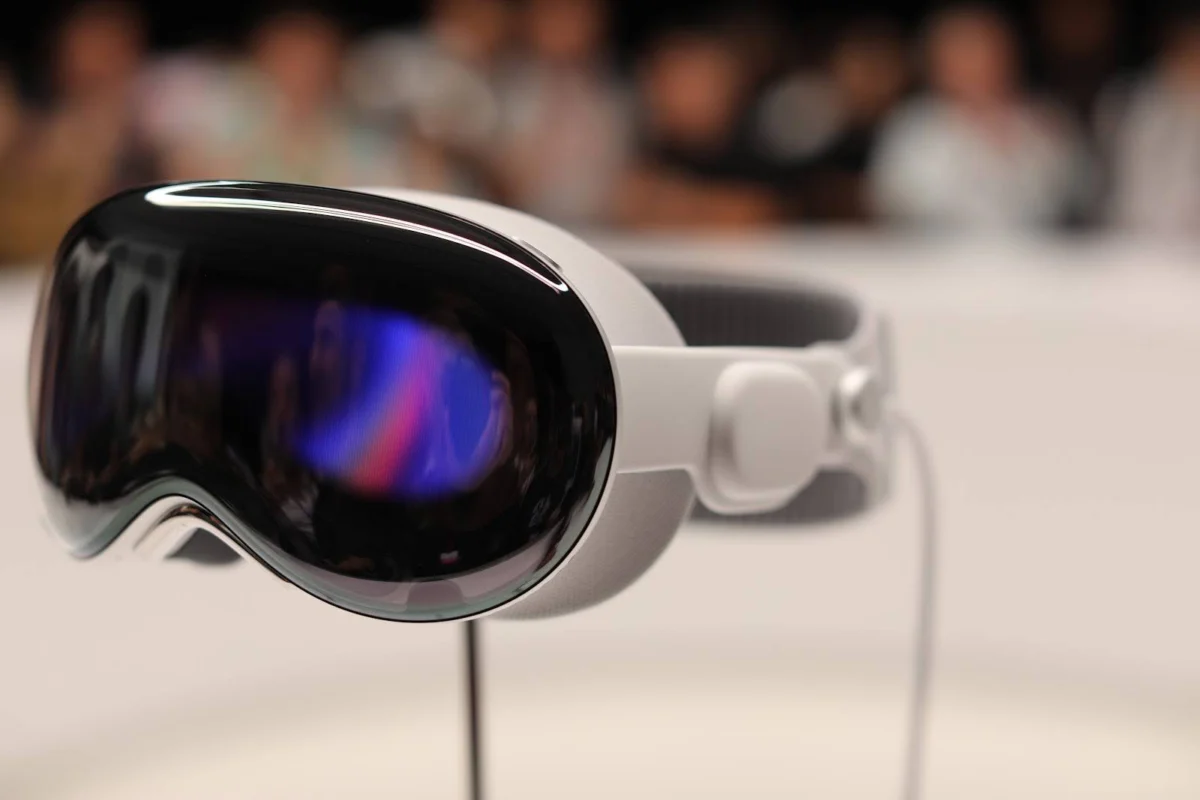
Paul Meade’s exit is not merely the departure of a single executive; it is a symptom of a broader strategic realignment at Apple. As the vice president in charge of the Vision Pro, Meade occupied one of the most critical roles in the company’s hardware engineering division. The Vision Pro, while technically sophisticated, failed to capture the mass-market imagination, leading Apple to pivot its hardware roadmap toward more accessible, AI-integrated wearables.
Meade was the primary architect behind Apple’s forthcoming smart glasses project, a product line intended to compete directly with Meta’s successful Ray-Ban smart glasses. His move to OpenAI—a company currently collaborating with former Apple design chief Jony Ive on a mystery "calm" AI device—suggests that the race for the next "post-smartphone" hardware platform is entering a new, more aggressive phase.
Chronology: The Road to the Departure
The events leading to this shift have been unfolding over several months, marked by internal friction and a reassessment of Apple’s long-term hardware goals.
- October 2025: Reports surface that Apple has shelved plans for a major hardware overhaul of the Vision Pro. The company decides to shift internal resources away from expensive, immersive spatial computing toward AI-centric, lightweight smart glasses.
- November 2025: OpenAI and Jony Ive’s collaboration enters the public spotlight. Sam Altman describes the project as a "peaceful and calm" alternative to the sensory overload of the iPhone. However, reports emerge suggesting the team is struggling with the complex ergonomics and processing limitations of the device.
- April 2026: Apple accelerates testing on four distinct designs for its upcoming smart glasses, hoping to capture the market share that the Vision Pro failed to penetrate.
- April 2026: John Ternus is identified as the clear front-runner to replace Tim Cook. Reports indicate that Ternus has already begun exercising influence over the hardware engineering team, resulting in structural changes that left several long-standing vice presidents feeling marginalized.
- June 27, 2026: Paul Meade officially confirms his departure, ending his tenure at Apple to join the OpenAI hardware team.
Supporting Data: Why the Shift Matters
The departure of an executive like Meade highlights the fundamental divide between Apple’s legacy hardware approach and the new, AI-first philosophy being championed by OpenAI.
The Failure of the Vision Pro
The Vision Pro was marketed as the "next big thing," yet its price point and heavy form factor limited its adoption to enthusiasts and developers. Internal data suggests that while the software ecosystem for visionOS is robust, the hardware has not reached the critical mass required for a "new era of computing."
The "Smart Glasses" Imperative
Market analysts note that the industry is pivoting toward "AI-wearables." Meta’s smart glasses have proven that consumers prefer devices that enhance reality rather than replace it. Apple’s internal pivot toward smart glasses represents a "correction" in strategy—a move away from the "spatial computing" paradigm that defined Meade’s recent career.
Leadership Friction
The reorganization under John Ternus appears to be a "clearing of the deck." As Ternus prepares to take the reins of the world’s most valuable company, he is consolidating power within the hardware division. For veterans like Meade, who have spent years building the Vision Pro infrastructure, this reorganization has been perceived as a loss of autonomy, making the invitation from OpenAI—a company with a blank slate and massive capital—highly attractive.

OpenAI’s Hardware Ambitions: The Jony Ive Factor
OpenAI is no longer just a research lab; it is an integrated product company. By hiring Paul Meade, OpenAI is signaling that it intends to solve the hardware-software integration puzzle that Apple mastered decades ago.
The partnership between Sam Altman and Jony Ive is the centerpiece of this effort. Ive, who was responsible for the aesthetic and functional design language of the iPhone, is working to create a device that avoids the screen-addiction trap. However, internal rumors suggest that the partnership has faced significant hurdles, particularly regarding battery efficiency and the thermal management of AI-heavy workloads. Meade’s expertise in managing complex hardware cycles will be critical in turning those conceptual designs into mass-manufacturable reality.
Official Responses and Industry Context
As of this writing, Apple has not issued a formal statement regarding Meade’s departure, maintaining its standard policy of not commenting on individual personnel movements. Similarly, OpenAI has declined to provide specific details on Meade’s role or his official start date.
Industry observers, however, are weighing in heavily. "This is a talent war," says Sarah Jenkins, a senior hardware analyst. "Apple is losing the architects of its next decade to the very AI companies that are threatening its business model. If OpenAI successfully ships a device that feels as intuitive as the iPhone felt in 2007, but powered by their superior large language models, Apple’s hardware moat will be in serious danger."
Implications: What This Means for the Future
For Apple
The departure of Meade puts additional pressure on John Ternus. The incoming CEO must now prove that his reorganization was not just a management power play, but a strategic masterstroke. Apple’s future now rests on the success of its smart glasses—a product that must succeed where the Vision Pro stalled. If Apple loses more key engineering talent to rivals, the company’s ability to iterate on its hardware will be severely hampered.
For OpenAI
For OpenAI, the hire is a massive win. Meade brings the "Apple playbook" to a company that has, until now, been almost entirely software-driven. If the company can marry its generative AI capabilities with top-tier hardware, it will shift from being a software provider to a consumer electronics giant. This move brings them into direct, existential competition with the very company that helped build the modern digital world.
The "Calm" Computing War
We are witnessing the beginning of a battle for the "post-smartphone" era. The Vision Pro attempted to bring the computer to the eye; the new wave of smart glasses—led by the likes of Meta, and now being designed by the Ive-Meade-Altman nexus—aims to keep the computer in the background. The goal is "calm" computing: technology that informs and assists without demanding total visual attention.
The Bottom Line
Paul Meade’s move to OpenAI is a microcosm of a larger transition in Silicon Valley. The hardware-software divide is closing. As AI becomes the primary interface, the companies that own the physical devices will dictate the user experience. Apple is currently in a defensive posture, attempting to reorganize its massive, legacy-heavy structure, while OpenAI is in a high-speed, aggressive acquisition mode.
The coming year will determine whether Apple’s structural shift is a sign of a new, leaner era or the beginning of a decline in its hardware dominance. Meanwhile, the world waits to see what the combined genius of Jony Ive and Paul Meade will produce at OpenAI—a device that claims to be more peaceful, but one that is clearly intended to disrupt the status quo.
TechCrunch will continue to track the developments of Apple’s smart glasses project and the ongoing hardware efforts at OpenAI as more information becomes available.