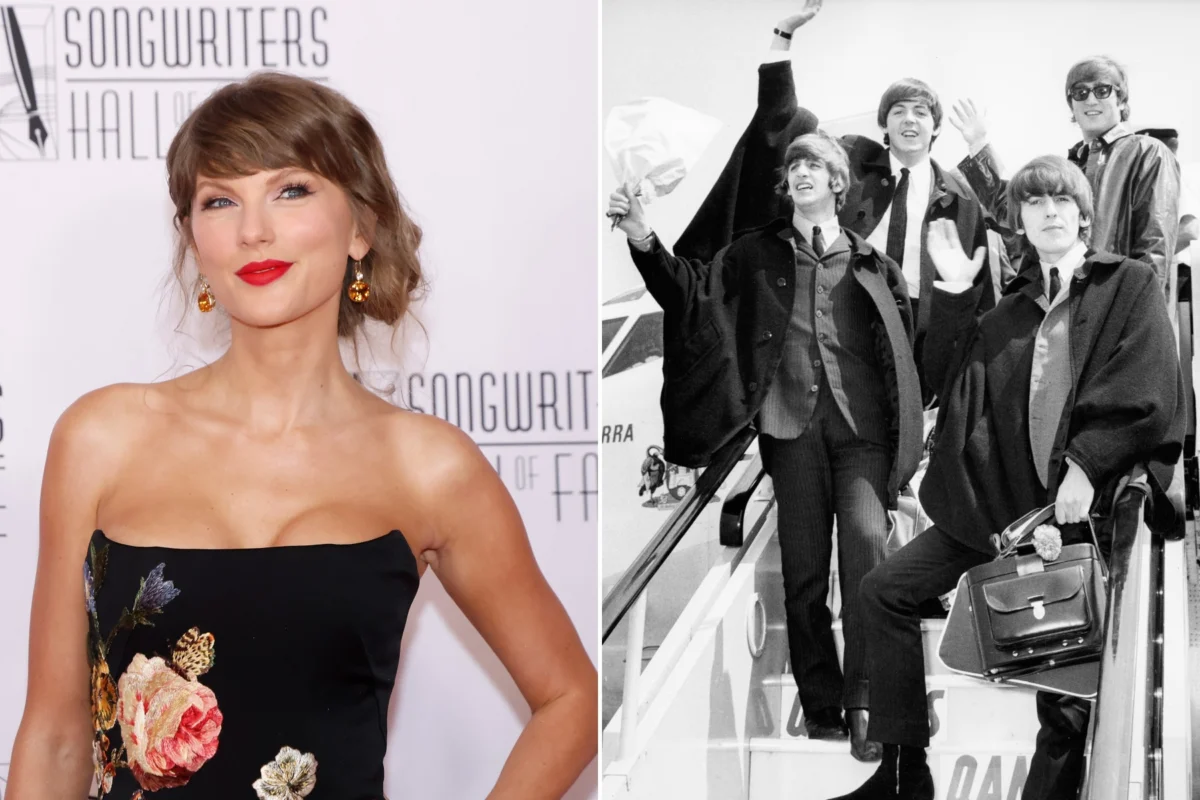
In the ever-evolving landscape of the music industry, few names command the historical weight of The Beatles and the contemporary cultural gravity of Taylor Swift. This week, the two forces have collided on the Billboard charts in a display of statistical synergy that highlights the evolution of popular music across six decades. As Swift’s The Life of a Showgirl marks its 14th consecutive week atop the Billboard 200, and The Beatles’ remastered deluxe edition of Rubber Soul surges to No. 4, the industry is once again forced to confront the unique intersection between mid-century pop innovation and 21st-century streaming hegemony.
The Billboard Pop Shop Podcast, hosted by industry analysts Katie Atkinson and Keith Caulfield, has dedicated its latest episode to dissecting this phenomenon. For students of music history and chart enthusiasts alike, the discussion serves as a bridge between the era of physical vinyl records and the algorithmic dominance of the digital streaming age.
The Intersection of Titans: Key Statistical Milestones
The most significant takeaway from this week’s chart data is the rare "Triple Threat" alignment: for the first time in history, the three acts with the most No. 1 albums in the history of the Billboard 200—The Beatles, Taylor Swift, and Drake—are all simultaneously positioned within the Top 10.
This alignment serves as a focal point for a larger conversation regarding longevity. Taylor Swift has now officially reached 100 total weeks at No. 1 on the Billboard 200 across her discography. She joins The Beatles as the only two acts in the history of the publication to achieve this specific milestone. While The Beatles hold the record with 132 weeks at the summit, Swift’s trajectory suggests that her capacity to maintain audience engagement—even as she pivots between genres—mirrors the same "elastic" appeal that kept the Fab Four relevant for decades after their initial split.
A Chronology of Chart Supremacy
To understand why this intersection is so significant, one must look at the historical timeline of both acts.
- 1963–1970 (The Beatles’ Reign): The Beatles transformed the concept of the album from a mere collection of singles into a cohesive, artistic statement. Their 132 weeks at No. 1 were forged through a cultural explosion that saw the band dominate radio, television, and retail simultaneously.
- 2006–2026 (The Swiftian Era): Taylor Swift’s rise coincides with the most radical shift in music consumption history—the transition from physical sales to digital downloads, and finally to the streaming-first economy. Her ability to navigate these shifts, while retaining a massive, loyal fan base, has allowed her to capture the same market share in a fragmented media landscape that The Beatles commanded during a period of monoculture.
- The 2026 Convergence: With the release of The Life of a Showgirl and the archival reissue of Rubber Soul, we are seeing a "dual-generation" moment. The charts are proving that legacy acts can still thrive in the streaming era, provided they have the historical prestige to warrant "deluxe" re-releases, while contemporary icons like Swift are reaching a level of commercial saturation that was previously thought impossible in the post-Napster world.
Supporting Data: The Anatomy of the Billboard 200
The current Billboard 200 data provides a masterclass in modern consumption patterns. The success of The Life of a Showgirl is not merely a result of initial hype but a testament to "long-tail" endurance. In an era where albums often drop off the charts within weeks, Swift’s 14-week residency at the top suggests a structural change in how fans consume music—treating the album as a recurring cultural event rather than a static product.
Meanwhile, the performance of Rubber Soul (Deluxe) demonstrates that the market for "heritage content" is stronger than ever. The Beatles’ ability to re-enter the Top 5 with an album originally released in 1965 indicates that the "Beatlemania" phenomenon has successfully transitioned into a permanent fixture of global pop culture.
Industry Implications: What Comes Next?
The ongoing conversation on the Pop Shop Podcast touches on a provocative question: Can Taylor Swift eventually surpass The Beatles’ record for the most No. 1 hits on the Billboard Hot 100?
The Beatles currently hold 20 No. 1 hits, a record that stood as the gold standard of pop achievement for years. Swift is currently within striking distance of this tally. Industry experts note that the primary difference lies in the "velocity" of hits. The Beatles’ hits were concentrated in a tight seven-year window, whereas Swift’s hits have been spread across two decades of stylistic evolution. If she maintains her current pace, the implications for the history of recorded music are profound; it would effectively crown her as the most successful singles artist of all time, while The Beatles would remain the most successful album artists.
Furthermore, the emergence of viral stars like ADELA, whose track "Nicole Kidman" recently cracked the Top 10, highlights a new, faster-paced chart ecosystem. This contrasts sharply with the "slow burn" of established icons, creating a dynamic environment where the charts are a battlefield between the titans of the past and the viral sensations of the future.
Beyond the Charts: Cultural Commentary and Viral Trends
While the chart statistics provide the framework, the Pop Shop Podcast also highlights the human element of the music business. The discussion of Kelly Clarkson’s public spat with a Brooklyn art and magic shop is not just a quirky tabloid story; it underscores the "humanization" of the celebrity brand in the digital age. In an era where chart stats are cold and calculated, these moments of relatability are what keep fans tethered to these artists long after the music stops playing.
Additionally, the potential for Tame Impala and JENNIE’s collaboration, "Dracula," to challenge for the top spot demonstrates the increasing globalization of the pop charts. Just as The Beatles once brought British sensibilities to the American market, modern collaborations are breaking down geographic barriers, ensuring that the "pop" label remains as diverse as it is influential.
Conclusion: The Perpetual Nature of Pop
The comparison between Taylor Swift and The Beatles is more than just a numbers game. It is a dialogue about the nature of fame. Both acts have managed to survive the "fickleness" of public opinion by constantly reinventing their sound and image while remaining fundamentally connected to the songwriting traditions that defined their beginnings.
As we look toward the remainder of the year, the Billboard charts will likely continue to reflect this tug-of-war between the past and the present. Whether it is a long-standing legacy act like The Beatles proving that their catalog is evergreen, or a generational talent like Taylor Swift continuing to rewrite the record books, one thing remains clear: the industry is currently witnessing a rare moment of historical equilibrium.
For the casual fan, these chart updates provide a sense of order in a chaotic media environment. For the chart junkie, they provide the data points for a debate that will surely last for decades to come. As Katie and Keith suggest, we are living through a unique window in time where the architects of the past and the innovators of the present are sharing the stage, and for the listener, that is the best possible outcome.
To catch the full discussion, including in-depth analysis of the latest viral hits and the future of the Hot 100, listeners are encouraged to stream the latest episode of the Billboard Pop Shop Podcast on Billboard.com or through your preferred podcast distribution platform.