In the rarefied world of high-fidelity audio, few names command the reverence of Bowers & Wilkins. As the British audio stalwart celebrates its 60th anniversary, it has chosen to mark the occasion not with a retrospective, but with a bold leap forward. On June 4th, in the acoustically rich city of Vienna, Austria, the company unveiled its all-new 800 Series Diamond D5 range. This fifth-generation collection represents the pinnacle of decades of research, merging John Bowers’ foundational "True Sound" philosophy with cutting-edge materials science and a refined, luxurious aesthetic.
The Architecture of Sound: Defining the D5 Series
The 800 Series Diamond has long been considered the industry benchmark for both audiophiles and recording professionals. The D5 iteration is not merely an incremental update; it is a comprehensive reimagining of the loudspeaker. Spanning seven distinct models—ranging from the compact 805 D5 stand-mount to the authoritative 801 D5 floorstander—the range is designed to deliver a flawless, uncolored rendering of the original recording.

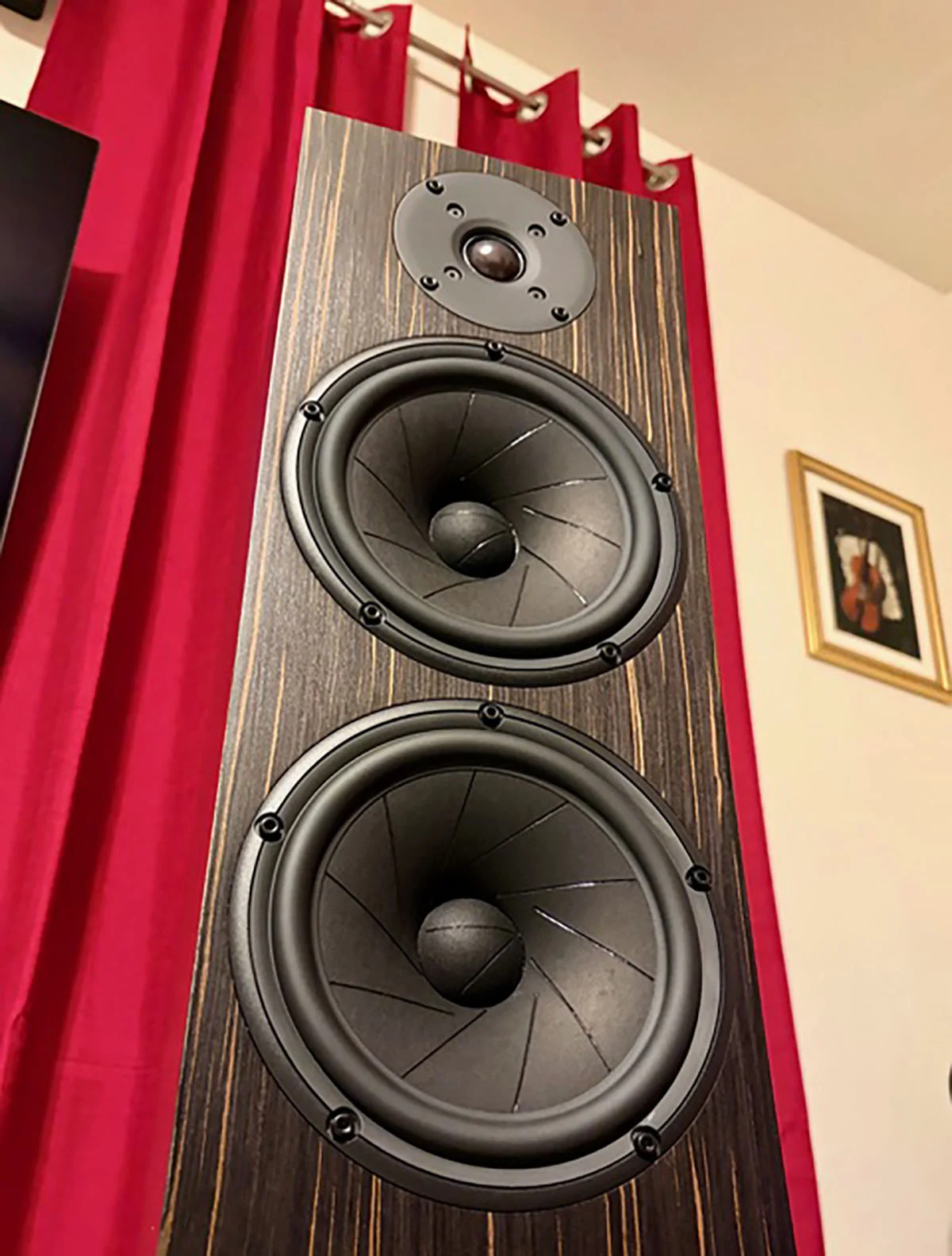
The hallmark of the series remains the world-renowned Diamond Dome tweeter, but in the D5, it is housed within a chassis that has been subjected to unprecedented levels of mechanical and acoustic refinement. By cascading technologies previously reserved for the exclusive "Signature" series, Bowers & Wilkins has succeeded in creating a loudspeaker that is, in their own words, "the most advanced range we’ve ever made."
A Chronology of Excellence: 60 Years of Innovation
To understand the significance of the D5, one must look back at the trajectory of Bowers & Wilkins. Founded in 1966 in Worthing, UK, the company began with a singular obsession: the removal of distortion.

- The Early Years (1966–1980): Establishing the brand’s reputation through meticulous craftsmanship and the early adoption of advanced materials for drive units.
- The Birth of the 800 Series (1979–1990s): The introduction of the original 801 model, which quickly became the standard for classical music recording studios worldwide, including the iconic Abbey Road Studios.
- The Diamond Revolution (2005–2015): The integration of diamond-dome tweeters—an industry first—transformed high-frequency reproduction, offering unparalleled rigidity and clarity.
- The D3 and D4 Eras (2015–2023): Successive generations introduced the Continuum cone and the revolutionary Turbine Head, constantly pushing the boundaries of cabinet isolation.
- The D5 Milestone (2024): The current launch marks the 60th-anniversary culmination, focusing on structural "silence"—the idea that a cabinet should be invisible to the sound waves it contains.
Engineering the "Silent" Cabinet: Technical Deep-Dive
The most significant improvements in the D5 range are structural. The research team at the Southwater Research Establishment (SRE) utilized advanced computer modeling and simulation to identify areas where cabinet vibration impacts sonic purity.
Space Frame Bracing
The standout innovation is the "Space Frame Bracing." By installing parallel aluminum rails reinforced longitudinally and transversely, the engineers have effectively turned the internal structure of the cabinet into a rigid, non-resonant skeleton. This system bolts directly to the rear of the Matrix bracing, dramatically stiffening the enclosure and ensuring that the only vibrations reaching the listener are those intended by the music itself.

The All-New Aluminum Top Plate
Drawing from the lessons learned during the development of the 801 D4 Signature, the D5 range introduces a substantially revised aluminum top plate. Featuring thicker ribbing and improved decoupling mounts, this plate serves as a mechanical anchor for the Turbine Head or the Solid-Body-Tweeter assembly. The result is a tighter, more coherent high-frequency response, as the top of the cabinet no longer moves in sympathy with the internal sound pressure.
Enhanced Matrix and Drive Unit Isolation
The proprietary Matrix bracing system—the "bones" of the 800 Series—has been enhanced with thicker aluminum profiles around each drive unit aperture. Furthermore, the 804 D5 model now benefits from an internal aluminum enclosure for its midrange assembly, a design feature previously restricted to the larger, more expensive floorstanding models. This provides superior mechanical decoupling, allowing the midrange to sound as open and spatial as if it were housed in a full-scale Turbine Head.

Aesthetic Refinement: A Study in Modern Luxury
Bowers & Wilkins has recognized that for the high-end consumer, the loudspeaker is a piece of furniture as much as it is an instrument. The D5 range debuts four new finishes, each meticulously crafted:
- Stealth Black: A deep, uniform finish that emphasizes the silhouette of the speaker.
- Warm White: A modern, inviting tone complemented by subtle champagne-colored metal detailing.
- Light Walnut: A bright, natural aesthetic that highlights the cabinet’s elegant curves.
- Dark Walnut: Replacing the outgoing Satin Rosenut, this finish draws inspiration from the 801 Abbey Road Limited Edition, featuring dark metal accents and luxurious Leather by Connolly trim.
The production tolerances have been tightened to a near-obsessive degree. Visible transitions between surfaces have been minimized, fixings are entirely concealed behind identification plates, and the paint finish has been upgraded to a higher, more durable standard, ensuring that these speakers remain as stunning in a decade as they are on the day of purchase.

Implications for the Audio Industry
The release of the D5 series has immediate implications for the high-end audio market. By "cascading" Signature-level components—such as the refined tweeter grille mesh and low-distortion motor systems—into the standard flagship range, Bowers & Wilkins is effectively raising the floor for high-end performance.
Competitors will now have to contend with a product line that offers a seamless integration of industrial design and extreme engineering. Furthermore, the focus on "quiet" enclosures suggests that the next frontier in speaker design is not just the drive unit, but the total elimination of the enclosure as a source of interference. For the professional recording sector, the D5 provides a more accurate, revealing tool for mastering and mixing, likely cementing its place in the world’s most prestigious studios for another decade.

Pricing and Availability
The new range is positioned at the top of the luxury audio market, reflecting the R&D investment and hand-crafted nature of the products. The official rollout is as follows:
- 801 D5 (Flagship): The definitive expression of the range.
- 802 D5 ($45,000): Proportions and midrange performance that mirror the flagship at a different scale.
- 803 D5 ($35,000): A headed design optimized for smaller listening environments.
- 804 D5 ($25,000): The discreet floorstanding choice.
- 805 D5 ($15,000): The ultimate two-way stand-mount experience.
- HTM81 D5 ($15,000 each) & HTM82 D5 ($12,000 each): Dedicated center channels for high-end home theater.
Availability is scheduled for September 9th, following the initial showcase in Vienna.

Conclusion: The Pursuit of the Perfect Speaker
In a world increasingly dominated by digital convenience and compressed audio, Bowers & Wilkins stands as a bastion of analog-led excellence. The 800 Series Diamond D5 is more than a collection of drivers and cabinets; it is an argument for the importance of high-fidelity in the human experience. By obsessing over the tiniest mechanical details, the brand continues to fulfill its mission of delivering the "True Sound." As the company enters its seventh decade, the D5 serves as a testament to the fact that when science truly shapes art, the results are nothing short of breathtaking. Listen to the D5, and the difference is not just heard—it is experienced.