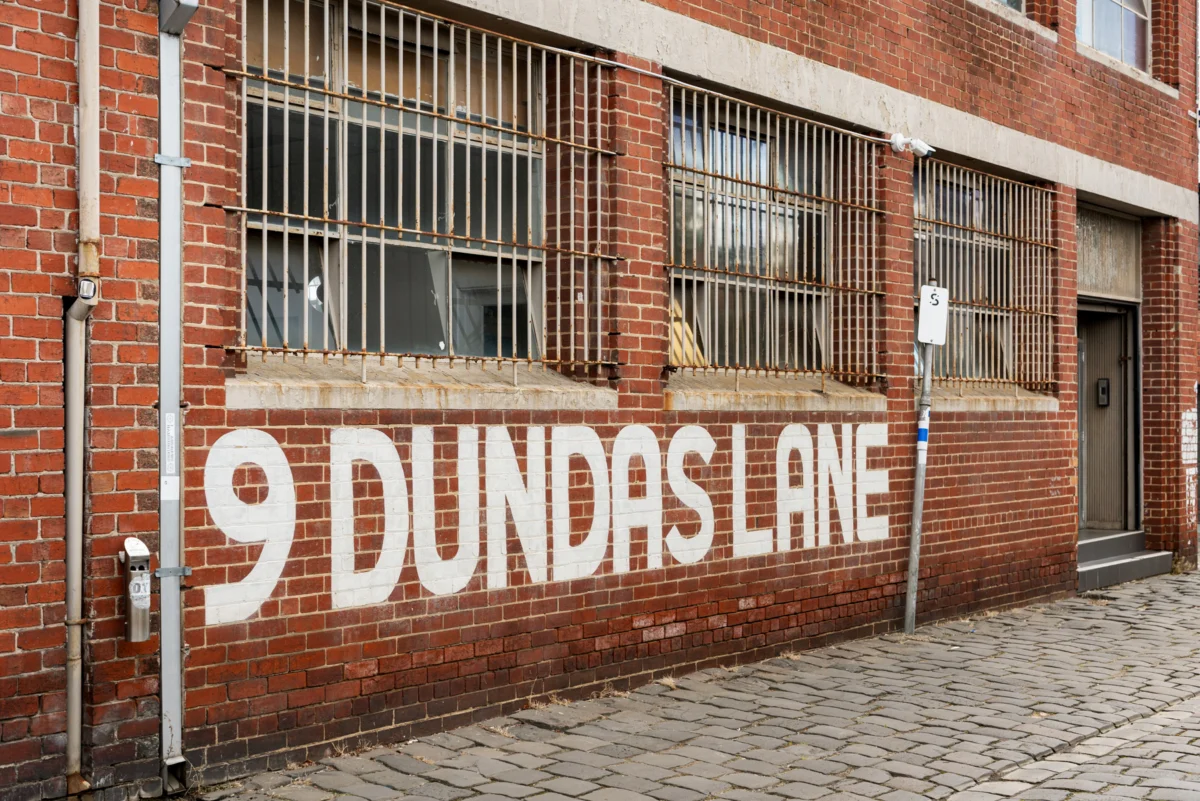
"If the walls could talk, they’d have one hell of a story." It is a sentiment that hangs heavy in the air at 9 Dundas Lane, Albert Park. For nearly half a century, this unassuming former biscuit factory in Melbourne’s inner-south has served as the nerve center for Australia’s most influential independent music empire. Now, as Mushroom Group prepares to vacate its spiritual home for a new chapter in the city’s East End, the iconic property has officially hit the market, marking the end of an era that defined the sound of a nation.
The Epicenter of Australian Music
Since its acquisition by the legendary Michael Gudinski in 1980, the Dundas Lane facility has been far more than a corporate office. It has acted as a creative incubator, a safe harbor for iconoclasts, and a launchpad for artists who would go on to achieve global superstardom. The list of talent that has walked through its doors reads like a definitive history of Australian music: Kylie Minogue, Jimmy Barnes, Split Enz, Skyhooks, Archie Roach, Paul Kelly, Hunters & Collectors, Yothu Yindi, Vance Joy, The Temper Trap, Vika & Linda, Dan Sultan, and The Teskey Brothers.
Beyond the recording contracts and management deals, the site serves as the historical bedrock of Frontier Touring. As one of the Southern Hemisphere’s preeminent concert promoters, the company has utilized the Dundas Lane headquarters to coordinate gargantuan tours for global icons including Taylor Swift, The Rolling Stones, Billy Joel, Madonna, Bruce Springsteen, and the Foo Fighters. Today, Frontier Touring stands as just one of more than 20 distinct businesses operating under the sprawling Mushroom Group banner.
A Chronology of Noise: From St Kilda to Dundas Lane
To understand the significance of 9 Dundas Lane, one must look at the trajectory of the man who built it. Michael Gudinski founded Mushroom Records in 1972, initially operating out of St Kilda. At the time, the Australian music industry was nascent, struggling to find its own voice against the dominance of imported American and British acts. Gudinski, with his relentless energy and entrepreneurial foresight, sought to provide a platform for local artists to own their narrative.
By 1980, the company had outgrown its St Kilda origins. The move to the warehouse space in Albert Park was strategic; it provided the "warehouse-scale proportions" necessary to house a growing roster of staff, equipment, and the administrative machinery required to manage a burgeoning entertainment conglomerate.
The building stood as a silent witness to the company’s evolution through the decades: the rise of pub rock in the 80s, the explosion of Australian pop in the 90s, the digitalization of the 2000s, and the global dominance of local acts in the 21st century. In 2023, the group celebrated its 50th anniversary—a milestone marked by the all-star covers collection Mushroom: 50 Years of Making Noise and the release of the acclaimed documentary Ego: The Michael Gudinski Story. These tributes served as a poignant bridge between the company’s past and its future, just as the leadership began planning the transition away from the Albert Park site.
Architectural Specifications and Market Value
The property at 9 Dundas Lane is a unique asset, representing a rare blend of industrial history and cultural prestige. The freehold corner landholding spans approximately 525 square meters and boasts three distinct street frontages, providing significant logistical advantages.
The building itself offers a total floor area of approximately 1,080 square meters. The layout is split across two primary levels, with each floor measuring roughly 490 square meters. An additional 100-square-meter upper-level office space connects to a rooftop terrace, a feature that has hosted countless industry parties, product launches, and moments of quiet reflection for the Mushroom team over the decades.
The sale of the property is being managed by a high-profile consortium of real estate experts, including Marshall White and Stonebridge, acting under the instructions of Advise Transact. Given the building’s heritage and its status as a piece of "tangible Australian music history," the listing is expected to draw interest from both commercial developers and cultural institutions interested in preserving the site’s storied legacy.

Reflections from Leadership
The decision to sell was not made lightly. For the Gudinski family, 9 Dundas Lane is synonymous with home. Matt Gudinski, the current CEO of Mushroom Group, has spoken candidly about the emotional weight of the departure.
"Dundas Lane has been an incredible part of Mushroom’s history and is globally renowned in the music industry," Matt Gudinski said. "I’ve been coming here my entire life, and it’s hard to overstate what this place means to everyone at Mushroom. As we look ahead, finding the right custodian to carry Dundas Lane’s storied history into its next chapter is incredibly important to us. It will be sad to leave so many memories behind, but we’re excited for what the future might hold for this iconic address."
The transition represents a shift in philosophy as much as it does a change in geography. The move to a new, state-of-the-art facility on Little Collins Street in Melbourne’s East End signals a modern era for the company. The new premises are designed to house all of Mushroom’s diverse operations—touring, record labels, management, music publishing, film production, and brand services—under one roof, facilitating a more integrated and agile approach to the modern entertainment landscape.
Implications for the Melbourne Music Scene
The departure of Mushroom Group from Albert Park is a symbolic milestone for the Melbourne music scene. For nearly 50 years, Dundas Lane acted as a magnetic north for the industry. Artists, managers, and international agents knew that if they wanted to do business in Australia, they had to make the pilgrimage to that specific corner in Albert Park.
The sale of the building invites questions about the preservation of cultural landmarks in a rapidly gentrifying city. While the structure itself will remain, its function will inevitably change. Whether it is repurposed as high-end creative offices, an art space, or redeveloped entirely, the building’s "soul"—the stories of late-night contract signings, the legendary parties on the rooftop, and the constant hum of industry activity—will remain embedded in its brickwork.
For the music industry, the move represents a "graduation." Mushroom Group has grown from a scrappy, independent label into a global powerhouse that requires a facility capable of hosting complex, multi-national operations. The new Little Collins Street headquarters reflects this stature, positioning the company at the heart of Melbourne’s business district.
The Future of 9 Dundas Lane
As the property listing goes live, the music world watches with a mix of nostalgia and curiosity. Prospective buyers are not merely purchasing a square-meterage footprint; they are buying a piece of the Australian zeitgeist. The legacy of Michael Gudinski, a man who transformed the cultural landscape of the country, is inextricably linked to the site.
"The building stands as a tangible piece of the Mushroom story and Australia’s rich music history," the company stated in a final release. The sale marks the conclusion of a significant chapter, but as the team prepares to move to their new home in the East End, the focus remains on the continuity of the mission that began in 1972: to champion Australian artists and make noise on the global stage.
The doors of 9 Dundas Lane may soon be under new management, but for the countless musicians, producers, and fans who know its history, the walls will always whisper the stories of the songs, the tours, and the dreams that were built within them. The biscuit factory that became a music factory has fulfilled its purpose; now, it awaits its next act.