Solid State Logic System T Unifies Audio Production Across Vienna’s Prestigious Theater in der Josefstadt and Kammerspiele
016 mins
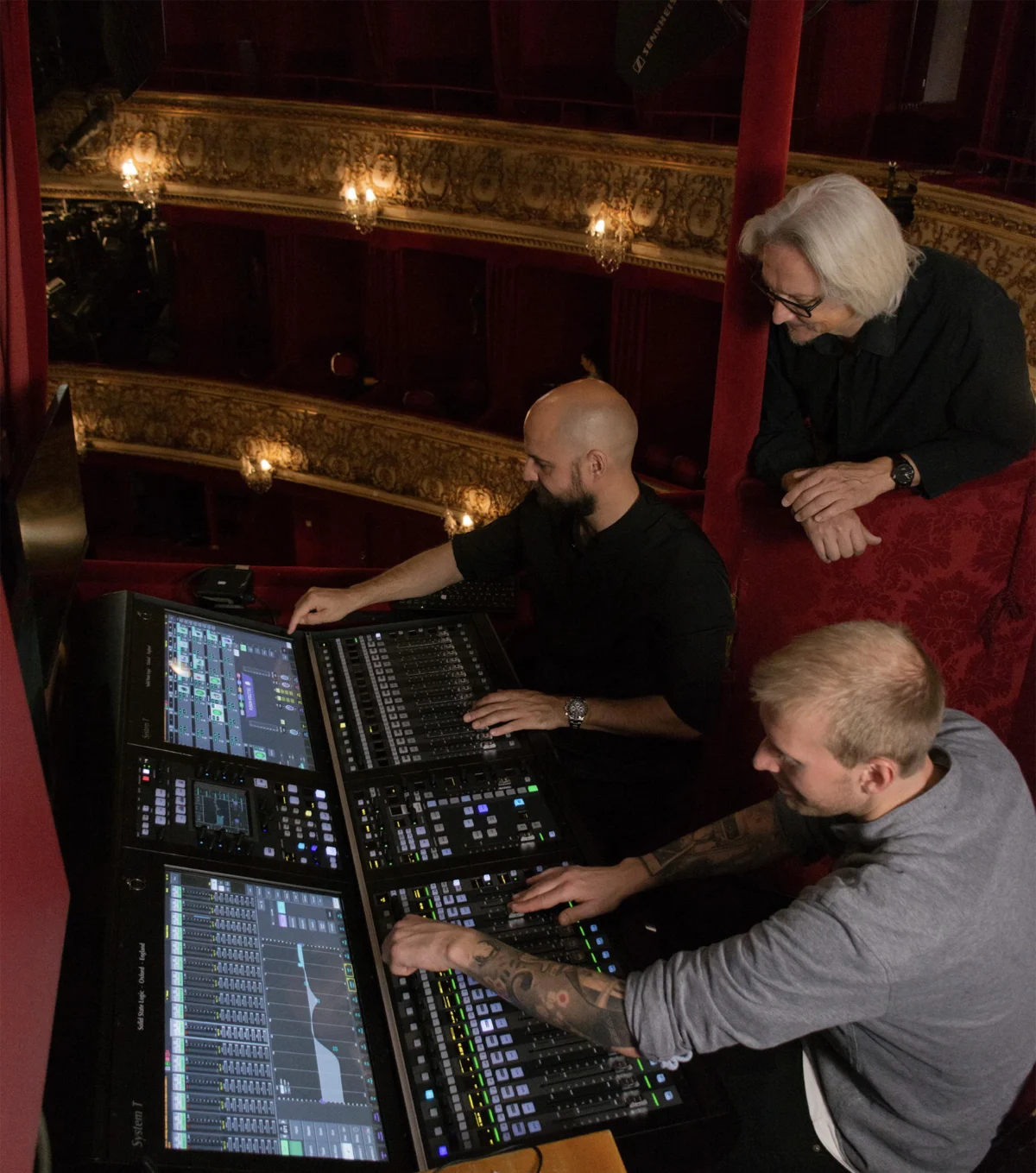
VIENNA, AUSTRIA — In a major technical leap forward for one of Europe’s most storied cultural capitals, Vienna’s historic Theater in der Josefstadt and its sister venue, the Kammerspiele, have successfully modernized their sonic infrastructure. By deploying Solid State Logic (SSL) System T digital mixing platforms, the two renowned institutions have established a shared, state-of-the-art audio production ecosystem.
Designed to seamlessly handle everything from spoken-word classical drama and intricate live musical performances to large-scale multimedia productions, the new system bridges the operational gap between the two historic venues. Spearheaded by Head of Sound Raimund Hornich and supplied by Austrian distributor TSAMM Professional Audio, the multi-phase upgrade marks a definitive departure from aging, legacy analog and early digital workflows into the era of Audio over IP (AoIP) and object-based mixing.
Main Facts: The Technical Core of the Upgrade
The deployment of the Solid State Logic System T infrastructure represents one of the most significant theatrical audio investments in Vienna in recent years. The initiative fundamentally transforms how both the Theater in der Josefstadt and the Kammerspiele manage day-to-day audio operations.
At the heart of the deployment is a flexible, highly scalable mixing architecture. Theater in der Josefstadt now houses two robust 32-fader SSL S500 surfaces:
Front of House (FoH): One 32-fader S500 console is permanently installed in the traditional control position, anchoring the primary mix environment.
Mobile Control: The second 32-fader S500 surface is mounted on a custom-engineered mobile trolley, giving engineers the unprecedented freedom to mix from various positions within the auditorium or stage areas depending on the demands of the specific staging.
Remote Control: An additional 16-fader remote unit provides supplementary control layers, optimizing workflow ergonomics during complex, multi-channel cues.
Crucially, the Kammerspiele operates on the same underlying System T console platform. This shared technical foundation allows sound engineers to effortlessly transfer show files, channel layouts, custom processing structures, and overarching operational workflows between the two stages.
Beyond the consoles themselves, the overarching technical overhaul at Theater in der Josefstadt—completed during a tight six-week summer window—integrated several cutting-edge systems:
A native Audio over IP (AoIP) network backbone ensuring ultra-low latency and massive channel routing capabilities.
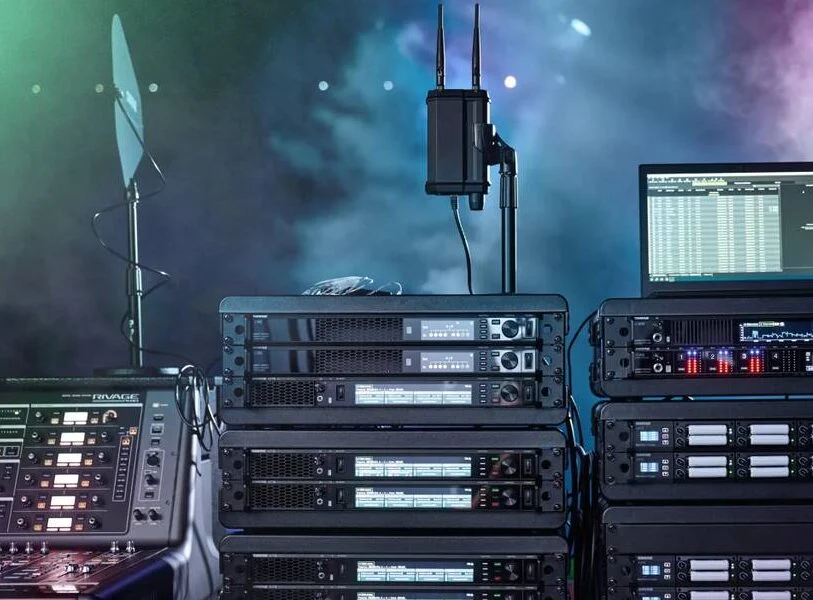
A high-density Sennheiser multichannel wireless microphone system to accommodate demanding theatrical casts.
A premium d&b audiotechnik PA system, chosen for its pristine clarity and acoustic dispersion characteristics.
Comprehensive support for object-based audio workflows via Open Sound Control (OSC) integration, providing a seamless bridge to external renderers like the d&b Soundscape system.
Chronology: A Multi-Year Modernization Strategy
The path to a unified audio ecosystem in Vienna’s top-tier theatres was neither instantaneous nor accidental; it was the result of a deliberate, multi-year strategy orchestrated by the venue’s technical leadership.
Phase One: The Arrival at Kammerspiele (2024)
When Raimund Hornich assumed the role of Head of Sound for both Theater in der Josefstadt and the Kammerspiele three years ago, he inherited a theatrical audio infrastructure that had long passed its operational prime.
"I started in the job three years ago and at that time both places had very old-school mixing consoles," Hornich recalls. "I knew I had to install a new system with a modern workflow for theatre productions nowadays, and SSL provided that."
Drawing from his prior professional experience at Vienna’s illustrious Burgtheater—where he had grown intimately familiar with the demands of a high-pressure repertory theatre environment utilizing the System T platform—Hornich identified SSL as the ideal manufacturer to meet the challenge. In 2024, the Kammerspiele became the vanguard of the modernization effort, acting as the first testbed for the System T architecture in a live commercial and artistic run.
Phase Two: The Josefstadt Overhaul (Summer 2025)
Buoyed by the success at the Kammerspiele, planning immediately commenced for the much larger and more logistically complex installation at the main house, the Theater in der Josefstadt.
The integration was scheduled during the theatre’s standard summer operational hiatus in 2025. Working in close collaboration with Mario Reithofer and the team at TSAMM Professional Audio, the technical crew faced a strict deadline: the entire overhaul—encompassing the structural network, wireless microphone rigging, PA replacement, and the dual S500 console commissioning—had to be fully completed, calibrated, and stress-tested within a grueling six-week window, just ahead of the new season’s rehearsals.
The project was successfully delivered on schedule, allowing incoming casts and sound designers to step directly into a bleeding-edge acoustic environment without missing a single rehearsal cue.
Supporting Data: Operational Scalability and Workflow Synergy
Operating a major repertory theatre in Europe means dealing with a staggering rate of change. Unlike commercial run-and-slide musicals that play identical shows for months or years, houses like Theater in der Josefstadt and the Kammerspiele often rotate multiple distinct productions through their spaces on a weekly—or even daily—basis.
In this kind of environment, static configurations spell operational disaster. The integration of System T addresses this reality through several key data-driven and structural advantages:
File Portability and Interchangeability: Because both venues run on the identical SSL console core, show files are natively interchangeable. A mix file created during rehearsals at the Kammerspiele can be loaded into the Josefstadt system with virtually zero translation errors.
Personnel Mobility: Sound engineers, guest designers, and technical operators can transition fluidly between the two venues without needing to retrain on disparate mixing surfaces or proprietary software logic.
Dynamic Channel Counts: Modern theatrical sound design frequently demands massive inputs—dozens of wireless bodypacks, spot mics, live instrumental ensembles, complex Foley arrays, and multi-channel spatial sound effects. System T’s scalable processing engine effortlessly manages high channel counts without compromising processing depth or adding audible latency.
Spatial Audio Readiness: With the integration of Open Sound Control (OSC) protocol support, the consoles are future-proofed for advanced spatial and object-based mixing. Sound designers can route audio objects directly to external spatialization engines, opening the door for full integration with advanced acoustic environments like d&b Soundscape.
Official Responses: Industry Voices on the Collaboration
The partnership between Solid State Logic, TSAMM Professional Audio, and the Viennese theatres has generated considerable praise across the European professional audio community.
Raimund Hornich emphasized that his decision to select SSL was not driven merely by a checklist of technical specifications on paper, but by proven, real-world reliability under extreme pressure:
"I was not only looking for a system based purely on specifications," Hornich explains. "I wanted a platform that was trusted in real-world theatre operation. We knew exactly how it behaved under pressure, how flexible and scalable it was, and where its strengths lay."
Highlighting the overarching philosophy of the dual-venue integration, Hornich elaborated on how the consoles redefine inter-theatre logistics:
"The requirement was to make show files interchangeable, allowing operators to move easily between the two theatres, from one venue to the other. System T allows us to treat both theatres as part of a common audio ecosystem rather than two completely separate installations. Because both venues share the same console platform, show files, channel layouts, processing structures, and operational workflows, show files can be transferred between them with very little effort. That makes it much easier to move productions, technical resources, and personnel between theatres whenever necessary."
Furthermore, Hornich pointed out the immense value of the system’s spatial audio capabilities as theatrical productions increasingly abandon traditional left-right stereo imaging in favor of immersive, localized sound reinforcement:
"One of the features I value most is the integration with object-based workflows."
Mario Reithofer of TSAMM Professional Audio, who coordinated the local supply and technical delivery alongside Thomas Haas and the Josefstadt technical crew, worked closely with Hornich to ensure the infrastructure met the uncompromising standards of Vienna’s theatrical elite. Summing up the ethos required for successful repertory sound design, Hornich concluded:
"What I particularly appreciate about System T is that it was clearly designed to handle complex production requirements. Theatre productions are rarely static: shows evolve constantly, requirements change, and every production brings its own challenges. In repertory theatre, where productions change daily, flexibility is essential."
Implications: Setting a New Standard for European Repertory Theatres
The successful unification of audio operations at the Theater in der Josefstadt and the Kammerspiele carries profound implications for the broader European performing arts sector.
For decades, mid-to-large-scale theatrical organizations operating multiple venues have struggled with logistical friction caused by siloed technical infrastructure. When two stages within the same organization use entirely different mixing consoles, hardware ecosystems, and routing topologies, sharing productions becomes an expensive and time-consuming headache. Technicians must completely rebuild show files from scratch, rental costs spike due to incompatible peripheral gear, and cross-training staff drains valuable labor hours.
By eliminating these operational barriers through a unified Solid State Logic System T deployment, Theater in der Josefstadt and the Kammerspiele have established a blueprint for modern theatrical efficiency. The ability to seamlessly port complex show files, transition mixing personnel across venues instantly, and future-proof the stages for immersive, object-based spatial audio ensures that these historic Viennese institutions will remain at the absolute vanguard of theatrical production quality for years to come.
As theatres globally face increasing pressure to deliver cinematic, multi-channel sound design on tighter schedules and leaner budgets, the Vienna model demonstrates how smart, forward-thinking investments in unified IP-based audio networks can unlock unprecedented creative freedom and operational agility.