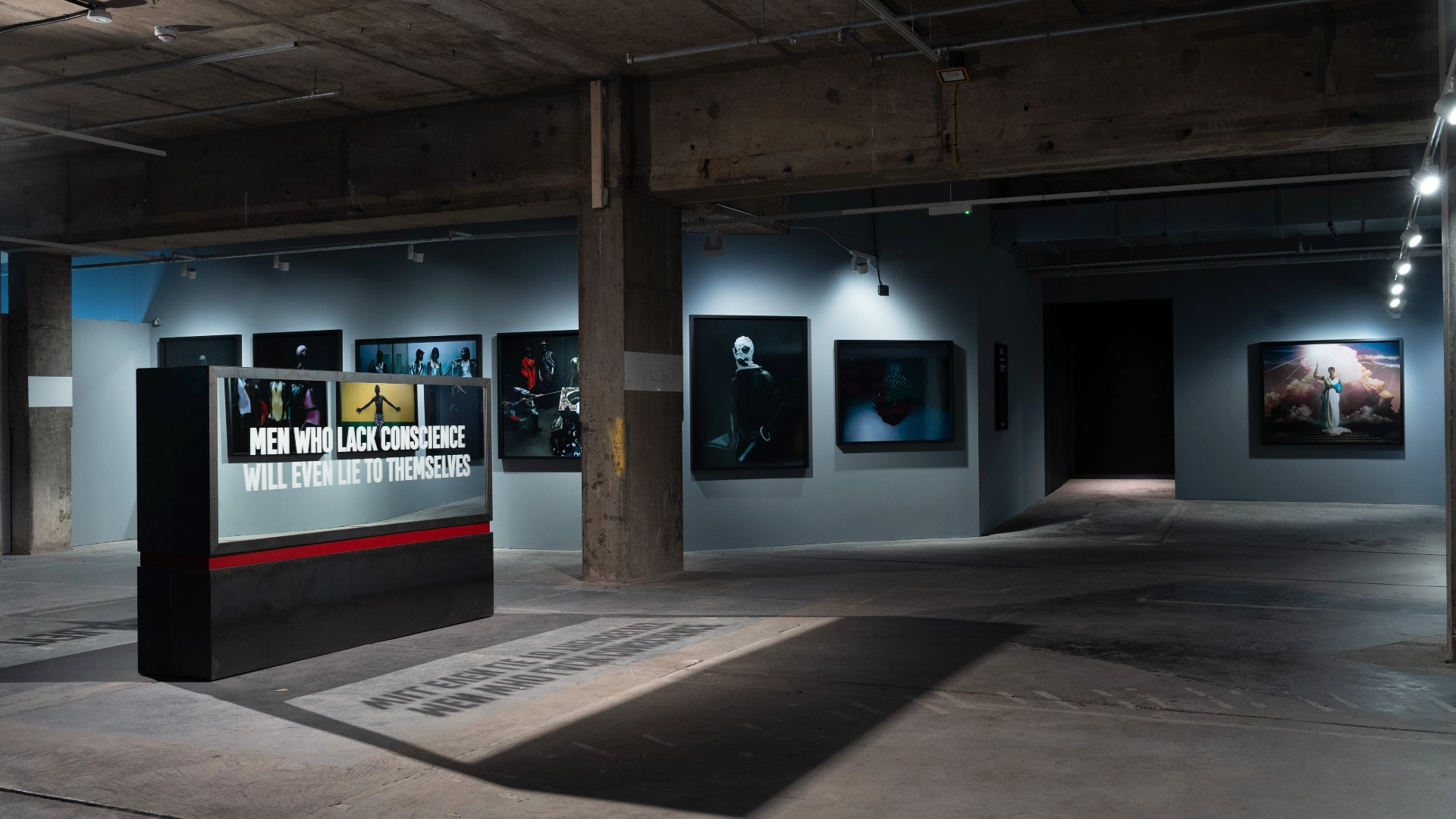
In the heart of London’s creative epicenter, 180 Studios has once again transformed into a portal for the visual imagination. This time, the space is occupied by Gabriel Moses, the visionary photographer and filmmaker whose rapid ascent has redefined the visual lexicon of contemporary fashion, sport, and music. His latest exhibition, Selah, is not merely a gallery show; it is a sprawling, multi-sensory odyssey that signals the maturation of an artist who refuses to be confined by the boundaries of his medium.
Selah marks Moses’s most ambitious undertaking to date, filling two floors of the iconic 180 Studios with a dizzying array of over 70 photographs, 10 films, and a series of sculptural installations. As the doors open to the public, the exhibition stands as a testament to the power of narrative-driven photography, inviting viewers to step inside the meticulously crafted worlds that Moses has spent the better part of a decade building.
The Evolution of a Visionary: From Regina to Selah
To understand the weight of Selah, one must first revisit its predecessor. In 2023, Moses made his solo debut at 180 Studios with Regina, a body of work that established his signature aesthetic: high-contrast, cinematic, and deeply nostalgic. It was a show that interrogated heritage, community, and the beauty of the everyday. Yet, looking back, Moses views that debut as a foundational chapter rather than a peak.
"I’ve grown a lot in those two years," Moses reflects during an exclusive conversation regarding the new show. "I’ve developed more as an artist. For me, it was important to create a show that felt so much more immersive and interactive. With Regina, I was finding my voice in the gallery space. With Selah, I am commanding it."
This evolution is palpable. While Regina was a curated retrospective of his photographic prowess, Selah is an architectural experience. It breaks the traditional "white wall" gallery convention, opting instead for a path that encourages visitors to wander through a landscape of light, sound, and shadow. The shift from a static viewing experience to an immersive environment reflects Moses’s deepening interest in film and spatial design—the idea that a photograph should not just be looked at, but inhabited.
Chronology: A Career Built on Rhythm and Light
The trajectory of Gabriel Moses’s career is a study in relentless momentum. Born in London, Moses’s visual language was forged in the melting pot of the city’s streets. His early work began to gain traction through his ability to capture the nuance of human interaction—often within the worlds of hip-hop culture and street sport—with the lighting sensibilities of a Renaissance painter.
- 2018–2020: The Breakthrough: Moses began capturing the attention of major fashion houses and cultural publications. His work was characterized by a distinct "warmth," a golden-hour glow that made his subjects feel both mythic and accessible.
- 2021–2022: Global Recognition: His collaboration with high-profile athletes and musicians solidified his status as a documentarian of modern culture. He moved beyond simple portraiture, beginning to weave short narratives into his commercial work.
- 2023: The Regina Milestone: His debut solo exhibition at 180 Studios cemented his reputation as a fine artist. It proved that his commercial work could carry the weight of a gallery setting.
- 2025: The Selah Era: With his latest show, Moses has transitioned into the realm of multimedia installation, incorporating sculpture and long-form storytelling to challenge the limits of the photographic print.
The Anatomy of the Exhibition: The Last Hour and Beyond
The centerpiece of the Selah exhibition is the premiere of his new short film, The Last Hour. While Moses has long been praised for his "moving" photography, The Last Hour represents a narrative leap forward. The film explores themes of time, consequence, and the quiet moments that precede transformation.
The exhibition is divided into thematic zones that mirror the diversity of Moses’s practice. One wing of the gallery is dedicated to his fashion work, but stripped of its editorial context. By removing the glossy magazine branding, Moses invites the viewer to focus on the textures of the fabric, the vulnerability of the model, and the deliberate construction of the pose.
Another section delves into his sporting photography. Moses has a unique ability to capture the stillness within the motion of a game. By slowing down the frame, he reveals the grace of an athlete—turning a competitive sport into a meditative performance.
The inclusion of sculptures and installations is perhaps the most surprising element of Selah. These objects, often physical manifestations of motifs found in his photographs, provide a bridge between the two-dimensional and the three-dimensional. They serve as tactile anchors, forcing the visitor to slow down and consider the materiality of the image.
Supporting Data: The Scale of Ambition
Selah is not a modest exhibition. Its scale reflects the sheer volume of work Moses has produced in the last two years:
- Venue: 180 Studios, London.
- Duration: Open now through August 31, 2025.
- Gallery Footprint: Two full floors of custom-built exhibition space.
- Visual Assets: Over 70 large-scale photographic prints, 10 short films, and original sculptural commissions.
- Thematic Scope: A synthesis of fashion, high-performance sport, music culture, and personal, abstract storytelling.
The exhibition’s design was a collaborative effort, involving lighting technicians, sound designers, and architects to ensure that the transition from a vibrant, color-drenched fashion portrait to the somber, cinematic stillness of The Last Hour felt intentional and fluid.
Official Responses and Critical Reception
The art world has been quick to note the shift in Moses’s approach. Critics have pointed to the exhibition as a sign that the line between "commercial photographer" and "fine artist" is effectively obsolete.
"Gabriel Moses isn’t just taking pictures of the culture," says a spokesperson for 180 Studios. "He is actively participating in the shaping of it. Selah proves that he has the stamina to sustain a narrative across multiple floors and mediums. It’s an exhibition that respects the audience’s time and intelligence."
For Moses, the feedback is secondary to the act of creation. In discussions about his process, he emphasizes the importance of the "pause." The title Selah—a Hebrew word often found in the Psalms, commonly interpreted as a musical or liturgical pause—is central to the exhibition’s theme. He wants the viewer to stop, to breathe, and to reflect on the imagery before them.
Implications: The Future of the London Art Scene
The success and ambition of Selah have significant implications for the future of photography exhibitions in London. It signals a move away from the traditional, passive viewing experience toward something far more experiential. By blending film, sculpture, and photography, Moses is setting a new standard for how artists can present their portfolios to the public.
Furthermore, his ability to bridge the gap between high-fashion editorial work and gallery-bound fine art suggests a shifting demographic in the art-going public. Selah attracts not only the traditional gallery crowd but also the fashion-forward youth and music aficionados who follow Moses’s every move on digital platforms.
As Selah continues its run throughout the summer of 2025, it serves as a milestone for both the artist and the venue. For Gabriel Moses, it is a statement of intent: he is no longer just capturing the world; he is creating his own.
For those wishing to experience this convergence of sight and sound, tickets are currently available via the 180 Studios website. Whether one is a follower of his editorial work or a newcomer to his cinematic universe, Selah demands to be experienced in person—a rare, visceral reminder of why we continue to look at images, and more importantly, why we continue to find ourselves within them.