
The traditional boundary dividing high-fidelity stereophonic reproduction from multi-channel home cinema has long been a source of compromise for AV enthusiasts. For decades, the conventional wisdom dictated that a system optimized for explosive, directional movie soundtracks would inevitably falter when tasked with the delicate, nuanced imaging required for high-end music playback. Conversely, dedicated two-channel audiophile systems lacked the processing power, low-end management, and spatial distribution necessary to recreate a modern cinematic soundstage.
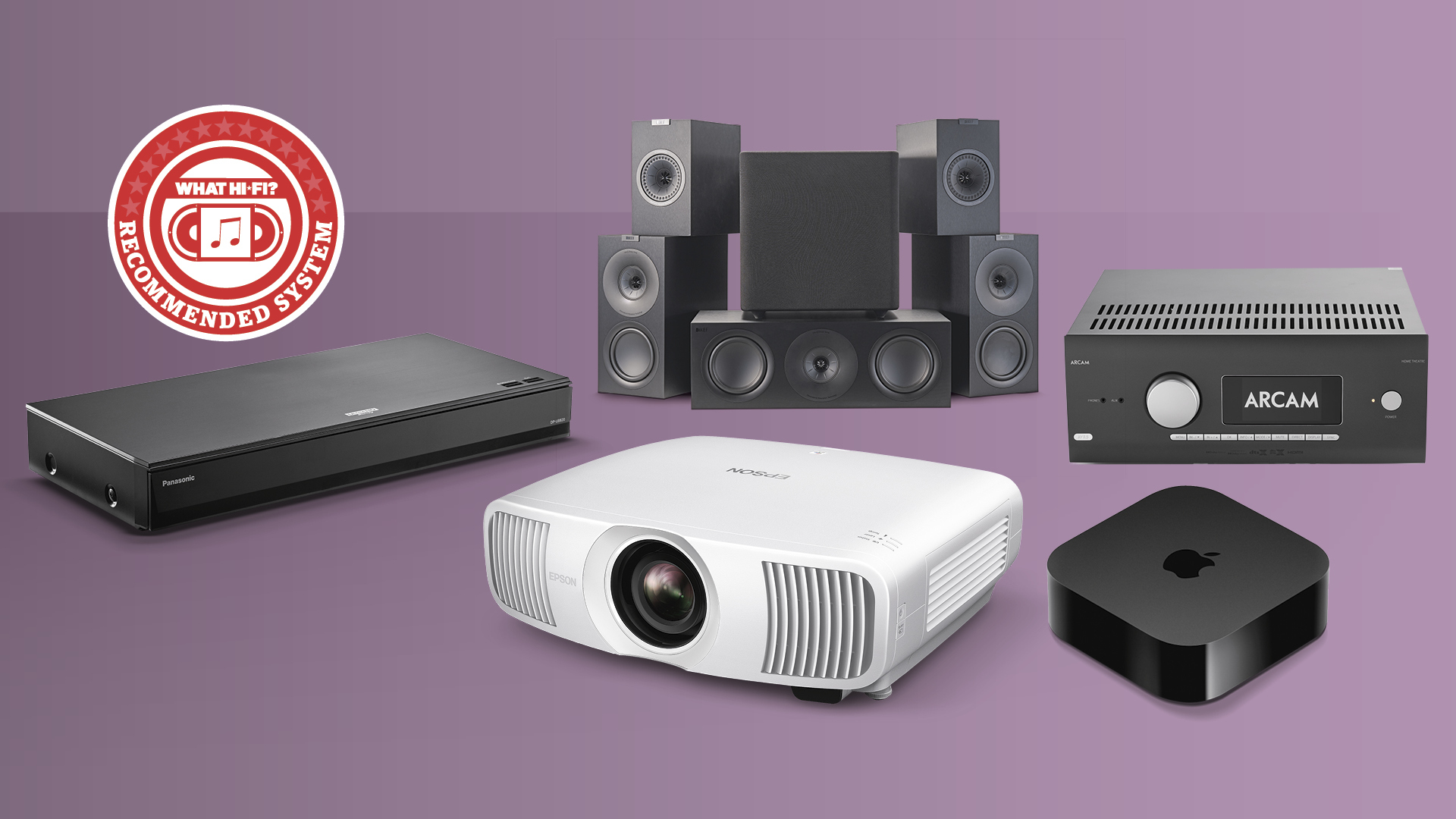
However, a new paradigm is emerging. By marrying state-of-the-art acoustic engineering with purist amplification philosophies, contemporary manufacturers are proving that a single, unified system can serve both masters without compromise. At the vanguard of this movement is a carefully curated premium system that pairs KEF’s critically acclaimed Q Concerto Meta speaker package with Arcam’s sonically focused AVR5 AV receiver. Supported by Epson’s award-winning EH-LS9000 projection system, Panasonic’s reference DP-UB820 4K Blu-ray player, and the Apple TV 4K streamer, this setup represents a high-water mark for domestic entertainment.
1. Main Facts: System Composition and Philosophy
The core philosophy of this premium setup is the maximization of asset utility. High-quality loudspeakers should not sit idle during music-only sessions, nor should they be relegated to flat, uninspiring performance when the source material switches from a Hollywood blockbuster to a high-resolution stereo FLAC file.
At the heart of this system is a financial and spatial commitment that totals over £7,000 (approximately $9,000). While this represents a significant capital outlay, the system justifies its price tag by effectively rendering a secondary, dedicated stereo hi-fi system obsolete.
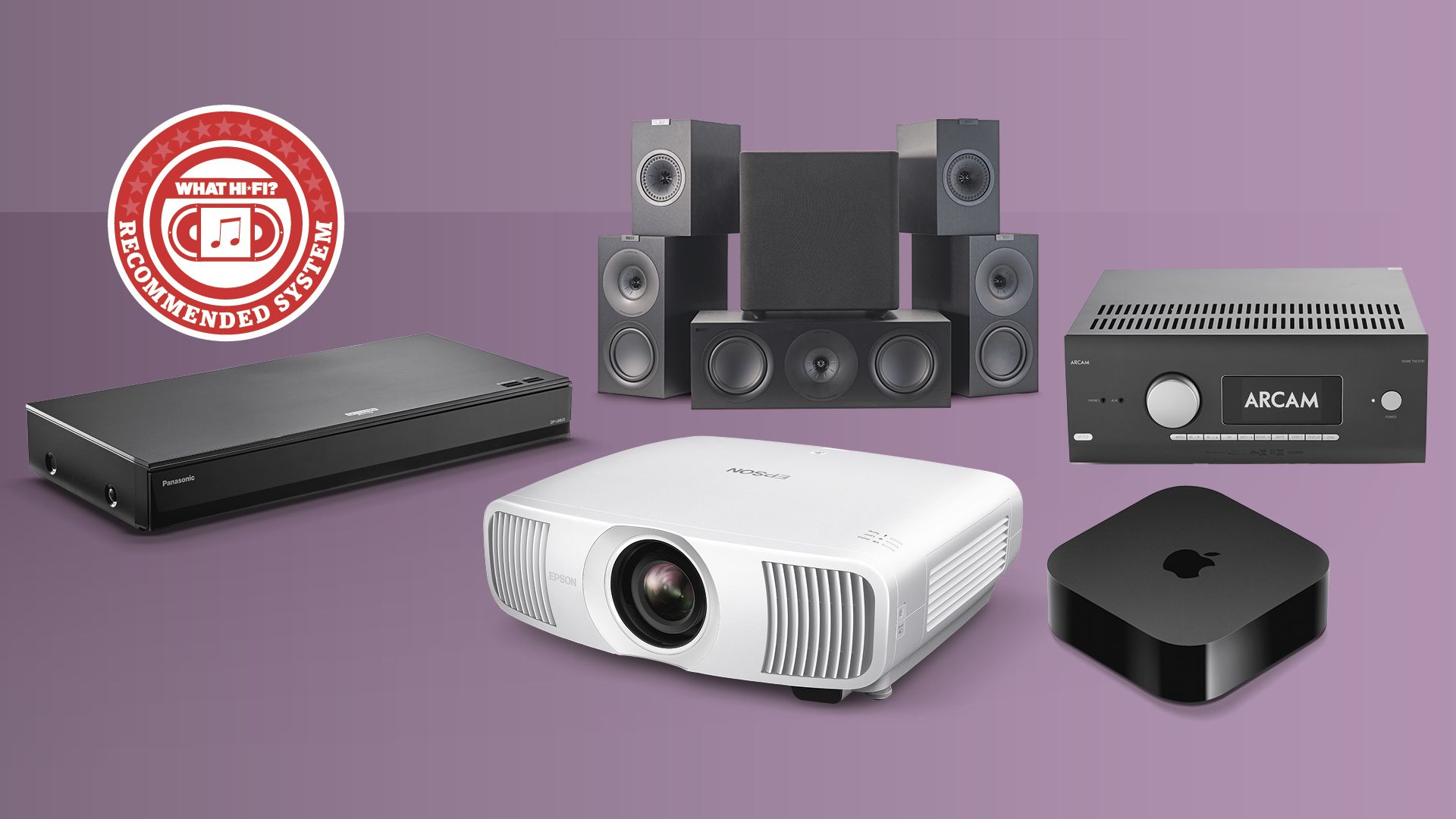
The Component Breakdown:
- AV Receiver: Arcam AVR5 (£2,000 / $2,500 class)
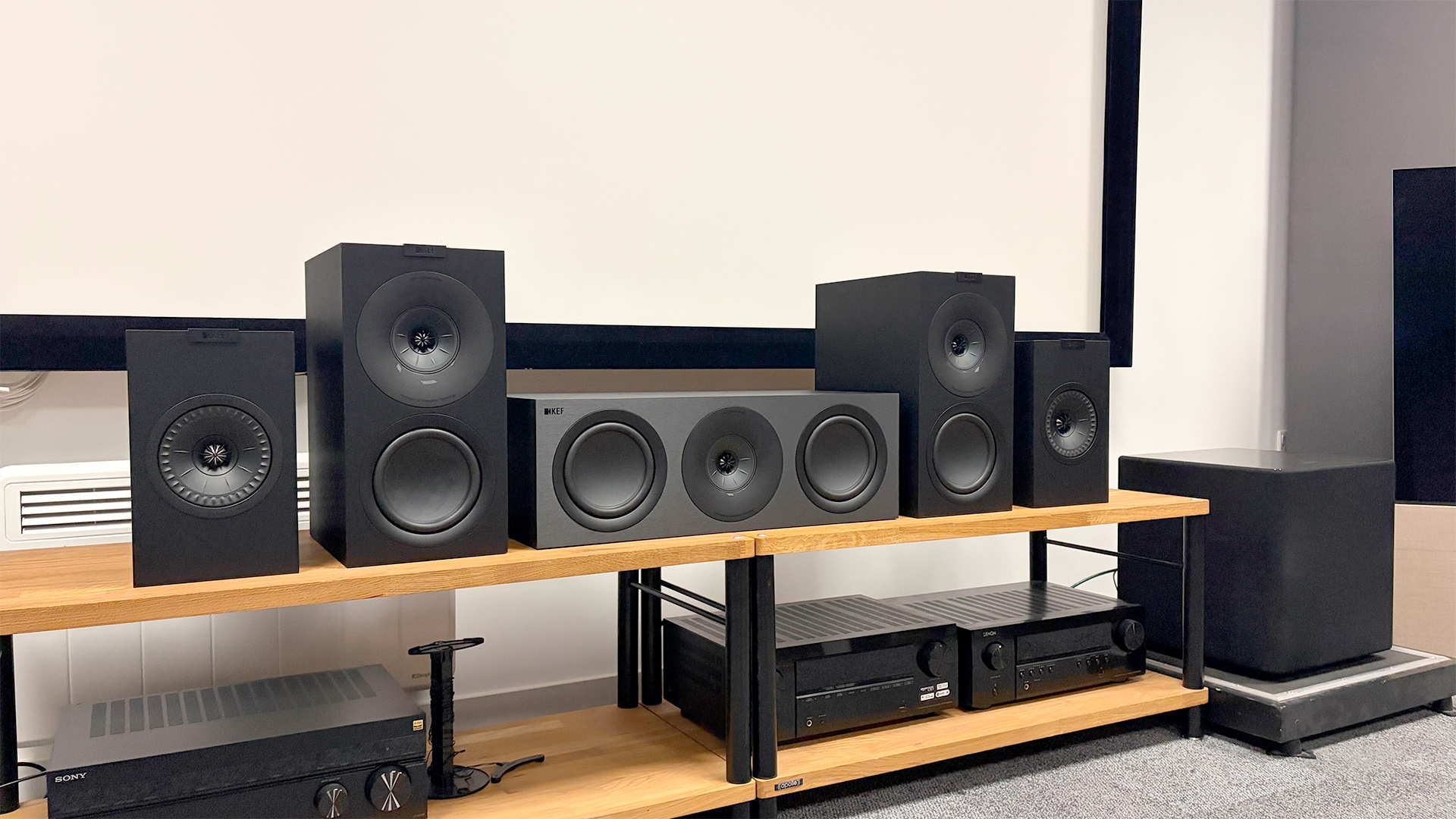
- Speaker Package: KEF Q Concerto Meta 5.1 System (£3,500 class, featuring Q Concerto Meta standmounts, Q1 Meta surrounds, a dedicated centre channel, and the Kube active subwoofer)
- Projector: Epson EH-LS9000 (£2,500 class)
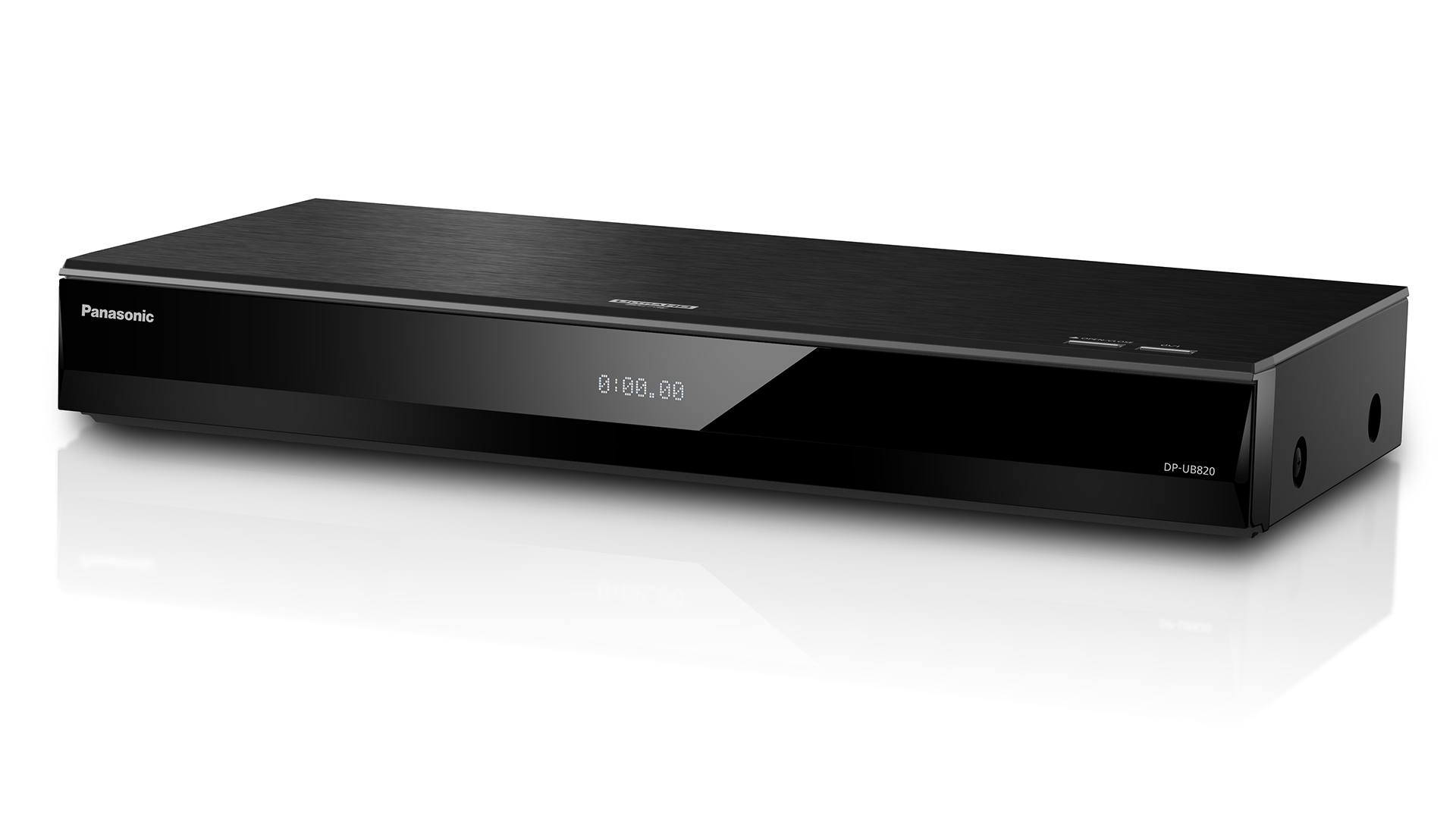
- 4K Blu-ray Player: Panasonic DP-UB820 (£350 class)
- Media Streamer: Apple TV 4K (£150 class)
Rather than chasing the industry’s current obsession with packing dozens of low-quality amplifier channels into a single chassis, this system prioritizes the quality of each watt delivered. It targets a classic 5.1-channel configuration with an immediate, seamless upgrade path to a 5.1.2 Dolby Atmos layout. This is achieved by utilizing KEF’s Q8 Meta Atmos enabled upward-firing "toppers" placed atop the front standmounts, driven directly by the Arcam receiver’s onboard amplification.
2. Chronology: The Evolution of Reference Home Cinema Tech
To understand why this specific combination of components yields such spectacular results, one must trace the chronological development of the underlying technologies that define them.
[2018-2019] ────────────────► [2020] ──────────────────────► [2021-2022] ────────────────► [2024-2025]
Panasonic launches UB820;     KEF introduces MAT           Arcam releases AVR5;         KEF trickles MAT to Q Series;
Establishes HDR tone mapping  in high-end LS50 Meta        Brings class-leading DACs    Epson EH-LS9000 wins
dominance.                    for resonance control.       to entry-level luxury.       "Best Buy" projection awards.
The Trickle-Down of Metamaterial Absorption Technology (2020–2024)
In 2020, KEF revolutionized high-frequency transducer design with the introduction of Metamaterial Absorption Technology (MAT) in its legendary LS50 Meta speaker. MAT is a highly complex, maze-like synthetic structure positioned behind the tweeter that absorbs 99% of the unwanted sound radiating from the rear of the dome. This eliminates the high-frequency distortion that plague traditional cabinet designs. Over the next four years, KEF systematically refined this technology, culminating in late 2024 with its integration into the more accessible Q Series, specifically the Q Concerto Meta standmounts that anchor this system.
Arcam’s Purist AV Renaissance (2021–2022)
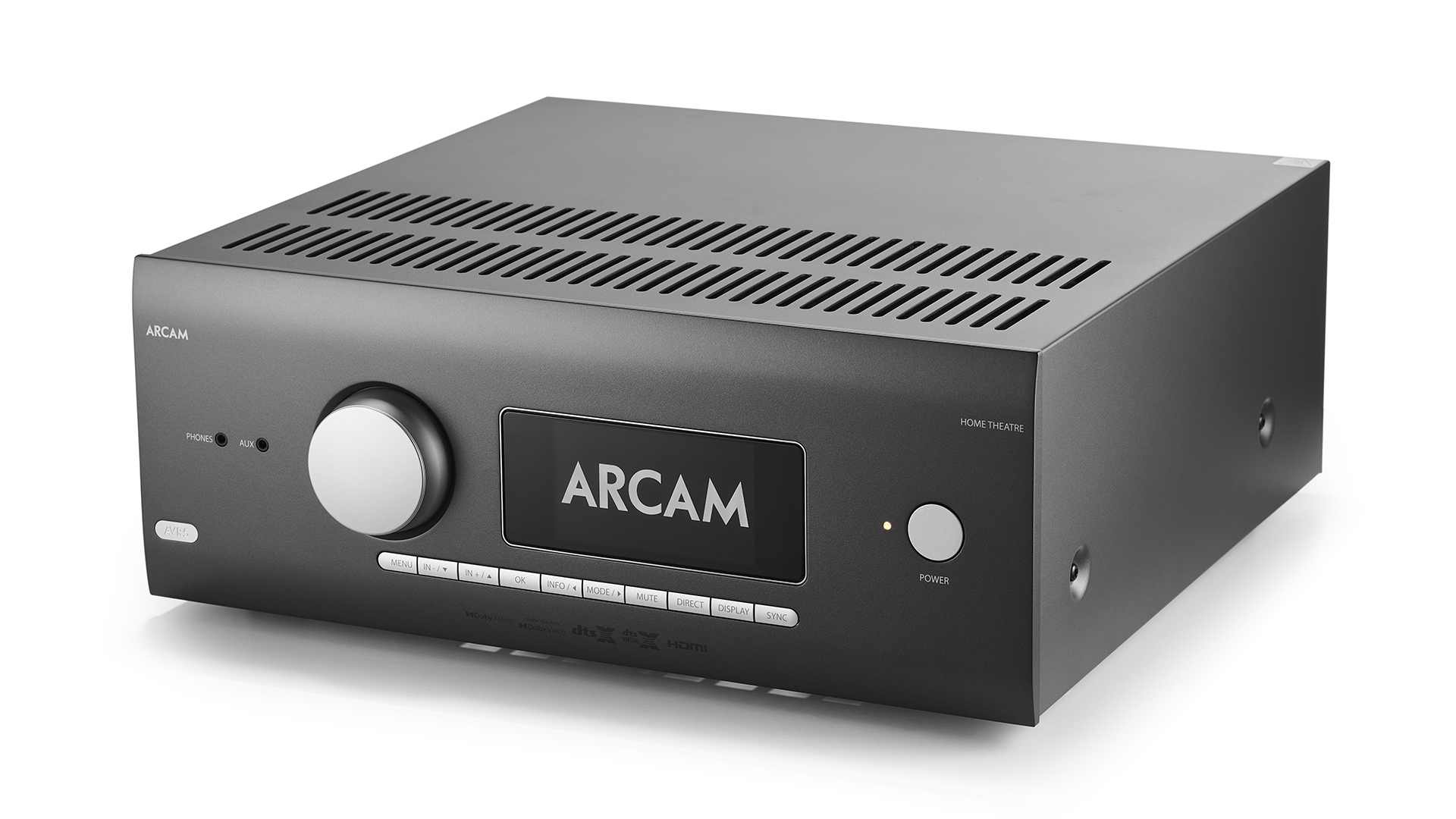
Historically, AV receivers have been designed as feature-first appliances, with sound quality often treated as a secondary concern behind HDMI switching capabilities and licensing badges. In late 2021, Arcam sought to disrupt this trend by introducing the AVR5. Positioned as an entry-level gateway to the brand’s luxury HDA range, the AVR5 stripped away unnecessary legacy video connections and multi-zone complexities to focus strictly on power supply design, digital-to-analog conversion, and musical timing.
The Longevity of Physical Media and Projector Innovation (2019–2025)
While visual display technologies have moved rapidly toward massive, ultra-bright MicroLED and OLED televisions, the dedicated home cinema market has maintained its reliance on projection for true cinematic scale. Epson’s refinement of pixel-shifting technology over the last half-decade has allowed projectors like the EH-LS9000 to deliver stunning, near-native 4K images at a fraction of the cost of true native 4K silicon chips. Concurrently, the Panasonic DP-UB820 4K Blu-ray player, first introduced in late 2018, has maintained an unprecedented seven-year tenure at the top of the physical media market, proving that superior chroma processing and HDR tone-mapping algorithms do not go out of style.
3. Supporting Data: Technical Specifications and System Synergy
The synergy of this system is rooted in the mathematical and electrical compatibility of its components.
| Component | Key Technical Specification | Critical System Benefit |
|---|---|---|
| Arcam AVR5 | ESS Sabre ES9026PRO DAC; Class AB amplification (85W per channel, all 7 channels driven) | Delivers pristine digital decoding with the current drive required to handle complex impedance dips in KEF speakers. |
| KEF Q Concerto Meta | 12th-Gen Uni-Q driver array with MAT; 3-way bass reflex design | Ensures perfect acoustic time-alignment and uniform off-axis dispersion for a wider sweet spot. |
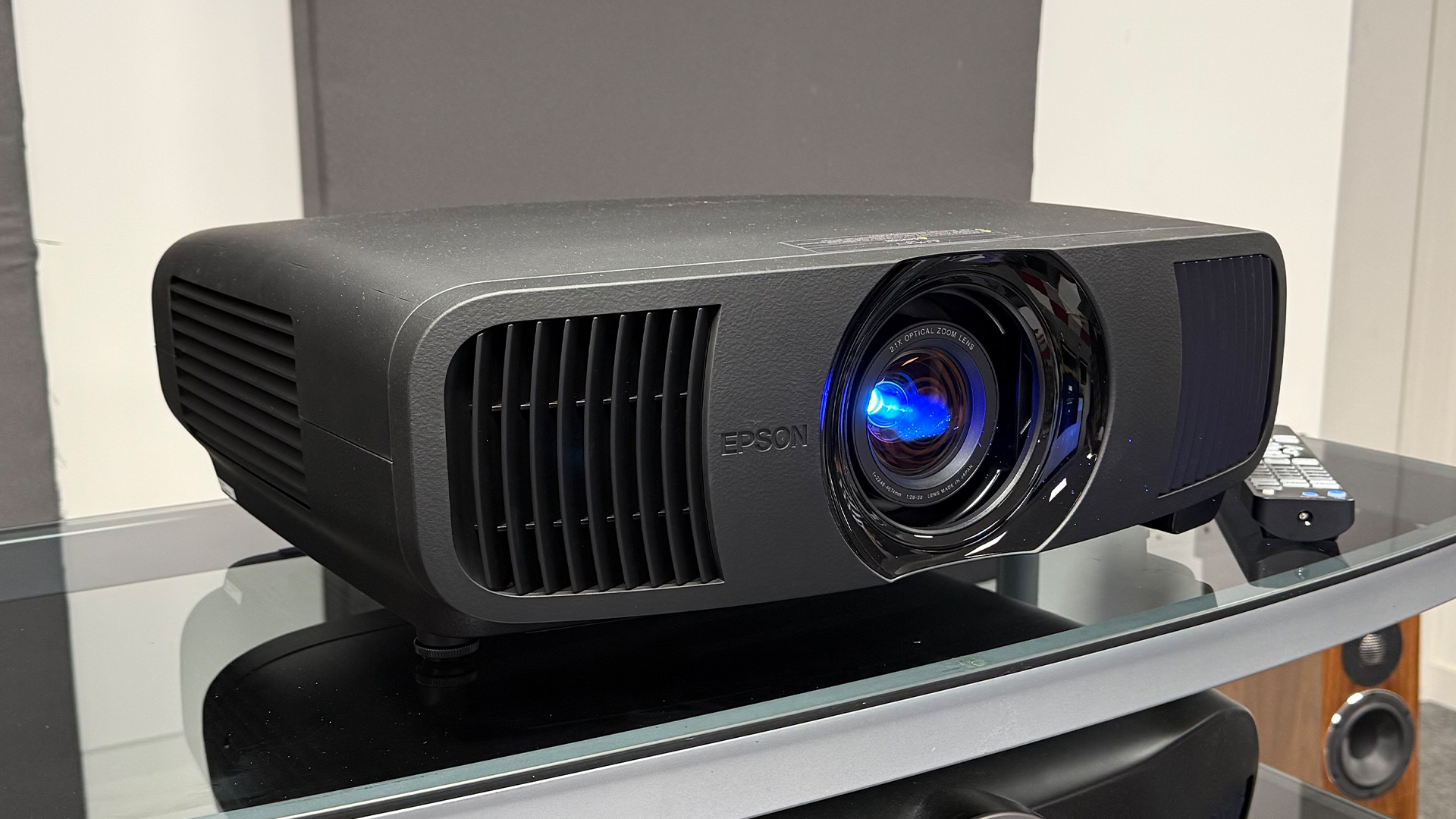
| Epson EH-LS9000 | 3LCD Laser Light Source; 4K PRO-UHD Pixel-Shifting Technology | Achieves high light output and exceptional color accuracy across a 100-inch screen surface. |
| Panasonic DP-UB820 | HCX (Hollywood Cinema Experience) Processor; HDR10+ & Dolby Vision support | Maximizes video bitrates (up to 100 Mbps) to feed the projector with uncompressed visual data. |
| Apple TV 4K | A15 Bionic Chip; High-bitrate audio/video streaming output | Provides an intuitive user interface with reference-quality decoding of Dolby Vision and Dolby Atmos streaming profiles. |
Acoustic Alignment and Power Delivery
The KEF Q Concerto Meta standmounts feature an 8-ohm nominal impedance (dipping to 3.2 ohms) and a sensitivity of 85dB. These figures indicate that while they are not incredibly difficult to drive, they require an amplifier with a robust power supply and high current reserves to control their low-frequency drivers during dynamic transients.
The Arcam AVR5, utilizing a massive custom-designed toroidal transformer and Class AB amplification topologies, delivers a genuine 85 watts per channel with all seven channels driven simultaneously. This is a crucial distinction from mass-market receivers, which often spec their power ratings with only one or two channels driven at an easy 1kHz frequency. The Arcam’s ESS Sabre DACs ensure that whether decoding a Dolby Atmos soundtrack or a 24-bit/192kHz stereo PCM stream, the signal remains free of jitter and phase distortion.
Visual Precision and Pixel Shifting
The Epson EH-LS9000 relies on a sophisticated three-chip liquid crystal (3LCD) engine. Rather than utilizing a native 4K panel—which significantly increases manufacturing costs and heat generation—the LS9000 employs rapid diagonal pixel-shifting. By shifting each pixel diagonally by 0.5 pixels at a frequency virtually imperceptible to the human eye, the projector doubles its on-screen resolution.
Combined with the Panasonic DP-UB820’s HCX processor, which performs precise chroma upsampling, the system produces a picture characterized by exceptional edge definition, minimal color banding, and a level of three-dimensional depth that mimics native 4K displays.
4. Official Responses and Critical Reception
The critical reception of these components individually, and as a collective ecosystem, highlights a shared appreciation for their performance-first design.
What Hi-Fi? Testing and Editorial Verdict
In its comprehensive evaluation of the Epson EH-LS9000, the What Hi-Fi? editorial team noted:
"Playing Thunderbolts on 4K Blu-ray… we’re instantly struck by the sharpness and detail of the image. There’s an awesome solidity and depth to the picture, which is particularly impressive at the 100-inch scale of our screen… Colours are both vivid and natural, and the shading is excellent."
Furthermore, the publication praised the Epson’s unusual "Vivid" preset. While vivid modes on most projectors tend to oversaturate primary colors and introduce distracting blue tints, Epson’s implementation optimizes the light source’s dynamic range without sacrificing director intent.
Industry Experts on the Arcam-KEF Partnership
Acoustic engineers frequently recommend pairing Arcam electronics with KEF loudspeakers due to their complementary sonic signatures. Arcam’s amplifiers are characterized by a warm, authoritative, and rhythmically precise presentation. KEF’s Uni-Q driver array, which places the tweeter directly in the acoustic center of the midrange cone, offers highly analytical, wide-dispersion characteristics.
The warmth and drive of the Arcam balance the absolute transparency of the KEFs, preventing the system from sounding overly clinical or fatiguing during long listening sessions.
5. Implications for the AV Industry and Consumers
The existence and success of this curated system point to several broader trends shaping the home entertainment landscape.
The Survival of Physical Media in a Streaming Era
The inclusion of the Panasonic DP-UB820 alongside the Apple TV 4K highlights an ongoing truth in the AV community: for enthusiasts, convenience does not replace quality. While streaming platforms have made massive strides in compression efficiency, they still deliver 4K video at compressed bitrates ranging from 15 to 25 Mbps.
A physical 4K Ultra HD Blu-ray disc, by contrast, routinely delivers bitrates between 70 and 100 Mbps. This extra bandwidth translates directly into a lack of macroblocking in dark scenes, finer grain structure representation, and uncompressed Dolby TrueHD/Atmos audio tracks that streaming services simply cannot match.
Visual/Audio Bitrate Comparison:
Streaming (Apple TV 4K, Netflix, etc.):  ████ 15-25 Mbps
Physical Media (Panasonic DP-UB820):     ████████████████████ 70-100 Mbps
The Spatial and Financial Rationalization of Dual-Purpose Rooms
As real estate prices rise and dedicated square footage becomes premium, fewer homeowners can justify maintaining separate rooms for music listening and movie watching. A dual-purpose system like this allows a living room or a semi-dedicated den to transition seamlessly between roles. By investing in high-quality standmount speakers (like the Q Concerto Meta) rather than massive, imposing floorstanders, users can maintain a cleaner room aesthetic without sacrificing the low-end authority needed for cinema, thanks to the heavy lifting of the Kube subwoofer.
Conclusion: The Ultimate Verdict
For those with the space to accommodate a dedicated projection screen, a light-controlled room, and a budget of approximately £7,000, this system represents an extraordinary value proposition. It is a masterclass in balance: pairing the analytical brilliance of KEF’s MAT technology with the musical soul of Arcam amplification, fed by the finest source components available today. It proves that when chosen with care, a home cinema system does not just recreate the theater experience—it can also bring your music collection to life with breathtaking fidelity.