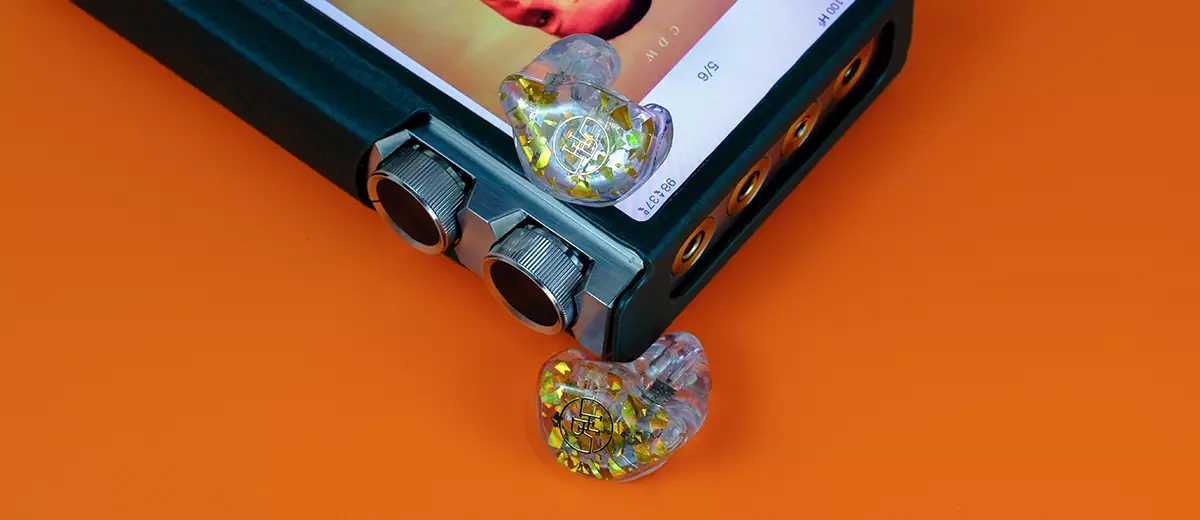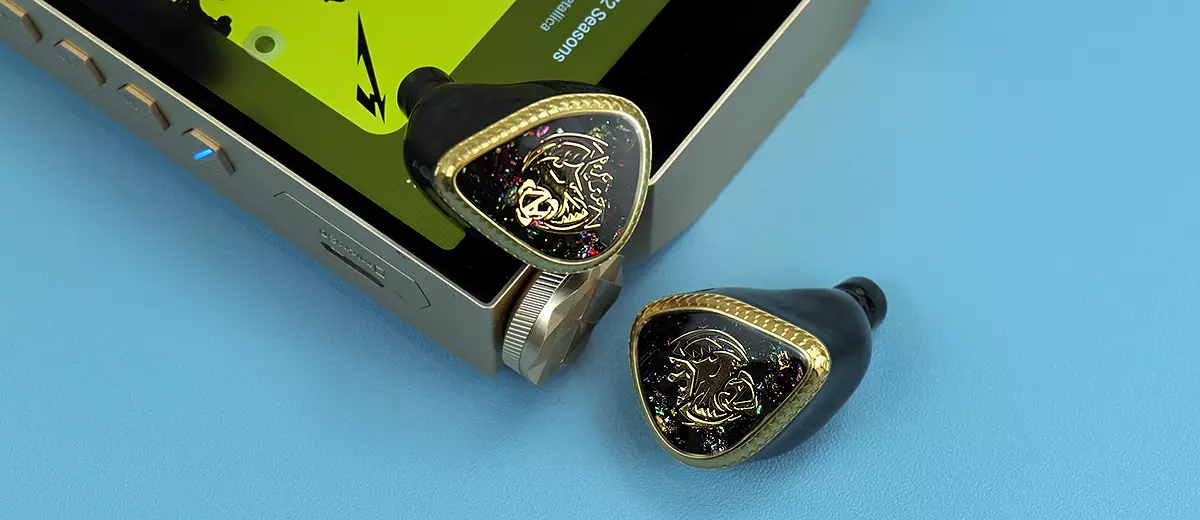
In the rapidly evolving landscape of "Summit-Fi," few companies manage to bridge the gap between extravagant storytelling and raw technical performance as effectively as Nostalgia Audio. Their latest release, the Nostalgia Audio Pendragon, arrives with a commanding $3,799 price tag, positioning itself as the new apex of the brand’s consumer-accessible lineup.
As a quad-hybrid, 14-driver universal in-ear monitor (IEM), the Pendragon represents a masterclass in complexity. It is not merely a collection of high-end components; it is a meticulously engineered sonic instrument that leans into a lush, powerful, and fatigue-free sound signature—a departure from the clinical, hyper-analytical tuning that has dominated the industry in recent years.
Main Facts: The Anatomy of a Flagship
The Pendragon is arguably Nostalgia Audio’s most ambitious undertaking. Eschewing the limited-run, ultra-niche status of their $32,000 "Royal Camelot," the Pendragon is designed for the high-end audiophile seeking a daily driver that refuses to compromise on depth or texture.
Technical Specifications:
- Driver Configuration: 14-driver quad-hybrid setup.
- Ultra-Lows: Dual 9.2mm dynamic drivers.
- Mid-Lows: Dual-diaphragm bone conduction drivers.
- Mids/Highs: 6 balanced armature (BA) drivers.
- Ultra-Highs: 4 electrostatic (EST) drivers.
- Impedance: 19Ω
- Sensitivity: 115 dB/mW @1kHz
- Technology: Features the updated XBS II (Extreme Bass System) with titanium alloy components and the refined SFD II (Spiral Flow Device) for improved midrange resolution.
Chronology: From Tesseract to Pendragon
To understand the Pendragon, one must look at the lineage of Nostalgia Audio’s evolution over the past several years. The brand has spent the early part of the 2020s experimenting with various sonic philosophies and aesthetic themes.
- The Early Era: Models like the Tesseract set a high bar for technical precision, often utilizing a "cyberpunk" aesthetic that favored sharp, aggressive, and highly detailed sound signatures.
- The Durandal Transition: The Durandal marked a shift toward more sophisticated, material-heavy construction, introducing the initial iterations of the Spiral Flow Device (SFD) and micro-nano 3D printing. It proved that Nostalgia Audio could balance complex driver arrays with cohesive tuning.
- The Pendragon Launch (2026): Positioned as the spiritual successor to the brand’s previous flagships, the Pendragon integrates the best of the Durandal’s acoustic engineering with a refined, "Arthurian-inspired" design language. It effectively cements the new design philosophy for the company’s 2026-and-beyond catalog, moving away from the stark, cold aesthetics of the past toward a warmer, more ornate identity.
Supporting Data: Acoustic Engineering & Design
The Pendragon is a feat of micro-engineering. The utilization of dual 9.2mm dynamic drivers for the ultra-lows provides a foundation that is significantly more authoritative than the BA-driven lows found in older models like the Tesseract.
The Engineering of Flow
The inclusion of the SFD II (Spiral Flow Device II) is not merely a marketing gimmick; it serves a specific acoustic purpose. By creating a rigid, helical formation within the acoustic tubes, the device manages soundwave flow to minimize turbulence and maximize midrange clarity. The transition to micro-nano 3D printing has allowed for tighter tolerances, resulting in a more accurate vocal performance that retains natural timbre.
Materiality and Aesthetics
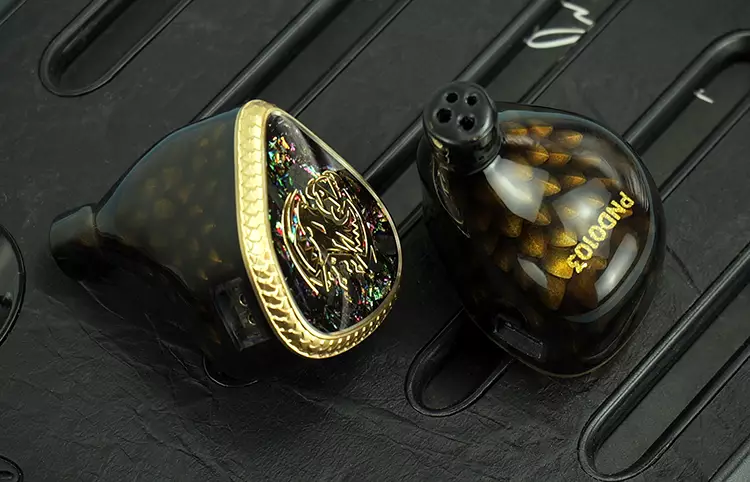
Nostalgia Audio has leaned heavily into the "Matter of Britain" Arthurian legend, creating a cohesive visual theme. The shells are a hybrid of 3D-printed resin and CNC-machined aluminum. The "dragonscale" underside, coupled with a gold-plated fender, gives the unit a sense of luxury that justifies its premium price point. However, this level of construction does result in a larger physical footprint, which may challenge users with smaller ear canals.
The "Caliburn" Cable
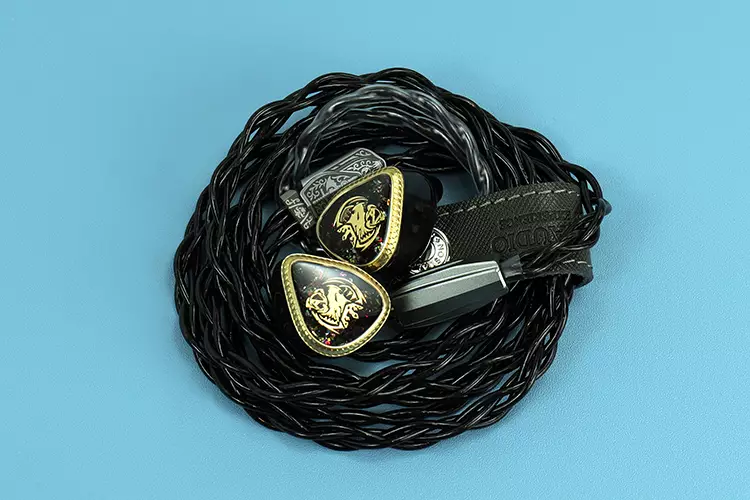
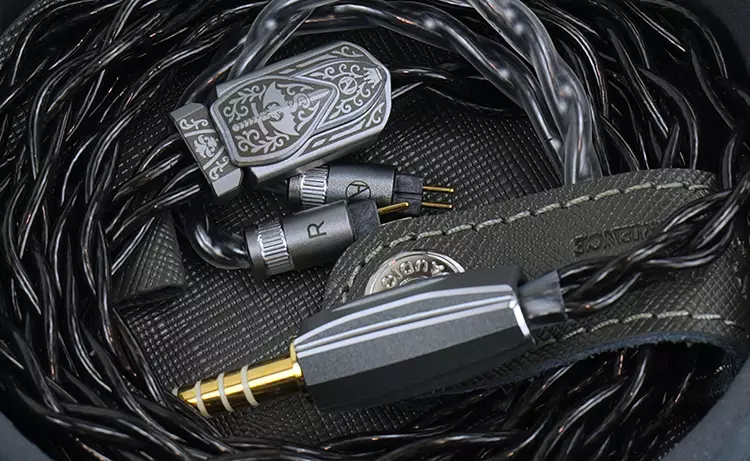
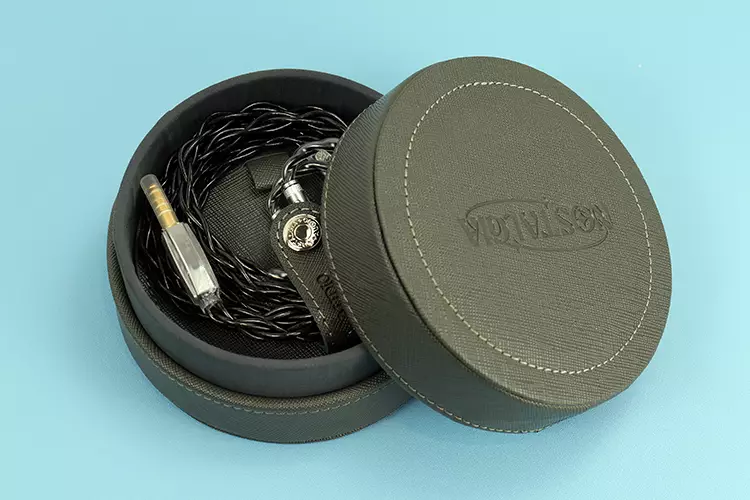
The stock cable, aptly named "Caliburn," is a testament to the brand’s attention to detail. Utilizing a 21.5AWG 4N OFC copper core with a 5N silver-plated OFC copper inner shielding mesh, the cable is designed to provide optimal signal transmission while maintaining physical flexibility.
Official Responses and User Experience
While the technical specifications are impressive, the real-world performance reveals a distinct, deliberate tuning philosophy. Our testing, conducted using the iBasso DX320 MAX Ti and the FiiO M27, highlights a sound signature that favors musicality over surgical precision.

The "Fatigue-Free" Philosophy
Nostalgia Audio’s team has clearly prioritized long-term listenability. The Pendragon avoids the "treble spikes" common in modern flagships, opting for a relaxed upper-treble roll-off that ensures listeners can enjoy extended sessions without ear fatigue.
Performance Metrics
- The Low End: The bass response is arguably the star of the show. It is rich, textured, and possesses a "heaviness" that brings life to modern genres like synthwave and R&B.
- The Midrange: While the vocals are smooth and lush, the slightly elevated lower-mids can, in some instances, introduce a hint of congestion in very busy, bass-heavy tracks.
- The Treble: The 4-5kHz region is slightly recessed. While this contributes to the fatigue-free experience, some listeners might find they crave a bit more "bite" or sparkle, which can be easily rectified through subtle PEQ adjustments.
Implications: Where the Pendragon Sits in the Market
The launch of the Pendragon carries significant weight for the high-end IEM market.
A Shift in Trends
The Pendragon suggests that the "arms race" of driver counts and analytical detail is cooling down in favor of "musicality." As consumers reach a point of diminishing returns with technical resolution, the demand for "organic" and "full-bodied" sound signatures is growing. Nostalgia Audio has positioned itself at the forefront of this shift.
Challenges and Critiques
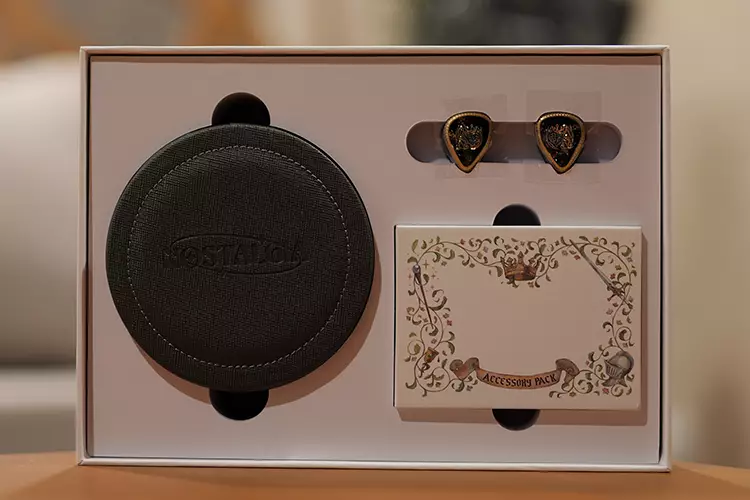
Despite its many strengths, the Pendragon is not without its hurdles. The "dynamic driver flex" noise, common in many high-end hybrid models, remains a point of contention for some users. Furthermore, the sheer size of the shell necessitates a careful selection of ear tips; while the included Symbio W and LSR tips provide a good starting point, the fit is inherently more demanding than smaller, traditional IEMs.
The Verdict
The Pendragon is an unapologetic flagship. It is a product for the enthusiast who values a rich, immersive, and Arthurian-themed aesthetic as much as they value deep, powerful bass and smooth mids. It represents a mature step for Nostalgia Audio—a company that has transitioned from a boutique experimenter into a sophisticated manufacturer of high-fidelity audio equipment.
For those who prioritize technical accuracy and surgical detail above all else, the Pendragon might require a bit of EQ. However, for the listener who wants to lose themselves in the "texture" and "body" of their favorite records, the Pendragon is a compelling argument for the $3,799 investment. It is not just an IEM; it is a statement piece in the world of personal audio.
Disclaimer: This sample was provided for review purposes. Headfonics remains an independent publication with no affiliate links or financial ties to Nostalgia Audio.