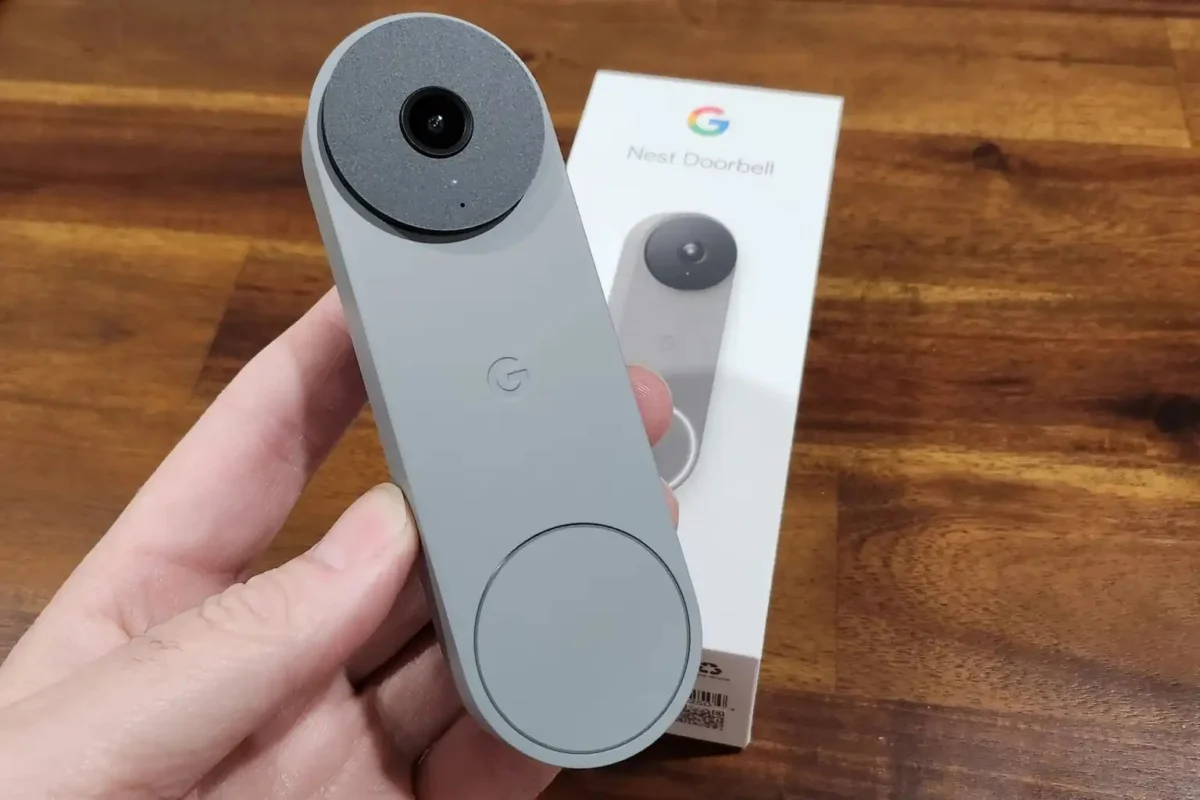
As the holiday season approaches, the quest for the perfect home security upgrade becomes a top priority for homeowners looking to secure their perimeters against porch pirates and unwanted visitors. Among the crowded market of smart home peripherals, Google’s Nest Doorbell (Wired) stands out as a sophisticated, reliable, and now remarkably affordable solution.
With a significant Black Friday discount slashing the price by 46%, the Nest Doorbell is currently available for just $98—a substantial $82 reduction from its standard $179.99 retail price. This aggressive pricing makes it one of the most compelling entry points into the Google Home ecosystem, combining advanced AI capabilities with a sleek, minimalist hardware design.
The Core Offering: Why the Nest Doorbell Excels
The Nest Doorbell (Wired) is designed for those who prefer the reliability of a constant power source over the maintenance of battery-powered alternatives. By tethering directly to your home’s existing doorbell wiring, the device ensures that you never miss a moment of activity. It provides a constant stream of vigilance, ensuring that whether it is a delivery driver dropping off a package or a family member arriving home, the homeowner is kept in the loop with real-time notifications.
At its heart, the device utilizes advanced on-device processing. Unlike older, cloud-dependent cameras that often struggled with latency or excessive false positives, the Nest Doorbell processes visual data locally. This allows the system to distinguish between people, packages, animals, and vehicles with high precision. By filtering out the noise—such as a tree branch swaying in the wind or a stray cat wandering onto the porch—the camera ensures that you are only interrupted for events that actually matter.
Chronology of Innovation: The Evolution of Nest
The journey of the Nest Doorbell reflects the broader evolution of the smart home industry. When Nest first introduced its video doorbell concept, the goal was simple: provide a window into the home’s entry point. Over the years, the product line has matured from basic motion-sensing cameras into a sophisticated AI-powered security hub.
- Early Stages: The initial iterations of Nest cameras focused primarily on 24/7 video streaming, which required heavy cloud bandwidth and often resulted in "alert fatigue" for users due to over-sensitive motion detection.
- The Transition to AI: As Google integrated its proprietary AI research into the hardware, the devices became "smarter." The shift toward on-device processing was a watershed moment, drastically reducing bandwidth consumption and improving privacy, as much of the sensitive footage analysis happens on the chip itself rather than being sent to a server.
- The Gemini Integration: The most recent chapter in this evolution is the integration of Google’s Gemini AI. This has fundamentally changed the user experience from one of "viewing" to one of "interacting." Users no longer need to scrub through hours of footage to find a specific event; they can simply ask the system to "show me the package delivered at 2 PM" or "tell me what happened on the porch today."
Technical Specifications and Performance
The hardware behind the Nest Doorbell is built for clarity and comprehensive coverage. It captures video in crisp 1080p resolution, which provides enough detail to identify faces and read labels on packages without consuming excessive storage. The device features a 145-degree field of view with a tall aspect ratio, providing a "head-to-toe" perspective. This is critical for doorbells, as it allows users to see items left directly on the porch floor—a feature that traditional wide-angle cameras often miss.
Furthermore, the integration of High Dynamic Range (HDR) technology ensures that the video feed remains balanced, even when the subject is backlit by the bright afternoon sun. Night vision capabilities are equally robust, allowing the device to maintain visibility even in total darkness, ensuring that security does not lapse when the sun goes down.
The Gemini AI Advantage: Natural Language Processing
The inclusion of Google’s Gemini AI is perhaps the most exciting feature for the modern smart home enthusiast. While other cameras simply record video, the Nest Doorbell now understands it. Gemini allows for natural-language search queries, meaning users can treat their security footage like a database.
If you suspect a package was stolen or need to confirm when a service person arrived, you no longer need to manually toggle through a timeline of events. You can simply ask the assistant, "Did a person drop off a package today?" or "Show me when the delivery truck arrived." This feature saves an immense amount of time and provides peace of mind that is rarely found in competing products.

The Ecosystem: Nest Aware and Beyond
While the Nest Doorbell is a powerful tool out of the box, it reaches its full potential through the Nest Aware subscription service. For a starting price of $8 per month, users unlock 30 to 60 days of event video history. This subscription is not merely about storage; it introduces "Intelligent Alerts."
Key benefits of the Nest Aware subscription include:
- Familiar Face Detection: The system can learn to recognize regular visitors—such as family members or frequent guests—and provide customized notifications.
- Emergency Audio Detection: The system can alert you if it hears specific sounds, such as a smoke alarm or carbon monoxide detector going off, adding a layer of safety that extends beyond the porch.
- e911 Service: This is a vital feature for those who want immediate assistance in the event of an emergency. If the doorbell detects a security threat, the service can route emergency calls to the local 911 dispatcher nearest to your home address, rather than the location of your smartphone.
Implications for Home Security
The widespread adoption of devices like the Nest Doorbell has profound implications for residential security. These devices act as a digital "neighborhood watch," creating a deterrent effect against petty crime. However, they also raise important questions regarding privacy and data management.
Google has taken significant steps to address these concerns by moving toward on-device processing. By minimizing the amount of data sent to the cloud and ensuring that users have granular control over their video history and privacy settings, the company is attempting to balance convenience with user trust.
Furthermore, the shift toward a more intelligent, AI-assisted security model means that homes are becoming more proactive. Instead of reacting to a crime after it has occurred, homeowners are now empowered with tools that provide context, documentation, and instant awareness.
Conclusion: A Limited-Time Opportunity
At the current price point of $98, the Nest Doorbell (Wired) is arguably the best value in the smart home market for the 2024 holiday season. It combines top-tier video quality, industry-leading AI intelligence, and a robust subscription ecosystem that scales with your needs.
However, prospective buyers should act quickly. Black Friday deals are historically ephemeral, and the supply of discounted hardware often depletes rapidly as demand surges. For those looking to protect their home, optimize their delivery management, or simply modernize their entry point, this discount represents an ideal moment to invest in a safer, smarter home.
Whether you are a long-time Google Home user or a newcomer to the world of smart security, the Nest Doorbell offers a seamless experience that simplifies the complex task of home monitoring. Don’t wait for the promotion to expire—the combination of hardware performance and cutting-edge AI makes this one of the smartest purchases you can make this November.