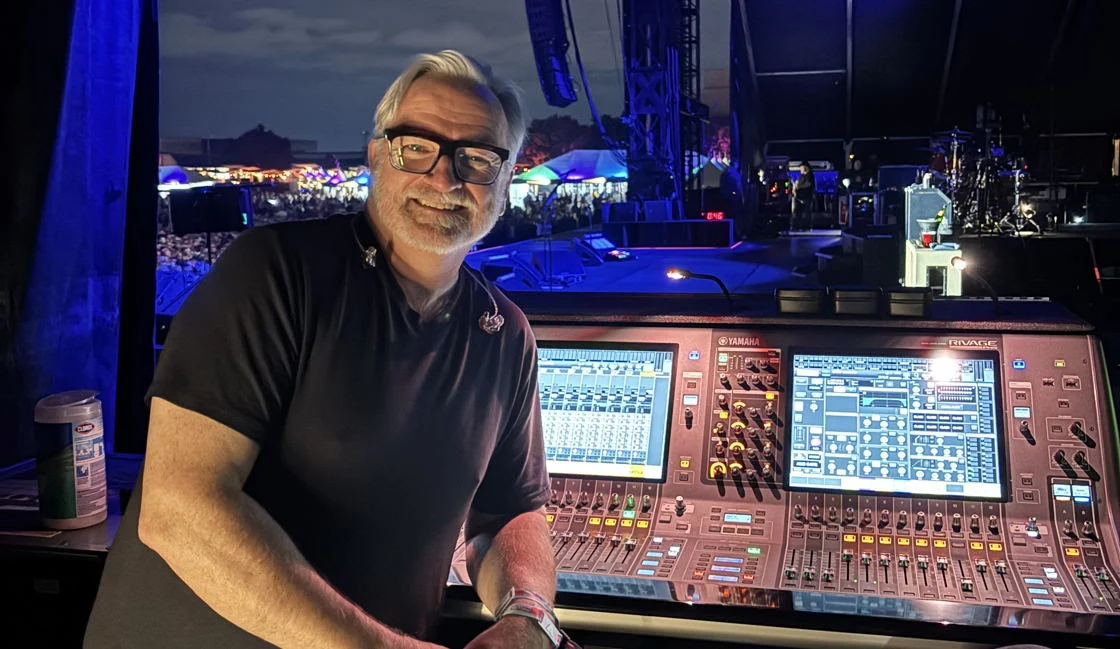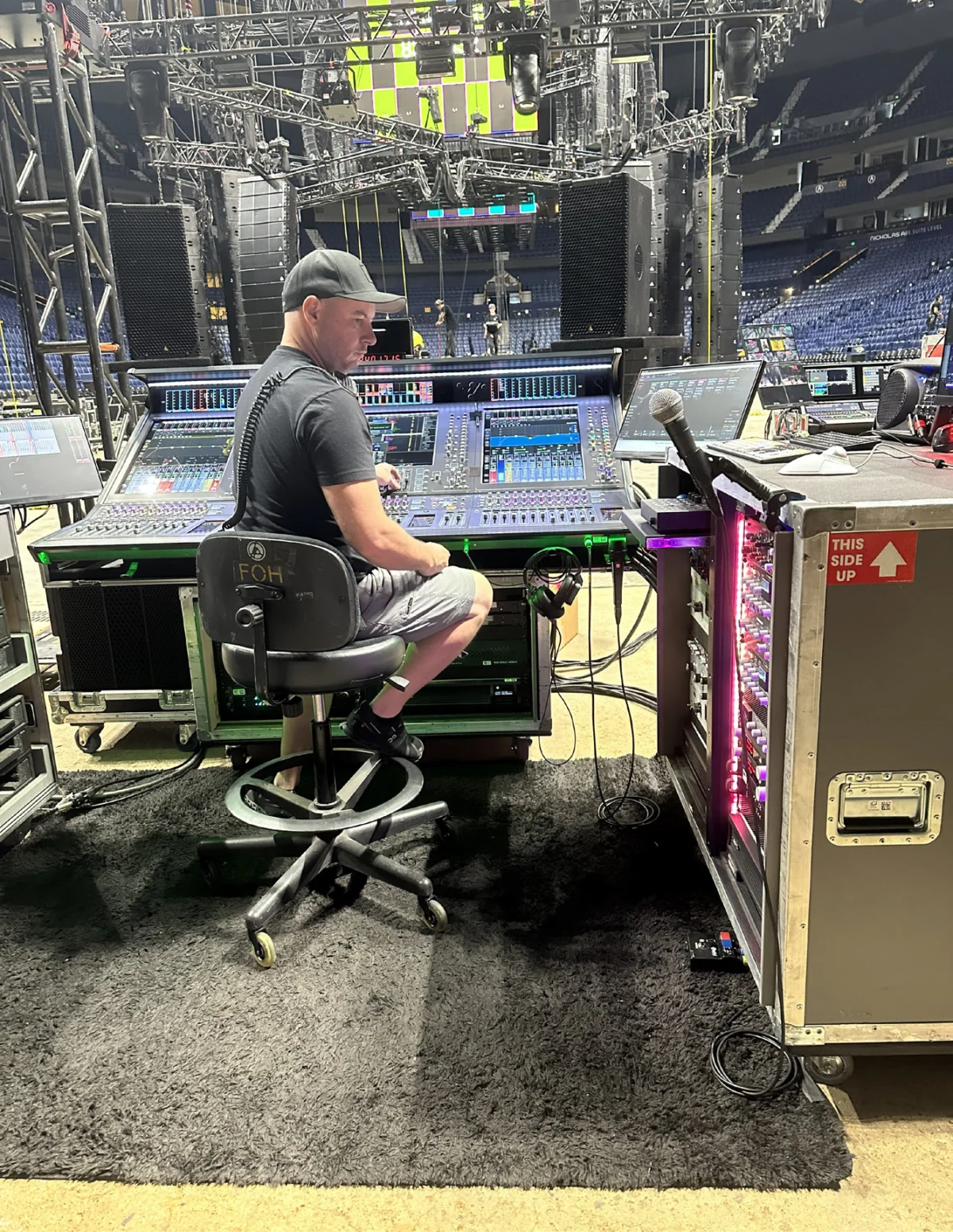
In the high-stakes world of modern touring, the difference between a seamless, world-class production and a catastrophic system failure often boils down to a single, invisible backbone: the network. As live sound environments shift from analog copper to complex, interconnected digital ecosystems, the role of the Network Architect has moved from a luxury to an absolute necessity. At the forefront of this shift is Ricki Cook, a 43-year-old Australian specialist whose expertise in Audio over IP (AoIP) has made him one of the most sought-after professionals in the global entertainment industry.
Currently serving as the digital audio and networking lead for Linkin Park’s massive 2024-2026 "From Zero" world tour, Cook is proving that the future of live performance is as much about data packets and latency management as it is about decibels and microphone placement.
The Convergence of Broadcast and Live Sound
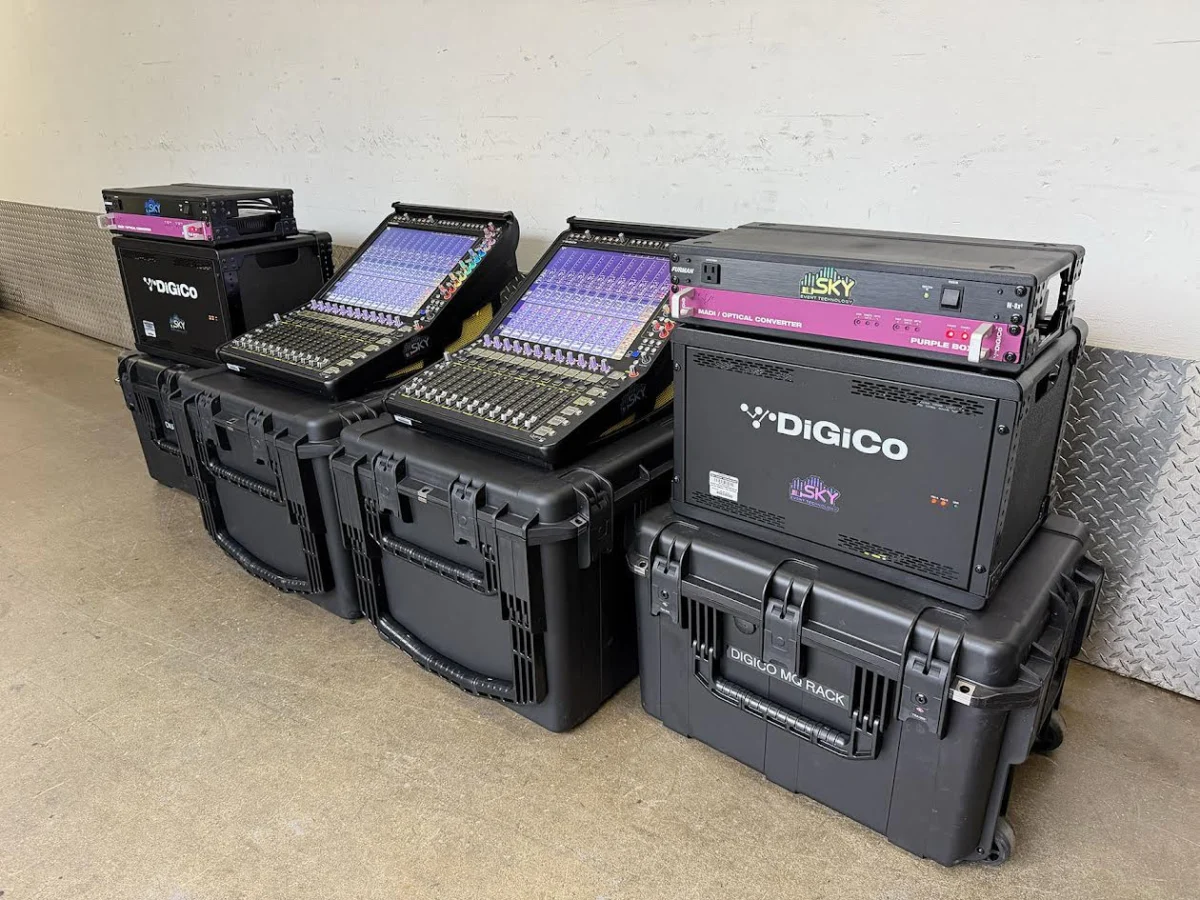
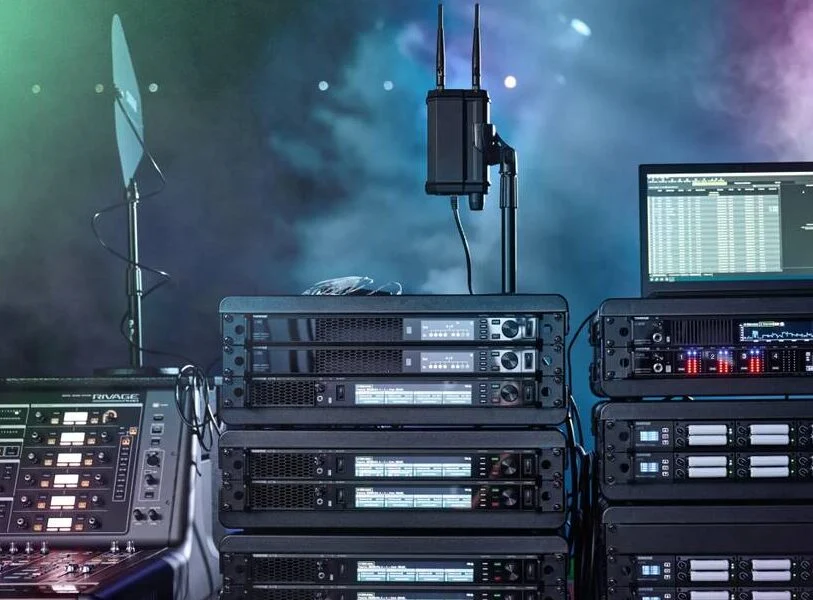
For the uninitiated, the term "network" in a live environment might simply imply Wi-Fi for the production office. For Cook, it represents the entire nervous system of a concert. Whether it is an Optocore loop, a Dante-based audio distribution network, or AVB (Audio Video Bridging) protocols for PA control, everything in a modern production requires robust, reliable digital transport.
"It doesn’t matter what the company is, small or large, everything these days is network-based," Cook explains. "Everything requires a form of digital transport. For an audio engineer to have to learn networking skills, it’s quite the step. It’s a new, different set of skills—akin to learning a foreign language while the show is running."
Cook’s work on the Linkin Park tour serves as a masterclass in this philosophy. By unifying disparate systems—comms, backline telemetry, audio routing, and video feeds—into a single, homogenous network, he has eliminated the performance bottlenecks common in multi-network setups. This unified architecture allows for real-time monitoring and near-instant troubleshooting, ensuring that if a fault occurs, it is identified and mitigated before the audience ever notices.

A Chronology of Innovation: From Sydney to the World Stage
Cook’s professional trajectory was not a straight line, but rather a series of intentional pivots that allowed him to bridge the gap between traditional electrical engineering and cutting-edge IT.
The Foundation (1990s–2005)
Raised on the Central Coast of New South Wales, Cook’s obsession with electronics began early. Guided by his grandfather, an RF (Radio Frequency) specialist and HAM radio operator, Cook gravitated toward the "geeky" side of school events. By the time he was 14, he had secured his first professional role in a rental department, cleaning and prepping gear. By 16, he had bypassed traditional secondary education to pursue an electrical apprenticeship, providing him with a bedrock understanding of power, signal flow, and hardware.
The "Doha" Catalyst (2006)
The defining moment of his career occurred in 2006 at the Doha Asian Games. Working under the late, legendary sound designer Bruce Jackson, a 22-year-old Cook was introduced to a "secret" protocol being developed by a small Sydney-based company called Audinate.
"Bruce showed us the new protocol, and it occurred to me my two worlds were about to collide," Cook recalls. That protocol, an early iteration of Dante, demonstrated that audio could travel over standard Ethernet with precision and stability. It was the "Aha!" moment that convinced Cook that his future lay in the intersection of networking and audio.
The Broadcast Transition (2010s–2023)
While he continued to tour, Cook sought the stability of a "9-to-5" environment, spending years as a consultant and Network Architect for major Australian broadcasters, including NEP Australia. During this period, he led the charge in converting legacy baseband infrastructure to IP-based remote production. He became the "guy to call" for complex infrastructure, eventually acting as a third-party consultant for Riedel and other major firms, training their internal IT teams to handle the rigors of live production.

Supporting Data: The Technical Complexity of "From Zero"
The technical requirements for a tour of Linkin Park’s scale are staggering. Cook has moved beyond simple audio routing to managing a complete, software-defined environment.
- Unified Networking: By consolidating comms, audio, and control data, Cook has reduced latency and overhead, creating a centralized dashboard for all system health.
- Protocol Interoperability: The tour utilizes a hybrid of Dante (for FOH and mic preamps) and AVB (for PA system distribution).
- Telemetry: RTP MIDI is transmitted across the network to automate guitar rig presets, allowing the backline to be synced perfectly to the show’s musical cues.
- Scalability: Because the network is unified, adding new production elements—such as video for a remote office or additional wireless comms—is as simple as "plug-and-play," a luxury previously unheard of in large-scale touring.
Official Recognition and Academic Impact
Cook’s influence has extended beyond the stage and into the classroom. Recognizing the massive skills gap in the industry, the Audio Engineering Society (AES) tapped Cook to headline their Live Sound Training events in Nashville in 2025 and 2026.
His lecture series, "Introduction to Networking for Live Sound," has been expanded into intensive 90-minute modules. His curriculum focuses on demystifying IP protocols, teaching young engineers how to gain Cisco certifications, and, perhaps most importantly, shifting the industry mindset from "it’s just audio" to "it’s a data system."
"Companies like Clair Global are investing in teaching younger generations networking," Cook notes. "They’re recognizing that it’s a fundamental skill that up-and-coming audio professionals need to grasp."
Implications for the Industry: The Future of Touring
Cook’s return to the road in 2024, after a successful career in broadcast, signals a broader industry trend: the "professionalization" of live event IT. His journey highlights several key implications for the future of the entertainment sector:

- The End of the Silo: Historically, lighting, sound, and video operated on their own proprietary networks. The "Cook Model" proves that a converged network is more reliable and easier to manage, effectively forcing a shift in how departments collaborate.
- The Rise of the "Network-Native" Technician: The next generation of audio engineers will not be judged solely on their golden ears, but on their ability to configure VLANs, manage IP addressing, and secure network traffic.
- Knowledge Sharing as a Competitive Edge: Unlike the broadcast sector, which is often shrouded in corporate secrecy, the live touring community has embraced a culture of sharing. Cook believes that by teaching others, the entire standard of live performance is elevated.
A Passion Reclaimed
When asked why he walked away from a stable, high-paying career as a corporate Network Architect to return to the grueling reality of life on a tour bus, Cook’s answer is simple: the thrill of the tangible.
"In broadcasting, you apply great technology, but it’s often hidden," he explains. "On the road, I get a kick out of that feeling of: ‘I built this, and it’s out here working flawlessly.’ You’re constantly deploying, troubleshooting, and seeing the direct result of your work in the joy of the audience."
As he continues to push the boundaries of what is possible on the Linkin Park "From Zero" tour, Ricki Cook is not just keeping the sound on; he is building the infrastructure that will define the next two decades of live entertainment. For the industry at large, his work stands as a testament to the fact that in the modern era, the most critical instrument in the band is the network itself.