
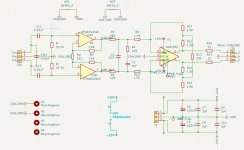
In the quiet, technical corners of the DIY audio community, a provocative experiment is underway. A user known as "torzsok" on the popular forum DIYAudio has sparked a heated debate regarding the limits of artificial intelligence in high-end analog circuit design. By attempting to "vibe code" a balanced phono stage—a notoriously sensitive piece of audio equipment—using AI-assisted design, the project has become a lightning rod for broader industry questions: Can a large language model effectively navigate the nuances of electrical engineering, or is it merely an illusion of competence?
The Main Facts: An AI-Assisted Phono Stage
At the heart of the controversy is a fully-balanced Moving Magnet (MM) phono stage. The design, as described by torzsok, integrates a hybrid JFET (Junction Field-Effect Transistor) frontend with a Fully Differential Amplifier (FDA) output stage. The project is explicitly an attempt to modernize older, established designs—specifically referencing the "Pearl 3" and "Twisted Pear Audio" architectures—by translating them into modern Surface Mount Device (SMD) components.
The core premise is straightforward: the user has offloaded significant portions of the circuit design, simulation, and parts selection to an AI. While the builder handled the physical PCB layout—the aspect of the project they described as most enjoyable—the conceptual heavy lifting was performed by an LLM-driven process. The result is a schematic that is, according to the creator, simulated but not yet physically constructed, setting the stage for a classic "theory vs. practice" confrontation.

Chronology of a Controversial Build
The project gained traction on the forum in late June 2026.
- June 18, 2026: Initial inquiry. The user announces their intent to modernize a balanced phono schematic found in the archives, utilizing SMD parts and AI-assisted design.
- June 29, 2026: Development update. The user reveals the hybrid architecture (JFET frontend + FDA output). The community reacts with immediate skepticism regarding the feasibility of the design.
- June 29–30, 2026: The critique phase. Seasoned forum members begin to dissect the schematic, noting issues with input impedance, RIAA accuracy, and the suitability of the chosen FDA for the intended load.
- June 30, 2026: The AI disclosure. When accused of relying too heavily on automated tools, the user confirms that AI was used extensively, citing it as a way to engage with complex hobbyist projects while navigating personal anxiety regarding AI’s rapid growth in the professional world.
Supporting Data and Technical Critiques
The technical pushback against the design was swift and granular. Experienced members of the DIYAudio community, such as "ejp" and "Drbulj," pointed out several critical flaws that highlight the current limitations of AI in engineering:
1. The RIAA Accuracy Problem
The RIAA equalization curve is the "Holy Grail" of phono preamp design. It requires precise passive or active components to restore the frequency response of a vinyl record. Critics noted that the AI-generated schematic failed to provide a stable or accurate RIAA implementation, a sentiment summarized by one user who remarked, "We already know that AI cannot design RIAA networks."

2. Impedance Mismatch and Component Selection
Drbulj highlighted a significant technical oversight: the use of a high-speed FDA for a secondary stage. Because FDAs are typically designed for low-impedance environments, they are poorly suited for the high-impedance requirements of a phono cartridge. The critique suggested that the AI failed to account for the fundamental interaction between the output stage and the passive RIAA filtering, which would likely result in poor performance and significant loading issues.
3. DC Offset Concerns
Veteran designer "rayma" prompted the user regarding the output DC offset. While the user reported a simulated offset of 4.2mV, the conversation revealed that the design lacked a DC servo mechanism found in the original, tested products that the user was trying to emulate. Without such a mechanism, the stability of the design remains questionable.
Official Perspectives: The Human Element
The interaction between the user and the community represents a microcosm of the wider "Human vs. AI" debate.

For the community, the frustration is rooted in the erosion of traditional engineering rigor. Many feel that the iterative process of trial, error, and deep study is being bypassed by users who view complex circuits as mere text-based puzzles to be solved by a prompt. One user, "mlloyd1," succinctly expressed this frustration: "Too many words for me… looks like it just means AI did it."
Conversely, the user’s perspective is one of modern coping. By utilizing AI for technical tasks that exceed their current expertise, they are lowering the barrier to entry for high-end audio engineering. They view the AI as a bridge between curiosity and execution, rather than a replacement for engineering expertise. In their own words, using AI for "useless" projects (in a commercial sense) is a mechanism for dealing with the anxiety surrounding the rapid, often unsettling, advancement of AI in their professional life.
Implications for the Future of DIY Audio
The implications of this project are twofold.

The "Black Box" Engineering Crisis
The DIY community has historically been defined by a deep understanding of why a circuit works. If hobbyists begin to rely on "black box" AI outputs—schematics that are generated without an underlying grasp of physics or electronic theory—the community risks becoming a generation of "copy-pasters" rather than engineers. If a design fails, the user may lack the foundational knowledge to troubleshoot it, as they did not perform the calculations themselves.
The Potential for Democratization
On the other hand, if AI tools can be refined to better handle domain-specific constraints (such as RIAA curves and impedance matching), we could see a golden age of hobbyist innovation. The ability for a layperson to bridge the gap between a concept and a PCB layout in a matter of days could lead to a proliferation of creative, if unconventional, audio designs.
The "torzsok" case study demonstrates that we are in a transition period. The AI has proven capable of assembling a functional-looking schematic, but it remains deficient in the nuanced, context-dependent judgments that define professional-grade engineering. As of now, the design remains a simulation, with the physical build yet to be tested. Whether it succeeds in producing high-fidelity audio or fails due to the "hallucinations" of its silicon architect remains to be seen.

For now, the DIYAudio community remains the ultimate gatekeeper—a place where, regardless of the tools used to create a design, the final output must still pass the rigorous test of the oscilloscope and the listening ear. The, as of yet, unbuilt phono stage serves as a reminder that while AI can draft a map, it cannot yet guarantee that the terrain will be hospitable.


