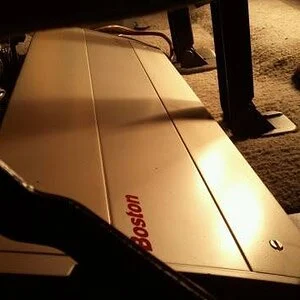
In the realm of car audio, few components define the listening experience as fundamentally as the subwoofer. For the enthusiast balancing high-fidelity sound with a pragmatic budget, the search for the "best bang for your buck" is a perennial challenge. Recently, a discussion within the CarAudio.com community highlighted the complexities of this search, specifically for those driving a 300W RMS load at 2 ohms—a common configuration for mid-range systems, such as the Infinity Kappa 5 amplifier.
As enthusiasts look to upgrade their vehicle’s sonic footprint without breaking the bank, the consensus among experts suggests that while entry-level pricing is attractive, the intersection of power handling, enclosure efficiency, and build quality remains the true north for any successful installation.
Main Facts: The $200 Threshold
The primary constraint identified by enthusiasts is the $200 price point for a single 12-inch subwoofer. At this budget, the market is saturated with options ranging from "big-box" entry-level drivers to legacy professional-grade components that have recently been discounted due to model turnover.
The user, identified as Brian Husser, entered the forum with a specific technical requirement: he needed a driver capable of handling a 300W RMS load at 2 ohms. His initial interest lay in the Memphis Audio PRX1224. This choice is reflective of a broader trend: consumers seeking brands with a reputation for consistent performance rather than flashy, unverified wattage claims.
The core challenge is not merely picking a driver, but ensuring that the subwoofer’s electrical requirements (impedance and power handling) align perfectly with the existing amplifier’s output. When these variables are mismatched, the result is either thermal failure of the voice coil or, more commonly, a lackluster output that fails to justify the investment.
Chronology of the Community Consultation
The discourse began on June 21, 2026, when Husser initiated the thread seeking advice. By the following day, the community had responded with a blend of specific product recommendations and philosophical advice on how to approach car audio upgrades.
- June 21, 2026 (02:54 AM): The original inquiry is posted. The user highlights his current hardware (Infinity Kappa 5) and his intent to use a single 12-inch configuration for a wide variety of music genres.
- June 21, 2026 (03:15 AM): "CarAudio.com – Hal," a senior contributor, validates the Memphis Audio PRX1224 as a viable contender while broadening the horizon with three distinct alternatives: the Rockford Fosgate P3D2-12, the JL Audio 12W0v3-4, and the Kenwood KFC-W3016PS.
- June 22, 2026 (01:41 PM): User "Old_Slapper" provides a foundational rule of thumb: stick to established, legacy brands. He emphasizes that with major manufacturers, quality control is more predictable.
- June 22, 2026 (07:20 PM): A more nuanced, "insider" recommendation emerges from user "Doxquzme," who advises moving away from current retail models toward high-end, discontinued stock that offers superior engineering at clearance prices.
Supporting Data: Comparative Analysis of Top Contenders
To understand why these specific models were recommended, one must look at their technical specifications and how they interact with a 300W RMS amplifier.
The Memphis Audio PRX1224
The Memphis PRX series is widely regarded for its versatility. It is a dual-voice coil driver that allows for flexible wiring configurations to hit that 2-ohm stable load. It is designed for users who want a "punchy" response that doesn’t sacrifice the mid-bass clarity required for rock, jazz, or electronic music.

The Rockford Fosgate P3D2-12
Rockford Fosgate is a titan of the industry. The P3 series is often cited as the "gold standard" for the 300-600W RMS range. Its anodized aluminum cone and dust cap provide a rigid structure that resists deformation under high excursion, ensuring that even at the lower end of the power spectrum (300W), the bass remains tight and distortion-free.
The JL Audio 12W0v3-4
JL Audio is frequently associated with sound quality (SQ) rather than just raw output. The 12W0v3 is praised for its linearity. While some subwoofers in this price range are designed to "boom," the JL driver is engineered to articulate the notes of a bass guitar or the subtle textures of a kick drum. It is a precision instrument, ideal for a listener who prioritizes the fidelity of the recording.
The "Hidden Gem" Strategy
The recommendation provided by "Doxquzme" represents a sophisticated approach to the market: hunting for "new-old stock." High-end drivers that once retailed for $600–$700, now discontinued, can occasionally be found for ~$220. These drivers often feature superior motor structures, more advanced cooling technologies, and higher-quality surround materials compared to modern entry-level drivers. For the patient consumer, this path offers the highest return on investment.
Official Industry Perspectives and Expert Guidance
When evaluating these options, industry experts emphasize that the subwoofer is only one half of the equation; the enclosure is the other. As noted by the contributors, the physical housing—whether sealed or ported—dictates the final sound signature.
- Sealed Enclosures: Recommended for the JL Audio or the "hidden gem" options. A sealed box offers a predictable, "tight" sound with a natural roll-off, making it ideal for listeners who enjoy diverse musical genres.
- Ported Enclosures: Generally recommended for the Memphis or Rockford options if the user desires more "output" or volume at the cost of some transient accuracy.
The consensus is clear: a $200 subwoofer in a poorly constructed enclosure will sound worse than a $100 subwoofer in a precision-built, acoustically damped enclosure. The experts advise users to allocate a portion of their budget toward high-quality MDF (Medium Density Fiberboard), polyfill, and proper sealing techniques (e.g., using Acousta-fill).
Implications for the Modern Enthusiast
The debate highlights a shift in the car audio landscape. In previous decades, the "best" bass was often defined by the loudest SPL (Sound Pressure Level) numbers. Today, the modern enthusiast is increasingly focused on the "daily driver" experience: clear, accurate, and dynamic bass that integrates seamlessly with factory or upgraded interior speakers.
Key Considerations for Future Upgrades:
- Impedance Matching: Always verify the voice coil configuration (DVC vs. SVC) against the amplifier’s stable impedance range.
- Enclosure Volume: Every driver has a specific "Vas" (volume of air) requirement. Ignoring the manufacturer’s suggested enclosure volume is the most common cause of "blown" subwoofers and poor sound.
- The "Brand" Myth: While major brands (Kicker, JBL, Pioneer, etc.) offer reliability, they also offer different "house sounds." Some are tuned for SPL, while others favor SQ. Matching the brand to the desired listening style is as important as matching the wattage.
- Beyond the Driver: Wiring kits, ground points, and the rigidity of the mounting surface are factors that often get overlooked but are critical for performance.
Final Assessment
The quest to find the "best" 12-inch subwoofer for under $200 is not a simple transaction but a process of matching hardware to personal intent. Whether one opts for the reliable, modern performance of the Memphis PRX1224, the proven longevity of the Rockford Fosgate P3, or the refined accuracy of a JL Audio driver, the key remains the same: thoughtful planning.
By leveraging the insights of community experts—prioritizing established brands, respecting the power limits of the amplifier, and investing time in proper enclosure design—any enthusiast can transform their vehicle’s audio system. The $200 threshold, while restrictive to some, is more than enough to achieve a professional-grade sound that brings new life to a music collection. As the forum contributors concluded, the best system is not necessarily the one with the highest price tag, but the one most intelligently engineered for the listener’s specific needs.