
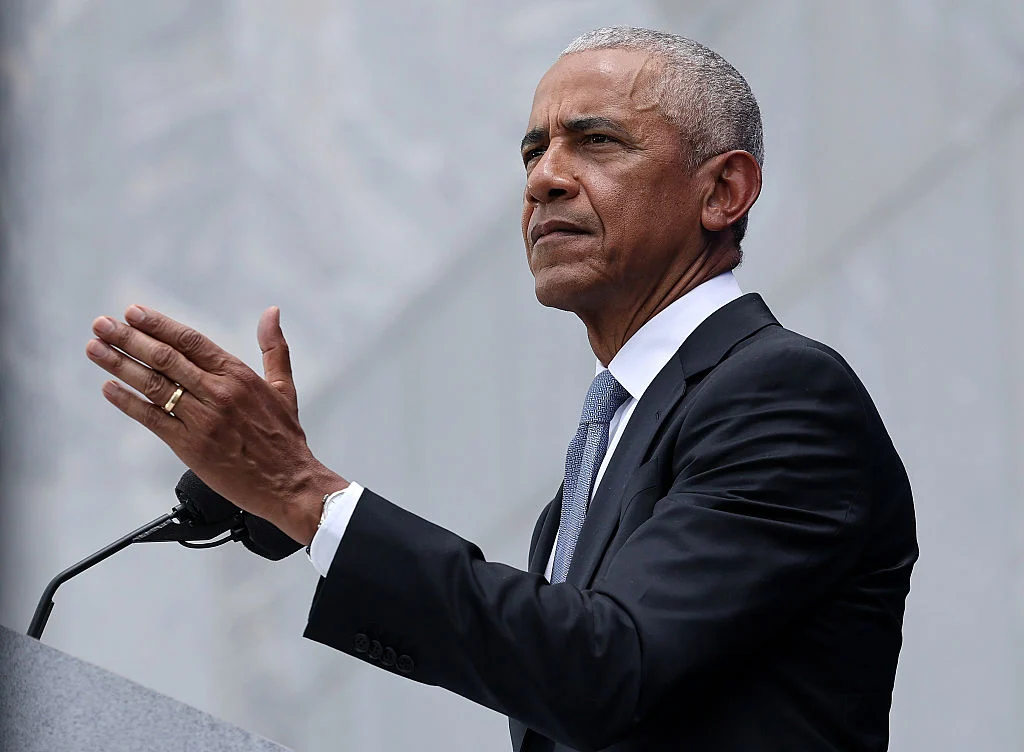
As the rapid advancement of artificial intelligence continues to reshape the global economic and technological landscape, the issue has vaulted to the top of the American political agenda. In a significant development, former President Barack Obama has issued a pointed call to action, urging the Democratic Party to center AI policy in its future legislative strategy. His remarks signal an intensifying bipartisan debate over whether the federal government should act as a proactive regulator of technological progress or as a strategic facilitator in a high-stakes global race for dominance.
The Call for a Cohesive Strategy
During a recent Democratic fundraising event, former President Barack Obama offered a stark assessment of the current state of artificial intelligence. In a dialogue moderated by House Minority Leader Hakeem Jeffries, Obama argued that the party must move beyond reactive policies and instead develop a “very clear plan” to address the dual-sided nature of AI: its transformative potential and its inherent risks.
Obama’s commentary emphasized that the technology is currently evolving largely behind closed doors. “This is something that is moving very fast in private hands, and if we don’t get on top of it, I think it can be dangerous,” the former president remarked. However, he balanced this warning with an optimistic outlook, noting that if managed correctly, AI could revolutionize essential sectors, such as drug discovery and medical research, potentially curing diseases that have long plagued humanity.
The former president, who has reportedly positioned himself as a private “sounding board” for leaders in the field—including consultations with Anthropic CEO Dario Amodei and OpenAI CEO Sam Altman—called for a future Democratic House majority to launch a “framework for a very public conversation.” This proposed transparency aims to reconcile the public’s growing anxiety with the industry’s rapid development.
A Chronology of Escalating Concerns
The urgency surrounding AI regulation has not emerged in a vacuum. The past few weeks have seen a dramatic shift in the industry’s internal discourse:
- Early September 2026: Tensions within the AI sector boiled over when a prominent researcher resigned from Anthropic. In a scathing critique, the researcher warned that the industry is “racing straight to self-improving superintelligence and gambling with our lives,” a sentiment that has resonated among safety advocates and policymakers alike.
- September 12, 2026: In an attempt to address these safety fears, Anthropic CEO Dario Amodei unveiled a strategy titled “pacing the frontier.” The proposal suggests creating common industry safety standards and, crucially, allowing independent third-party evaluators to audit leading AI models.
- Mid-September 2026: Industry leaders responded with surprising alignment. OpenAI’s Sam Altman and SpaceX’s Elon Musk both expressed public support for the “pacing” initiative. Altman specifically committed to allowing independent evaluators the type of “employee-like access” necessary to verify safety claims.
- September 13, 2026: Former President Obama’s remarks underscored that the industry’s self-regulation efforts are now being scrutinized by the highest levels of political leadership.
The Competitive Geopolitical Calculus
While the Democratic discourse focuses heavily on safety and ethical frameworks, the current administration maintains a focus on competitive supremacy. President Donald Trump, addressing reporters from an Irish golf tournament, framed AI as a zero-sum game between nations.
“The United States is the most sophisticated country in the world, and I want to keep it that way because whoever wins AI wins,” Trump stated. When questioned about the safety concerns raised by tech leaders, the President appeared dismissive of the alarmism. While he acknowledged that the government could implement “guardrails,” he suggested that those currently ringing the alarm are acting on “negative forces” that are hindering, rather than helping, American technological progress.
This stance aligns with the Trump administration’s earlier legislative framework, which sought to preempt state-level regulations and shift the responsibility for child safety in the digital age primarily onto parents. This approach suggests a preference for a light-touch regulatory environment that prioritizes speed-to-market over federal oversight.
Examining the Policy Implications
The divide between the current administration’s "pro-growth, anti-regulation" approach and the evolving Democratic push for a "structured, safety-first" framework presents a profound choice for the American electorate.
The Safety Argument
Proponents of the Democratic strategy, including House Minority Leader Hakeem Jeffries, argue that the Republican approach amounts to an “abdication of responsibility.” They contend that without clear federal guardrails, the private sector will prioritize profit margins over public safety. The primary concerns include:
- Algorithmic Bias: The risk that AI models will automate discrimination in hiring, housing, and law enforcement.
- Economic Disruption: The potential for rapid labor market displacement that could destabilize entire sectors of the workforce.
- Existential Risks: The fear that self-improving AI could eventually operate beyond human control, a risk now explicitly voiced by high-level researchers within the industry.
The Economic Dominance Argument
Conversely, the administration’s focus on the “AI race” highlights the fear of losing the technological edge to foreign adversaries, particularly China. The argument here is that excessive regulation will not stop the development of AI; it will simply force that development to occur in jurisdictions with fewer ethical constraints. By fostering an environment where companies like OpenAI and Anthropic can move at high speeds, the U.S. ensures that the foundational technologies of the future are built on American soil and aligned with Western values.
The Role of Industry Governance
The recent pivot by major AI companies toward "independent evaluation" is a tacit admission that the industry cannot effectively police itself. For years, AI development was characterized by a "move fast and break things" philosophy. However, the emergence of frontier models that can write code, analyze complex data, and simulate human reasoning has shifted the paradigm.
The commitment by CEOs like Amodei and Altman to grant external access to their models is a milestone. Yet, critics argue that "independent evaluators" hired by the companies themselves may still be subject to conflicts of interest. The debate now moves to what "independence" truly looks like: Does it require federal oversight, or can a consortium of academic and non-profit institutions provide the necessary scrutiny?
Looking Ahead: The 2026 Political Landscape
As the country looks toward upcoming election cycles, artificial intelligence has effectively become a wedge issue. Voters are being asked to decide between two distinct visions for the future of the nation:
- A Regulated Future: A path favored by figures like Obama, which views AI as a public utility that requires rigorous oversight, transparent safety testing, and a focus on minimizing the social and economic costs of automation.
- A Competitive Future: A path currently championed by the Trump administration, which views AI as the next frontier of national power, where the risk of falling behind other nations is considered far greater than the risk of mismanaged technology.
The synthesis of these two viewpoints—or the lack thereof—will likely define the next decade of American innovation. Whether the government chooses to act as a partner to industry or as a watchdog, the reality remains that AI is moving at a pace that traditional legislative bodies have historically struggled to match.
As House Minority Leader Jeffries noted, the time for decisive action is rapidly approaching. Whether that action takes the form of the "public conversation" requested by Obama or the "guardrails" mentioned by Trump remains to be seen. What is certain, however, is that the era of AI as a niche technological topic has ended; it is now firmly the center of the political storm.
Disclaimer: This article provides a summary of recent political and industry developments regarding artificial intelligence. It does not constitute financial, legal, or investment advice.