By Lewis Empson
Evaluating home cinema audio systems is a deeply immersive, highly methodical process, but it can also be remarkably repetitive. Over the past month in our dedicated testing rooms, the routine has been precisely the same: dark room, calibrated levels, and the opening few minutes of a rotating selection of test discs. Sequences from Sinners, Blade Runner 2049, F1: The Movie, and Thunderbolts* have been played, rewound, and analyzed more times than prudent for my own sanity.
Yet, this rigorous, marathon testing schedule across the latest 2026 releases from industry heavyweights like Wharfedale, KEF, Paradigm, Dali, and Q Acoustics has driven home a singular, inescapable conclusion: sonic cohesion is the absolute make-or-break of any surround sound package.
While the audio industry has seen marvelous engineering feats this year, and while soundbars continue to win the battle for living room convenience, nothing quite replicates the genuine cinematic immersion of discrete multi-channel audio. Placing dedicated speakers around a room to recreate a three-dimensional acoustic bubble remains the gold standard for film enthusiasts. However, that bubble is fragile. All it takes is a single mismatched driver or a poorly voiced center channel to shatter the illusion entirely, pulling the listener right out of the cinematic experience and back onto the couch.
Main Facts: The Anatomy of a Mismatch
To understand why multi-channel speaker packages succeed or fail, one must examine how they are constructed. A typical 5.1 or Dolby Atmos surround package is not usually born as a single, indivisible monolithic unit. Instead, manufacturers often curate them by combining existing bookshelf or floorstanding speakers for the front left and right channels, pairing them with a dedicated horizontal center channel, and utilizing smaller, more compact satellite speakers for the surrounds to keep costs down and footprints manageable.
This modular approach makes economic and practical sense for consumers trying to fit a home theater into a standard living room. However, it introduces a monumental acoustic challenge: timbre matching.
Timbre refers to the tonal color or character of a sound. A cello and a violin playing the exact same note at the same volume sound different because of their distinct harmonic overtones. The same principle applies to loudspeakers. If a front-left speaker uses a large mid-bass driver with a rich, warm midrange, and the rear surround speaker uses a smaller, cheaper driver with a brighter, thinner profile, any panning sound effect will undergo an audible identity crisis as it moves across the room.
When an audio package lacks cohesion, the speakers stop blending into a unified, invisible soundscape. Instead, individual components start drawing attention to themselves. If a surround speaker suddenly sounds noticeably brighter or less full-bodied than the front soundstage, the listener’s brain immediately localizes the physical cabinet rather than the helicopter flying overhead on screen. The acoustic illusion collapses.
Chronology: A Year of Testing 2026’s Best Systems
The insights driving this evaluation are the culmination of a year-long assessment cycle testing the market’s premier multi-channel offerings.
Q1–Q2 2026: Establishing the Baseline
The testing calendar kicked off with a deep dive into compact and lifestyle-oriented multi-channel arrays. Systems from Dali and Q Acoustics arrived in the testing room, offering sleek aesthetic profiles designed to blend into modern apartments. During these early months, the focus was heavily placed on spatial dispersion and calibration flexibility using modern AV receivers.
Q3 2026: The Mid-Tier Battles and Paradigm’s Lesson
By mid-year, attention shifted toward more traditional, robust box speaker packages. This was when the true complexities of system matching came to the fore. The Paradigm Premier v2 5.1 system arrived in the testing rooms. Technically, Paradigm aced the engineering exam regarding channel cohesion: by keeping driver materials strictly consistent across the front, center, and rear channels, panning effects were seamlessly smooth.
However, the Paradigm package provided a crucial industry lesson: cohesion alone is not a golden ticket to a five-star review. While the system matched its components brilliantly, its fundamentally hard-edged sound profile and lack of natural warmth meant that despite its seamless transitions, the overall listening experience remained fatiguing. Cohesion is a mandatory prerequisite, not the finish line.
Q4 2026: The Wharfedale Benchmark and Year-End Awards
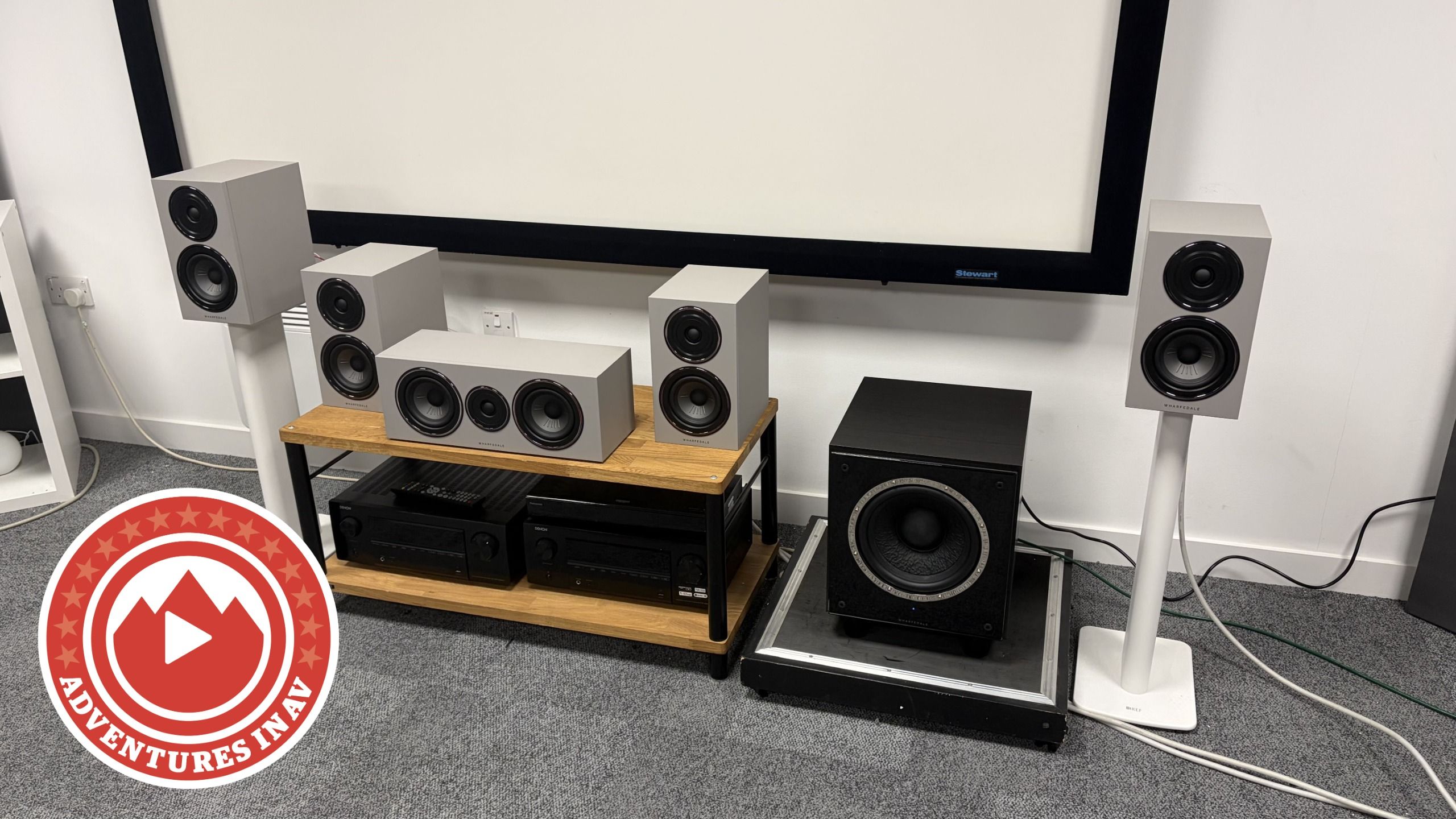
As the review cycle culminated in the What Hi-Fi? Awards 2026, the benchmark for multi-channel success crystallized in the form of the Wharfedale Diamond 12.1i 5.1 HCP. This system demonstrated precisely how a manufacturer should approach multi-channel design. By utilizing the exact same Wharfedale Diamond 12.1i standmount speakers for both front and surround duties, and pairing them with the 12.1Ci center channel—which shares the identical 25mm woven polyester dome tweeter and 13cm mid/bass drivers—Wharfedale achieved an astonishingly unified sonic identity.
Supporting Data: The Heavy Lifting at the Front
To appreciate why matching is so difficult, one must look at how movie mixes distribute acoustic information. In a standard 5.1 or immersive audio mix, the front left and right speakers do the vast majority of the heavy lifting.
- The Front Soundstage: Over 70% of a film’s audio content—including aggressive musical scores, atmospheric environmental effects, and primary sound design—is anchored to the front left, right, and center channels.
- The Center Channel: Responsible primarily for dialogue, the center channel must maintain absolute clarity without sounding isolated from the expansive music playing out across the front stage.
- The Surrounds: Tasked with ambient cues, directional fly-bys, and environmental reflections, surround speakers must pass audio seamlessly off to the front mains without changing character.
When a manufacturer builds a budget-conscious system, the temptation to cut corners on the surround and center channels is high. Smaller cabinets and reduced driver sizes inevitably lead to a thinner lower-midrange response. When a cinematic sound effect—such as a roaring engine or a passing spacecraft—travels from the front soundstage into the rear channels, a poorly matched system creates an abrupt drop in weight and body.
Official Industry Perspectives and Engineering Challenges
Speaking with acoustic engineers across the Hi-Fi landscape reveals a persistent tug-of-war between acoustic idealism and consumer reality.
The Engineering Dilemma:
Acoustic designers openly admit that the ideal multi-channel system would feature identical, full-range floorstanding speakers at every single position in the room (a 5.0 or 7.0 setup utilizing five or seven identical primary towers). In a laboratory environment, this yields zero phase anomalies and absolute timbre perfection.
The Commercial Reality:
However, living rooms are not laboratories. Most consumers are unwilling—or structurally unable—to place five or seven large floorstanding cabinets around their living space. Wife-acceptance factor, spatial constraints, and budgetary limits dictate that surrounds must be wall-mountable, bookshelf-sized, or even miniature satellite units.
To bridge this gap, modern manufacturers rely heavily on advanced digital signal processing (DSP) room correction software, such as Audyssey, Dirac Live, and Anthem Room Correction (ARC). While these modern software suites can work miracles correcting frequency response peaks, phase delays, and subwoofer crossovers, they cannot fundamentally rewrite the acoustic signature of a mismatched driver. If a small surround speaker lacks physical cabinet volume, no amount of EQ can inject genuine, natural low-mid body into it. Consequently, hardware-level consistency remains paramount.
Implications for Consumers and Manufacturers
The overarching takeaway from a year of rigorous multi-channel testing is that home cinema buyers must look beyond individual component reviews and evaluate packages holistically.
What This Means for Consumers:
- Beware "Mix-and-Match" Custom Setups: While building a home theater piece-by-piece from different brands or mismatched series can sometimes work based purely on specifications, it introduces a high risk of tonal dissonance.
- Prioritize the Center and Surrounds: When auditioning a system, pay close attention to panning scenes. If an audio effect changes tone or loses weight as it transitions from the front to the sides or back, the system’s immersion factor is compromised.
- Respect the Manufacturer’s Ecosystem: Systems designed from the ground up as a unified package—such as Wharfedale’s Diamond HCP series or KEF’s matched multi-channel bundles—offer a massive safety net because the engineering teams have already solved the timbre-matching equation.
What This Means for Manufacturers:
The market is shifting away from lazy bundling. As streaming services push increasingly complex spatial audio mixes into living rooms via Dolby Atmos and DTS:X, consumers are becoming more aurally sophisticated. Brands that attempt to offset package costs by dropping cheap, poorly voiced satellite speakers into otherwise stellar front-stage setups will find themselves exposed by modern reviewers and discerning enthusiasts alike.
Ultimately, surround sound is an illusion built on engineering precision. When a system achieves total acoustic cohesion, the speakers disappear, the walls of the room seemingly expand outward, and the viewer is transported directly into the heart of the cinematic narrative. Getting that formula right from the blueprint stage is the difference between a collection of boxes that merely make noise and a true home cinema masterpiece.