Introduction: A Theater Built on Slag and History
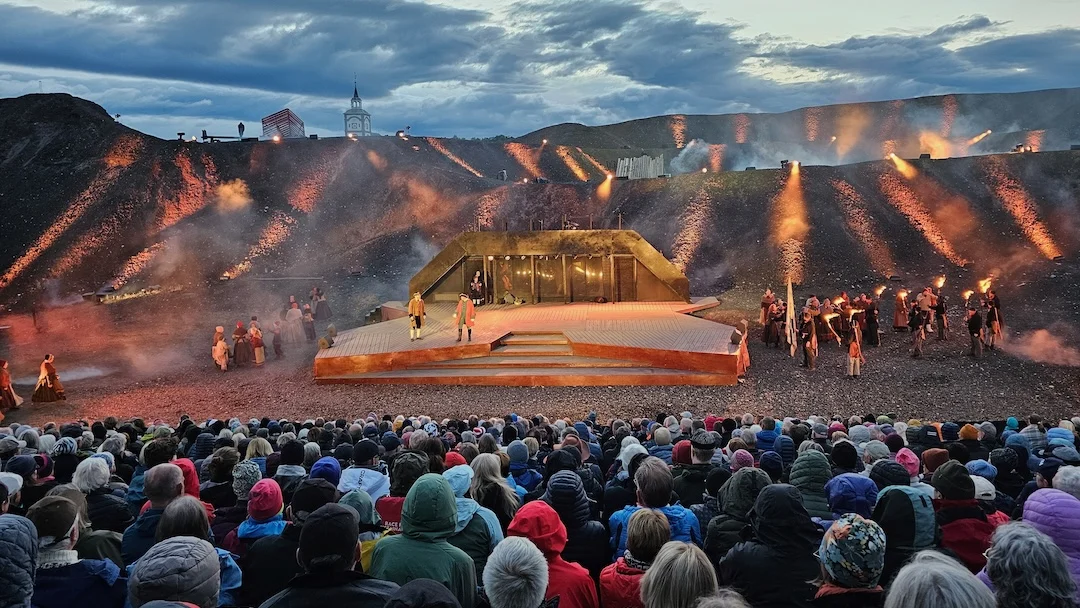
In the heart of Røros, Norway—a UNESCO World Heritage site known for its historic copper mining roots—an ambitious artistic feat unfolds every summer under the pale light of the Arctic circle. Elden, a sprawling historical musical chronicling the tragic 1718 march of 10,000 Swedish soldiers toward Norway, is perhaps one of the most logistically challenging productions in Europe.
The stage is not a traditional proscenium or a purpose-built auditorium. Instead, the production is set against the dramatic, stark backdrop of giant copper mining slag heaps. As the sun dips below the horizon, the performance begins around 9:30 PM, often continuing into the crisp, midnight air. Producing high-fidelity audio in such an exposed, unpredictable environment is a monumental task that requires more than just artistic vision; it requires technical mastery. This year, the production turned to the Outline P12 coaxial loudspeaker to ensure that the narrative weight of the performance reached all 12,000 spectators without compromise.
The Core Facts: Technology Meets the Elements
The annual staging of Elden is a feat of endurance for both the cast and the technical crew. With a massive, sprawling outdoor stage, the acoustic challenges are manifold: wind shear, humidity, ambient noise, and the sheer vastness of the slag heap terrain.
For the 2026 season, the production team—spearheaded by the rental and production specialists at Pro Systemer AS—sought a robust solution for stage monitoring. The objective was to replace aging infrastructure with a modern, high-output, and weather-resistant system. The selection of the Outline P12 coaxial loudspeakers was not merely a procurement decision; it was a strategic upgrade designed to withstand the volatile Norwegian climate.
The P12s were deployed as stage wedges at key positions across the expansive performance area. These speakers are designed to provide consistent audio dispersion and high sound pressure levels (SPL), essential for performers who need to hear their cues clearly despite the vast outdoor acoustics.
Chronology: From 1994 to the Present
Elden has been a staple of the Røros cultural calendar for over three decades, but the technological journey of the production has evolved significantly since its inception in 1994.
- 1994–2010: Establishing the Tradition. During the early years, the production relied on standard touring-grade audio equipment that was often prone to damage from moisture and the abrasive, dusty nature of the slag heap environment. Maintenance cycles were frequent, and gear replacement costs were high.
- 2011–2020: Scaling Up. As attendance grew toward the 10,000-spectator mark, the production required more sophisticated amplification and monitoring systems. The team began to integrate more advanced digital signal processing (DSP) to combat the phase cancellations inherent in outdoor, open-air staging.
- 2021–2025: The Search for Durability. Pro Systemer AS identified a critical need for equipment that could handle "1,000 projects a year" while simultaneously surviving the specific, brutal conditions of the Elden site. The criteria for new equipment were strictly defined: lighter weight for easier rigging, superior sonic fidelity, and, most importantly, IP54-rated weather protection.
- 2026: The P12 Deployment. The 2026 season marked the successful integration of the Outline P12 system. Over 10 consecutive nights of performance, the gear was tested against rain, wind, and fluctuating temperatures, effectively setting a new benchmark for the production’s technical reliability.
Supporting Data: Why Coaxial Matters
In an environment like the Røros slag heaps, traditional point-source speakers can struggle with off-axis coloration. The choice of a 12-inch coaxial monitor, such as the Outline P12, is significant for several technical reasons:
- Phase Coherence: Because the high-frequency driver is mounted in the center of the low-frequency cone, the sound emanates from a single point. This eliminates the "time-smear" that occurs in non-coaxial designs when a listener (or performer) moves slightly off-axis.
- Dispersion Control: In an outdoor environment, controlling where sound goes is as important as how loud it is. The P12’s design allows for a more controlled, uniform dispersion pattern, which minimizes reflections off the rocky, uneven surfaces of the slag heaps.
- The IP54 Advantage: The IP (Ingress Protection) rating of 54 means the units are protected against dust ingress and splashing water from any direction. For a production that often deals with sudden mountain rain showers, this rating is the difference between a seamless show and an equipment failure.
The sheer scale of the production—involving hundreds of volunteers, professional actors, and musicians—means that the monitoring system must be "bulletproof." Pro Systemer AS has confirmed that the P12s meet these high-stakes requirements, proving that high-end audio performance does not have to be sacrificed for the sake of ruggedness.
Official Responses: The Sound Designer’s Verdict
The success of the 2026 production was largely attributed to the synergy between the hardware and the design team. Fredrik Hagland, the Sound Designer for Elden, provided an insider’s perspective on the performance of the new monitors:
"We have been looking for a new 12-inch coaxial wedge monitor for some time," Hagland noted. "They needed to be lighter, to sound at least as good as what we already had, to offer flexibility in terms of rigging and setup, and to provide better protection for outdoor use in rainy conditions."
Regarding the real-world application, Hagland was definitive: "The Outline P12 wedges generally performed well and stood up to the harsh conditions that outdoor theatre in Norway is. They delivered the same monitoring even when there was rain straight into them."
This endorsement highlights a critical shift in professional audio: the transition from "weather-resistant" gear to "weather-hardened" gear. For rental houses like Pro Systemer AS, this efficiency is vital, as the same equipment used for Elden is cycled through over 1,000 other projects throughout the year, demanding a level of durability that most standard monitors cannot provide.
Implications: The Future of Outdoor Production
The success of the 2026 Elden production has broader implications for the live sound industry, particularly for festivals and outdoor theaters in climates ranging from the Nordic extremes to the humid tropics.
1. The Standardization of Ruggedized Audio
The industry is seeing a move away from fragile, delicate components toward gear that is inherently "road-ready" and weather-proof. As climate patterns become more unpredictable, the ability to guarantee a performance regardless of the forecast is becoming a primary selling point for professional audio manufacturers.
2. Efficiency in Rental Inventories
For companies like Pro Systemer AS, the consolidation of gear is key. By selecting a monitor that excels in both a controlled concert hall setting and an exposed, rugged mountainside, companies can maximize their return on investment (ROI). The P12’s ability to serve as a versatile, high-performance wedge for diverse applications is a blueprint for future inventory management.
3. Sustainability and Longevity
There is an implicit sustainability in choosing equipment that lasts. By investing in higher-quality, weather-resistant hardware, production teams reduce the frequency of equipment replacement, lower electronic waste, and ensure that artistic endeavors—like the annual retelling of the Elden story—can continue for decades to come.
Conclusion
The marriage of historical narrative and modern technology is what keeps the Elden tradition alive. As the music fades into the Røros night and the 12,000 spectators disperse, the success of the evening serves as a testament to the quiet, often unseen labor of the audio engineers. By embracing high-performance, weather-hardened solutions, the production has ensured that the voice of the performers remains clear, powerful, and resonant, no matter what the Norwegian elements decide to throw at them. In the world of live theater, this is not just engineering—it is the preservation of culture through sound.